
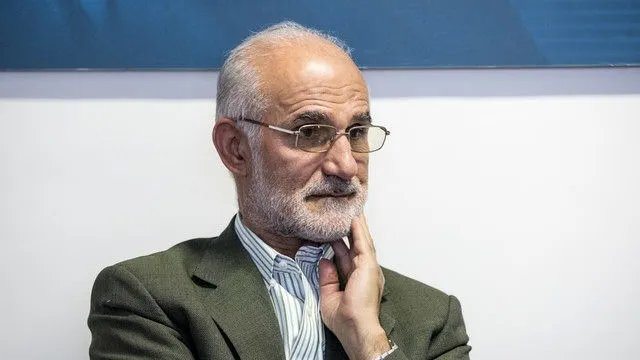
Dr. Mostafa Moin Najafabadi (born March 31, 1951, in Najafabad, Isfahan Province) is a specialist physician in clinical allergy and immunology, full professor at Tehran University of Medical Sciences, and one of Iran's most prominent Reformist figures over the past four decades. Possessing a combined record across academic, parliamentary, ministerial, electoral, and party spheres, he holds a unique position in the political and educational history of contemporary Iran. A student of Grand Ayatollah Montazeri and son-in-law of Ayatollah Dastgheib Shirazi, he began his executive career in the 1980s as Chancellor of Shiraz University, Member of the 1st Parliament, and Secretary of the Central Council of Academic Jihad (Jihad-e Daneshgahi). He was subsequently appointed Minister of Science in the first cabinet of Akbar Hashemi Rafsanjani (1989–1993).
Here is the complete English translation of your provided comprehensive biographical entry on Mostafa Moin:
Mostafa Moin Najafabadi (born March 31, 1951, in Najafabad, Isfahan Province) is a prominent Iranian Reformist politician, specialist physician in clinical allergy and immunology, full professor at Tehran University of Medical Sciences, founder and leader of the Front for Democracy and Human Rights in Iran, former Minister of Science and Research across the high-profile administrations of Akbar Hashemi Rafsanjani (5th Government, 1989–1993) and Mohammad Khatami (7th and 8th Governments, 1997–2003) for a total of 10 consecutive years, former Member of Parliament in the 1st (1982–1984), 3rd, and 5th terms, former Chancellor of Shiraz University (1981–1982), former Secretary of the Central Council of Academic Jihad (Jihad-e Daneshgahi) (1982–1985), renowned progressive Reformist candidate in the 9th presidential election in 2005 who ran under the highly resonated slogan "I will not take anyone to heaven by force" and secured fifth place in the first round with nearly 4 million votes, a central figure noted for his high-profile protest resignation from the Ministry of Science following the attack on the Tehran University dormitories on July 9, 1999 (18 Tir 1378), former student of Grand Ayatollah Hossein-Ali Montazeri, son-in-law of Ayatollah Abdolhossein Dastgheib Shirazi, steadfast supporter of Hassan Rouhani in 2013 and 2017, decisive supporter of Masoud Pezeshkian in 2024, and simultaneously one of the most widely cited, prominent, and distinct moral-political-academic Reformist figures of post-revolutionary Iran over the past four decades, standing among the core figures of progressive Reformist discourse and the defense of university autonomy.
Mostafa Moin—whose unique trajectory spans a prominent family-religious background in the cultural city of Najafabad in Isfahan Province, a distinguished career in medicine with a specialization in clinical allergy and immunology, high-profile academic appointments starting in the 1980s (including the presidency of Shiraz University from 1981 to 1982, representing the people of Shiraz in the 1st Islamic Consultative Assembly from 1982, serving as Secretary of the Central Council of Academic Jihad from 1982 to 1985, and holding numerous key executive responsibilities during the 1980s), serving as Minister of Science and Research in Akbar Hashemi Rafsanjani's 5th government from 1989 to 1993, continuing steady academic and executive activities during the mid-1990s, and re-assuming the Ministry of Science in Mohammad Khatami's 7th and 8th governments from 1997 to 2003 (during which he became one of the most prominent cabinet ministers of the Reform era through the vast expansion of student and cultural organizations, including over 2,000 student associations and an equal number of student publications), facing the high-profile crisis of the attacks on Tehran University and Tabriz University dormitories on July 9 and 11, 1999 (18 and 20 Tir 1378) by pressure groups which led to his protest resignation in defense of the sanctuary of the university and the oppression of students, submitting a second high-profile resignation during his second term in Khatami's 8th government due to an inability to fulfill divine duties, legal responsibilities, and protect the defenseless nation's youth (making him one of the few ministers to resign in post-revolutionary Iranian history), running as a high-profile candidate in the 9th presidential election on June 17, 2005 as the nominee of progressive Reformists supported by the Islamic Iran Participation Front, the Mojahedin of the Islamic Revolution Organization, the Freedom Movement of Iran, and National-Religious forces under the slogan "I will not take anyone to heaven by force," facing initial disqualification by the Guardian Council followed by reinstatement through a decree (hokm-e hokomati) by Ayatollah Khamenei, securing nearly 4 million votes in the first round to place fifth among seven candidates, issuing a prominent protest statement against the election results describing the fragmentation of Reformist votes as the cause of Mahmoud Ahmadinejad's victory, founding the Front for Democracy and Human Rights in Iran as a key progressive Reformist entity post-2005, stepping back from active political engagement between 2009 and 2013, offering high-profile endorsements to Hassan Rouhani in the 2013 and 2017 elections, refraining from participating in the 2021 election due to internal and external challenges within the Reformist front, and ultimately offering decisive support to Masoud Pezeshkian in the 14th presidential election in 2024 (emphasizing Pezeshkian's suitability, which drew sharp attacks from Kayhan)—has established himself as one of the most enduring and widely discussed moral-political-academic figures of post-revolutionary Iran's Reform movement.
The significance of Mostafa Moin in the historical and political landscape of contemporary Iran can be examined through several key dimensions. First, his tenure as the longest-serving Minister of Science in post-revolutionary Iran—holding the office for roughly 10 consecutive years across the administrations of Akbar Hashemi Rafsanjani and Mohammad Khatami—highlights his executive persistence. Second, his role as a leading figure of protest resignation in defense of university autonomy—becoming the first minister in the Reform government to resign following the July 9, 1999 attacks in defense of students—represents a cornerstone of his moral-political legacy. Third, as founder and leader of the Front for Democracy and Human Rights in Iran, he served as an architect of progressive post-2005 Reformist discourse. Fourth, his prominent candidacy as the progressive Reformist nominee in the 2005 presidential election, marked by the ethical-political slogan "I will not take anyone to heaven by force," stands among the most notable presidential campaigns of the post-revolutionary era. Fifth, his distinct identity as a combined physician-politician-academic represents a multi-dimensional persona relatively unique among major Iranian political figures.
Important Note: Mostafa Moin's record and performance are viewed through contrasting lenses within Persian-language political and media circles. In progressive Reformist discourse, he is recognized as the "minister who resigned for students," the "moral candidate of Reform," and the "founder of the Front for Democracy and Human Rights." Among prominent Principalist critics, his management of the Ministry of Science—particularly regarding the expansion of student organizations and his support for students—has been criticized as a "driver of student unrest." Sharp attacks by Kayhan against his endorsements of Pezeshkian reflect ongoing friction with Principalists. Among internal Reformist critics, his candidacy in the 2005 election has been critiqued for contributing to the fragmentation of votes. This profile presents accounts published in primary Persian-language media and historical sources with an analytical and neutral stance.
Life and Family Background
Mostafa Moin was born on March 31, 1951, in Najafabad, Isfahan Province—one of the most prominent cultural and religious cities of central Iran.
Najafabad Roots
According to published reports: "Mostafa Moin is from the city of Najafabad in Isfahan Province." Najafabad is recognized among the most prominent clerical and cultural cities in Isfahan Province and is also the birthplace of Grand Ayatollah Hossein-Ali Montazeri—one of the most prominent post-revolutionary clerical figures in Iran.
Student of Ayatollah Montazeri
According to published reports: "Mostafa Moin... was a student of Ayatollah Montazeri, the critical Iranian cleric." This educational and intellectual link formed the bedrock of his enduring religious-intellectual identity.
Son-in-Law of Ayatollah Dastgheib Shirazi
The most widely reported aspect of Moin's family background was becoming the son-in-law of Ayatollah Sayyid Abdolhossein Dastgheib Shirazi—a prominent source of emulation (Marja') in Shiraz who was martyred on December 11, 1981. This marital connection formed the foundation of his prominent clerical-political network in Shiraz.
Nasrullah Jahangard: Son-in-Law of Moin
According to published reports: "Nasrullah Jahangard, former acting Minister of Post, Telegraph, and Telephone during the Reform era, is his son-in-law." This political-family tie formed part of his close network during the Reform administration.
Education and Academic Appointments
Mostafa Moin possesses a distinguished medical and specialized academic trajectory.
Physician and Specialist
Moin studied medicine and later specialized in clinical allergy and immunology.
Professor at Tehran University of Medical Sciences
Moin's most prominent academic title is Full Professor in the Faculty of Medicine at Tehran University of Medical Sciences, specializing in clinical allergy and immunology. Moin ranks among Iran's most prominent clinical allergy and immunology specialists.
Post-Revolutionary Executive Path: 1980s
The initial chapter of Moin's executive career began with his sustained entry into the post-revolutionary governance structure in 1980.
Presidency of Shiraz University (1981–1982)
According to published reports: "In 1981, upon the formation of the Health and Medical Planning Council of Fars Province, [Moin] assumed its leadership and subsequently became... President of Shiraz University (1981–1982)."
Representative in the 1st Parliament from Shiraz (1982–1984)
Moin's early parliamentary career began when he was elected to represent the people of Shiraz in the 1st Islamic Consultative Assembly from 1982 to 1984, establishing his parliamentary foundation.
Secretary of the Central Council of Academic Jihad (1982–1985)
Another key role Moin held during this era was serving as Secretary of the Central Council of Academic Jihad (Jihad-e Daneshgahi)—a major post-revolutionary higher education institution.
Executive Responsibilities in the 1980s
Throughout the 1980s, Moin held numerous prominent positions across scientific, academic, cultural, social, and executive management sectors.
Minister of Science in the Rafsanjani Administration (1989–1993)
The earliest chapter of Moin's ministerial career was assuming the Ministry of Culture and Higher Education (later Ministry of Science) in Akbar Hashemi Rafsanjani's 5th government from 1989 to 1993. This 4-year ministerial term, coinciding with the beginning of the Reconstruction era, laid the groundwork for Moin's record in higher education and saw a notable expansion of Iran's university system.
Middle Years (1993–1997)
During the mid-1990s, Moin returned to Tehran University of Medical Sciences to focus on academic work. During this period, he also served as a Member of Parliament in its 3rd term.
Minister of Science in the Khatami Administration (1997–2003)
The central historical chapter of Mostafa Moin's career was serving as Minister of Science across the two terms of Mohammad Khatami's presidency.
Appointment in the Reform Administration
Following Mohammad Khatami's victory in the landmark election of May 23, 1997 (2 Khordad 1376), Moin was appointed Minister of Science and Research. This appointment, coming at the peak of the Reform movement, inaugurated a significant era in Iranian higher education.
Expansion of Student Organizations
According to published reports, Moin oversaw a major expansion of student entities during his second ministerial tenure. Within the first year following May 23, 1997, students were active in over 2,000 cultural, political, and social associations, alongside an equal number of student publications. This expansion formed a central pillar of the social and cultural base of the Reform movement.
The July 9, 1999 (18 Tir) Attack and Protest Resignation
The defining crisis of Moin's ministerial tenure occurred when pressure groups launched violent attacks on the dormitories of Tehran University and Tabriz University on July 9 and 11, 1999 (18 and 20 Tir 1378). According to published reports: "Moin's second and third ministerial terms were marked by numerous crises that directly targeted universities and students as the intellectual core and vanguard of Reform. The peak of this crisis occurred with the raid by pressure groups and illegal entry of armed individuals on July 9 and 11, 1999, into Tehran University and Tabriz University dormitories and the assault on students, which prompted the Minister's protest resignation in defense of university autonomy and student rights." In Moin's own words: "I tried to manage the crisis; my resignation was a protest resignation intended to bring calm to students and defend their rights. My goal was for students to remain inside the dormitory grounds rather than taking to the streets, preventing external forces from exploiting their movement." This resignation stands among the most notable protest resignations in post-revolutionary Iranian history. President Khatami initially rejected the resignation, prompting Moin to return to office.
Second Resignation in Khatami's Second Term
Moin submitted a second resignation during Khatami's second term. According to published reports: "Moin stated he was resigning due to an inability to fulfill divine obligations, legal duties, and protect the defenseless youth of the nation..."
Enduring Ministerial Legacy
Reflecting on his ministerial legacy, Moin famously noted: "The price of maintaining vitality in universities was that July 9 (18 Tir) occurred."
The 2005 Presidential Candidacy
The central post-ministerial chapter of Moin's political career was his campaign as a candidate in the 9th presidential election on June 17, 2005.
Progressive Reformist Nominee
According to published reports: "He was the nominee of progressive Reformists in Iran's 9th presidential election." His core backers included the Islamic Iran Participation Front, the Mojahedin of the Islamic Revolution Organization, the Freedom Movement of Iran, and National-Religious forces.
Disqualification and Reinstatement via Decree
Prior to the election, Moin was initially disqualified by the Guardian Council. Following this disqualification, Supreme Leader Ali Khamenei issued a state decree (hokm-e hokomati) instructing the Guardian Council to approve his candidacy—one of the most notable state decrees in post-revolutionary Iranian electoral history.
The Ethical-Political Slogan
Moin's primary campaign slogan was "I will not take anyone to heaven by force." In his words: "My slogan was that I will not take anyone to heaven by force." This slogan became a defining statement reflecting his ethical approach to Reformist politics.
Election Results
According to published reports: "In the first round of the 9th presidential election, [Moin] placed fifth out of seven candidates, receiving nearly 4 million counted votes."
Protest Statement
Following the election, Moin issued an official statement protesting the election process and results, noting that the fragmentation of Reformist votes contributed directly to Mahmoud Ahmadinejad's victory.
Front for Democracy and Human Rights in Iran
Following the 2005 election, Moin founded the Front for Democracy and Human Rights in Iran. Serving as its founder and leader, the front represented a key institutional framework for progressive post-2005 Reformist discourse.
Post-Green Movement Era (2009–2013)
In the years following 2009, Moin stepped back from active political leadership, focusing primarily on academic research and theoretical discourse.
Endorsement of Hassan Rouhani (2013 and 2017)
Moin returned to active campaign endorsement by publicly supporting Hassan Rouhani's presidential candidacies in both the 11th (2013) and 12th (2017) presidential elections.
Non-Participation in the 2021 Election
When asked about potentially running in the 2021 presidential election, Moin stated: "Until the aforementioned internal and external challenges within the Reformist front are resolved and the groundwork for effective service is established, I see no motivation or duty to participate."
Support for Masoud Pezeshkian (2024)
During the 14th presidential election in 2024, Moin offered explicit support for Masoud Pezeshkian. According to published reports, while Moin did not cast a ballot in either round, he publicly endorsed Masoud Pezeshkian as the most qualified candidate. This drew criticisms from Kayhan, which published articles targeting his position.
Political and Philosophical Framework
Mostafa Moin's long career in politics and academia is defined by several core principles:
Democracy and Human Rights: Emphasizing democratic governance and civil rights, as reflected in the name of the political front he established.
Ethics in Politics: Advocating for ethical boundaries in political life, encapsulated in his campaign slogan "I will not take anyone to heaven by force."
Defense of University Autonomy: Consistently defending academic independence and student rights, a stance demonstrated by his resignation following the July 9, 1999 events.
Free Party Competition: Advocating for open competition among political parties with equal rights and opportunities under the law.
Organizational Independence: Moin has frequently noted his independence from formal party membership, stating: "The reality is that I have not been and am not a member of any political party. My criteria for evaluating governments remain the principles I have publicly declared."
Political and Professional Networks
Reformist Leaders: Maintained close political ties with figures including Mohammad Khatami, Akbar Hashemi Rafsanjani, Hassan Rouhani, and Masoud Pezeshkian.
Progressive Reformist Figures: Worked closely alongside leaders such as Saeed Hajjarian, Mostafa Tajzadeh, Mohsen Mirdamadi, Abdollah Nouri, and Mohammad-Reza Khatami within the broader Participation Front network.
Ayatollah Montazeri: Maintained a long-standing religious and intellectual connection with Grand Ayatollah Hossein-Ali Montazeri as his former student.
The Dastgheib Family: Connected through marriage to the family of Ayatollah Abdolhossein Dastgheib Shirazi.
The Jahangard Family: Connected through marriage to Nasrullah Jahangard (former acting Minister of Post, Telegraph, and Telephone).
National-Religious and Freedom Movement Networks: Maintained ties with National-Religious figures and the Freedom Movement of Iran, who endorsed his 2005 presidential bid.
Summary
Mostafa Moin Najafabadi stands out as one of the most prominent moral-political-academic Reformist figures in post-revolutionary Iran. His career spans his religious-family roots in Najafabad, medical specialization in allergy and immunology, professorship at Tehran University of Medical Sciences, studies under Ayatollah Montazeri, family ties to Ayatollah Dastgheib, the presidency of Shiraz University (1981–1982), serving as MP for Shiraz (1st term), leading Academic Jihad (1982–1985), serving as Minister of Science under Rafsanjani (1989–1993) and Khatami (1997–2003) for 10 total years, expanding student associations and publications, resigning in protest after the July 9, 1999 dorm attacks, serving in the 1st, 3rd, and 5th Parliaments, running for president in 2005 with support from progressive Reformists, receiving reinstatement via state decree after initial disqualification, running under the slogan "I will not take anyone to heaven by force," securing nearly 4 million votes, founding the Front for Democracy and Human Rights in Iran, endorsing Hassan Rouhani in 2013 and 2017, and endorsing Masoud Pezeshkian in the 2024 presidential election.
Moin represents a distinct model of a physician-academic-politician in contemporary Iranian history—combining long-standing executive tenure in higher education with a career marked by principled resignations, campaign leadership, and advocacy for university autonomy and human rights.
Frequently Asked Questions (FAQ)
Who is Mostafa Moin?
Mostafa Moin Najafabadi (born March 31, 1951, in Najafabad, Isfahan Province) is a prominent Iranian Reformist politician, specialist physician in clinical allergy and immunology, full professor at Tehran University of Medical Sciences, founder and leader of the Front for Democracy and Human Rights in Iran, former Minister of Science under Akbar Hashemi Rafsanjani and Mohammad Khatami, and a major presidential candidate in 2005.
What is Moin's educational background?
Moin holds a medical degree with a subspeciality in clinical allergy and immunology. He is a Full Professor in the Faculty of Medicine at Tehran University of Medical Sciences.
What is his family background?
Moin was born in Najafabad, Isfahan. He was a student of Grand Ayatollah Hossein-Ali Montazeri and is the son-in-law of Ayatollah Abdolhossein Dastgheib Shirazi. His own son-in-law is Nasrullah Jahangard, former acting Minister of Post, Telegraph, and Telephone.
What were Moin's major past positions?
Key positions include: President of Shiraz University (1981–1982), Member of Parliament representing Shiraz (1st term) and Tehran (3rd and 5th terms), Secretary of the Central Council of Academic Jihad (1982–1985), Minister of Culture and Higher Education (1989–1993), and Minister of Science, Research, and Technology (1997–2003).
Why did Moin resign on July 9, 1999 (18 Tir)?
Following violent raids by pressure groups on Tehran University and Tabriz University dormitories on July 9 and 11, 1999, Moin submitted a high-profile protest resignation to defend university autonomy and protest the assault on students. He stated: "My resignation was a protest resignation intended to bring calm to students and defend their rights."
How many times did Moin resign as Minister of Science?
Moin submitted two formal resignations during his time as Minister of Science under Mohammad Khatami: first following the July 9, 1999 dormitory attacks, and a second final resignation during Khatami's second term, citing an inability to fulfill legal duties and protect students.
What was Moin's role in the 2005 presidential election?
Moin ran as the primary candidate of progressive Reformist groups (including the Participation Front, Mojahedin of the Islamic Revolution, Freedom Movement, and National-Religious forces). He secured nearly 4 million votes in the first round, placing fifth among seven candidates.
What was his campaign slogan in 2005?
His campaign slogan was "I will not take anyone to heaven by force" (Kasi ra be zor be behesht nakhoham bord).
Why was he initially disqualified in 2005?
Moin was initially disqualified by the Guardian Council, but was reinstated into the presidential race following a state decree (hokm-e hokomati) issued by Supreme Leader Ali Khamenei.
What is the Front for Democracy and Human Rights in Iran?
Founded by Mostafa Moin following the 2005 presidential election, the Front for Democracy and Human Rights in Iran is a progressive Reformist political coalition aimed at promoting democratic governance, civil liberties, and human rights.
What was his role in the 2013 and 2017 elections?
Moin endorsed Hassan Rouhani in both the 2013 and 2017 presidential elections.
Why did Moin refrain from running in 2021?
Moin stated that until internal and external challenges within the Reformist front were resolved and conditions for effective service existed, he had no motivation to seek office.
What was his role in the 2024 presidential election?
While Moin abstained from voting in the election, he publicly endorsed Masoud Pezeshkian as the most qualified candidate, drawing media criticism from Principalist outlets like Kayhan.
What defines Moin's political philosophy?
His framework centers on human rights and democracy, ethical principles in governance, university autonomy, free political party competition, and structural reform within the framework of the Islamic Republic.
What is notable about Moin's career record?
He is the longest-serving Minister of Science in post-revolutionary Iranian history (10 total years), known for his protest resignations in defense of students, his 2005 presidential campaign, and his combined identity as a physician, academic, and political figure.
What is his relationship with Masoud Pezeshkian?
Moin supported Pezeshkian's candidacy in the 2024 presidential election. Both figures share a background as medical doctors who entered top-level academic and political governance in Iran.
Take less than a minute, register and share your opinion under this post.
Insulting or inciting messages will be deleted.
Sign Up