
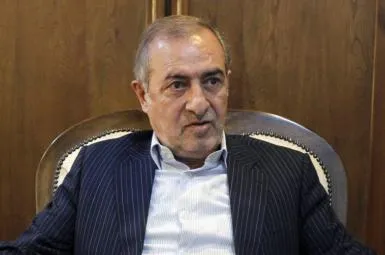
Engineer Morteza Alviri is a politician, executive manager, and a prominent, veteran figure of the Reformist faction in the Islamic Republic of Iran. Born on November 23, 1948, in Damavand, he is one of the few managers whose career spans several key positions over nearly four decades: serving as a three-term representative in the Islamic Consultative Assembly (Parliament), Mayor of Tehran, Iran's Ambassador to Spain, Head of the Free Trade-Industrial Zones Organization, and Chairman of the Supreme Council of Provinces. Alongside these executive responsibilities, Alviri is regarded as one of the most active Reformist figures in the spheres of urban management, government transparency, and critical political discourse in Iran over the past decade.
Morteza Alviri
Engineer Morteza Alviri is a politician, executive manager, and a prominent, veteran figure of the Reformist faction in the Islamic Republic of Iran. Born on November 23, 1948, in Damavand, he is one of the few managers whose career spans several key positions over nearly four decades: serving as a three-term representative in the Islamic Consultative Assembly (Parliament), Mayor of Tehran, Iran's Ambassador to Spain, Head of the Free Trade-Industrial Zones Organization, and Chairman of the Supreme Council of Provinces. Alongside these executive responsibilities, Alviri is regarded as one of the most active Reformist figures in the spheres of urban management, government transparency, and critical political discourse in Iran over the past decade.
The importance of Morteza Alviri in the political and executive history of the Islamic Republic can be examined from several perspectives. First, he is among the representatives of the first three terms of the Islamic Consultative Assembly (1st, 2nd, and 3rd parliaments)—a position that links him to the founding generation of the Islamic Republic's parliamentary structure. Second, his role as the Mayor of Tehran from 1999 to 2001, during a sensitive period following Gholamhossein Karbaschi and amidst the very first experience of an elected city council, stands out as a prominent facet of his career. Third, his activity as a member of the 5th City Council of Tehran and his chairmanship of the Supreme Council of Provinces have made him one of the leading Reformist figures in Iranian urban management in recent years.
The most prominent and noteworthy aspect of Alviri’s career is his role as one of the innovators behind the "Tehran Municipality Transparency System." Under this system, all municipal contracts exceeding one billion Tomans are made fully accessible to the general public. This initiative stands as one of the Reformist faction's most significant achievements in government transparency within Iran, establishing Alviri as a leading figure in urban management transparency discourse. In recent years, Alviri has been a vocal critic of the country's current trajectory, frequently warning against the dangers of systemic "collapse" and "intensifying crises."
Life and Background
Morteza Alviri was born on November 23, 1948, in the city of Damavand—located in Tehran province along the slopes of Mount Damavand. Known for its distinct cultural and geographical heritage, Damavand is a region that has introduced numerous prominent figures into contemporary Iranian politics and culture.
Alviri pursued his primary and secondary education before entering one of Iran's most prestigious technical institutions for his higher studies. He successfully earned a Bachelor of Science (B.S.) degree in Electrical Engineering from Sharif University of Technology (formerly known as Aryamehr University). In the pre-revolutionary era, this university served as a hub for training top engineering talents, many of whom later became political and revolutionary activists. This technical education, combined with Alviri's student-era revolutionary leanings, laid the foundation for his future career.
Following the victory of the Islamic Revolution and in subsequent years, Alviri shifted his academic focus toward management, obtaining a Master’s degree in Public Administration from Iran's Center for Public Administration Training. This combined educational background—electrical engineering and public administration—equipped him to take on a wide range of technical and executive responsibilities.
Entry into Politics and Parliamentary Representation
Alviri belongs to a generation of religious-revolutionary activists who were highly involved in university political landscapes prior to the revolution, later transitioning into key roles within the structure of the Islamic Republic. From the very beginning of his political life, he aligned himself with the Islamic Left and subsequently with the Reformist movement.
The turning point in Alviri's political career came with his entry into the Islamic Consultative Assembly. He served as a parliamentary representative during its first three consecutive terms: the 1st Parliament (1980–1984), the 2nd Parliament (1984–1988), and the 3rd Parliament (1988–1992). This three-term tenure places him among the veteran lawmakers of the Islamic Republic's first-generation parliamentary inner circle, a period that greatly expanded his network of connections with prominent figures of that era.
His parliamentary years coincided with critical historical eras, including the Iran-Iraq War, the post-war reconstruction period, and the beginning of Akbar Hashemi Rafsanjani's Reconstruction Administration—a timeframe during which Alviri sat at the heart of national legislative decision-making.
Head of the Free Trade-Industrial Zones Organization
Following the conclusion of the 3rd Parliament, Alviri transitioned directly toward major executive roles. One of his most vital assignments during this phase was heading the Free Trade-Industrial Zones Organization. Throughout the 1990s, free zones such as Kish, Qeshm, Chabahar, and Anzali played a pivotal role in shaping Iran's economic outlook as part of the Reconstruction Administration's economic development strategies.
This responsibility positioned Alviri at the center of Iran's commercial economy and investment policies during the 1990s, giving him extensive experience in macro-executive management and economic development.
Iran's Ambassador to Spain
Another key diplomatic milestone in the middle of Alviri’s career was his appointment as Iran's Ambassador to Spain. This diplomatic posting introduced Alviri to international relations and global diplomacy, making him one of the few political managers with direct, formal experience spanning legislation, executive economics, and international diplomacy.
During his ambassadorial tenure, Spain stood out as one of Iran's most important trading partners in Europe, making Iran's diplomatic presence in Madrid highly strategic.
Mayor of Tehran (1999 to 2001)
The defining peak of Alviri's executive career came with his selection as the Mayor of Tehran. In 1999, following the controversial trial and removal of Gholamhossein Karbaschi, and during the first-ever term of the elected City Council of Tehran—which was dominated by a Reformist majority—Alviri was chosen to lead the municipality.
Alviri's tenure as mayor lasted until 2001 and was marked by severe structural challenges. First, intense internal factionalism and disputes within the inaugural Tehran City Council created severe hurdles, ultimately leading to parliamentary intervention and the dissolution of the council before its legal term ended. Second, Alviri managed the capital at a time when debates over urban development models, municipal debts inherited from the Karbaschi era, and a highly polarized national political climate heavily overshadowed city management.
His mayoral term also came with its share of media scrutiny. According to published accounts, his residence during this period was one of the historical municipal properties traditionally used by Tehran's mayors, a topic that occasionally resurfaced in later years during public debates surrounding municipal assets. Following the end of Alviri's term and the dissolution of the first city council, Mohammad Hassan Malekmadani and subsequent figures took over leadership of the municipality.
Activities in the 5th Tehran City Council
After a long hiatus from local governance, Alviri returned to urban management in 2017. He ran in the 5th City and Village Council elections in May 2017 as part of the Reformist coalition and Rouhani administration allies (the "Hope" list), successfully securing a seat on the Tehran City Council.
Assembly President by Seniority
As the oldest serving member of the 5th Tehran City Council, Alviri was selected to serve as the "Seniority President" (Rais-e Senni) during the inaugural sessions in September 2017. He held this placeholder position until Mohsen Hashemi (son of Ayatollah Hashemi Rafsanjani) was officially elected as the permanent Chairman of the Council.
Program and Budget Committee
During his tenure on the council, Alviri assumed the chairmanship of the Program and Budget Committee of the Tehran City Council. Given its absolute oversight authority over the municipality's fiscal policies and budget allocations, this committee holds one of the most powerful positions within the council structure, making Alviri one of the most influential lawmakers of the 5th term.
Tehran Municipality Transparency System
One of Alviri’s most celebrated achievements during his 5th council term was his foundational role as one of the co-creators of the "Tehran Municipality Transparency System." By mandating that all municipal contracts valued over one billion Tomans be fully disclosed online for public viewing, the platform marked a major practical milestone for anti-corruption and public oversight efforts in Iran.
Launched at a time when public debates over administrative corruption and systemic rent-seeking were escalating, the transparency system served as an institutional remedy. As one of its chief architects, Alviri earned widespread recognition in state transparency discourses, and the model was subsequently adapted by various other municipalities and government bodies across the country.
Chairman of the Supreme Council of Provinces
Parallel to his legislative work in Tehran, Alviri was elevated to the chairmanship of the Supreme Council of Provinces—the highest coordinating body governing all city and village councils throughout Iran. Holding immense strategic value within the country's local governance framework, this national role made Alviri the official national voice for local council networks.
From this national platform, Alviri regularly commented on matters concerning local council rights, decentralization, and the structural limits of municipal systems. One of his most widely publicized statements followed the controversial legal case of former Tehran Mayor Mohammad Ali Najafi; speaking as the head of the Supreme Council of Provinces, Alviri openly noted that had council members been aware of the personal issues surrounding Najafi at the time, they undoubtedly would not have voted for his appointment.
Views and Stances
Throughout his extensive career, Morteza Alviri has formulated clear political stances firmly rooted within the Reformist camp, consistently championing a discourse of systemic, internal reform.
Membership in the Reformist Supreme Policy-Making Council
In recent years, Alviri has been a member of the Reformist Supreme Policy-Making Council—the most vital coordinating body of the Reformist movement in Iran. This position places him among the senior and influential figures of the faction.
Stance on Electoral Participation
In one of his widely publicized statements, Alviri warned about the possibility of Reformists refusing to field candidates in elections. He declared:
"If, for any reason, the path for the effective participation of Reformists in future elections is blocked, and we reach a point where we see that we cannot take even the smallest step for reform through the ballot box, we might not present any electoral list."
This stance, voiced during a period of escalating pressure on the Reformist movement, serves as a clear example of the faction's discursive shift toward a more critical approach.
Structural Critique and Warnings of Collapse
In recent years, Alviri has transformed into a vocal critic of policymaking trends in Iran. In an extensive interview with the Jamaran News Agency focusing on the country's structural challenges, he emphasized the urgent need to return to rationality and reform policy directions. Alviri believes that Iran stands at a critical juncture and that continuing the current trajectory could confront the country with more severe crises, such as systemic collapse and an widening rift between the people and the ruling establishment.
This stance highlights a significant evolution in Alviri's discourse over recent years—shifting from a moderate, executive Reformist to a structural critic.
Support for the Imam Ali Society
In an ethical and social stance, Alviri, along with several other members of the Tehran City Council, signed a letter addressed to the Head of the Judiciary. The letter urged for maximum care, precision, and fairness in handling the judicial case against the Imam Ali Popular Students Relief Society (IAPSRS)—one of Iran's most prominent non-governmental organizations dedicated to supporting child laborers and marginalized social groups. This move demonstrated his commitment to civil society and the protection of NGOs.
Relations with Figures and Factions
Throughout his extensive career, Morteza Alviri has maintained a broad network of connections with political, executive, and media figures in Iran. Within his own political faction, he has been closely connected to figures such as Mohsen Hashemi (Chairman of the 5th Tehran City Council), Eshaq Jahangiri (First Vice President under the Rouhani administration, who publicly offered condolences upon the passing of Alviri's mother), and other members of the Reformist Supreme Policy-Making Council.
An intriguing aspect found in published accounts is Alviri's long-standing, old friendship with Hossein Shariatmadari—the managing editor of Kayhan newspaper and one of the most prominent voices of the hardline Principlist faction. In a thought-provoking interview, Alviri spoke of their occasional personal meetings despite their severe political differences today. This narrative reflects a layer of personal relationships that transcend political boundaries among the first generation of revolutionary activists. This cross-factional dynamic was also evident at the memorial service for Alviri's father, where the simultaneous attendance of figures like Reformist Seyyed Abdulvahid Mousavi Lari and hardliner Hossein Shariatmadari drew significant media coverage.
Conclusion
Morteza Alviri is one of the most veteran and experienced managers in the Islamic Republic of Iran, occupying a distinct position through an extraordinary career that spans the legislative, executive, diplomatic, and urban management arenas. His trajectory—from studying at Sharif University of Technology, serving three terms in parliament, heading the Free Trade Zones Organization, and his ambassadorship to Spain, to becoming the Mayor of Tehran, a member of the 5th City Council, and the Chairman of the Supreme Council of Provinces—presents a portrait of a "Reformist politician-manager" who has stood at the center of the country's most critical political and executive developments for nearly four decades.
At the primary level, Alviri’s distinguishing feature is the diversity and breadth of his managerial experience. This attribute places him among a very select group of political figures who have held formal, high-level roles in the legislature, the executive branch, international diplomacy, and local urban governance. At the secondary level, his role as one of the architects behind the Tehran Municipality Transparency System stands out as one of his lasting institutional legacies in the field of public accountability.
From an analytical perspective, Alviri’s career path exemplifies the ideological and political evolution of a generation of Islamic Revolution activists. They began from the positions of the Islamic Left, climbed to major executive responsibilities during the Reconstruction Era, integrated into the Reformist movement during the Reform Era, and have ultimately arrived in recent decades at a point of structural critique toward the establishment's official discourse, warning of the dangers of "collapse." This journey mirrors the broader discursive transformation experienced by a large segment of the first generation of revolutionary activists.
What remains clear from today's viewpoint is that Alviri, regardless of agreement or disagreement with his positions, has become one of the most deep-rooted Reformist figures in contemporary Iran. His insights—particularly regarding the necessity of returning to rationality, reforming policy trajectories, ensuring public transparency, and avoiding intensifying crises—continue to form an essential part of the serious discourse surrounding the future of Iran.
Frequently Asked Questions
In what year and where was Morteza Alviri born?
Morteza Alviri was born on November 23, 1948, in the city of Damavand (located in Tehran province).
What is Morteza Alviri's educational background?
Alviri holds a Bachelor of Science (B.S.) degree in Electrical Engineering from Sharif University of Technology (formerly Aryamehr University) and a Master’s degree in Public Administration from Iran's Center for Public Administration Training.
What positions has Morteza Alviri held?
Throughout his extensive career, Alviri has held numerous high-level responsibilities: representative in the 1st, 2nd, and 3rd terms of the Islamic Consultative Assembly, Head of the Free Trade-Industrial Zones Organization, Iran's Ambassador to Spain, Mayor of Tehran (1999–2001), member of the 5th Tehran City Council, Seniority President of the Council, Chairman of its Program and Budget Committee, and Chairman of the national Supreme Council of Provinces.
When was Morteza Alviri the Mayor of Tehran?
Alviri served as the Mayor of Tehran from 1999 to 2001, succeeding Gholamhossein Karbaschi. His mayoral term coincided with the tenure of the first-ever elected Tehran City Council, which was formed following a sweeping Reformist electoral victory.
What was Morteza Alviri's role in the Tehran Municipality Transparency System?
Alviri is one of the co-creators of the "Tehran Municipality Transparency System." This platform mandates that all municipal contracts valued over one billion Tomans be fully disclosed online for public viewing, marking one of the most significant practical achievements in the arena of government transparency in Iran.
What are Morteza Alviri's views on the current situation in Iran?
In recent years, Alviri has become a strict critic of the current policymaking trends in Iran. He argues that Iran stands at a decisive crossroads and that continuing down the current path could expose the nation to deeper crises, including systemic collapse and an unbridgeable divide between the public and the ruling establishment. He continuously stresses the vital need to return to political rationality and overhaul national policy directions.
To which political faction does Morteza Alviri belong?
Alviri belongs to the Reformist camp and has served as a member of the Reformist Supreme Policy-Making Council—the faction's primary coordinating body. In the political sphere, he consistently champions reform-oriented and critical stances regarding the ruling establishment.
Is Morteza Alviri still active?
Yes, Morteza Alviri remains highly active as a veteran and frequently present figure of the Reformist movement within the public sphere. He regularly shares his commentary on contemporary Iranian affairs, government transparency, urban management, and the country's structural challenges through media interviews, analytical notes, and official political stances.
Take less than a minute, register and share your opinion under this post.
Insulting or inciting messages will be deleted.
Sign Up