
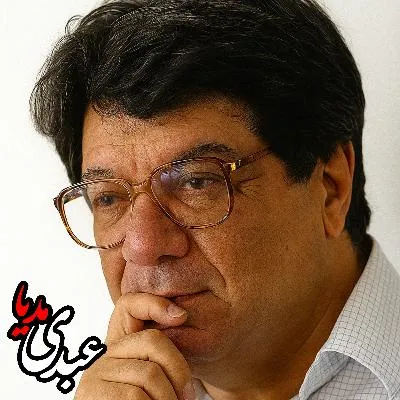
Dr. Mohammad Ilkhani, a philosopher, retired professor of the Department of Philosophy at Shahid Beheshti University, and one of the few prominent specialists in medieval philosophy in contemporary Iran, is regarded as one of the most frequently cited and pioneering figures of the second generation of Iranian academic philosophers.
With an exceptional academic background from leading Belgian universities—an M.A. from the Catholic University of Leuven and a Ph.D. in philosophy from the Université libre de Bruxelles—and as the author of the standard reference work A History of Philosophy in the Middle Ages and the Renaissance (published by SAMT), the principal textbook for university courses on the subject in Iran, he has become one of the key architects of the discourse on medieval philosophy in the Persian-speaking world.
In addition, through the publication of specialized works in French and Latin—including La Philosophie de la création chez Achard de Saint Victor and De unitate et pluralitate, published at the University of Dallas—as well as influential comparative articles such as “The Subject of Metaphysics: Aristotle, Avicenna, and Thomas Aquinas,” Ilkhani has become one of the most frequently cited voices bridging the Western and Eastern philosophical traditions.
In one of his notable statements, Ilkhani declared: “We should not look at issues through Western glasses… Avicenna is a theorist-philosopher in the Islamic world.”
Who Is Mohammad Ilkhani?
Dr. Mohammad Ilkhani (born in 1959 in Tehran) is a philosopher, retired professor of the Department of Philosophy at Shahid Beheshti University, one of the few prominent specialists in medieval philosophy in contemporary Iran, and a faculty member of the Higher School and University of Shahid Motahari. He is regarded as one of the most frequently cited and, at the same time, pioneering figures of the second generation of Iranian academic philosophers working in the fields of Greek philosophy, medieval philosophy, Islamic philosophy, Christian theology, and the philosophy of religion.
Ilkhani’s distinctive academic path began with Persian literature at the Higher School of Literature, followed by a transition to philosophy and a move to Belgium for advanced study. He earned two master’s degrees: one in medieval studies, with a specialization in philosophy and Christian theology, from the prestigious Catholic University of Leuven (Université catholique de Louvain), one of the leading centers of medieval studies in the Western world; and another in the philosophy of religion from the Université libre de Bruxelles. He subsequently received a Ph.D. in philosophy, specializing in medieval philosophy, from the Université libre de Bruxelles.
After returning to Iran, he joined the Department of Philosophy at Shahid Beheshti University. His academic profile was further strengthened by the publication of the reference work A History of Philosophy in the Middle Ages and the Renaissance (SAMT, 2003), which is taught as the principal source for the university course “History of Philosophy from the Middle Ages to the Renaissance” in Iran and is considered one of the major Persian-language works on medieval philosophy.
Through a series of specialized works in Persian, French, and Latin—including the widely noted French book La Philosophie de la création chez Achard de Saint Victor (1999) and the Latin-English work De unitate et pluralitate, published at the University of Dallas—as well as through his continuing membership on the editorial boards of several prominent Persian-language philosophy journals, Ilkhani has become one of the most frequently cited figures in contemporary Persian-language philosophy and an important bridge between Western medieval philosophy and the Islamic philosophical tradition.
Ilkhani, whose philosophical position is characterized by a critique of Western-centered approaches to Iranian philosophy and by a defense of the intellectual independence of Avicenna and other Islamic thinkers, has stated:
“We should not look at issues through Western glasses or judge Avicenna and our other thinkers by Western standards… We must pay more attention than ever to our own epistemic principles and concerns; it is from within these traditions of knowledge that we can arrive at new questions.”
He has also declared:
“I do not believe that Avicenna was merely a transmitter of Greek philosophy in the Islamic world or simply a vehicle for transferring it to the medieval West. Certainly, like the great philosophers of both East and West, Avicenna was a theorist-philosopher in the Islamic world.”
This position challenges the view that Avicenna was merely a narrator of Greek philosophy or a transmitter of Greek thought to the medieval West.
Why Mohammad Ilkhani Matters
The importance of Mohammad Ilkhani in Iran’s contemporary intellectual and academic landscape can be examined from several perspectives.
First is his pioneering role in establishing and developing the study of medieval philosophy in Iran, a contribution reflected in his reference book A History of Philosophy in the Middle Ages and the Renaissance, one of the most prominent Persian-language works in the field.
Second is his unusual academic background in Belgium. He pursued specialized studies in medieval philosophy and Christian theology at two influential European universities—the Catholic University of Leuven and the Université libre de Bruxelles—a background that places him among the relatively few Persian-language specialists with such training.
Third is his particular expertise in important medieval figures, especially Boethius, discussed in his book The Metaphysics of Boethius, and Achard of Saint Victor, examined in his French and Latin works.
Fourth is his ability to connect different intellectual traditions, including Greek philosophy, Christian theology, Islamic philosophy, and Western medieval philosophy. This comparative capacity forms the foundation of his distinctive scholarly approach.
Fifth is his sustained contribution to the critique of Western-centered interpretations of Iranian philosophy, particularly in his discussions of Avicenna and the Islamic philosophical tradition.
Life and Background
Mohammad Ilkhani was born in 1959 in Tehran, the capital of Iran. Born in the middle of the 1950s in the Iranian calendar, he belongs to a generation that came of age during the 1979 Islamic Revolution and the Iran-Iraq War, and that began its major academic activities in the postwar intellectual and institutional environment.
Detailed information about his family and school years is limited in publicly available media sources. However, his Tehran background and distinctive educational path point to a strong cultural and academic foundation.
Education
Ilkhani’s educational trajectory is one of the most distinctive and multidimensional among contemporary Iranian philosophers: it began in Persian literature and later developed into specialized research in medieval philosophy in Belgium.
Degree in Persian Literature
At the beginning of his academic career, Ilkhani studied Persian literature at the Higher School of Literature. This initial training gave him a strong foundation in the Persian language and in Iran’s intellectual and literary heritage.
Master’s Degree from the Catholic University of Leuven
After moving to Europe, Ilkhani earned a master’s degree in medieval studies, specializing in philosophy and Christian theology, from the Catholic University of Leuven in Belgium. The university is regarded as one of the world’s important centers for medieval studies and a major institution for research in medieval philosophy and Christian theology.
This training formed the basis of his expertise in the intellectual traditions of the Western Middle Ages.
Master’s Degree in the Philosophy of Religion
Ilkhani also earned a second master’s degree in the philosophy of religion from the Université libre de Bruxelles, one of Belgium’s leading secular universities. This degree established the foundation of his specialization in the philosophy of religion.
Ph.D. in Medieval Philosophy
The central stage of Ilkhani’s advanced education was his Ph.D. in philosophy, with a concentration in medieval philosophy, from the Université libre de Bruxelles. This specialized doctoral training provided the foundation for his international academic profile.
Academic Career at Shahid Beheshti University
After returning to Iran, Ilkhani joined the faculty of the Department of Philosophy at Shahid Beheshti University, one of Iran’s leading universities. He eventually attained the rank of professor and retired from the department as a professor emeritus.
Teaching at Shahid Motahari University
Ilkhani has also been a member of the faculty of the Higher School and University of Shahid Motahari, an institution known for education in philosophy and Islamic theology. His association with the university reflects his ability to connect Western academic traditions with Islamic and seminary-based philosophical education.
Major Works
Among Mohammad Ilkhani’s most important works are the following:
A History of Philosophy in the Middle Ages and the Renaissance
Ilkhani’s best-known work is A History of Philosophy in the Middle Ages and the Renaissance, published by SAMT in 2003. It was prepared as the principal textbook for the four-credit undergraduate course “History of Philosophy from the Middle Ages to the Renaissance” in Iranian universities.
The book covers a broad range of subjects, including:
Jewish-Christian thought
The Church Fathers, including the Greek Fathers, the Apostolic Fathers, Gnosticism, the Greek Apologists, the School of Alexandria, the Cappadocian Fathers, and Pseudo-Dionysius
The Latin world, including the Latin Apologists and Saint Augustine
Platonic philosophies in the fifth and sixth centuries, including Calcidius and Boethius
The formation of the medieval intellectual world, including the Carolingian Renaissance and Johannes Scotus Eriugena
The tenth and eleventh centuries, including Saint Anselm
The twelfth century, including William of Champeaux, Peter Abelard, the School of Chartres, the School of Saint Victor, Hugh of Saint Victor, Achard, Richard of Saint Victor, and Peter Lombard
The transmission of philosophy and science from the Islamic world to the West, including Avicenna’s reception in the medieval period
The thirteenth century, including universities, the mendicant orders, the Franciscans, and Thomas Aquinas
The Renaissance and the transition to modern philosophy
The book is particularly useful for students seeking a clear account of the development of premodern Western thought, researchers in theology interested in the historical relationship between faith and reason in the Latin tradition, and readers interested in the role of the Islamic philosophical and scientific heritage in the transformation of European intellectual history.
The Metaphysics of Boethius
Another important work by Ilkhani is The Metaphysics of Boethius: A Study in Christian Philosophy and Theology, published by Elham Publications in 2001.
The book is among the relatively few Persian-language works devoted to Boethius, a major figure at the intersection of Greek, Roman, and medieval cultures. It is organized into nine chapters and examines subjects including:
Greek and Christian thought
Boethius and his works
The problem of being in Boethius’s thought
Boethius’s theology
The Trinity, Saint Augustine, and the Aristotelian category of relation
Other aspects of Boethius’s philosophical and theological thought
La Philosophie de la création chez Achard de Saint Victor
Ilkhani published the French book La Philosophie de la création chez Achard de Saint Victor—The Philosophy of Creation in Achard of Saint Victor—in Paris in 1999 through Brielle’s publishing house.
The book examines the philosophy of creation in the thought of Achard of Saint Victor, one of the important thinkers associated with the School of Saint Victor in the twelfth century. It is considered one of Ilkhani’s principal international publications.
De unitate et pluralitate
Ilkhani also published De unitate et pluralitate—On Unity and Plurality—a Latin text by Achard accompanied by translation and commentary, at the University of Dallas in the United States.
The work represents another dimension of his international research, focusing on the translation and interpretation of a significant medieval philosophical text.
Collaborative Works
Among Ilkhani’s other contributions are:
“Islamic and Western Schools and Universities in the Middle Ages” (Institute for Humanities and Cultural Studies, 2000)
Unity, Duality, Trinity
New Theology, a collection of essays by various authors and translators
Selected Articles
His important research articles include:
“The Subject of Metaphysics: Aristotle, Avicenna, and Thomas Aquinas” (Shenakht, 2014), a comparative study of the subject of metaphysics in the thought of three major philosophers from the Greek, Islamic, and Western medieval traditions
“Symbolic Language from the Perspective of Paul Tillich” (Philosophical Research, 2009), on the twentieth-century theologian Paul Tillich
“Thomas Aquinas and Philosophy” (Wisdom and Philosophy, 2009)
Numerous articles on Avicenna, Achard of Saint Victor, Boethius, Saint Anselm, Saint Augustine, Thomas Aquinas, and other important figures
Editorial Activities
A significant part of Ilkhani’s academic career has involved editorial work. He has served on the editorial boards of several prominent Persian-language philosophy journals, including:
Philosophical Reflections
Avicennan Wisdom (Mashkat al-Nur)
Being and Knowledge
Knowledge
These positions have formed an important part of his institutional and editorial contribution to Persian-language academic philosophy.
Intellectual Framework
Throughout his academic career, Mohammad Ilkhani has developed a distinctive intellectual framework.
Critique of Western-Centered Approaches
The central feature of Ilkhani’s philosophical position is his criticism of Western-centered approaches to Iranian and Islamic philosophy. In his view:
“We should not look at issues through Western glasses or judge Avicenna and our other thinkers by Western standards.”
Defense of Avicenna’s Intellectual Independence
A defining element of his approach is his defense of Avicenna’s intellectual independence. Ilkhani argues that Avicenna should not be understood merely as a transmitter of Greek philosophy. Rather, he should be regarded as an original theorist within the Islamic world.
A Return to Iranian-Islamic Intellectual Traditions
Ilkhani emphasizes the importance of returning to the epistemic foundations of the Persian-Islamic intellectual tradition:
“We must pay more attention than before to our own questions and epistemic principles; it is from within these traditions that we can arrive at new questions.”
A Comparative Approach
Another defining characteristic of Ilkhani’s scholarship is its comparative orientation. In works such as “The Subject of Metaphysics: Aristotle, Avicenna, and Thomas Aquinas,” he brings Greek, Islamic, and Western medieval philosophical traditions into dialogue.
Specialization in the Church Fathers and Western Medieval Philosophy
Ilkhani’s research also focuses on the Church Fathers, Western medieval philosophy, and Christian theology—fields that remain relatively uncommon among Persian-language philosophers and that make him one of the few specialists in these areas in Iran.
Suggested Lecture
Listen | Myth and Philosophy | Dr. Mohammad Ilkhani | Presented at the “Metaphilosophy” Conference

Research Areas
Mohammad Ilkhani’s main research areas include:
Greek philosophy, particularly Plato and Aristotle
Western medieval philosophy, with a focus on Boethius, Saint Augustine, Achard of Saint Victor, Saint Anselm, and Thomas Aquinas
Islamic philosophy, particularly Avicenna
Christian theology, especially the Trinity, theology proper, and creation
The philosophy of religion, particularly Paul Tillich
Mysticism and its relationship to philosophy
Islamic and Western schools and universities in the Middle Ages, approached comparatively
Connections with Individuals and Intellectual Currents
Mohammad Ilkhani has been situated within a network of academic relationships involving prominent figures and institutions in medieval philosophy and the philosophy of religion, both in the Persian-speaking world and internationally.
Shahid Beheshti University
Ilkhani’s principal institutional affiliation has been with the Department of Philosophy at Shahid Beheshti University, as well as with other prominent members of the department, particularly senior figures among contemporary Persian-language philosophers.
Shahid Motahari University
At another institutional level, Ilkhani’s association with the Higher School and University of Shahid Motahari—an important institution for the study of philosophy and Islamic theology—has formed another component of his academic network.
Ali-Asghar Mohammadkhani
In the journalistic and academic sphere, Ilkhani’s relationship with Ali-Asghar Mohammadkhani—an influential figure at the Tehran Book City Institute and a prominent promoter of literary and philosophical culture in Persian—has been noteworthy. Mohammadkhani is among the significant interviewers who have spoken with Ilkhani.
Belgian Universities
At the international level, Ilkhani’s academic background is connected with the Catholic University of Leuven (Université catholique de Louvain) and the Université libre de Bruxelles, the two major European universities where he pursued his specialized studies.
The London Academy of Iranian Studies
Within the Iranian diaspora’s intellectual institutions, Ilkhani has been associated with the London Academy of Iranian Studies (LAIS), which published the notable interview with him titled “Avicenna Is a Theorist-Philosopher in the Islamic World.”
Major Figures of Western Medieval Philosophy
At the intellectual and specialist level, Ilkhani’s work is connected with major figures of Western medieval philosophy—from Boethius, Saint Augustine, Saint Anselm, and Achard of Saint Victor to Thomas Aquinas. These connections are reflected in his research and translated works and constitute an important part of his intellectual heritage.
Conclusion
Mohammad Ilkhani is one of the prominent and pioneering figures of the second generation of Iranian academic philosophers working in medieval philosophy, Islamic philosophy, Christian theology, and the philosophy of religion.
His distinctive profile combines:
An unusual educational path, beginning with a degree in Persian literature from the Higher School of Literature
A master’s degree in medieval studies from the Catholic University of Leuven in Belgium
A second master’s degree in the philosophy of religion from the Université libre de Bruxelles
A Ph.D. in philosophy, specializing in medieval philosophy, from the Université libre de Bruxelles
Approximately three decades of academic activity as a faculty member of the Department of Philosophy at Shahid Beheshti University, followed by retirement as a professor
The publication of A History of Philosophy in the Middle Ages and the Renaissance by SAMT, used as a principal university source in this field in Iran
The publication of specialized works in Persian, French, and Latin, including The Metaphysics of Boethius, the French book La Philosophie de la création chez Achard de Saint Victor—published in Paris in 1999—and the Latin-English work De unitate et pluralitate, published at the University of Dallas
Membership on the editorial boards of several Persian-language philosophy journals, including Philosophical Reflections, Avicennan Wisdom, Being and Knowledge, and Knowledge
Specialized research on major figures of Western medieval philosophy, particularly Boethius and Achard of Saint Victor
An ability to connect different intellectual traditions, including Greek philosophy, Christian theology, Islamic philosophy, and Western medieval philosophy
A sustained role in criticizing Western-centered approaches to Iranian-Islamic philosophy and defending Avicenna’s intellectual independence
Ilkhani’s distinctive contribution can first be seen in his pioneering role in establishing and developing the study of medieval philosophy in Iran. This role is reflected in his reference book A History of Philosophy in the Middle Ages and the Renaissance, which has become one of the notable Persian-language works in the field.
Second, his academic training at leading Belgian universities places him among the relatively few Persian-language specialists in medieval philosophy with such an international educational background.
Third, his ability to connect Western medieval philosophy, Islamic philosophy, and Christian theology—an ability reflected in his comparative works—is a notable feature of his research framework.
From an analytical perspective, Ilkhani may be viewed as an example of the contemporary Iranian “philosopher-specialist in medieval philosophy, critic of Eurocentrism, and founder of an intellectual tradition.” This model describes an academic researcher who, drawing on an international scholarly background, contributes over several decades to research, publishing, editorial work, and intellectual discourse-building.
Among Persian-language philosophers, this pattern has other examples as well. In Ilkhani’s case, however, it is particularly visible in his specialization in medieval philosophy and his pioneering contribution to an independent rereading of Avicenna.
From today’s perspective, the subjects addressed in Ilkhani’s works and statements—including Western medieval philosophy, the Church Fathers, Boethius, Achard of Saint Victor, Thomas Aquinas, Christian theology, the philosophy of religion, criticism of Western-centered approaches, the defense of Avicenna’s intellectual independence, comparative philosophy, and the connections among Greek, Islamic, and Western medieval traditions—remain among the important topics in contemporary Persian-language philosophical discourse.
Frequently Asked Questions
Who is Mohammad Ilkhani?
Dr. Mohammad Ilkhani, born in 1959 in Tehran, is a philosopher, retired professor of the Department of Philosophy at Shahid Beheshti University, one of the few prominent specialists in medieval philosophy in contemporary Iran, and a professor at the Higher School and University of Shahid Motahari. His research focuses primarily on Greek philosophy, medieval philosophy, Islamic philosophy, Christian theology, and the philosophy of religion.
What did Mohammad Ilkhani study?
Ilkhani followed a distinctive academic path. He earned a degree in Persian literature from the Higher School of Literature; a master’s degree in medieval studies, specializing in philosophy and Christian theology, from the Catholic University of Leuven in Belgium; a second master’s degree in the philosophy of religion from the Université libre de Bruxelles; and a Ph.D. in philosophy, specializing in medieval philosophy, from the Université libre de Bruxelles.
What is Mohammad Ilkhani’s most important book?
Ilkhani’s best-known book is A History of Philosophy in the Middle Ages and the Renaissance, published by SAMT. It is used as a principal source for the university course “History of Philosophy from the Middle Ages to the Renaissance” in Iran and is considered one of the important Persian-language works on medieval philosophy.
What are his other major works?
His other important works include:
The Metaphysics of Boethius: A Study in Christian Philosophy and Theology (Elham Publications, 2001)
La Philosophie de la création chez Achard de Saint Victor (Brielle’s, Paris, 1999)
De unitate et pluralitate, a Latin text by Achard accompanied by translation and commentary, published at the University of Dallas
Collaborative works such as Islamic and Western Schools and Universities in the Middle Ages (Institute for Humanities and Cultural Studies, 2000)
What are Ilkhani’s research interests?
His principal research interests include Greek philosophy; Western medieval philosophy, particularly Boethius, Saint Augustine, Achard of Saint Victor, Saint Anselm, and Thomas Aquinas; Islamic philosophy, especially Avicenna; Christian theology, particularly the Trinity and theology proper; and the philosophy of religion, especially Paul Tillich.
What is Ilkhani’s view of Avicenna?
In one of his notable statements, Ilkhani said:
“Avicenna is a theorist-philosopher in the Islamic world.”
He has also stated:
“I do not believe that Avicenna was merely a transmitter of Greek philosophy in the Islamic world or simply a vehicle for transferring it to the medieval West.”
What is Ilkhani’s view of Western-centered approaches to Iranian philosophy?
Ilkhani has argued:
“We should not look at issues through Western glasses or judge Avicenna and our other thinkers by Western standards. We must pay more attention than before to our own epistemic principles and concerns; it is from within these traditions that we can arrive at new questions.”
What has been Ilkhani’s role in philosophy journals?
Ilkhani has served on the editorial boards of several Persian-language philosophy journals, including:
Philosophical Reflections
Avicennan Wisdom
Being and Knowledge
Knowledge
What is Ilkhani’s specialization regarding Achard of Saint Victor?
Ilkhani is presented as a major specialist on Achard of Saint Victor, one of the thinkers associated with the School of Saint Victor in the twelfth century. His French book La Philosophie de la création chez Achard de Saint Victor (Paris, 1999) and the Latin-English work De unitate et pluralitate, published at the University of Dallas, are among his principal international works on this thinker.
What are Ilkhani’s notable articles?
His notable articles include:
“The Subject of Metaphysics: Aristotle, Avicenna, and Thomas Aquinas” (Shenakht, 2014)
“Symbolic Language from the Perspective of Paul Tillich” (Philosophical Research, 2009)
“Thomas Aquinas and Philosophy” (Wisdom and Philosophy, 2009)
Is Mohammad Ilkhani still active?
According to the information presented here, Mohammad Ilkhani remains active in academic and publishing circles as a retired professor of the Department of Philosophy at Shahid Beheshti University and as a specialist in medieval philosophy.
His continued involvement with the editorial boards of Persian-language philosophy journals, teaching at the Higher School and University of Shahid Motahari, publication of specialized articles, and participation in philosophical forums—including events associated with the London Academy of Iranian Studies—are described as signs of his continuing activity. His views on medieval philosophy, Avicenna’s intellectual independence, criticism of Western-centered approaches to Iranian-Islamic philosophy, and comparative philosophy continue to receive attention in Persian-language academic and media discussions.

Take less than a minute, register and share your opinion under this post.
Insulting or inciting messages will be deleted.
Sign Up