
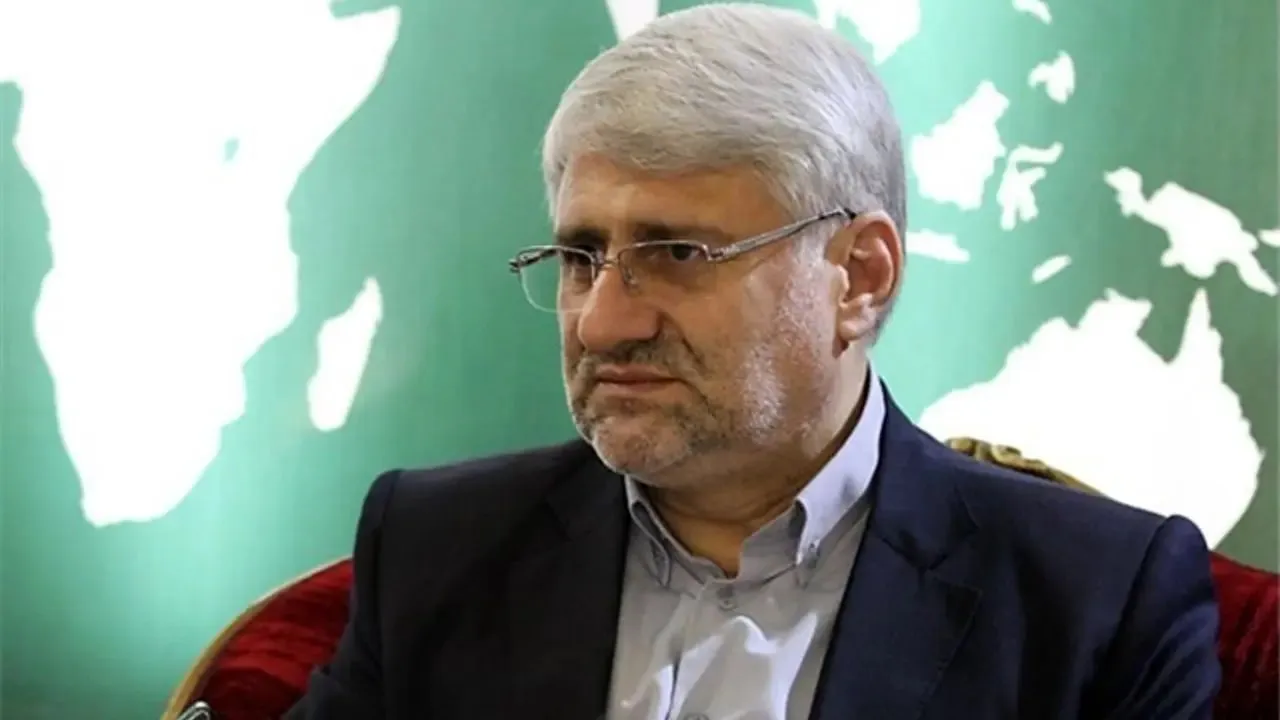
Dr. Mohammad Hossein Farhanghi is a politician, university professor, jurist, and a prominent, veteran figure of the Principlist faction in Iran. Born on October 23, 1961, in Tabriz, he is considered one of the longest-serving representatives of East Azerbaijan in the Islamic Consultative Assembly (Parliament). With five consecutive terms representing the people of Tabriz, Osku, and Azarshahr in the 7th, 8th, 9th, 10th, and 11th parliaments, Farhanghi is one of the few representatives who managed to maintain the trust of voters in the northwest of the country for nearly two decades, playing a sustained and influential role in the legislative structure of the Islamic Republic.
Who is Mohammad Hossein Farhanghi?Dr. Mohammad Hossein Farhanghi is a politician, university professor, jurist, and a prominent, veteran figure of the Principlist faction in Iran. Born on October 23, 1961, in Tabriz, he is considered one of the longest-serving representatives of East Azerbaijan in the Islamic Consultative Assembly (Parliament). With five consecutive terms representing the people of Tabriz, Osku, and Azarshahr in the 7th, 8th, 9th, 10th, and 11th parliaments, Farhanghi is one of the few representatives who managed to maintain the trust of voters in the northwest of the country for nearly two decades, playing a sustained and influential role in the legislative structure of the Islamic Republic.
The importance of Mohammad Hossein Farhanghi in Iran's parliamentary and political arena can be examined from several perspectives. First, his five-term continuity in parliament and his membership in the parliamentary presidium for four terms (8th, 9th, 10th, and 11th)—including roles in oversight, as a trustee, and as the spokesperson of the presidium—have made him one of the most experienced administrative figures in the parliament's structure. Second, his military-Basij background during and after the Holy Defense era—including serving as the chief of staff of the Ashoura Division, commander of the East Azerbaijan Basij Resistance Zone, deputy commander of the Ashoura Corps, and national commander of the Student Basij—places him among the figures closely aligned with revolutionary military institutions. Third, his deep academic expertise in law and jurisprudence, holding a PhD in Islamic Jurisprudence and Principles of Islamic Law along with a long teaching career at the Islamic Azad University, has turned him into one of the parliament's key representatives backed by a solid academic legal foundation.
Throughout his career, Farhanghi has also played roles in key political events; from serving as the spokesperson for Ali Larijani's presidential campaign in 2005, to heading the Caucus of East Azerbaijan Representatives and serving as the presidium spokesperson for the 11th parliament. In the political landscape of East Azerbaijan province and within the parliament, he is regarded as an influential and seasoned figure.
Life and Background
Mohammad Hossein Farhanghi was born on October 23, 1961, in Tabriz—the capital of East Azerbaijan province and one of Iran's most important metropolises. Tabriz, with its rich historical and cultural heritage as one of the intellectual and political capitals of contemporary Iran, has been one of the vital centers for revolutionary movements both before and after the Islamic Revolution.
Farhanghi completed his primary and middle school education in Tabriz and attended Ayatollah Taleghani High School—a well-known high school in Tabriz that was named after Ayatollah Seyyed Mahmoud Taleghani (a prominent revolutionary cleric) following the revolution. This educational environment played a role in shaping Farhanghi’s early intellectual and religious leanings.
Farhanghi's adolescence coincided with the events leading up to the 1977–1979 Revolution. During those years, Tabriz was one of the main epicenters of revolutionary movements in northwestern Iran, and the city's highly charged political atmosphere left a lasting impact on the youth who witnessed and participated in these transformations.
Education
Mohammad Hossein Farhanghi is considered one of the most highly educated representatives of the Islamic Consultative Assembly, boasting a unique academic record in the fields of theology, law, and management. He holds several university degrees:
Bachelor's Degree in Theology: This formed the foundation for his subsequent studies in Islamic jurisprudence and law.
Master's Degree in Jurisprudence and Principles of Law: This made him one of the prominent experts in the field of Islamic jurisprudence and law among parliamentarians.
Master's Degree in Public Administration: Alongside his legal expertise, this degree enhanced his capacity to take on managerial and executive roles.
PhD in Islamic Jurisprudence and Principles of Islamic Law: This qualification placed him among university faculty members. This field is one of the primary branches of theology and Islamic studies, focusing on the jurisprudential foundations of the Iranian legal system through teaching and research.
This diverse educational combination turned Farhanghi into one of the few representatives who possesses a rock-solid academic background both in drafting legislation (particularly in judicial and legal domains) and in overseeing its implementation.
Activities in the Holy Defense Era and the Basij Institution
One of the prominent, yet lesser-known facets of Farhanghi's life is his military-Basij background during the Iran-Iraq War (Holy Defense) and the subsequent years. This background places him among the figures who have been active in both the military-revolutionary arena and the parliamentary-academic sphere.
During the Holy Defense, Farhanghi served as the chief of staff of the Ashoura Division; a division that was one of the most important military units of the Islamic Revolutionary Guard Corps (IRGC) during the war, playing a vital role in various military operations, particularly along the country's northwestern fronts.
Following the end of the war, Farhanghi assumed numerous other responsibilities within the structure of the Basij institution:
Commander of the Basij Resistance Zone of East Azerbaijan Province: This put him at the helm of Basij activities in one of the country's most strategic provinces.
Deputy Commander of the Ashoura Corps: This serves as the provincial IRGC corps of East Azerbaijan, inheriting the legacy of the wartime Ashoura Division.
National Commander of the Student Basij: This is one of the most pivotal responsibilities of the Basij institution within the academic sphere. This position placed Farhanghi at the core of the relationship between the Basij institution and university environments.
This extensive military-Basij background turned Farhanghi into a well-known figure within revolutionary-military institutions and played a foundational role in shaping his network of connections within the power structure of the Islamic Republic.
Academic Activity
Parallel to his political and military activities, Farhanghi has also been active in academia. He previously served as the secretary of Region 2 of the Islamic Azad University and was a member of the academic board of the Department of Law. These positions integrated him into the administrative and academic structure of the Islamic Azad University—one of Iran's largest university systems.
In the field of teaching, Farhanghi is engaged in lecturing at the Master’s level in Law at the Islamic Azad University, Tehran Central Branch. Within the faculty of law at this branch, he teaches courses on the registration of deeds and properties, registration jurisprudence, and other specialized law courses at the postgraduate level. This specialization in the field of deeds and property registration is one of the relatively niche and less-explored areas within the Iranian legal education system.
Membership in the Islamic Consultative Assembly
The turning point and most extensive chapter of Farhanghi's career is his five-term presence in the Islamic Consultative Assembly. From 2004 to 2024, he continuously served as the representative of the people of Tabriz, Osku, and Azarshahr in parliament.
Terms of Representation:
7th Parliament (2004–2008): Farhanghi’s first term of representation, which occurred during the rise of the Principlist faction and amidst the 7th parliamentary elections (marked by Guardian Council restrictions on Reformist candidates).
8th Parliament (2008–2012): A period that coincided with the administration of Mahmoud Ahmadinejad and the challenges following the 2009 election.
9th Parliament (2012–2016): A period in which Farhanghi was one of the active representatives on the judicial and legal committees.
10th Parliament (2016–2020): A term where the parliament was formed with a Reformist-Moderate coalition, yet Farhanghi managed to retain his seat as one of the few Principlist representatives from Tabriz.
11th Parliament (2020–2024): A period when the parliament was formed with an overwhelming Principlist majority under the leadership of Mohammad Bagher Ghalibaf, during which Farhanghi secured a prominent position within the presidium.
Membership in Specialized Committees: Throughout his parliamentary terms, Farhanghi served as a member and, at times, vice-chairman of numerous committees, including:
Judicial and Legal Committee (Vice-Chairman and Member): A position aligned with his legal expertise.
Program and Budget Committee (Vice-Chairman and Member): One of the most critical parliamentary committees regarding oversight of the national budget and financial policies.
The Committees on Councils and Internal Affairs, Development, and Industries and Mines: Each covering vital areas of national policy-making.
Membership in the Parliamentary Presidium: One of the standout aspects of Farhanghi's parliamentary record is his continuous membership in the presidium of the Islamic Consultative Assembly across four terms (8th, 9th, 10th, and 11th). This position, which holds special significance within the structure of parliament, turned Farhanghi into a permanent administrative fixture of the house.
In the 11th parliament, Farhanghi was elected as a "presidium overseer" with 167 votes and was subsequently promoted to the position of "presidium spokesperson"; a role that made him the official voice of the legislative branch's leadership and a primary liaison between the parliament and the media.
Championship of the East Azerbaijan Representatives Caucus: In August 2021, Farhanghi was elected as the head of the East Azerbaijan Representatives Caucus by a consensus of the majority of the province's representatives. This position made him the coordinating spokesperson for the stances of the province's lawmakers in parliament, playing an active role in pursuing regional issues—including matters related to the distribution of COVID-19 vaccines, the selection of the East Azerbaijan governor, and the province's development projects.
Campaign Spokesperson for Ali Larijani in 2005
One of the notable dimensions of Farhanghi's political career was his role in the 9th presidential election in 2005. In this election, Farhanghi served as the official spokesperson for the campaign of Ali Larijani (then-head of the Islamic Republic of Iran Broadcasting and a candidate for the Principlist faction).
This election, which ultimately led to the presidency of Mahmoud Ahmadinejad in the runoff round, is considered one of the landmark elections in contemporary Iranian history. In this race, Larijani, as one of the mainstream Principlist candidates, exited the competition with relatively weak results, while Ahmadinejad unexpectedly advanced to the second round. Farhanghi's presence as Larijani's campaign spokesperson during that period forged a close bond between him and Larijani—who in subsequent years became the speaker of the 8th and 9th parliaments and later a member of the Expediency Discernment Council.
Views and Stances
Throughout his long career, Mohammad Hossein Farhanghi has aligned with the Principlist camp and the "Forces of the Revolution" movement. Within internal factional dynamics, he was recognized as part of the moderate Principlist wing close to Ali Larijani. In recent years, he also served as a member of the central council of the Forces of the Revolution faction in parliament.
Among Farhanghi's prominent stances and emphases in recent years, the following can be noted:
Criticism of the Rouhani Administration: During the 11th parliament, Farhanghi was a serious critic of Hassan Rouhani's government. In one of his stances, he declared that the Reformist movement had backed Rouhani's government with their ideas, which "effectively gridlocked the country from various angles," and that they must be held accountable.
A Measured Approach to Cyberspace: In debates related to legislative bills in the field of cyberspace, Farhanghi took a relatively cautious stance, stating that "we already have laws in the domain of cyberspace, and decisions regarding cyberspace should not be made in a rushed manner."
Oversight of the Government and Yellow Cards to Ministers: During the 10th parliament, Farhanghi played an active role in monitoring the performance of Rouhani's ministers. In one instance, his questioning of Mohammad Shariatmadari (Minister of Cooperation, Labor, and Social Welfare) failed to convince lawmakers, resulting in a "yellow card" warning for the minister.
Criticism of Central Bank Policies: In economic spheres, Farhanghi criticized certain policies of the Central Bank. In the case of the Noor Credit Institution, while acknowledging the institution's license, he voiced criticisms against the "double-standard policies" of the Central Bank.
Pursuit of Provincial Issues: As the head of the East Azerbaijan Representatives Caucus, Farhanghi actively monitored issues tied to his home province; for instance, he protested and criticized the lower volume of vaccines delivered to East Azerbaijan compared to other provinces.
Relations with Figures and Factions
Throughout his years of activity, Mohammad Hossein Farhanghi has been connected to a network of Principlist figures and revolutionary institutions. At the core of this network lies his relationship with Ali Larijani (Speaker of the 8th and 9th parliaments, member of the Expediency Discernment Council); a bond that took root during his time as Larijani's campaign spokesperson in 2005.
During the 11th parliament, Farhanghi collaborated closely with Mohammad Bagher Ghalibaf (Speaker of the 11th and 12th parliaments), serving as a spokesperson and overseer within the presidium led by Ghalibaf.
Within revolutionary institutions, Farhanghi's relationship with the IRGC (particularly the Ashoura Corps of East Azerbaijan) and the Basij institution has been one of his most enduring relational networks. Among provincial lawmakers, his ties with other East Azerbaijan representatives—including Ahmad Alireza Beigi, Mohammad Reza Tajeddini, and other elected figures from Tabriz—form part of this regional network.
An interesting point to note is that during the 11th parliamentary elections in the Tabriz constituency, Masoud Pezeshkian (who later became the President of Iran in 2024) was also an elected representative from that very same constituency. Consequently, the names of Pezeshkian and Farhanghi stood side-by-side on the list of elected officials for that district. This shared parliamentary tenure, at least at the constituency level, remains one of the notable facets of the political narrative surrounding Tabriz during that era.
Dr. Mohammad Hossein Farhanghi is one of the most veteran and stable representatives of the Principlist faction in the Islamic Consultative Assembly, occupying a distinct position through a unique combination of a military-Basij background, extensive legal-jurisprudential education, academic expertise, and a five-term tenure in parliament. His career—spanning activities in the chief of staff of the Ashoura Division during the Holy Defense, serving as the national commander of the Student Basij, lecturing at the Azad University, five terms of parliamentary representation, four terms as a member of the presidium, acting as the campaign spokesperson for Larijani in 2005, heading the East Azerbaijan Representatives Caucus, and serving as the presidium spokesperson for the 11th parliament—presents a portrait of a "Principlist representative-technocrat" who has been at the core of parliamentary, revolutionary, and academic activities for two decades.
At the primary level, Farhanghi’s distinguishing feature is the continuity and stability of his presence in parliament and his ability to rally the voters of Tabriz across five consecutive elections; a phenomenon that is quite rare in the competitive electoral atmosphere of Tabriz, which has witnessed intense rivalries between Principlists and Reformists over various periods. At the secondary level, his academic legal background, coupled with his military-Basij past, has provided him with a blend that makes him one of the few representatives with deep legal-jurisprudential expertise in the legislative framework.
From an analytical perspective, Farhanghi’s career path exemplifies the trajectory of a generation of revolutionary-Basij activists who transitioned from the trenches of the frontlines to parliamentary benches, pursuing higher education alongside their political endeavors, and playing a sustained role in the legislative structure of the Islamic Republic over decades. This trajectory, which is relatively common among the wartime generation of Basij members, has found a successful and unbroken model in Farhanghi.
What remains clear from today's viewpoint is that Farhanghi, regardless of agreement or disagreement with his positions, has turned into one of the prominent figures of the second generation of Principlists in the Iranian parliament. His views—particularly in the areas of government oversight, legal-judicial matters, and the pursuit of East Azerbaijan's provincial issues—continue to be a part of Iran's political-legislative discourse.
Frequently Asked Questions
In what year and where was Mohammad Hossein Farhanghi born?
Mohammad Hossein Farhanghi was born on October 23, 1961, in Tabriz—the capital of East Azerbaijan province. He completed his high school education at Ayatollah Taleghani High School in Tabriz.
What is Mohammad Hossein Farhanghi's educational background?
Farhanghi holds a Bachelor's degree in Theology, a Master's degree in Jurisprudence and Principles of Law, a Master's degree in Public Administration, and a PhD in Islamic Jurisprudence and Principles of Islamic Law (a branch of Theology and Islamic Studies). This academic combination makes him one of the most highly educated representatives in the history of the parliament.
Which terms of parliament did Mohammad Hossein Farhanghi serve as a representative?
Farhanghi was the representative of the people of Tabriz, Osku, and Azarshahr in the Islamic Consultative Assembly for five consecutive terms, from the 7th to the 11th parliament (2004 to 2024). He served as a member of the parliamentary presidium during the 8th, 9th, 10th, and 11th terms.
What was Mohammad Hossein Farhanghi's role during the Holy Defense?
During the Iran-Iraq War, Farhanghi was the chief of staff of the Ashoura Division, which was one of the most vital military units of the IRGC. Following the war, he assumed multiple responsibilities within the Basij structure, including: Commander of the Basij Resistance Zone of East Azerbaijan Province, Deputy Commander of the Ashoura Corps, and National Commander of the Student Basij.
What was Mohammad Hossein Farhanghi's role in the 11th Parliament?
In the 11th parliament (2020–2024), Farhanghi was initially elected as a "presidium overseer" with 167 votes and was subsequently elevated to the position of "presidium spokesperson." Additionally, in August 2021, he was chosen as the head of the East Azerbaijan Representatives Caucus by a consensus of the province's lawmakers.
What role did Mohammad Hossein Farhanghi play in the 2005 election?
In the 9th presidential election (2005), Farhanghi served as the official spokesperson for the campaign of Ali Larijani, the mainstream candidate of the Principlist faction. This experience marked the beginning of a lasting political relationship between Farhanghi and Ali Larijani.
At which university does Mohammad Hossein Farhanghi teach?
Farhanghi teaches at the Master's level in the Department of Law at the Islamic Azad University, Tehran Central Branch, focusing specifically on the areas of deeds and property registration law, registration courses, and registration jurisprudence. He previously served as the secretary of Region 2 of the Islamic Azad University and was a member of the academic board of its Law Department.
To which political faction does Mohammad Hossein Farhanghi belong?
Farhanghi aligns with the Principlist camp, and within internal factional dynamics, he was recognized as part of the moderate Principlist wing close to Ali Larijani. He has also been a member of the central council of the Forces of the Revolution faction in parliament and was considered a serious critic of the policies of Hassan Rouhani's administration during its tenure.
Take less than a minute, register and share your opinion under this post.
Insulting or inciting messages will be deleted.
Sign Up