
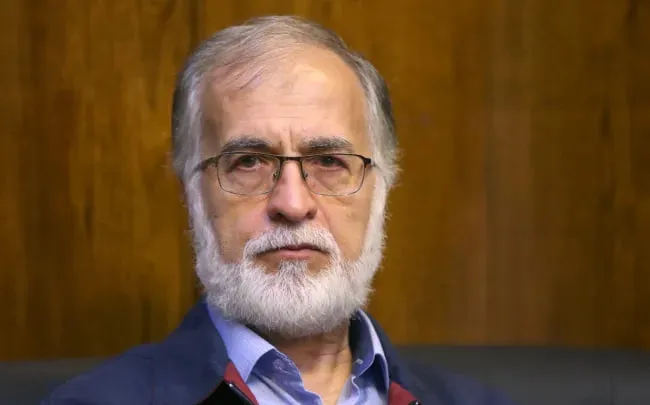
Mohammad Atrianfar, a journalist, politician, and prominent figure of the moderation current and the Executives of Construction Party, was born in 1332 (1953/54) in Isfahan. He is one of the most influential press managers and reformist political activists in Iran over the past three decades.
Who is Mohammad Atrianfar?
Mohammad Atrianfar, a journalist, politician, and prominent figure in the moderation movement and the Executives of Construction Party, born in 1332 (1953/54) in Isfahan, is one of the most influential press managers and reformist political activists in the past three decades of Iran. The name Atrianfar in contemporary Iranian political and media history is tied to several key chapters: founding and serving as editor-in-chief of the widely circulated Hamshahri newspaper, membership in the policy councils of major newspapers such as Shargh and Shahrvand-e Emrooz, membership in the first Tehran City Council, a central role in the Executives of Construction Party, and finally his controversial arrest and trial during the events following the 2009 presidential election.
The importance of Atrianfar in Iran’s political-media sphere can be examined from several perspectives. First, he was one of the main architects of the Hamshahri newspaper project; a newspaper that, with a new model of urban journalism and color printing, transformed Iran’s press industry in the 1990s. Second, Atrianfar, as one of the senior members and intellectual figures of the Executives of Construction Party—a centrist and technocratic party close to Akbar Hashemi Rafsanjani—played an important role in shaping the discourse of this movement. Third, his presence in the post-2009 election trials and his televised statements at that time remain one of the most controversial chapters of his career, still debated in analyses of that period.
In recent years, Atrianfar has continued to be active as an analyst and a figure within the moderate political current, and in Dey 1404 (based on published reports), he was appointed as a member of the Media Council of President Masoud Pezeshkian’s administration—an indication of his continued role in media and politics.
Life and Background
Mohammad Atrianfar was born in 1332 (1953/54) in Isfahan. His childhood, adolescence, and early education were spent in this city. Isfahan in the 1950s and 1960s was one of Iran’s major cultural, religious, and political centers, and this environment played a role in shaping his early intellectual and political orientations.
After obtaining his diploma in Isfahan, he moved to Tehran for higher education and entered Sharif University of Technology (formerly Aryamehr University) to study petroleum engineering (or, according to some sources, chemical engineering). His student years coincided with the peak of student political activism against the Pahlavi regime.
Pre-Revolution Activism
During his student years, Atrianfar became politically active. According to published accounts, between 1975 and 1979, he was arrested twice by SAVAK due to his connections with Majid Sharif-Vaqefi—a prominent figure of the People’s Mojahedin Organization of Iran who was killed during internal ideological conflicts and Marxist factional takeover within the organization. This activist background, along with his later participation in the investigation team of the assassination of Ayatollah Morteza Motahhari after the revolution, forms part of his revolutionary record.
Entry into the Islamic Republic Structure
After the 1979 Revolution, Atrianfar gradually entered the administrative and political structure of the Islamic Republic. According to reports, he was part of the investigative team for the assassination of Ayatollah Motahhari, a key intellectual figure of the revolution who was assassinated in May 1979.
Deputy Minister of Interior
A turning point in his executive career came in 1989. From 1989 to 1993, during the tenure of Abdollah Nouri at the Ministry of Interior, Atrianfar served as Deputy for Political and Social Affairs. This position was one of the most important executive posts in the country’s political-security structure and placed him at the center of political and social management during the Rafsanjani administration. This experience expanded his network with key figures of the Rafsanjani political camp and later founders of the Executives of Construction Party.
Journalism Era
The most prominent aspect of Atrianfar’s career is his extensive and influential work in journalism. He is considered one of the main architects of several major press projects in the past three decades.
Founding and Editing Hamshahri Newspaper
His most important journalistic achievement was his role in establishing and managing Hamshahri newspaper. Founded in December 1992 by the Tehran Municipality during the mayorship of Gholamhossein Karbaschi, Hamshahri introduced a new model of urban journalism with color printing, modern layout, and focus on citizens’ daily needs. It quickly became one of the most widely circulated newspapers in Iran’s history.
Atrianfar served as editor-in-chief of Hamshahri from February 1993 to July 2003. During this period, a generation of young journalists—such as Mohammad Quchani—developed within the Hamshahri newsroom, and innovative supplements such as Hamshahri Monthly were created. His long-term leadership made him one of the most experienced press managers in Iran.
Shargh and Shahrvand-e Emrooz
After Hamshahri, Atrianfar became head of the policy council of Shargh newspaper, founded in 2003, which became one of Iran’s most respected newspapers with an intellectual and professional approach. He played a strategic role alongside Mohammad Quchani (editor-in-chief) and others.
In 2006, after a period of suspension and reopening of Shargh, Atrianfar and Quchani left the newspaper. He also served as head of the policy council of the weekly Shahrvand-e Emrooz, published between 2006 and 2008 and considered one of the most important magazines of that period. He also managed media outlets affiliated with the Ministry of Oil for a period.
Membership in the First Tehran City Council
Atrianfar was a member of the first Islamic City Council of Tehran, formed after the 1999 local elections—one of the major achievements of the Reformist government.
The council, however, experienced internal conflicts in its final years, which eventually led to its dissolution before the end of its legal term following parliamentary intervention.
Role in the Executives of Construction Party
Atrianfar is a senior figure in the Executives of Construction Party of Iran. This party, founded in 1996 by members of Hashemi Rafsanjani’s government, is considered a centrist and technocratic political party.
He is a member of its central council and has played a key role in shaping its discourse. Within the party, he was considered one of the more liberal members and close to the positions of the Reformist Participation Front. He has publicly described Rafsanjani as the “patron” of the party, a characterization he did not reject.
Arrest and Trial After the 2009 Election
The most controversial chapter of Atrianfar’s political career relates to the events following the 2009 presidential election. He supported Mir-Hossein Mousavi during the election.
Following widespread protests after the announcement of results, he was arrested around June 2009 on charges of “acting against national security.”
Trial and Televised Statements
In the mass trial of post-election detainees in August 2009, Atrianfar appeared as one of the defendants. During this trial—which international human rights organizations described as a “show trial”—he made televised statements suggesting there had been no widespread electoral fraud.
These statements, made while in detention, were widely criticized as coerced confessions. He was released in November 2009 after posting bail of 500 million tomans (5 billion rials).
Recent Activities
After the post-2009 political tensions eased, Atrianfar gradually returned to political and media activities. During Hassan Rouhani’s presidency, he became an active commentator in the moderate political current.
In Dey 1404, he was reportedly appointed as a member of the Media Council of President Masoud Pezeshkian’s administration, reflecting his continued influence in media and politics.
Views and Positions
Atrianfar supports the discourse of moderation, development, rational governance, and engagement with the world. He defends political participation and has consistently emphasized electoral engagement as a means of reform.
He is also closely associated with the political legacy of Akbar Hashemi Rafsanjani and views him as a central figure in the formation of Iran’s centrist political current.
Controversies and Criticism
The main controversy in his career remains his televised statements during the 2009 trials, widely criticized as coerced confessions. Human rights groups and parts of the reformist camp rejected their legitimacy, while state-aligned media presented them as valid admissions.
Relations with Figures and Networks
Atrianfar has been connected to a wide network of political and media figures:
- The Rafsanjani circle and Executives of Construction Party founders such as Gholamhossein Karbaschi, Ataollah Mohajerani, and Isa Kalantari
- Long-term media collaboration with Mohammad Quchani
- Institutional roles under Abdollah Nouri in the Ministry of Interior
- Recent cooperation with Masoud Pezeshkian’s media council alongside figures such as Mashallah Shamsolvaezin
Conclusion
Mohammad Atrianfar is a distinct figure at the intersection of journalism and politics in contemporary Iran. His career—from student activism before the revolution, to government roles, major press leadership, city council membership, political party leadership, and involvement in post-2009 trials—illustrates the trajectory of a journalist-politician deeply embedded in Iran’s political-media transformations over four decades.
His most notable contribution lies in modernizing Iranian journalism through Hamshahri, while his long-standing role in the Executives of Construction Party has made him a consistent figure in Iran’s centrist political current.
From an analytical perspective, his career reflects the complex path of a generation that moved from revolutionary activism to state governance, reformist media leadership, political crises, and continued participation in moderating political structures.
Take less than a minute, register and share your opinion under this post.
Insulting or inciting messages will be deleted.
Sign Up