
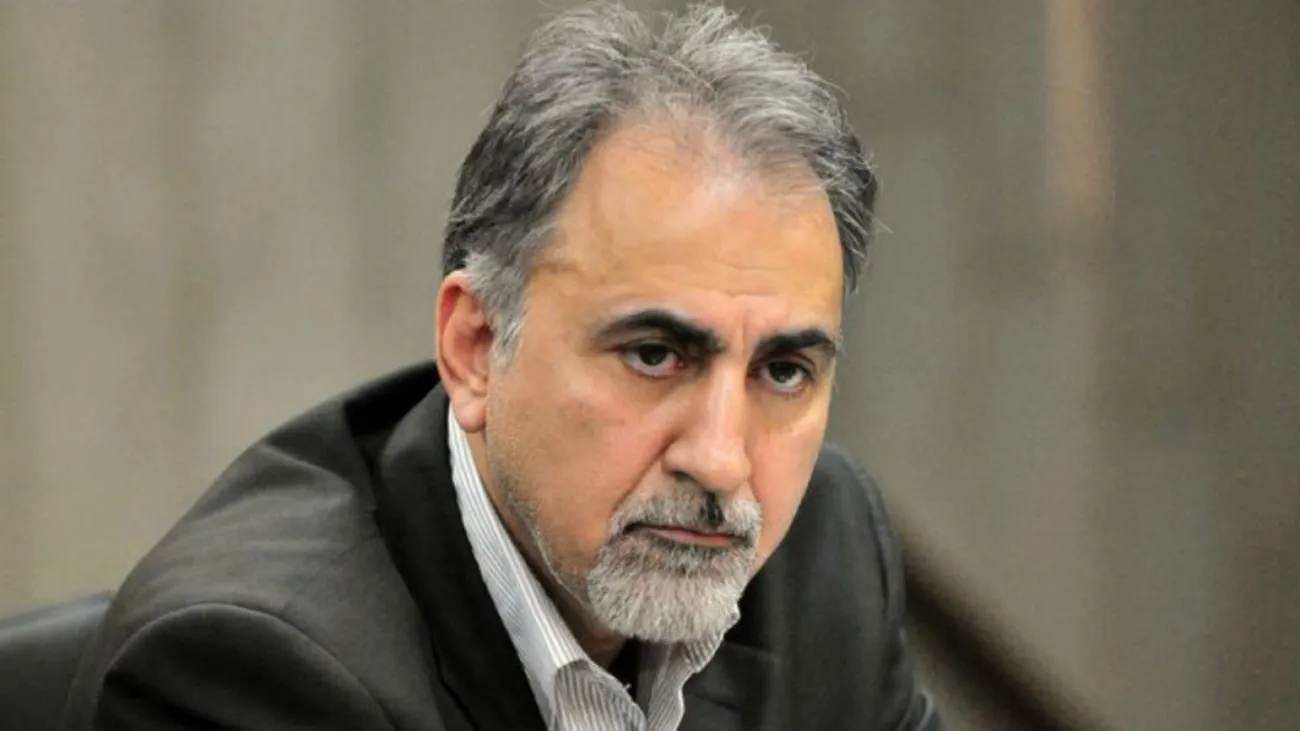
Dr. Mohammad-Ali Najafi—a mathematician, prominent Iranian politician, member of the Reformist-Moderate faction, 12th official Mayor of Tehran (2017–2018), former Minister of Education across two terms in Hashemi Rafsanjani's administration (1989–1997) for 8 years, former Minister of Science and Research (1981–1984), former Head of the Plan and Budget Organization in Khatami's administration (1997–2000), and a co-founder of the Executives of Construction Party of Iran—ranks among the most widely reported and controversial post-revolutionary Iranian figures over the past four decades. Supported by an academic background featuring a Bachelor’s degree in Mathematics from Sharif University of Technology and a Master’s degree in Mathematics from the Massachusetts Institute of Technology (MIT), he navigated roles from the Ministry of Science in the Bahonar, Mahdavi Kani, and Mousavi cabinets to an 8-year tenure as Minister of Education and Head of the Plan and Budget Organization before being elected Mayor of Tehran in 2017, a position from which he resigned after 7 months. On May 28, 2019, Najafi confessing to the murder of his second wife, Mitra Ostad, was sentenced to death; however, following the victim's family's pardon (Diya forgiveness), he was released in July 2023 after several years of imprisonment. In May 2025, he attended a meeting at the Plan and Budget Organization alongside Mohammad-Reza Aref.
Here is the complete English translation of the text provided:
Dr. Mohammad-Ali Najafi (born January 1952 in Tehran), a prominent Iranian mathematician and politician, leading member of the Reformist-Moderate faction, 12th official Mayor of Tehran from August 27, 2017, to April 10, 2018, distinguished alumnus holding a Bachelor of Science in Mathematics from Sharif University of Technology and a Master of Science in Mathematics from the Massachusetts Institute of Technology (MIT) in the United States, (retired) faculty member of the Faculty of Mathematics and Computer Science at Sharif University of Technology, former Minister of Education during two presidential terms of Akbar Hashemi Rafsanjani from 1989 to 1997 for 8 years, former Minister of Science and Research from 1981 to 1984 in the cabinets of Mohammad-Javad Bahonar, Mohammad-Reza Mahdavi Kani, and Mir-Hossein Mousavi, former Head of the Plan and Budget Organization in Mohammad Khatami's administration from 1997 to 2000, former President of Isfahan University of Technology starting in 1980, former Head of the Cultural Heritage, Handicrafts and Tourism Organization in Hassan Rouhani's 11th administration for 6 months in 2013, former Acting Minister of Science, Research and Technology in 2014 (via a binding state decree [Hokm-e Hokoomati] issued by Ayatollah Khamenei following the impeachment of Reza Faraji-Dana), former member of the Islamic City Council of Tehran from 2007 to 2013, a key co-founder of the Executives of Construction Party of Iran, the controversial figure in the highly publicized gunshot murder of his second wife, Mitra Ostad, on May 28, 2019—to which he confessed and was subsequently sentenced to Qisas (retribution in kind)—the widely reported individual released in July 2023 following a pardon by the victim's next of kin, a widely reported attendee at a Plan and Budget Organization meeting in May 2025 alongside Mohammad-Reza Aref (First Vice President to President Pezeshkian), and simultaneously one of the most widely reported, prominent, and yet controversial post-revolutionary figures in Iran over the past four decades, ranks among the central figures of Iran's post-revolutionary political-executive-academic discourse.
Dr. Mohammad-Ali Najafi—whose unique trajectory spans a prominent Tehran-based socio-cultural background known for his stylish appearance, an outstanding academic path including a Bachelor's in Mathematics from Sharif University of Technology and a Master's in Mathematics from MIT (placing him among the very few Iranian politicians with an MIT education), a post-revolutionary return to Iran and sustained integration into the post-revolutionary power structure, taking on the high-profile position of President of Isfahan University of Technology starting in 1980 as the commencement of his executive career, serving as Minister of Science and Research from 1981 to 1984 under Bahonar, Mahdavi Kani, and Mousavi during the onset of the Iran-Iraq War and the Cultural Revolution, joining the first cabinet of Mir-Hossein Mousavi at the personal insistence of Ayatollah Seyyed Ali Khamenei (then President and current Supreme Leader of Iran), serving as Minister of Education across two presidential terms of Akbar Hashemi Rafsanjani from 1989 to 1997 (forming the foundation of an 8-consecutive-year ministerial tenure), co-founding the Executives of Construction Party of Iran in 1996 (one of the most prominent Moderate-Reformist parties in post-revolutionary Iran), leading the Plan and Budget Organization in Khatami's first administration from 1997 to 2000, serving on the City Council of Tehran for two consecutive terms from 2007 to 2013, heading the Cultural Heritage, Handicrafts and Tourism Organization for 6 months in 2013, acting as Acting Minister of Science, Research and Technology in 2014 following the impeachment of Minister Reza Faraji-Dana (extended through a state decree by Ayatollah Khamenei beyond the standard 3-month limit), being nominated by President Hassan Rouhani for Minister of Education in 2013 during which he stated in his 9th Parliament defense regarding allegiance to the Supreme Leader that "his presence in Mir-Hossein Mousavi's first government occurred at the insistence of then-President and current Supreme Leader Seyyed Ali Khamenei," being appointed by Hassan Rouhani on November 17, 2015, as a member of the Council of the Educational Research and Planning Organization, being elected on August 10, 2017, by the Reformist-led 5th City Council of Tehran as the 12th Mayor of Tehran, holding office from August 27, 2017, to April 10, 2018 (resigning after just 7 months citing illness), facing a life-altering turn of events on May 28, 2019, when he reported to Tehran Homicide Police to confess to the murder of his second wife Mitra Ostad by gunshot citing "family disputes," standing trial in criminal court where on July 30, 2019, he was sentenced to death (Qisas) for intentional murder alongside 2 years of imprisonment for carrying an illegal firearm, receiving a publicized pardon from the victim's next of kin on August 14, 2019, announced by Masoud Ostad (the victim's brother), having the verdict overturned by the Supreme Court for re-examination under Branch 9 of Tehran Criminal Court 1 led by Judge Mohammad-Reza Mohammadi Kashkooli, receiving a revised sentence of 6.5 years of imprisonment, securing final release in July 2023 after obtaining full satisfaction from the plaintiff, and finally making a widely covered public reappearance at a Plan and Budget Organization meeting in May 2025 alongside Mohammad-Reza Aref (First Vice President to President Masoud Pezeshkian) and former heads of the organization—has become one of the most enduring yet controversial figures of post-revolutionary Iran.
The significance of Dr. Mohammad-Ali Najafi in the contemporary historical-political spectrum of Iran can be examined through several lenses:
Long-Serving Cabinet Minister: Holding the position of Minister of Education for nearly 8 consecutive years across two Rafsanjani administrations represents a notable aspect of his executive endurance.
Academic Credentials: As an MIT graduate in mathematics, he stands out as a prominent hybrid academic-political figure.
Party Co-Founder: As an architect of the Executives of Construction Party, he played a vital role in establishing one of post-revolutionary Iran's primary Moderate-Reformist political platforms.
Mayor of Tehran: Serving as the 12th Mayor of Tehran post-revolution highlights his prominent involvement in municipal governance.
Controversial Judicial Case: The high-profile murder case of Mitra Ostad remains a major, controversial chapter of his legacy.
Important Note: The career and record of Dr. Mohammad-Ali Najafi are viewed through starkly contrasting perspectives within Persian-language media and political circles:
Reformist and Moderate Discourse: He is viewed as a "distinguished Minister of Education," "prominent Head of the Plan and Budget Organization," and "notable Mayor of Tehran."
Critics' Discourse: The murder case of Mitra Ostad is viewed as a "controversial end to a political career."
Feminist and Women's Rights Discourse: The murder case is highlighted as a "stark example of violence against women within the power structure."
Principalist/Conservative Discourse: His presence at the Plan and Budget Organization meeting during the Pezeshkian administration in May 2025 was heavily criticized as a "controversial public return following a major criminal case."
This profile presents accounts published in primary Persian-language media and historical sources with an analytical and neutral stance; the final evaluation of his character and record rests with the reader.
Early Life and Family Background
Dr. Mohammad-Ali Najafi was born in January 1952 in Tehran, the capital of Iran.
Tehran Heritage
According to published reports: "Mohammad-Ali Najafi is the 12th official Mayor of Tehran in the post-revolution era; a stylish man born in Tehran in January 1952."
First Wife: Sorour Tabeshian
According to published reports: "Mohammad-Ali Najafi married Sorour Tabeshian many years ago; his wife was mostly involved in charitable work, and a school named 'Sorour' was built through her efforts." The Sorour School ranks among the notable charitable schools established through her contribution.
Second Wife: Mitra Ostad
The most widely publicized personal and judicial aspect of Najafi's life was his second marriage to Mitra Ostad. According to published reports: "In November 2018, controversial photos of Mohammad-Ali Najafi and a young woman were released, who hours later was identified as Mitra Ostad, a candidate for the 5th term of the Islamshahr City Council." Mitra Ostad was a candidate for the Islamshahr City Council and was among the active young figures in social and political spheres.
Education
Dr. Mohammad-Ali Najafi possesses an academic background combining Iranian and American higher education institutions.
Bachelor of Science in Mathematics from Sharif University of Technology
According to published reports: "Najafi is a graduate with a Bachelor’s degree in Mathematics from Sharif University of Technology..." Sharif University of Technology is among Iran's most prestigious scientific and technical universities.
Master of Science in Mathematics from MIT
According to published reports: "Najafi holds a Master’s degree in Mathematics from the Massachusetts Institute of Technology." MIT ranks among the world's top universities, placing Najafi among the very few Iranian politicians educated at MIT. This background formed the foundation of his identity as a mathematician-politician.
Career and Executive Record
Presidency of Isfahan University of Technology (1980)
The early chapter of Najafi's executive career began with assuming the presidency of Isfahan University of Technology in 1980. According to published reports: "[Najafi] began his career with the presidency of Isfahan University of Technology." Taking place in the early post-revolutionary years, this role laid the ground for his subsequent administrative service.
Ministry of Science and Research (1981–1984)
Najafi served as Minister of Science and Research from 1981 to 1984. According to published reports: "[Najafi] served as Minister of Science from 1981 to 1984" under the cabinets of Mohammad-Javad Bahonar, Mohammad-Reza Mahdavi Kani, and Mir-Hossein Mousavi.
Defense Statement in Parliament
According to published reports: "During his defense in the 9th Parliament to secure a vote of confidence as Minister of Education, and in response to questions regarding his commitment to the Guardianship of the Islamic Jurist (Velayat-e Faqih), Najafi stated that his presence in Mir-Hossein Mousavi's first government took place at the insistence of the then-President and current Supreme Leader of Iran, Seyyed Ali Khamenei."
Ministry of Education (1989–1997)
The central chapter of his ministerial record was serving as Minister of Education during Akbar Hashemi Rafsanjani's two presidential terms for 8 consecutive years. According to published reports: "He served as Minister of Science from 1981 to 1984 and as Minister of Education from 1989 to 1997." This 8-year tenure stands out as one of the longest in post-revolutionary educational administration.
Co-Founding the Executives of Construction Party (1996)
In 1996, Najafi co-founded the Executives of Construction Party of Iran (Kargozaran). According to published reports: "Mohammad-Ali Najafi is among the co-founders of the Executives of Construction Party of Iran." As a key Moderate-Reformist party, it formed a core component of his political network.
Plan and Budget Organization (1997–2000)
Najafi served as Head of the Plan and Budget Organization during Mohammad Khatami's first administration. According to published reports: "[Najafi] was Head of the Plan and Budget Organization from 1997 to 2000," playing a structural role in shaping the economic policies of the Reformist administration.
City Council of Tehran (2007–2013)
Najafi served as a member of the Islamic City Council of Tehran for two consecutive terms. According to published reports: "Between 2007 and 2013, he was among the members of the Tehran City Council."
Cultural Heritage Organization (2013)
In Hassan Rouhani's 11th administration, Najafi headed the Cultural Heritage, Handicrafts and Tourism Organization for 6 months in 2013.
Acting Minister of Science (2014)
Following the impeachment of Minister of Science Reza Faraji-Dana in 2014, Najafi was appointed Acting Minister. According to published reports: "In 2014, after the impeachment of Minister of Science Reza Faraji-Dana, Najafi was appointed acting minister. Although acting appointments are legally limited to three months, Najafi's tenure was extended via a 'State Decree' (Hokm-e Hokoomati) by Ayatollah Khamenei."
Mayor of Tehran (August 27, 2017 – April 10, 2018)
Election: On August 10, 2017, the 5th City Council of Tehran selected Najafi as Mayor.
Resignation: He served for 7 months before resigning on April 10, 2018, citing health issues (prostate cancer) amidst political pressures surrounding events held during his tenure.
Judicial Case: The Murder of Mitra Ostad (May 28, 2019)
Confession
According to published reports: "On May 28, 2019, Najafi surrendered to Tehran Homicide Police and confessed to shooting his second wife, Mitra Ostad, to death."
Stated Motive
Tehran Criminal Prosecutions Office reported that Najafi cited "family disputes" as the primary reason behind the killing.
Death Sentence (July 30, 2019)
The Criminal Court sentenced Najafi to death (Qisas) for intentional murder, along with a 2-year sentence for illegal firearm possession.
Pardon by Next of Kin (August 14, 2019)
Fifteen days after the verdict, Masoud Ostad (the victim's brother) publicly announced on social media that the family had granted forgiveness, removing the execution sentence under Islamic law (Diya resolution).
Appeal and Retrial
The Supreme Court cited investigative gaps and overturned the initial verdict. Upon retrial in Branch 9 of Tehran Criminal Court 1, Najafi was sentenced to 6.5 years in prison.
Final Release (July 2023)
In July 2023, the Judiciary announced that Najafi was released from prison after obtaining full legal settlement from the plaintiffs.
Public Reappearance (May 2025)
In May 2025, published photographs showed Najafi attending a meeting at the Plan and Budget Organization alongside Mohammad-Reza Aref (First Vice President to President Masoud Pezeshkian) and former heads of the organization, sparking fresh public commentary regarding the return of figures with major judicial records to official spaces.
Political and Philosophical Framework
Over his career, Dr. Mohammad-Ali Najafi articulated a distinct stance based on:
Moderate-Reformism: Advocating technocratic governance, developmental planning, and institutional reforms within the framework of the Islamic Republic.
Technocratic Management: Emphasizing professional expertise, reflected in his roles across the Ministry of Education, Plan and Budget Organization, and Ministry of Science.
Development/Construction (Sazandegi): Aligning with state-led economic expansion and infrastructure modernization.
Key Relationships and Affiliations
Reformist and Moderate Leaders: Maintained close working ties with Akbar Hashemi Rafsanjani, Mohammad Khatami, Hassan Rouhani, and Masoud Pezeshkian's administration figures (such as Mohammad-Reza Aref).
Executives of Construction Party: Associated with figures like Hossein Marashi, Gholamhossein Karbaschi, Abdollah Ramazanzadeh, and Akbar Torkan.
Ayatollah Khamenei: Highlighted personal interventions by the Supreme Leader at key points in his career, including his 1980s cabinet inclusion and the 2014 state decree extending his tenure at the Ministry of Science.
Frequently Asked Questions (FAQ)
Who is Dr. Mohammad-Ali Najafi?
Dr. Mohammad-Ali Najafi (born January 1952 in Tehran) is an Iranian mathematician, politician, leading Reformist-Moderate figure, former 12th Mayor of Tehran (2017–2018), former 8-year Minister of Education under Hashemi Rafsanjani, former Head of the Plan and Budget Organization under Khatami, and co-founder of the Executives of Construction Party.
What is Najafi's educational background?
He holds a B.S. in Mathematics from Sharif University of Technology and an M.S. in Mathematics from the Massachusetts Institute of Technology (MIT).
Who were Najafi's spouses?
His first wife is Sorour Tabeshian, who was involved in charitable activities. His second wife was Mitra Ostad, a city council candidate in Islamshahr, whom he fatally shot on May 28, 2019.
What were Najafi's main executive roles?
President of Isfahan University of Technology (1980), Minister of Science (1981–1984), Minister of Education (1989–1997), Head of the Plan and Budget Organization (1997–2000), Tehran City Council Member (2007–2013), Head of Cultural Heritage (2013), Acting Minister of Science (2014), and Mayor of Tehran (2017–2018).
What was his role in the Executives of Construction Party?
He was one of its core founding members in 1996.
Why was his acting tenure at the Ministry of Science extended in 2014?
After acting minister appointments reached the legal 3-month limit following Reza Faraji-Dana's impeachment, his term was extended via a state decree (Hokm-e Hokoomati) issued by Ayatollah Khamenei.
When did he serve as Mayor of Tehran?
He was elected on August 10, 2017, served from August 27, 2017, and resigned on April 10, 2018 (serving 7 months).
When did the murder of Mitra Ostad occur?
Najafi confessed to shooting Mitra Ostad on May 28, 2019, citing family disputes.
What was the original legal verdict in the murder trial?
He was initially sentenced to death (Qisas) for intentional murder and given 2 years for illegal firearm possession on July 30, 2019.
When did the victim's family grant forgiveness?
On August 14, 2019, Masoud Ostad (her brother) announced the family's decision to pardon him from execution.
When was he released from prison?
The Judiciary confirmed his final release in July 2023 after complete legal settlement.
What was his involvement with the Pezeshkian administration?
In May 2025, he attended an official gathering of former heads of the Plan and Budget Organization alongside First Vice President Mohammad-Reza Aref.
Take less than a minute, register and share your opinion under this post.
Insulting or inciting messages will be deleted.
Sign Up