
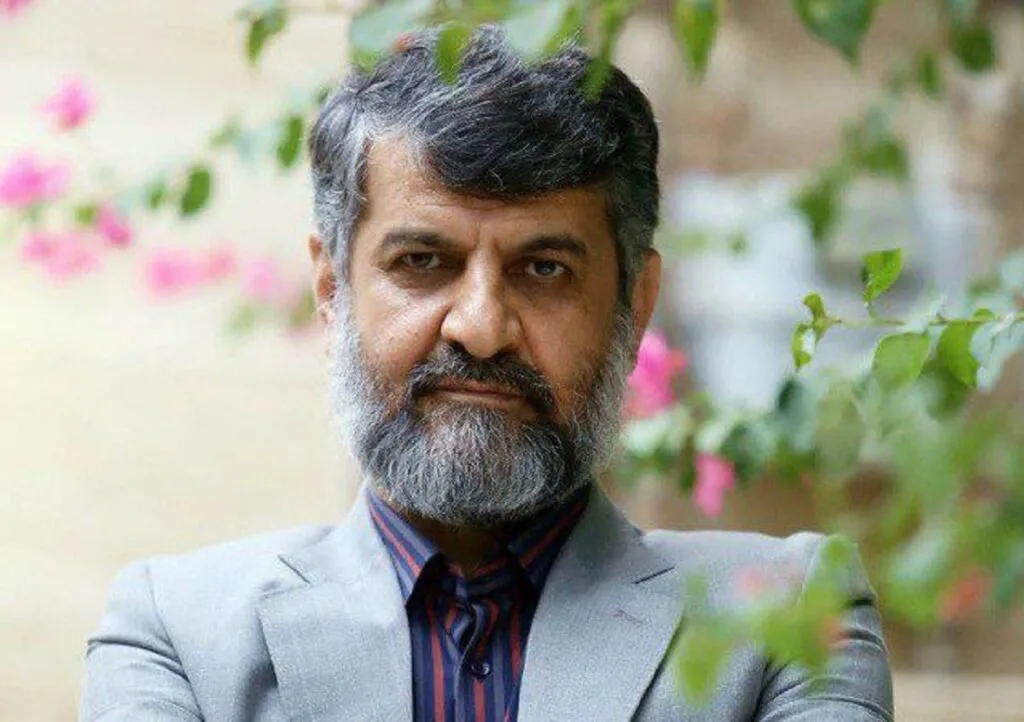
Mehdi Nasiri, a journalist, author, political analyst, religious researcher, current editor-in-chief of Samat, and former editor-in-chief and managing director of the prominent newspaper Kayhan, is one of the most widely discussed figures to have undergone a significant intellectual transformation in contemporary Iran.
Coming from a clerical family—with a father who was a Najaf-educated mujtahid—and beginning his religious education at the age of twelve, Nasiri became editor-in-chief of Kayhan at the age of twenty-five in 1988 and was subsequently appointed its managing director in 1991 by direct order of Ayatollah Khamenei. Alongside Yousefali Mirshakak, he was among the early figures to promote a hard-line editorial direction at Kayhan.
Beginning in the early 2010s, however, Nasiri underwent a major political and intellectual shift and became one of the most prominent critics of Velayat-e Faqih—the doctrine of clerical guardianship. He attracted considerable attention in recent years through his controversial proposal for a “Tajzadeh–Prince dialogue” and his arrest on February 2, 2025, at Ferdowsi’s tomb. In recent years, Nasiri has emigrated to Canada.
Who is Mehdi Nasiri?
Mehdi Nasiri Lelardi (born September 23, 1963, in Damghan) is a journalist, author, political analyst, religious researcher, current editor-in-chief of the "Samat" publication, former editor-in-chief and managing director of the prominent newspaper "Kayhan" and the weekly "Sobh," and one of the most widely discussed figures with a notable intellectual transformation in contemporary Iran. He is among the most cited figures in Persian-language media-intellectual discourse. Nasiri, with a unique path—from a distinguished seminary-religious family background as the son of Sheikh Gol Mohammad Nasiri Lelardi, to beginning his seminary studies in 1975 at the Damghan Seminary, to starting his media career in his youth, to entering the Kayhan Institute in 1986, to being appointed as editor-in-chief of Kayhan at the age of 25 in 1988, to being appointed as managing director of Kayhan in 1991 by direct order of Ayatollah Ali Khamenei, to initiating the hardline policy at Kayhan alongside Yousef Ali Mirshakak, to his editorship of the weekly "Sobh," to his current editorship of "Samat," to his major intellectual shift from the early 2010s, to his widely discussed recent positions, to his arrest on February 3, 2025, at the tomb of Ferdowsi in Tus, Mashhad, and finally, to his recent emigration to Canada—has become one of the main references of contemporary Persian-language intellectual-political discourse.
The importance of Mehdi Nasiri in Iran's contemporary intellectual-media sphere can be examined from several angles. First, his distinguished seminary-religious family background as the son of a prominent mujtahid. Second, his pioneering position in his youth as the editor-in-chief of Kayhan at the age of 25 in 1988. Third, his pioneering position as one of the initiators of the hardline policy at Kayhan alongside Yousef Ali Mirshakak. Fourth, his major intellectual shift from the early 2010s—from a hardline figure to a critic of velayat-e faqih. Fifth, his pioneering contribution to proposing the "Tajzadeh-Shahzadeh dialogue." Sixth, the production of a series of prominent intellectual-theological works.
Nasiri, in one of his notable analytical positions, stated: "We have established an enemy-centric system and are mainly seeking to create enemies. We must seize the JCPOA at the earliest opportunity, because the more we delay, the greater our loss will be. When politics becomes ideological and leaves the realm of rationality, it results in what we see today."
Life and Background
Mehdi Nasiri was born on September 23, 1963, in the city of Damghan, Semnan province. Born in the early 1960s, Nasiri belongs to a generation that, in adolescence, coincided with the events of the 1979 Islamic Revolution and, in youth, began his prominent activities in the post-revolutionary political-media structure.
Family: Seminary-Religious Background
The central aspect of Nasiri's family-cultural background is his connection to a prominent seminary-religious family.
Father: Sheikh Gol Mohammad Nasiri Lelardi—a prominent cleric from Mazandaran, educated at the Najaf Seminary, who had reached the level of ijtihad.
Mother: Khadijeh Sadat Torabi—from Damghan.
This family background formed the foundation of Nasiri's early religious-intellectual identity.
Seminary Education
Nasiri began his seminary studies in 1975 at the Damghan Seminary, studying under his father and other scholars of that seminary. This background formed the foundation of his later expertise in religious philosophy, jurisprudence, and theology.
Beginning of Media Activity
The most notable chapter of the beginning of Nasiri's media career was his activity in his youth and the early years of the revolution.
Article for "Zan-e Rooz"
According to Nasiri himself, he had written an article for the "Zan-e Rooz" magazine.
Cultural Centers of Damghan
In his youth and the early years of the revolution, Nasiri spent summers writing pamphlets at the cultural centers of Damghan.
Entering the Kayhan Institute
The central chapter of Nasiri's professional media career was his entry into the Kayhan Institute in 1986.
Cultural Representative of Kayhan Institute in Qom (1986)
According to Nasiri's own account, after a notable article, he appeared as the "cultural representative of the Kayhan Institute in Qom." At that time, Seyyed Mohammad Khatami was serving as the Supreme Leader's representative at the Kayhan Institute.
Invitation to Tehran (1987)
Nasiri spent a year in this position until 1987, when he was invited to Tehran to work at Kayhan.
Notable Series of Articles
After moving to Tehran, Nasiri published a series of articles on "the grounds for issuing Imam's fatwas" criticizing Ayatollah Azari Qomi, which received widespread attention. These articles were later published as a book by the Islamic Teachers' Association.
Editorship and Managing Directorship of Kayhan
The most prominent chapter of Nasiri's media career was his editorship and then managing directorship of the prominent newspaper Kayhan.
Editorship at Age 25 (1988)
In 1988, at the age of 25, Nasiri was appointed as the editor-in-chief of Kayhan. This appointment was made with the approval of Mohammad Asghari and Seyyed Mohammad Khatami.
Managing Directorship of Kayhan (1991)
In 1991, Nasiri was appointed as the managing director of Kayhan by direct order of Ayatollah Ali Khamenei.
Hardline Policy with Yousef Ali Mirshakak
According to academic sources, Nasiri, along with Yousef Ali Mirshakak, was one of the initiators of the hardline policy at Kayhan, which was later continued by Hossein Shariatmadari.
Weekly "Sobh"
After Kayhan, Nasiri became the editor-in-chief and managing director of the weekly "Sobh."
"Samat" Publication
Nasiri's current media activity is centered on his editorship of the "Samat" publication.
Notable Works
Among Nasiri's most important works are:
"Islam and Modernity" (2008).
"Philosophy from the Perspective of the Quran and the Ahl al-Bayt" (2008).
"The Social Position of Women from the Perspective of Islam" (2002).
"Avini and Modernity."
"The Age of Bewilderment" (2019).
"The Grounds for Issuing the Imam's Fatwas."
Intellectual Shift from the Early 2010s
The most notable chapter of Nasiri's intellectual-political transformation was his major intellectual shift from the early 2010s.
From Hardliner to Critic of Velayat-e Faqih
According to academic sources, "Nasiri has been expressing critical views of velayat-e faqih since the early 2010s." This shift is relatively unique among Iranian journalists.
Notable Recent Positions
Among Nasiri's most important recent analytical-political positions are:
Enemy-Centric System
Nasiri stated: "We have established an enemy-centric system and are mainly seeking to create enemies."
Critique of Ideological Politics
Nasiri stated: "When politics becomes ideological and leaves the realm of rationality, it results in what we see today."
The "Tajzadeh-Shahzadeh Dialogue" Proposal
One of Nasiri's most widely discussed recent positions was his proposal for a "dialogue between Tajzadeh and the Shahzadeh"—a call for unity between republican forces and monarchist forces.
Comparison of the November 2019 Protests with the Yellow Vests
Nasiri compared the November 2019 protests with the Yellow Vests protests in France.
Critique of Religious Intellectualism
Nasiri critiqued a branch of religious intellectualism, particularly Abdolkarim Soroush.
Arrest on February 3, 2025
The most prominent chapter of Nasiri's recent judicial experience was his arrest on February 3, 2025, at the tomb of Ferdowsi.
Details of the Arrest
Nasiri was arrested at the tomb of Ferdowsi in Tus, Mashhad, while recording a video about Ferdowsi and the Persian language. He was released after a few hours.
Complaint by Hamid Rasaii
Another recent judicial case involved a complaint by Hamid Rasaii, which led to Nasiri being summoned to the Special Court for the Clergy in Qom.
Emigration to Canada
Nasiri announced that he was emigrating to Canada with his wife, with the intention of returning in three months.
Intellectual Framework
Throughout his intellectual-media career, Mehdi Nasiri has formulated a distinctive intellectual framework.
First Period: Hardline Principlism
Nasiri's central framework in the first period was hardline principlism, defense of authentic religious civilization, and critique of religious intellectual currents.
Second Period: Critique of Velayat-e Faqih and the Power Structure
Nasiri's central framework in the second period has been the critique of velayat-e faqih, critique of the "enemy-centric" structure of the Islamic Republic, defense of the JCPOA and rationality in foreign policy, and advocacy for cross-factional dialogue.
Critique of Religious Intellectualism
A distinguishing feature of Nasiri's intellectual framework is his critique of the religious intellectualism current, particularly Abdolkarim Soroush.
Theological-Jurisprudential Framework
Nasiri is among the few Persian-language journalists with a distinctive theological-jurisprudential framework.
Connections with Figures and Currents
Mehdi Nasiri is situated within a network of intellectual-political connections with prominent Persian-language figures.
The Kayhan Circle
Nasiri's central institutional network in his first period was the Kayhan circle, including Mohammad Asghari, Seyyed Mohammad Khatami, Yousef Ali Mirshakak, and Hossein Shariatmadari.
The Leadership Institution
At the political level, Nasiri's relationship with Ayatollah Ali Khamenei formed his early institutional network.
Prominent Debaters
At the debate level, Nasiri's relationship with figures such as Mohsen Gharavian, Mehdi Khazali, Hamid Rasaii, and other debaters forms his dialogue network.
Cross-Factional Dialogue Circle
At the intellectual level of his second period, Nasiri's relationship with Mostafa Tajzadeh and Reza Pahlavi forms his cross-factional network.
Prominent Persian-Language Media
At the media level, Nasiri's relationship with BBC Persian, Ensaf News, and other prominent Persian-language media forms his dialogue network in the second period.
Conclusion
Mehdi Nasiri is one of the most widely discussed and distinctive figures with a notable intellectual transformation in contemporary Iran. With a unique combination of a distinguished seminary-religious family background, beginning his seminary studies in 1975, entering the Kayhan Institute in 1986, being appointed as editor-in-chief of Kayhan at age 25 in 1988, being appointed as managing director of Kayhan in 1991 by direct order of Ayatollah Ali Khamenei, initiating the hardline policy at Kayhan, editorship of the weekly "Sobh," current editorship of "Samat," the production of a series of prominent intellectual-theological works, a major intellectual shift from the early 2010s, proposing the "Tajzadeh-Shahzadeh dialogue," his arrest on February 3, 2025, and his recent emigration to Canada, he occupies a unique position in the contemporary Persian-language intellectual-media structure.
Nasiri's distinguishing feature, on the first level, is his notable intellectual shift from the early 2010s—a shift in which a hardline principlist figure becomes one of the most prominent critics of the power structure. On the second level, his pioneering position in his youth as editor-in-chief of Kayhan at age 25 is one of the notable aspects of his media career. On the third level, his pioneering contribution to proposing the "Tajzadeh-Shahzadeh dialogue" is one of the notable aspects of his cross-factional political framework.
From an analytical perspective, Nasiri's position exemplifies the phenomenon of the "hardliner-critic-cross-factional-exile" in contemporary Iran—a phenomenon in which a figure with a distinguished seminary-media background, over decades, plays a sustained role in various media, intellectual, political, and judicial arenas—although, as a result of his intellectual shift, he ultimately finds himself at odds with his initial background.
What is clear from today's perspective is that the topics Nasiri has addressed in his works and positions—from jurisprudential governance, Islamic civilization-building, the age of bewilderment, the scope of the Supreme Leader's authority, critique of religious intellectualism, critique of the "enemy-centric" structure of the Islamic Republic, defense of the JCPOA and rationality in foreign policy, cross-factional dialogue, and the social position of women from the perspective of Islam—remain among the most debated topics in contemporary Persian-language intellectual-political discourse.
Frequently Asked Questions
Who is Mehdi Nasiri?
Mehdi Nasiri Lelardi (born September 23, 1963, in Damghan) is a journalist, author, political analyst, religious researcher, current editor-in-chief of the "Samat" publication, former editor-in-chief and managing director of the prominent newspaper "Kayhan" and the weekly "Sobh." He is one of the most widely discussed figures with a notable intellectual transformation in contemporary Iran.
What is Mehdi Nasiri's family background?
Nasiri's father, Sheikh Gol Mohammad Nasiri Lelardi, was a prominent cleric from Mazandaran, educated at the Najaf Seminary, and a mujtahid. His mother, Khadijeh Sadat Torabi, was from Damghan.
When did Nasiri become editor-in-chief of Kayhan?
In 1988, at the age of 25, Nasiri was appointed as the editor-in-chief of Kayhan. In 1991, he was appointed as the managing director of Kayhan by direct order of Ayatollah Ali Khamenei.
What was Nasiri's role in Kayhan's hardline policy?
Nasiri, along with Yousef Ali Mirshakak, was one of the initiators of the hardline policy at Kayhan, which was later continued by Hossein Shariatmadari.
What are Nasiri's most important books?
Among Nasiri's most important books are: "Islam and Modernity," "Philosophy from the Perspective of the Quran and the Ahl al-Bayt," "The Social Position of Women from the Perspective of Islam," "Avini and Modernity," "The Age of Bewilderment," and "The Grounds for Issuing the Imam's Fatwas."
Why did Nasiri shift from a hardline position to a critic of velayat-e faqih?
According to sources, "Nasiri has been expressing critical views of velayat-e faqih since the early 2010s." This intellectual shift is one of the most notable transformations of his career and is relatively unique among Iranian journalists.
What was the "Tajzadeh-Shahzadeh dialogue" proposal?
One of Nasiri's most widely discussed recent positions was his proposal for a "dialogue between Mostafa Tajzadeh and Reza Pahlavi"—a call for unity between republican forces and monarchist forces.
What is Nasiri's view on the structure of the Islamic Republic?
Nasiri stated: "We have established an enemy-centric system and are mainly seeking to create enemies. When politics becomes ideological and leaves the realm of rationality, it results in what we see today."
What was the arrest on February 3, 2025?
On February 3, 2025, Nasiri was arrested at the tomb of Ferdowsi in Tus, Mashhad, while recording a video about Ferdowsi and the Persian language, and was released after a few hours.
What is Nasiri's emigration to Canada?
Nasiri announced that he was emigrating to Canada with his wife, with the intention of returning in three months.
Is Mehdi Nasiri still active?
Yes, Mehdi Nasiri, as the editor-in-chief of "Samat" and one of the most widely discussed Persian-language political-intellectual analysts, remains active in the media-analytical arena. His consistent presence in prominent debates on platforms such as BBC Persian, debates with prominent intellectual figures, the publication of sustained analytical articles, and his highly visible presence on YouTube and online conversations are signs of his sustained activity. His analytical positions on the critique of velayat-e faqih, the "enemy-centric" structure of the Islamic Republic, cross-factional dialogue, and Iran's intellectual-political challenges continue to receive widespread coverage in Persian-language media.
Take less than a minute, register and share your opinion under this post.
Insulting or inciting messages will be deleted.
Sign Up