
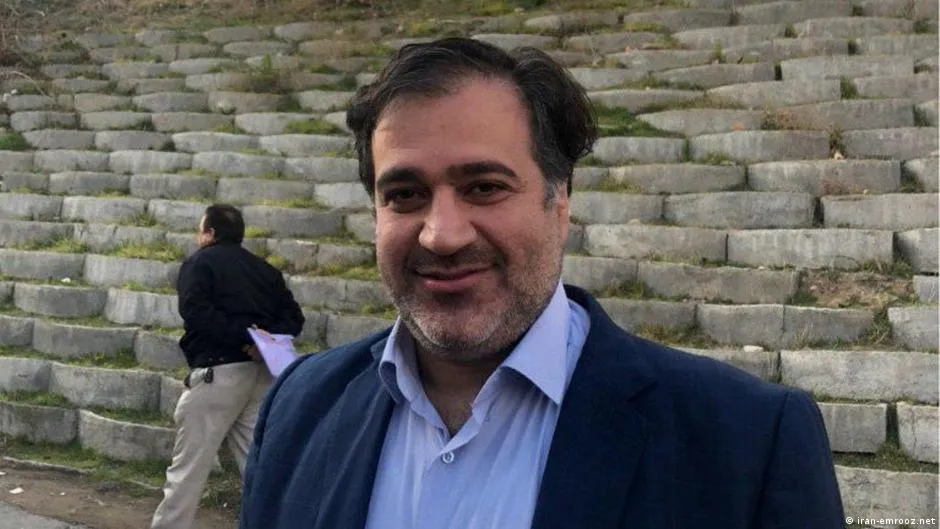
A long-time political prisoner, journalist, human rights activist, and pro-transition activist, he is one of the most recognized figures in Iran's protest and human rights movements over the past two decades. With his high-profile exposé of the Kahrizak detention center—two years before the bloody events of 2009—he became a symbol of defending prisoners' rights in Iran. Throughout his career, he has endured several long prison terms in the Islamic Republic's prisons: five years following the Green Movement, thirty months following the "Woman, Life, Freedom" movement, and eight months for exposing the bedbug infestation in Evin Prison. After 15 years of activity in reformist parties (Mosharekat and Ettehad-e Mellat), he joined the pro-transition movement in 2020 and was one of the signatories of the 17-person statement on peaceful transition in January 2023.
Who is Mehdi Mahmoudian?
Mehdi Mahmoudian, a long-time political prisoner, journalist, human rights activist, and pro-transition activist, born in 1978, is one of the most recognized and most costly figures in Iran's protest and human rights movements over the past two decades. With his high-profile exposé of the Kahrizak detention center—two years before the bloody events of 2009—he became a symbol of defending prisoners' rights in Iran. Throughout his tumultuous career, he has endured several long prison terms in the Islamic Republic's prisons. Having been active for 15 years in the Islamic Iran Participation Front and the Islamic Iran Unity Party, he left these two parties in 2020 and joined the pro-transition movement. He is currently a member of the committee of the Society for the Defense of Prisoners' Rights and one of the most persistent domestic human rights activists in Iran.
The importance of Mehdi Mahmoudian in Iran's human rights-political sphere can be examined from several angles. First, his early history of exposing the Kahrizak detention center—before the key events of September 2009 in which several detainees of the Green Movement protesters lost their lives—which made him a symbol of defending prisoners' rights in Iran. This exposé, which began in the early 2000s and eventually received widespread media coverage in 2009, formed the foundation of his fame in the human rights arena. Second, his history of several long prison terms—from five years after his arrest on September 16, 2009, to thirty months after his arrest in February 2023, and finally, eight months for exposing the bedbug infestation in Evin Prison in 2024—which places him among the most experienced political prisoners in contemporary Iran. Third, his discursive-political transformation in 2020—in which, after 15 years of activity in two prominent reformist parties (Mosharekat and Ettehad-e Mellat), he joined the pro-transition movement—which is one of the notable aspects of his political path. Fourth, his signing of prominent human rights statements—from the 77-person statement after the November 2019 protests to the 17-person statement on peaceful transition on January 2, 2023—which placed him among the most prominent civil activists of the "Woman, Life, Freedom" movement. Fifth, his high-profile cases in defending prisoners' rights—especially the bedbug case in Evin Prison in 2024—which has made him one of the most prominent contemporary human rights activists in Iran.
In the recent period (February 2025), Mahmoudian, by going on a dry hunger strike from the day he entered Evin Prison and then being transferred to Taleghani Hospital in protest of judicial rulings, has become one of the most prominent figures among Iranian political prisoners in the domestic and international media space.
Life and Background
Mehdi Mahmoudian was born in 1978—the year of the victory of the Islamic Revolution. This generation, born in the year the Islamic Republic began, came of age during the Reconstruction era and then the Reform era, and entered the political arena in their youth during the final years of the reformist government and the beginning of Ahmadinejad's government.
Mahmoudian's continuous experience with Iran's political developments in a generation born in the post-revolutionary atmosphere formed the foundation of his political-legal identity.
15 Years of Activity in Reformist Parties (2005-2020)
The initial turning point of Mahmoudian's political activity was his consistent membership in two prominent reformist parties.
The Islamic Iran Participation Front
Mahmoudian began his early political activity in the Islamic Iran Participation Front—which was founded in 1998 by supporters of Seyyed Mohammad Khatami and became one of the most important reformist parties in Iran during the reform era. This party, which faced severe restrictions in 2009 following the Green Movement events and was eventually dissolved by judicial order, formed the foundation of Mahmoudian's political activity.
The Islamic Iran Unity Party
After the dissolution of the Participation Front, Mahmoudian joined the Islamic Iran Unity Party—which was founded in 2015 by activists from the dissolved Participation Party and is currently considered one of the most prominent reformist parties in Iran—and became a member of its Central Council.
Separation from the Parties (2020)
In 2020, after approximately 15 years of consistent activity in these two reformist parties, Mahmoudian separated from them and joined the pro-transition movement. This transformation, in which a prominent reformist activist became part of the structural critique of reformism, was a sign of the discursive transformations in Iran's civil activist space in the years after the November 2019 protests.
This transformation, in connection with the new discourse of peaceful transition that had formed among a segment of human rights activists and civil activists in Iran, is one of the notable aspects of Mahmoudian's political path.
Prominent Exposé: The Kahrizak Detention Center
The most prominent early chapter of Mahmoudian's career was his early exposé of the Kahrizak detention center—an exposé that eventually, with the tragic events of September 2009, received widespread coverage in Iran's public discourse.
Two Years Before the 2009 Events
Mahmoudian was the first person who, two years before the tragic events of the Kahrizak detention center, reported on the establishment of a detention center in Kahrizak and warned about the violent and illegal behavior of officials there.
This warning was issued following the very violent operation by Tehran police during the arrest of young men whom the police referred to as "neighborhood thugs and hooligans"—a sign of Mahmoudian's sensitivity to the violation of citizens' rights even before the high-profile events of the Green Movement.
Coverage Following the 2009 Events
After several of the detainees sent to Kahrizak lost their lives and news of the torture of political protesters arrested in September 2009 emerged, the attention of the media, political-civil figures, and Green Movement leaders turned toward the Kahrizak detention center and Mahmoudian's exposés. This shift formed the foundation of his widespread fame in Iran's human rights arena.
Multiple Arrests and Convictions
Mahmoudian has undergone several periods of arrest and imprisonment over two decades of activity.
First Arrest: September 16, 2009 - Five-Year Sentence
Mahmoudian's first major arrest occurred following the protests against the results of the 2009 presidential election (the Green Movement). On September 16, 2009, he was arrested in his home and ultimately sentenced to 5 years in prison. This conviction, which occurred in the tense post-Green Movement atmosphere, was one of his first long prison experiences.
Torture During Interrogation
According to published reports, during interrogation, Mahmoudian was kept without clothes for long periods in the winter, in the open space of the prison for punishment. This torture is one of the documented cases of human rights violations in his case.
Notable Letter from January 2011
In January 2011, despite all the pressure on Mahmoudian and other political prisoners, he wrote a letter addressed to Seyyed Mohammad Khatami, Mir-Hossein Mousavi, and Mehdi Karroubi, asking these three movement leaders not to abandon their rightful positions.
Part of the letter states: "I ask you, for the sake of the blood of the martyrs of the revolution from the beginning to today, and for the sake of the tears and sorrows of the mothers, fathers, spouses, and children of the martyrs and prisoners of the Green Movement, and for the sake of those tortured in Kahrizak, Block 209 and 2-A, and other prisons and detention centers, visible and hidden, as you have safeguarded the freedom-seeking and justice-seeking goals of God-seeking people of Iran, continue to do so and do not abandon your rightful and principled positions at any cost."
This letter is considered one of the most prominent expressions of perseverance by political prisoners of the Green Movement.
Arrest Following the November 2019 Protests
After the nationwide November 2019 protests, Mahmoudian was one of the 77 signatories of a statement by political activists to the government leaders protesting the violent treatment of protesting citizens.
Arrest on International Human Rights Day
Mahmoudian's arrest following this statement coincided with International Human Rights Day (December 10)—a symbolic coincidence that received widespread coverage in Iranian media.
Hunger Strike
Following his arrest, Mahmoudian was held in Block 2-A of Evin Prison (one of the prominent security blocks) and went on a hunger strike in protest of his arrest. Later, with his transfer to the IRGC Intelligence Block, his hunger strike intensified.
Release on December 30, 2019
Mahmoudian was released from Evin Prison on December 30, 2019—a release that was followed by subsequent arrests.
Arrest Following the "Woman, Life, Freedom" Movement
The most prominent chapter of Mahmoudian's arrests occurred following the "Woman, Life, Freedom" movement in the fall of 2022.
17-Person Statement on Peaceful Transition (January 2, 2023)
On January 2, 2023, Mahmoudian was among 17 civil and political activists who published a statement declaring "peaceful transition from the Islamic Republic an unavoidable necessity" and "announcing their support for the nationwide protests and the people's demands."
This statement, published in the aftermath of Mahsa Amini's death and the widespread protests of the fall of 2022, was one of the most important collective positions of civil-political activists inside Iran in defense of the "Woman, Life, Freedom" movement.
Arrest on February 1, 2023
Only one month after the publication of this statement, on February 1, 2023, Mahmoudian was arrested along with Vida Rabbani and Abdollah Momeni. This arrest, which was carried out without initially announcing the details of the arresting institution or the charges, was considered one of the most prominent arrests following the "Woman, Life, Freedom" movement.
30-Month Sentence
Following this arrest, Mahmoudian was imprisoned in Evin Prison for 30 months. This long imprisonment, which occurred in the tense post-movement atmosphere of 2022, was one of his longest periods of imprisonment.
Release on January 4, 2024
Mahmoudian was released from Evin Prison on January 4, 2024, after 30 months. This release received widespread coverage in Iranian media.
The Bedbug Case in Evin Prison (2024)
The most prominent recent chapter of Mahmoudian's career was the exposé of the bedbug infestation in Evin Prison—a case that in 2024 became one of the most cited instances of defending prisoners' rights in Iran's human rights discourse.
Zia Nabavi's Letter (May 11, 2024)
The issue of bedbugs in Evin Prison was raised in Iranian media on May 11, 2024, following the publication of a letter from Zia Nabavi (a student activist and political prisoner) from Evin Prison describing the psychological and physical harassment caused by bedbugs. This letter, which highlighted the inhumane conditions of the prison, received widespread coverage.
The Judiciary's Denial and Mahmoudian's Two Tweets
Following the publication of Nabavi's letter, the Judiciary's news agency denied the claims. In response to this denial, Mahmoudian published two tweets criticizing it—tweets that formed the basis of his new judicial case.
8-Month Sentence
Due to these two tweets, Iman Afshari, the head of Branch 26 of the Tehran Revolutionary Court, sentenced Mahmoudian to eight months in prison on charges of "propaganda activity against the system." This sentence was issued while Zia Nabavi himself (the original author of the letter) was acquitted of the charge of "disseminating falsehood"—a widely discussed judicial paradox that attracted attention in Iranian media.
Arrest on February 4, 2025, and Dry Hunger Strike
On February 4, 2025, Mahmoudian was transferred to Evin Prison to serve this sentence. From the moment he entered the prison, he went on a dry hunger strike and refused medication, announcing that this strike was in protest of "the unjust sentences issued by the judiciary."
Deterioration of Health and Transfer to Hospital
After two days of a dry hunger strike, on the evening of Wednesday, February 6, 2025, Mahmoudian's condition deteriorated and he was transferred to Taleghani Hospital.
Mother's Sit-In
On Wednesday, February 6, Mahmoudian's mother announced in a video message that she would sit in front of the prison if her son was not released by noon on Thursday, February 7, 2025. This threat was one of the notable aspects of the family's pursuit of the case in Iranian media.
Medical Leave
Following the deterioration of his health and widespread reactions, on February 7, 2025, Mahmoudian was granted medical leave and released for medical treatment.
Return to Prison (February 24, 2025)
According to a report by Hossein Razzagh (a political activist, former political prisoner, and one of the main pursuers of Mahmoudian's case), on February 24, 2025, Mahmoudian returned to prison after his medical leave ended.
Activity in the Field of Defending Prisoners' Rights
In addition to his multiple personal arrests, Mahmoudian, as a member of the committee of the Society for the Defense of Prisoners' Rights, is one of the most persistent activists in defending the rights of political prisoners in contemporary Iran.
Exposé in the Late 2010s
According to a report by the National Iranian American Council (NIAC), a decade after the Kahrizak exposé, in the late 2010s, Mahmoudian once again made a very important exposé that is considered a valid document proving the systematic violation of human rights in Iran.
This recurring pattern of exposés is a sign of his sustained commitment to documenting human rights violations in Iran's official structure.
Views and Analytical Positions
Throughout his intellectual-political career, Mehdi Mahmoudian has formulated a clear intellectual framework that can be traced in several axes.
Transformation from Reformism to Pro-Transition
The most central discursive transformation of Mahmoudian was the transition from reformism to pro-transition in 2020. This transformation, in which a prominent activist of the Unity Party (and previously the Participation Party) joined the structural critique of reformism, is one of the notable aspects of his political path.
This transformation, in connection with the discursive transformations of Iran's civil activists in the years after the November 2019 protests, is one of the prominent examples of the political identity change of the middle generation of Iran's civil activists.
Sustained Support for Protest Movements
Throughout his career, Mahmoudian has been a consistent supporter of protest movements:
The 2009 Green Movement: one of its prominent figures.
The November 2019 protests: a signatory of the 77-person statement.
Protests against the downing of the Ukrainian plane (January 2020).
The 2022 "Woman, Life, Freedom" movement: a signatory of the 17-person statement on peaceful transition.
This consistency in supporting protest movements is one of the notable aspects of his political character.
Emphasis on Peaceful Transition
Despite his transformation to the pro-transition movement, Mahmoudian emphasizes a "peaceful transition from the Islamic Republic"—a position reflected in the 17-person statement of January 2023. This position, in which peaceful transition is contrasted with violent transition, is a sign of his civil-legal view of structural changes in Iran.
Defense of Prisoners' Rights
Mahmoudian's most central theoretical position is the defense of prisoners' rights. This position, which has continued from the Kahrizak exposé to the bedbug case in 2024, is one of the most enduring aspects of his activity.
Critique of the Judiciary
In one of his notable critical positions, Mahmoudian has criticized "the unjust sentences issued by the judiciary" and declared this criticism as the basis for his dry hunger strike in February 2025.
See: From Coerced Change to the Responsibility of Choice: Democratic Transition or the Repetition of Authoritarianism | A Conversation with Mehdi Mahmoudian, Activist and Political Prisoner
Listen unfiltered on the Abdi Media Castbox.
Connections with Figures and Currents
Mehdi Mahmoudian is situated within a network of political-human rights connections with prominent figures in Iran's civil activist space. At the party level, his previous relationship with the Participation Party and the Unity Party (until 2020) forms his earlier reformist communications network.
At the level of solidarity and comradeship, his relationship with Zia Nabavi (in the bedbug case), Vida Rabbani and Abdollah Momeni (co-detainees in 2023), Hossein Razzagh (a persistent activist in these cases), and Farhad Meisami (a comrade) forms his human rights communications network.
At the level of Green Movement leaders, his relationship with Seyyed Mohammad Khatami, Mir-Hossein Mousavi, and Mehdi Karroubi (to whom he wrote a letter in January 2011) are among his intellectual-political connections.
At the media level, his relationship with prominent human rights-political media outlets—including IranWire, Radio Farda, Iran International, HRANA, Ensaf News, Zeytoon, and the National Iranian American Council (NIAC)—forms his media communications network.
Conclusion
Mehdi Mahmoudian is one of the most prominent and, at the same time, most costly figures in Iran's protest and human rights movements over the past two decades. With a unique combination of early exposé history (as the first person to reveal the Kahrizak detention center two years before the 2009 events), a history of several long prison terms (including five years following the Green Movement, thirty months following the "Woman, Life, Freedom" movement, and eight months for exposing the bedbug infestation in Evin Prison), a notable discursive-political transformation (from reformism to pro-transition in 2020, after 15 years of activity in the Participation Party and the Unity Party), signing prominent human rights statements (the 77-person statement after the November 2019 protests and the 17-person statement on peaceful transition in January 2023), and finally, his sustained role as a member of the committee of the Society for the Defense of Prisoners' Rights, he occupies a unique position in contemporary Iran's human rights structure. His career—from his birth in 1978, 15 years of activity in two prominent reformist parties, early exposé of Kahrizak, first arrest on September 16, 2009, notable letter to Green Movement leaders in January 2011, signing the 77-person statement after November 2019, transition to pro-transition in 2020, signing the 17-person statement on peaceful transition in January 2023, 30-month imprisonment after his arrest in February 2023, release in January 2024, re-arrest in February 2025 for exposing the bedbug case, dry hunger strike, medical leave, and return to prison in February 2025—presents a multidimensional picture of a "political prisoner-human rights activist-journalist-pro-transition activist."
The distinguishing feature of Mehdi Mahmoudian, on the first level, is his sustained continuity in defending prisoners' rights—a continuity in which a civil activist, over two decades of activity, in multiple periods of arrest and imprisonment, continues to expose the conditions of prisons. This persistence is relatively unique among Iranian human rights activists. On the second level, his courage in accepting the costs of critical positions—such that even after thirty months of imprisonment and release, he quickly returned to prison by supporting the bedbug case—is one of the notable aspects of his character. On the third level, his notable discursive transformation in 2020—in which, after 15 years of activity in prominent reformist parties, he joined the pro-transition movement—is one of the notable aspects of his political path and is among the prominent examples of discursive transformations of Iran's civil activists in recent years.
From an analytical perspective, Mahmoudian's position exemplifies the phenomenon of the "political prisoner-pro-transition human rights activist" in contemporary Iran—a phenomenon in which a civil activist with a long history of imprisonment is recognized in the public sphere as one of the most persistent defenders of prisoners' rights and, at the same time, an advocate of peaceful structural change. This pattern, which has other examples among contemporary Iranian civil activists (such as Zia Nabavi, Vida Rabbani, Abdollah Momeni, Farhad Meisami, and others), has found a special reflection in Mahmoudian through his exceptional persistence in exposing prison conditions and his notable discursive transformation.
What is clear from today's perspective is that the topics Mahmoudian has addressed in his activities—from exposing the conditions of the Kahrizak detention center, torture during interrogation, violation of prisoners' rights, unjust judicial sentences, peaceful transition from the Islamic Republic, support for protest movements, and the inhumane conditions of prisons (such as the bedbug case)—remain among the most enduring topics in contemporary Iranian human rights-political discourse. In a situation where Iran is in one of the most tense periods of its human rights-judicial discourse—particularly after the "Woman, Life, Freedom" movement in the fall of 2022 and the increasing challenges of the judicial structure—Mahmoudian's voice, with a combination of long prison experience and persistence in expressing positions, is one of the main references for this discourse.
Frequently Asked Questions
Who is Mehdi Mahmoudian?
Mehdi Mahmoudian (born 1978) is a long-time political prisoner, journalist, human rights activist, and Iranian pro-transition activist. Having been active for 15 years in the Participation Party and the Unity Party, he left these two parties in 2020 and joined the pro-transition movement. He is currently a member of the committee of the Society for the Defense of Prisoners' Rights and one of the most persistent human rights activists inside Iran.
What was Mahmoudian's role in exposing the Kahrizak case?
Mahmoudian was the first person who, two years before the tragic events of the Kahrizak detention center, reported on the establishment of this detention center and warned about the violent and illegal behavior of officials there. This exposé formed the foundation of his fame in Iran's human rights arena.
Why was Mehdi Mahmoudian arrested in 2009?
Following the protests against the results of the 2009 presidential election, Mahmoudian was arrested in his home on September 16, 2009, and ultimately sentenced to 5 years in prison. During interrogation, according to published reports, he was kept without clothes for long periods in the winter, in the open space of the prison.
Why did Mahmoudian leave the reformist parties?
In 2020, after approximately 15 years of consistent activity in the Participation Party and the Unity Party (in which he was a Central Council member), Mahmoudian separated from these two parties and joined the pro-transition movement. This transformation, in connection with the discursive transformations of Iran's civil activists in the years after the November 2019 protests, is one of the notable aspects of his political path.
What was the 17-person statement of January 2023?
On January 2, 2023, Mahmoudian was among 17 civil and political activists who published a statement declaring "peaceful transition from the Islamic Republic an unavoidable necessity" and announcing their support for the nationwide protests and the people's demands. One month after the publication of this statement, on February 1, 2023, Mahmoudian was arrested along with Vida Rabbani and Abdollah Momeni and sentenced to 30 months in prison.
What was the bedbug case in Evin Prison?
The issue of bedbugs in Evin Prison was raised on May 11, 2024, following the publication of a letter from Zia Nabavi from Evin Prison. After the Judiciary's news agency published a denial, Mahmoudian published two tweets criticizing it. Due to these two tweets, Iman Afshari, the head of Branch 26 of the Tehran Revolutionary Court, sentenced Mahmoudian to eight months in prison on charges of "propaganda activity against the system." This sentence was issued while Zia Nabavi himself, the original author of the letter, was acquitted.
What was Mahmoudian's hunger strike in February 2025?
On February 4, 2025, Mahmoudian was transferred to Evin Prison to serve the bedbug case sentence. From the moment he entered the prison, he went on a dry hunger strike and refused medication, declaring this strike in protest of "the unjust sentences issued by the judiciary." After two days of strike, on February 6, he was transferred to Taleghani Hospital, and on February 7, he was granted medical leave.
What role did Mahmoudian's mother play in the case?
On February 6, 2025, Mahmoudian's mother announced in a video message that she would sit in front of the prison if her son was not released by noon on February 7, 2025. This threat, which received widespread coverage in Iranian media, is one of the notable aspects of the family's pursuit of political prisoners' cases.
What was the 77-person statement?
Following the nationwide November 2019 protests, Mahmoudian was one of the 77 signatories of a statement by political activists to the government leaders protesting the violent treatment of protesting citizens. His arrest following this statement coincided with International Human Rights Day—a symbolic coincidence that received widespread coverage in Iranian media.
Is Mehdi Mahmoudian still in prison?
According to the latest published reports, on February 24, 2025, Mahmoudian returned to prison after his medical leave ended. This return, according to a report by Hossein Razzagh, was his last official status in media sources before the last update of this profile. His exact current status may require updated verification.
Take less than a minute, register and share your opinion under this post.
Insulting or inciting messages will be deleted.
Sign Up