
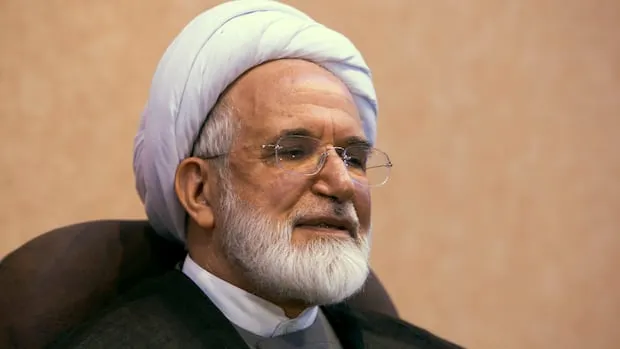
Mehdi Karroubi, born on September 26, 1937, in Aligudarz, Lorestan, is a prominent cleric, leading reformist politician, and one of the most influential and controversial political figures in post-revolution Iran. With a seven-decade career spanning clerical, legislative, executive, party, and protest arenas, he holds a unique place in contemporary Iranian history.
Here is the complete English translation of the provided text:
Mehdi Karroubi (born September 26, 1937, in Aligudarz, Lorestan Province), an Iranian Shia cleric, prominent reformist politician, former two-term Speaker of the Islamic Consultative Assembly of Iran (the 3rd parliament from May 28, 1989 to May 28, 1992, and the 6th parliament from May 28, 2000 to May 28, 2004), former Secretary-General of the National Trust Party (Etemad-e Melli) from 2005 to 2021, prominent presidential candidate in 2005 and 2009, one of the three main leaders of the Green Movement alongside Mir-Hossein Mousavi and Zahra Rahnavard, former head of the Imam Khomeini Relief Committee, founding head of the Islamic Revolution Martyrs' Foundation (from 1979), former representative of Ayatollah Seyyed Ruhollah Khomeini for Hajj affairs, former four-term member of parliament, former member of the Expediency Discernment Council, former Secretary-General of the Association of Combatant Clerics, and under house arrest from February 14, 2011 to March 16, 2025 (for nearly 15 years without judicial trial)—while simultaneously being one of the most widely reported, controversial, and prominent clerical-political figures of the Islamic Republic of Iran in the 46 post-revolutionary years—stands among the central figures of Iran’s post-revolutionary reformist discourse. In Persian-language media discourse, he is known by the prominent epithet "Sheikh of Reform."
Mehdi Karroubi’s unique trajectory spans: a distinguished clerical family background as the son of a prominent cleric and Pahlavi-era political prisoner who engaged in sustained anti-Shah struggles; rigorous seminary studies in Qom and sustained revolutionary activities starting in the 1960s—during which he formed a lasting student-political bond with Ayatollah Seyyed Ruhollah Khomeini; enduring imprisonment and exile under the Shah; assuming major post-revolutionary institutional roles—including founding and leading the Martyrs' Foundation in 1979 by decree of Ayatollah Khomeini, heading the Imam Khomeini Relief Committee, and serving as Ayatollah Khomeini's representative for Hajj affairs; serving as a prominent member of the 1st Parliament representing Aligudarz in 1980, member of the 2nd Parliament representing Tehran in 1984, and being elected Deputy Speaker; serving as Speaker of the 3rd Parliament from May 28, 1989 to May 28, 1992—which encompassed the critical period following the passing of Ayatollah Khomeini, the selection of Ayatollah Seyyed Ali Khamenei as Supreme Leader, and the 1989 constitutional revision; playing a major role in founding the Association of Combatant Clerics in 1988 and serving as its Secretary-General; serving again as Speaker of the 6th Parliament from May 28, 2000 to May 28, 2004 during the peak of Seyyed Mohammad Khatami's reform movement; running a high-profile candidacy in the 9th presidential election in 2005—where, despite media predictions of a first-round victory, he narrowly missed the runoff and subsequently issued a prominent protest letter to Ayatollah Khamenei; resigning from the Association of Combatant Clerics in 2005; founding the National Trust Party and launching the Etemad-e Melli newspaper in 2005; running in the 10th presidential election in 2009 alongside Mir-Hossein Mousavi, Mahmoud Ahmadinejad, and Mohsen Rezaee, ultimately securing 333,635 votes; co-leading the Green Movement's post-election protests alongside Mir-Hossein Mousavi—including his historic exposure of torture and sexual assault of political prisoners at the Kahrizak detention center, detailed in an open letter to Ayatollah Hashemi Rafsanjani (then Head of the Assembly of Experts); enduring house arrest from February 14, 2011—imposed without judicial trial following a call for a rally in solidarity with popular uprisings in Egypt and Tunisia; witnessing the sealing of the National Trust Party offices and the closure of the Etemad-e Melli newspaper; remaining under house arrest for 15 years at his personal residence in Tehran; participating in the 2024 presidential election and endorsing Masoud Pezeshkian, diverging from his fellow detainee Mir-Hossein Mousavi; and ultimately, having his house arrest lifted on March 16, 2025 (three days before the end of the Iranian calendar year) by order of Judiciary Chief Gholam-Hossein Mohseni-Eje'i after nearly 15 years without trial. Through this trajectory, he has become one of the most enduring yet controversial figures in post-revolutionary Iranian reformist discourse.
The significance of Mehdi Karroubi in contemporary Iran’s historical-political landscape can be examined from several angles. First, as one of the three prominent leaders of the 2009 Green Movement, he represents an enduring symbol of election protest within his political legacy. Second, as a two-term Speaker of the Majlis during the pivotal post-Khomeini and Reform eras, his legislative leadership formed the foundation of his sustained role within state governance. Third, his exposure of torture and sexual abuse at the Kahrizak detention center represents a significant milestone in post-revolutionary human rights advocacy. Fourth, his 15-year house arrest without judicial trial stands among the longest instances of extrajudicial political detention in contemporary Iranian history. Fifth, his continuous political presence from the 1979 Revolution to the present—engaging with all three Supreme Leaders, six presidents, and dozens of cabinet ministers—demonstrates remarkable political endurance.
Important Note: Mehdi Karroubi's record and performance are viewed through starkly contrasting lenses across Persian-language political and media spheres. In the discourse of key reformist supporters and the Green Movement, he is known as the "Sheikh of Reform," a "pioneer of human rights exposure," and a "symbol of resistance against suppression." Among major critics—particularly radical opposition groups and victims of 1980s state violence—his tenure heading the Martyrs' Foundation in the early post-revolutionary years, including allegations concerning illegal detention facilities and involvement in the state apparatus of the 1980s, remains subject to serious criticism. In principalist (Osulgerā) discourse, Karroubi is presented as a controversial figure responsible for the 2009 unrest. This profile presents the narrative documented in major Persian media and historical sources with an analytical and neutral stance; the final evaluation of his character and legacy rests with the reader.
Life and Family Background
Mehdi Karroubi was born on September 26, 1937, in the city of Aligudarz in Lorestan Province—a prominent city in western Iran.
Clerical-Revolutionary Father
The central pillar of Karroubi’s family and religious background was his descent from a cleric and Pahlavi-era political prisoner. According to published reports: "[Mehdi Karroubi] was born in September 1937 in Aligudarz. His father was a cleric and political prisoner." This background formed the bedrock of his clerical-revolutionary identity.
Wife: Fatemeh Karroubi
Mehdi Karroubi’s wife, Fatemeh Karroubi, is a prominent political activist and figure in the reformist women's movement. During her husband’s house arrest, she actively advocated for his rights and those of other political prisoners, publishing open letters on these matters.
Children
Among Mehdi Karroubi's children, the most prominent are Hossein Karroubi (who served as his father’s unofficial spokesperson during house arrest and announced the end of the house arrest on March 16, 2025) and Mohammad-Taqi Karroubi (a prominent activist).
Education and Pre-Revolutionary Activities
The earliest chapter of Mehdi Karroubi’s career involved his seminary education and pre-revolutionary political activism.
Seminary Education
Karroubi pursued his advanced seminary studies at the Qom Seminary, attending the lectures of leading scholars, including Ayatollah Seyyed Ruhollah Khomeini. This educational and political connection formed the foundation of his lifelong bond with Khomeini.
Revolutionary Activities
In the 1960s, Karroubi joined the revolutionary movement against the Pahlavi regime, playing an active role in the Combatant Clergy movement. His activities led to multiple arrests and exiles.
Post-Revolutionary Political Path (1979–2005)
The opening chapter of Karroubi’s post-revolutionary political career was defined by his appointment to major institutional positions following the victory of the Revolution.
Founding the Martyrs' Foundation (1979)
Karroubi’s primary early appointment was founding the Islamic Revolution Martyrs' Foundation in 1979 by decree of Ayatollah Seyyed Ruhollah Khomeini and serving as its head. Established to support the families of revolutionary and war casualties, this organization formed a major pillar of Karroubi’s institutional career.
Imam Khomeini Relief Committee
Karroubi also headed the Imam Khomeini Relief Committee, a primary social welfare and economic support institution in the Islamic Republic.
Representative of Ayatollah Khomeini for Hajj
Another major role was serving as Ayatollah Khomeini's representative for Hajj affairs and leader of Iranian pilgrims. In this capacity, Karroubi played a prominent role during the events of the 1987 Hajj (Mecca) and subsequent years.
Member of the 1st Parliament from Aligudarz (1980)
According to published reports: "[Karroubi] participated in the elections for the first term of the Islamic Consultative Assembly in 1980 and entered parliament as the representative for Aligudarz."
Member of the 2nd Parliament from Tehran and Deputy Speaker
In the second parliamentary elections, Karroubi ran from the Tehran constituency and was elected Deputy Speaker of the Majlis.
Speaker of the 3rd Parliament (1989–1992)
The core chapter of Karroubi's early legislative leadership was serving as Speaker of the 3rd Parliament from May 28, 1989 to May 28, 1992. This period encompassed pivotal historical events:
The passing of Ayatollah Khomeini on June 3, 1989
The selection of Ayatollah Seyyed Ali Khamenei as Supreme Leader on June 4, 1989
The constitutional referendum on July 28, 1989
The beginning of Hashemi Rafsanjani's reconstruction era
Founding the Association of Combatant Clerics (1988)
Karroubi was among the founders of the Association of Combatant Clerics (Majma'-e Rowhāniyun-e Mobārez)—which split from the Combatant Clergy Association of Tehran in 1988—and served as its Secretary-General.
Speaker of the 6th Parliament (2000–2004)
The most widely discussed period of Karroubi’s legislative leadership was his second tenure as Speaker of the 6th Parliament from May 28, 2000 to May 28, 2004. The 6th Parliament, won by the reformist movement, stands as one of the most high-profile parliaments in post-revolutionary history. During this term, Karroubi worked closely with Seyyed Mohammad Khatami's reformist administration.
Member of the Expediency Discernment Council
Following the end of his term as Speaker, Karroubi was appointed as a member of the Expediency Discernment Council.
2005 Presidential Election
A major turning point in Karroubi's career prior to 2009 was his candidacy in the 9th presidential election on June 17, 2005.
Slogan of "Empty Hands"
In this election, Karroubi ran under the slogan "Empty Hands," promising a monthly stipend of 50,000 Tomans to every Iranian citizen over the age of 18. This proposal became one of the most widely discussed campaign promises in post-revolutionary Iranian politics.
Protests Against Election Results
Following the announcement of the results, Karroubi contested the outcome, addressing an open letter of protest to Ayatollah Khamenei alleging significant irregularities in the vote count. This protest marked a major political development prior to 2009.
Resignation from the Association and Founding of the National Trust Party
Following disagreements within the Association of Combatant Clerics, Karroubi resigned as Secretary-General in 2005 and founded the National Trust Party (Hezb-e Etemad-e Melli), alongside launching the Etemad-e Melli newspaper. The party became one of the primary reformist political organizations.
2009 Presidential Election and the Green Movement
The defining historical chapter of Mehdi Karroubi's career was his candidacy in the 10th presidential election on June 12, 2009, and his subsequent leadership within the Green Movement.
2009 Candidacy
According to published reports: "Mehdi Karroubi was a candidate in Iran's 10th presidential election. He officially announced his candidacy on October 12, 2008, competing alongside three other candidates. Karroubi placed fourth, receiving 333,635 votes."
Debate with Ahmadinejad
A key moment of the 2009 televised debates was Karroubi’s confrontation with Mahmoud Ahmadinejad, during which he raised allegations concerning government corruption and financial mismanagement.
Election Contestations and Green Movement Leadership
Following the announcement of the results, Karroubi, alongside Mir-Hossein Mousavi and Zahra Rahnavard, contested the outcome and assumed leadership of the widespread Green Movement protests. These protests represented one of the largest opposition movements in post-revolutionary Iran.
Kahrizak Exposures
Among Karroubi's most notable post-election actions was his public exposure of torture and sexual abuse against political prisoners at the Kahrizak detention center. In an open letter to Ayatollah Hashemi Rafsanjani (then Head of the Assembly of Experts), Karroubi detailed reports of these abuses. His disclosures contributed to official investigations and the eventual closure of the Kahrizak facility.
Sealing of Party Offices and Newspaper Closure
In the aftermath of the 2009 protests, the offices of the National Trust Party were sealed, and the Etemad-e Melli newspaper was shut down.
House Arrest (February 14, 2011 – March 16, 2025)
A central historical chapter in Karroubi's life was his 15-year house arrest without judicial trial.
Imposition of House Arrest (February 14, 2011)
The house arrest of Mehdi Karroubi, Mir-Hossein Mousavi, and Zahra Rahnavard began on February 14, 2011, following their joint call for public demonstrations in solidarity with popular uprisings in Egypt and Tunisia. The detention was instituted without formal judicial charges or trial.
15 Years of Detention
According to published reports: "Mehdi Karroubi was held under house arrest from February 2011." This restriction continued until March 16, 2025—spanning nearly 15 years.
Statements During Detention
Throughout his house arrest, Karroubi issued periodic letters reflecting his political positions, including a letter to Sadeq Larijani (then Head of the Judiciary) concerning abuses in prisons, as well as protests against the closure of the National Trust Party offices.
2024 Presidential Election and Support for Pezeshkian
A notable shift in Karroubi's political approach during house arrest was his decision to participate in the 2024 presidential election and endorse Masoud Pezeshkian.
Divergence from Mousavi
According to published reports: "Karroubi's approach evolved over the past decade. Unlike Mir-Hossein Mousavi, he consistently encouraged public participation in elections, casting his vote for Masoud Pezeshkian in 2024." This position marked a key operational distinction between Karroubi and Mousavi.
Message on "Conditional Release"
Regarding the potential lifting of his detention, Karroubi issued a statement on August 27, 2024: "While thanking Mr. Mohseni-Eje'i and Mr. Pezeshkian for seeking the end of my house arrest, I must remind these friends that Mir-Hossein Mousavi and I were placed under house arrest simultaneously, and if it is to be lifted, it must be lifted for both of us together. Therefore, I hope this happens soon, but jointly. I do not want house arrest lifted for me alone."
End of House Arrest (March 16, 2025)
The conclusion of Karroubi’s house arrest occurred on March 16, 2025.
Official Announcement
According to published reports: "His son Hossein Karroubi announced on March 17, 2025, that his father's house arrest had ended the previous day by order of Judiciary Chief Gholam-Hossein Mohseni-Eje'i, with security personnel remaining at the residence until April 9 for security and protective purposes." This release, occurring on the eve of Nowruz 2025 during Masoud Pezeshkian's presidency, represents a major event in the post-Green Movement era.
Continued House Arrest of Mir-Hossein Mousavi
According to published reports: "Karroubi’s house arrest—who, unlike Mousavi, had endorsed Pezeshkian—ended on March 16, 2025, during Pezeshkian's presidency. According to Karroubi's son, officials told his father that Mousavi's house arrest would also end within a few months, but this has not occurred." Mir-Hossein Mousavi and Zahra Rahnavard remain under house arrest.
National Trust Party: Structure and Evolution
The primary political party associated with Karroubi’s career is the National Trust Party (Hezb-e Etemad-e Melli).
Founding (2005)
The National Trust Party was established in 2005 under Karroubi's leadership as a moderate reformist political organization.
Post-2009 Closure
Following the 2009 protests, the party's central headquarters in Tehran were sealed, and its official newspaper was suspended.
Partial Revival (Post-2013)
According to published reports: "Following the 11th presidential election in Iran, which resulted in Hassan Rouhani's victory, senior members of the party announced its return to political activity."
Leadership Changes
Following internal debates regarding Karroubi's resignation, the Central Council accepted his resignation as Secretary-General in March 2021, selecting Elias Hazrati as his successor. A faction led by Rasoul Montajabnia (former Deputy Secretary-General) separated from the party and founded the Islamic Iran Republic Party (Hezb-e Jomhuriat-e Iran-e Eslami).
Political and Ideological Framework
Over his political and clerical career, Mehdi Karroubi formulated a distinct political-ideological stance:
Reformist Political Islam: Karroubi’s core framework combines adherence to the Islamic Republic system and the principle of Velayat-e Faqih (Guardianship of the Islamic Jurist) with support for gradual reform, civil liberties, political development, and anti-discrimination policies.
Economic Justice: A defining aspect of his platform was economic populism and social welfare advocacy, highlighted by his "Empty Hands" campaign in 2005.
Human Rights Advocacy: Another key element of his record was his public exposure of rights violations against political detainees, particularly concerning the Kahrizak facility.
Electoral Participation: Karroubi maintained a consistent belief in electoral engagement as a means of political activity, reflected in his support for Pezeshkian in 2024—a stance that set him apart from Mousavi.
Network and Relationships
Mehdi Karroubi built a broad network of political, clerical, and party relationships across the Islamic Republic:
Green Movement Leadership: Co-leading the 2009 protests and sharing a 14-year period of house arrest alongside Mir-Hossein Mousavi and Zahra Rahnavard.
Reformist Leadership: Maintaining historical ties with Seyyed Mohammad Khatami, Akbar Hashemi Rafsanjani (the addressee of his 2009 letter), Mostafa Tajzadeh, Abdollah Nouri, Mohsen Mirdamadi, Mohammad-Reza Khatami, and other senior reformist figures.
Masoud Pezeshkian: Maintaining political connections with President Masoud Pezeshkian, whom he endorsed in the 2024 election.
Gholam-Hossein Mohseni-Eje'i: Interacting with Judiciary Chief Gholam-Hossein Mohseni-Eje'i, who issued the order ending his house arrest on March 16, 2025.
National Trust Party Figures: Working closely with party leadership, including Rasoul Montajabnia, Elias Hazrati (his successor as Secretary-General), Esmail Gerami-Moghaddam (spokesperson), and Ahmad Mazani.
Association of Combatant Clerics: Historical ties with the Association from its founding until his resignation in 2005.
Summary
Mehdi Karroubi is a prominent and controversial clerical-political figure in the 46-year post-revolutionary history of the Islamic Republic of Iran. His career spans a clerical background in Aligudarz, seminary studies in Qom, revolutionary activities under Ayatollah Seyyed Ruhollah Khomeini, exile and imprisonment under the Shah, founding the Martyrs' Foundation in 1979, heading the Imam Khomeini Relief Committee, serving four terms in parliament, holding the Speakership of the 3rd (1989–1992) and 6th (2000–2004) Parliaments, founding the National Trust Party, running for president in 2005 and 2009, co-leading the Green Movement, exposing abuses at Kahrizak, enduring a 15-year extrajudicial house arrest from 2011 to 2025, endorsing Masoud Pezeshkian in 2024, and having his house arrest lifted on March 16, 2025, by order of Judiciary Chief Gholam-Hossein Mohseni-Eje'i.
Analytical perspectives view Karroubi as a prime example of a post-revolutionary clerical-politician who evolved from within state institutions to leading opposition protests while maintaining an orientation within the established political framework. His legacy reflects a combination of legislative governance, party leadership, human rights exposures, and prolonged extrajudicial detention.
Frequently Asked Questions
Who is Mehdi Karroubi?
Hojjatoleslam wal-Moslemin Mehdi Karroubi (born September 26, 1937, in Aligudarz, Lorestan) is an Iranian Shia cleric, prominent reformist politician, former two-term Speaker of Parliament (3rd term 1989–1992 and 6th term 2000–2004), former Secretary-General of the National Trust Party, presidential candidate in 2005 and 2009, and one of the three main leaders of the Green Movement. He is known by the epithet "Sheikh of Reform."
What is Mehdi Karroubi's family background?
His father was a cleric and Pahlavi-era political prisoner. His wife, Fatemeh Karroubi, is a political activist and figure in the reformist women's movement. His sons include Hossein Karroubi (who served as his unofficial spokesperson during his house arrest) and Mohammad-Taqi Karroubi.
What were Karroubi's main political and institutional positions?
His positions include four terms as a member of parliament, Deputy Speaker of the 2nd Parliament, Speaker of the 3rd and 6th Parliaments, head of the Imam Khomeini Relief Committee, founder and head of the Martyrs' Foundation (1979), Ayatollah Khomeini's representative for Hajj affairs, Secretary-General of the Association of Combatant Clerics, member of the Expediency Discernment Council, and Secretary-General of the National Trust Party (2005–2021).
When did Karroubi serve as Speaker of Parliament?
He served twice as Speaker of the Majlis: first during the 3rd Parliament (May 28, 1989 – May 28, 1992) following the passing of Ayatollah Khomeini, and second during the 6th Parliament (May 28, 2000 – May 28, 2004) during the Reform era.
What was the National Trust Party?
The National Trust Party (Hezb-e Etemad-e Melli) was founded by Mehdi Karroubi in 2005 after he resigned from the Association of Combatant Clerics. It functioned as a reformist party. Following the 2009 election protests, its offices were sealed and its newspaper was closed. In March 2021, the party accepted Karroubi's resignation and appointed Elias Hazrati as Secretary-General.
What were the results of Karroubi's 2005 presidential campaign?
In the June 17, 2005 presidential election, Karroubi ran under the slogan "Empty Hands," proposing a monthly 50,000-Toman payment to every citizen over 18. After failing to advance to the runoff, he sent an open letter of protest to Ayatollah Khamenei alleging election irregularities.
What was Karroubi's role in the 2009 election?
Karroubi ran in the June 12, 2009 presidential election alongside Mir-Hossein Mousavi, Mahmoud Ahmadinejad, and Mohsen Rezaee, officially receiving 333,635 votes. During televised debates, he raised corruption allegations against the administration. Following the vote, he contested the results and co-led the Green Movement protests.
When did Karroubi's house arrest begin?
House arrest was imposed on Mehdi Karroubi, Mir-Hossein Mousavi, and Zahra Rahnavard on February 14, 2011, following their call for rallies in solidarity with popular movements in Egypt and Tunisia. The detention was instituted without formal trial.
When was Karroubi's house arrest lifted?
Karroubi's house arrest was lifted on March 16, 2025, by order of Judiciary Chief Gholam-Hossein Mohseni-Eje'i, after nearly 15 years. Security personnel remained at his residence until April 9, 2025, for protective arrangements.
How did Karroubi and Mousavi differ regarding election participation?
Unlike Mir-Hossein Mousavi, Karroubi continued to advocate for voting in elections during his detention, participating in the 2024 election and endorsing Masoud Pezeshkian. Mousavi remained under house arrest, whereas Karroubi's detention was ended following the election.
What was Karroubi's disclosure regarding Kahrizak?
Karroubi publicly reported instances of torture and sexual abuse against political detainees at the Kahrizak detention center through a letter to Ayatollah Hashemi Rafsanjani. His disclosures led to official reviews and the eventual closure of the center.
What was Karroubi's statement on "conditional release"?
On August 27, 2024, Karroubi stated that while acknowledging efforts by Judiciary Chief Mohseni-Eje'i and President Pezeshkian, he did not seek to have his house arrest lifted individually, emphasizing that his release should occur simultaneously with Mir-Hossein Mousavi's.
What is Karroubi's ideological framework?
His political framework combines reformist political Islam, support for the Islamic Republic system and Velayat-e Faqih, economic welfare policies, human rights advocacy, and sustained participation in elections.
What are the main criticisms of Karroubi's record?
Key areas of criticism include: 1) His role in early post-revolutionary institutions during the 1980s, including the Martyrs' Foundation; 2) Criticisms from radical overseas opposition groups; 3) Differing approaches from Mir-Hossein Mousavi on electoral participation; and 4) Ongoing debates regarding his release while Mousavi remains under house arrest.
Who succeeded Karroubi as Secretary-General of the National Trust Party?
Following Karroubi's resignation in March 2021, Elias Hazrati was appointed Secretary-General. A faction led by former Deputy Secretary-General Rasoul Montajabnia subsequently formed the Islamic Iran Republic Party.
Is Mir-Hossein Mousavi still under house arrest?
Mir-Hossein Mousavi and Zahra Rahnavard remain under house arrest. Reports indicate officials suggested Mousavi's release might follow, but no official change in his status has occurred. On July 24, 2025, Mousavi had his first non-family visit in 14 years, meeting with Masih Mohajeri, Mohammad-Reza Hosseini Beheshti, and Gholam-Reza Aghazadeh.
Take less than a minute, register and share your opinion under this post.
Insulting or inciting messages will be deleted.
Sign Up