
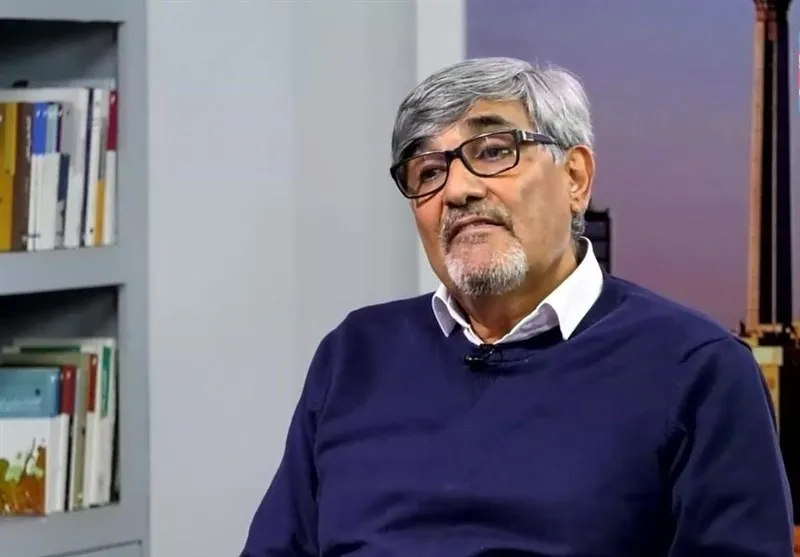
Masoud Roghani Zanjani, an economist, professor of economic development at Allameh Tabatabai University, and former Vice President and head of the Plan and Budget Organization, is one of the most widely discussed and, at the same time, least talkative figures in Iran's contemporary economics. With the longest tenure as head of the Plan and Budget Organization after the revolution—from 1984 until the second half of the 1990s—he became one of the main architects of Iran's economic policy-making in the most tense post-revolutionary periods: from the war economy of Mir-Hossein Mousavi's government to the economic adjustment policies of Hashemi Rafsanjani's government. Roghani Zanjani, who played a central role in formulating the first and second development plans, has in recent years become one of the most cited critical voices in the field of Iran's political economy through his theory of "two treasuries" and his critique of the system's financial-economic structure.
Who is Masoud Roghani Zanjani?
Masoud Roghani Zanjani (born 1953) is an economist, professor of economic development at the Faculty of Economics of Allameh Tabatabai University, a faculty member of the Niavaran Institute for Research in Management and Planning, and a former Vice President and head of the Plan and Budget Organization of the country in the governments of Mir-Hossein Mousavi and Akbar Hashemi Rafsanjani. He is one of the most widely discussed and, at the same time, least talkative figures in Iran's contemporary economics. With the longest tenure as head of the Plan and Budget Organization after the Islamic Revolution—from 1984 until the second half of the 1990s—he became one of the main architects of Iran's economic policy-making in the most tense post-revolutionary periods, including the peak years of the Iran-Iraq war, the transition from a war economy to reconstruction, and the beginning of economic adjustment policies. Roghani Zanjani, known in Iran's political-economic space as the "black box of Iran's economy in the 1980s and the first half of the 1990s," is considered a prominent example of the ability to bridge different executive periods due to his unique ability to work in two governments with two contrasting economic approaches—from Mousavi's government with its centralist and command-economy orientation during the war, to Hashemi Rafsanjani's first government with its economic adjustment and reconstruction orientation.
The importance of Masoud Roghani Zanjani in Iran's contemporary economic-political sphere can be examined from several angles. First, the longest tenure as head of Iran's most important economic policy-making institution—from 1984—which places him among the record holders in managing this institution. Second, his sustained presence in the economic policy-making structure in the most tense post-revolutionary periods—from the war economy of Mousavi's government, to the two-year "New Conditions" program, to the formulation of the first and second five-year development plans, to the economic adjustment policies of Hashemi's government—which makes him one of the main architects of the post-revolutionary economic structure. Third, his distinctive expertise in market economics, privatization, and free trade—which stood in contrast to the dominant economic tendencies of Mousavi's government, yet Roghani Zanjani was able to maintain his role in the economic structure of that government—an example of his notable intellectual-political flexibility. Fourth, his sustained academic position—as a professor of economic development at Allameh Tabatabai University and a faculty member of the Niavaran Institute—which places him among the most prominent theorists in the field of development planning in Iran. Fifth, his sustained critical analytical presence in the recent period—particularly after breaking his years-long silence following the asset monetization policies—which has made him one of the most cited critical voices in the field of Iran's political economy.
In one of his recent widely discussed analytical positions, Roghani Zanjani, referring to Iran's economic structure, stated: "The establishment has two treasuries: the government's treasury and the leadership's treasury." This position, which points to the duality of the system's financial-economic structure, is one of his most widely discussed critical statements in the recent period.
Life and Background
Masoud Roghani Zanjani was born in 1953. The family name "Zanjani" indicates his family's connection to the Zanjan region. Born in 1953, Roghani Zanjani belongs to a generation that came of age during the developments leading to the Islamic Revolution and, in his twenties, coincided with the moment of the revolution's victory and the beginning of the Iran-Iraq war.
Detailed information about Roghani Zanjani's family and school years is limited in open media sources. This limited information is relatively common among prominent Iranian economic figures who primarily focus on their specialized scientific activities. What is clear from his professional path is that at the age of 31, in the tense atmosphere of the 1980s, he achieved one of the most sensitive economic positions in Iran.
Beginning of Activity at the Plan and Budget Organization
The initial turning point of Roghani Zanjani's career was his appointment as head of the Plan and Budget Organization in 1984.
Introduction to Mousavi's Government
According to published accounts, Roghani Zanjani's friends were also friends of Engineer Mir-Hossein Mousavi, through whom he became acquainted with Mousavi. Following this acquaintance, Mousavi introduced him for the position of head of the Plan and Budget Organization in 1984. This appointment, which occurred in the tense atmosphere of the peak of the Iran-Iraq war and during the most sensitive period of Iran's economic management, formed the foundation of his entry into the official structure of the system's economic policy-making.
Challenge with Mousavi's Intellectual Framework
Notably, Roghani Zanjani believed in a market economy, privatization, free trade, and minimal government—a framework that stood in contrast to Mir-Hossein Mousavi's intellectual tendencies. According to published accounts, Mousavi's expertise was in art, architecture, and urban planning, and he had a great interest in leftist philosophy. This fundamental intellectual conflict was one of the notable aspects of the economic dynamics of Mousavi's government.
Despite this conflict, Roghani Zanjani is known as a "longtime companion of Mir-Hossein Mousavi"—a sign of his intellectual-executive flexibility in the difficult economic conditions of the war.
Structural Changes in the Plan and Budget Organization
Roghani Zanjani witnessed several notable structural changes in the Plan and Budget Organization during his management tenure.
Upgrade from Ministry Advisor to Ministry Level (1984)
According to published reports, in 1984, the Plan and Budget Organization was upgraded from the level of Ministry Advisor to the level of Ministry of Budget. This change was due to a change in the Guardian Council and pressure from the parliament for greater oversight of the Plan and Budget Organization.
According to Roghani Zanjani's account: "The parliament understood the importance of the Plan and Budget Organization and wanted to increase its power against the government by bringing the organization under its oversight, because whoever controlled this organization shifted the balance in their favor."
Transformation into the Vice Presidency (1988)
With the amendment of the constitution in 1988, the Ministry of Budget was transformed into the Vice Presidency. According to Roghani Zanjani's analysis: "If the organization is upgraded to the Vice Presidency, it considers itself accountable to the head of the government, because the organization's task was to plan for the country's development."
This transformation, which occurred on the eve of the acceptance of Resolution 598 and the end of the Iran-Iraq war, formed the foundation of the economic structure of Hashemi Rafsanjani's reconstruction period.
Managing the Economy During the War
Roghani Zanjani's tenure in Mousavi's government coincided with the severe challenges of the war economy.
The Rationing Economy
According to Roghani Zanjani's account: "The situation was so dire that we were forced to ration hygiene products and detergents. How to secure wheat, oil, and the basic needs of factories were important concerns."
The Two-Year "New Conditions" Program
During this period, the "New Conditions" two-year program was published. According to Roghani Zanjani's account: "The first year was implemented, and conditions worsened. If we had not accepted the ceasefire in 1988, the situation would have been much worse." This position is a sign of his pragmatic view of the necessity of ending the war from an economic perspective.
Acceptance of Resolution 598 as a Turning Point
Roghani Zanjani considers the acceptance of Resolution 598 in 1988 as a historical turning point for Iran's economy—a point at which "the country's economic conditions overcame foreign policy conditions and a difficult decision was made." This analysis is one of his distinctive theoretical perspectives on the economic dimensions of the end of the war.
Hashemi Rafsanjani's Era and Adjustment Policies
After the end of the war and the beginning of Akbar Hashemi Rafsanjani's presidency, Roghani Zanjani continued his activity as Vice President and head of the Plan and Budget Organization in the Construction government.
Formulation of Development Plans
Roghani Zanjani is among the main architects of the first and second five-year development plans of the Islamic Republic of Iran. These plans, which are among the most prominent post-revolutionary development frameworks in Iran, formed the foundation of the economic structure of the Reconstruction era.
Economic Adjustment Policies
The central framework of Hashemi Rafsanjani's economic policy-making was economic adjustment policies—policies aimed at reducing the role of the state in the economy, liberalizing prices, and privatization. Roghani Zanjani, who intellectually aligned with this framework, was among its main advocates.
Critique of the Fate of Privatization
Despite his initial support for privatization, Roghani Zanjani became one of its prominent critics in later years. In one of his notable positions, he stated: "From the very beginning, privatization was not treated mercifully. A project that was supposed to proceed in a competitive and transparent environment to develop the private sector became a means for various power institutions to enhance their economic and political power."
This position, which critiques the appropriation of the privatization project by power institutions, is one of the notable aspects of Roghani Zanjani's critique of Iran's political economy structure in recent decades.
The Roghani Zanjani-Mirzadeh Dichotomy
In one of the prominent narratives surrounding the transition period of Iran's economic policies from adjustment to stabilization, the "Roghani Zanjani-Mirzadeh" dichotomy is raised. In this narrative, at the end of Hashemi Rafsanjani's first presidential term, adjustment policies gave way to stabilization policies—a transformation in which, according to some analyses, "the liberals vacated the field."
Conflict with the Minister of Intelligence
One of the notable aspects of Roghani Zanjani's career is his account of a conflict with the Minister of Intelligence. In a notable interview with EcoIran, Roghani Zanjani detailed this conflict and provided a widely discussed account of Hashemi Rafsanjani's stance in it. This account is one of the debated aspects of his career.
Resignation from Government
From the second half of the 1990s, Roghani Zanjani distanced himself from government work and turned to academic and research activities. This resignation, which occurred in the tense atmosphere of the end of Hashemi Rafsanjani's government and the beginning of the Reform Era, marked a turning point in his transition from the policy-making arena to the theoretical-academic arena.
Academic Activity
After resigning from government, Roghani Zanjani turned to sustained academic activity.
Professor of Economic Development at Allameh Tabatabai University
Roghani Zanjani is a professor of economic development at the Faculty of Economics of Allameh Tabatabai University—one of Iran's most prestigious social-economic sciences universities. This position, in which one of the main architects of Iran's economic planning plays a role in the educational structure of this field, is one of the notable aspects of his transition from the executive to the academic arena.
Membership in the Niavaran Institute for Research in Management and Planning
Roghani Zanjani is also a faculty member of the Niavaran Institute for Research in Management and Planning—a prominent research center that is among the most important intellectual centers in the field of development planning and public administration in Iran.
Return to Public Discourse
After years of media silence, Roghani Zanjani returned to public discourse following the asset monetization policy.
Notable Interview with Mohammad Taheri
Roghani Zanjani, in a notable interview with Mohammad Taheri, critiqued Iran's economic policies. This interview, part of which was reflected in the book The Political Economy of the Islamic Republic, is one of the prominent sources for understanding his theoretical-analytical framework.
Sustained Presence in Economic Media
In recent years, Roghani Zanjani has presented notable analyses in prominent economic media outlets such as EcoIran, Tejarat-e Farda, and other platforms.
See / Iran at the Crossroads of Sanctions and Change; What Awaits the Future? Exclusive Conversation between Abdi Media and Masoud Roghani Zanjani, Economist and Faculty Member of the Niavaran Institute for Research in Management and Planning.
Hear without filter in the cassette box
Views and Theoretical Frameworks
Throughout his intellectual-analytical career, Masoud Roghani Zanjani has formulated a clear intellectual framework.
The "Two Treasuries" Theory
Roghani Zanjani's most central theoretical framework in the recent period is the "Two Treasuries" theory. In his view: "The establishment has two treasuries: the government's treasury and the leadership's treasury." This position, which points to the duality of the system's financial-economic structure, is one of his most widely discussed critical statements.
Critique of Dependence on Oil Revenues
In one of his notable analytical positions, Roghani Zanjani stated: "One of the characteristics of high-ranking officials in the history of Iran's economic developments is the speed of consumption of oil revenues and the creation of rapid changes, which has been one of the diseases of Iran's economy." This position, which critiques the structural dependence of Iran's economy on oil, is one of the notable aspects of his critical framework.
Critique of Cash Subsidies
In one of his notable positions, Roghani Zanjani stated: "Cash subsidies are not targeted and are universal. The most important solution to poverty lies within the framework of macro-economic policies."
The Necessity of Energy Price Reform
In one of his notable strategic positions, he stated: "We must certainly pursue energy price reform. This reform may cause social problems. If the president wants to fix the budget deficit... balancing the budget is a surgery that also involves bleeding."
Leadership-President Trust
In one of his notable positions on Iran's political structure, Roghani Zanjani stated: "If there is no trust between the leadership and the president, helping the economy is not possible." This position, which presents the condition of the power structure's cooperation for helping the economy, is one of the critical aspects of his view.
Continuity of the Reformist Current
In one of his notable positions on the political space, Roghani Zanjani stated: "Many people have reformist beliefs, but they are not members of any group. Even with the elimination of reformists, the reformist current will continue."
Criticisms and Challenges
Despite Roghani Zanjani's prominent credibility, he has faced criticism from some detractors in recent years.
Criticism from the Principlist Current
Some critics from the principlist current—particularly in media outlets such as Tasnim, Alef, and Mashregh—have accused Roghani Zanjani of "leftist policies in Mousavi's government" and "excessive confiscations."
Roghani Zanjani's Account
In response, Roghani Zanjani stated in the book The Political Economy of the Islamic Republic: "Mr. Mousavi's great supporter in confronting the right-wing faction was Mr. Hashemi himself." This account, in which Hashemi Rafsanjani's role as Mousavi's supporter against the right-wing faction is highlighted, is one of the debated aspects of his historical-economic narrative.
Connections with Figures and Currents
Masoud Roghani Zanjani is situated within a network of economic-political connections with prominent figures of the Islamic Republic. At the historical level, his sustained relationship with Mir-Hossein Mousavi and Akbar Hashemi Rafsanjani formed his central network of relationships.
At the economic level, his relationship with the extensive network of prominent Iranian economists forms his academic network.
At the academic level, his relationship with Allameh Tabatabai University and the Niavaran Institute for Research in Management and Planning forms his institutional network.
At the media level, his consistent presence in prominent economic media outlets forms his media communications network.
Conclusion
Masoud Roghani Zanjani is one of the most widely discussed and, at the same time, least talkative figures in Iran's contemporary economics. With a unique combination of the longest tenure as head of the Plan and Budget Organization after the revolution, sustained presence in economic policy-making in the most tense post-revolutionary periods, exceptional ability to bridge two governments with contrasting economic approaches, central role in formulating the first and second five-year development plans, distinctive expertise in market economics and privatization, sustained academic position as a professor of economic development, and finally, a sustained critical analytical presence in the recent period, he occupies a unique position in Iran's contemporary economic-political structure.
Roghani Zanjani's distinguishing feature, on the first level, is his exceptional ability to bridge two contrasting economic approaches—an ability in which an economist believing in a market economy, in Mousavi's government with its command-economy tendencies and then in Hashemi's government with its adjustment policies, consistently served at the head of the Plan and Budget Organization. This intellectual-executive flexibility is relatively unique among prominent Iranian economic figures. On the second level, his years-long silence after his resignation and then his highly visible return—which has made him one of the most cited analysts of Iran's political economy in the recent period—is one of the notable aspects of his career. On the third level, his structural critique of Iran's political economy—particularly with the "Two Treasuries" theory and his critique of the speed of oil revenue consumption—is one of the most widely discussed critical frameworks in contemporary Iranian economic discourse.
From an analytical perspective, Roghani Zanjani's position exemplifies the phenomenon of the "technocrat-executive manager bridging governments" in contemporary Iran—a phenomenon in which an economic expert with a clear intellectual framework, over decades, plays a sustained role in Iran's most tense economic periods. This pattern, which has other examples among prominent post-revolutionary economic figures, has found a special reflection in Roghani Zanjani through his record-long tenure as head of the Plan and Budget Organization and his exceptional intellectual-executive flexibility.
What is clear from today's perspective is that the topics Roghani Zanjani has addressed in his works and positions—from analysis of the war period and acceptance of Resolution 598, the formation of economic adjustment policies, critique of the fate of privatization, critique of cash subsidies, the necessity of energy price reform, the "Two Treasuries" theory, and critique of recent governments' economic policies—remain among the most debated topics in contemporary Iranian economic-political discourse. In a situation where Iran is in one of its most tense economic periods—particularly after the 12-day Iran-Israel war in June 2025 and increasing economic challenges—Roghani Zanjani's analytical voice, with a combination of exceptional historical credibility and a distinctive theoretical framework, is one of the main references for this discourse in Persian-language media.
Frequently Asked Questions
Who is Masoud Roghani Zanjani?
Masoud Roghani Zanjani (born 1953) is an economist, professor of economic development at the Faculty of Economics of Allameh Tabatabai University, a faculty member of the Niavaran Institute for Research in Management and Planning, and a former Vice President and head of the Plan and Budget Organization of the country in the governments of Mir-Hossein Mousavi and Akbar Hashemi Rafsanjani. He holds the record for the longest tenure as head of the Plan and Budget Organization after the revolution.
When was Roghani Zanjani appointed as head of the Plan and Budget Organization?
Roghani Zanjani was appointed as head of the Plan and Budget Organization in 1984, introduced by Mir-Hossein Mousavi. This tenure continued until the second half of the 1990s—the end of Hashemi Rafsanjani's first term.
What is Roghani Zanjani's intellectual-economic framework?
Roghani Zanjani believes in a market economy, privatization, free trade, and minimal government. This framework stood in contrast to the command-economy tendencies of Mousavi's government but aligned with the economic adjustment policies of Hashemi Rafsanjani's government.
What were the structural changes in the Plan and Budget Organization during Roghani Zanjani's tenure?
During Roghani Zanjani's tenure, the Plan and Budget Organization experienced two notable structural changes: in 1984, it was upgraded from the level of Ministry Advisor to the level of Ministry; and with the amendment of the constitution in 1988, the Ministry of Budget was transformed into the Vice Presidency.
What is Roghani Zanjani's "Two Treasuries" theory?
In one of his recent widely discussed analytical positions, Roghani Zanjani, referring to Iran's economic structure, stated: "The establishment has two treasuries: the government's treasury and the leadership's treasury." This position, which points to the duality of the system's financial-economic structure, is one of his most widely discussed critical statements.
What is Roghani Zanjani's critique of privatization?
In one of his notable positions, Roghani Zanjani stated: "From the very beginning, privatization was not treated mercifully. A project that was supposed to proceed in a competitive and transparent environment to develop the private sector became a means for various power institutions to enhance their economic and political power."
What is Roghani Zanjani's view on energy price reform?
In one of his notable strategic positions, Roghani Zanjani stated: "We must certainly pursue energy price reform. This reform may cause social problems... balancing the budget is a surgery that also involves bleeding."
What is Roghani Zanjani's view on cash subsidies?
Roghani Zanjani has stated: "Cash subsidies are not targeted and are universal. The most important solution to poverty lies within the framework of macro-economic policies."
What is Roghani Zanjani's relationship with Mir-Hossein Mousavi?
Roghani Zanjani is known as a "longtime companion of Mir-Hossein Mousavi." His friends were also friends of Mousavi, through whom they became acquainted, and Mousavi appointed him as head of the Plan and Budget Organization in 1984. Despite their intellectual-economic differences, there was a sustained cooperation between them.
Is Masoud Roghani Zanjani still active?
Yes, Masoud Roghani Zanjani, as a professor of economic development at the Faculty of Economics of Allameh Tabatabai University and a faculty member of the Niavaran Institute for Research in Management and Planning, is active in the academic arena. In recent years, after years of media silence, he returned to public discourse following the asset monetization policy. His consistent presence in prominent economic media outlets is a sign of his sustained analytical activity. His critical positions on recent governments' economic policies, the "Two Treasuries" theory, energy price reform, and the challenges of Iran's political economy have received widespread coverage in Persian-language media.
Take less than a minute, register and share your opinion under this post.
Insulting or inciting messages will be deleted.
Sign Up