
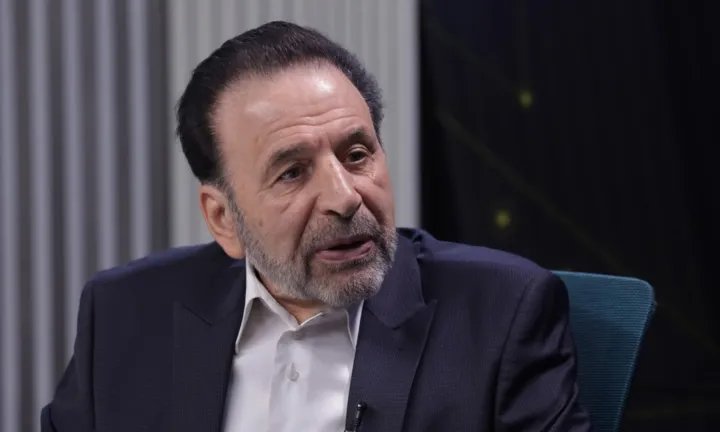
Mahmoud Vaezi Jezeh—a prominent Moderate politician, former Minister of Information and Communications Technology in Hassan Rouhani's 11th administration, former Chief of Staff and Head of the Presidential Administration in the 12th administration, a co-founder and current Deputy Secretary-General of the Moderation and Development Party of Iran, former Deputy Minister of Foreign Affairs for European and American Affairs, former CEO of the Telecommunication Company of Iran (TCI), and an influential figure in Iranian diplomacy, technology, and domestic politics—secured his ministerial post with 218 parliamentary confirmation votes and played an unparalleled role in expanding the country's cyberspace by unlocking internet infrastructure; during Rouhani's second term, he rose to become arguably the most powerful Chief of Staff in post-revolutionary Iranian history, wielding influence that arguably surpassed that of the First Vice President, and in the post-government era, through his outspoken criticism of unformatted internet filtering, backing of Masoud Pezeshkian, and public responses to economic disruption, he has consistently remained a key figurehead for the discourse of moderation, development, and active diplomacy in contemporary Iran.
Here is the complete and precise English translation of the provided biographical text on Mahmoud Vaezi:
Mahmoud Vaezi (full name: Mahmoud Vaezi Jezeh, born May 22, 1952, in a southern neighborhood of Tehran) is a prominent Iranian Moderate politician, former Chief of Staff to the President and Head of the Presidential Administration in Hassan Rouhani's 12th government from August 3, 2017, to August 3, 2021 (serving 4 consecutive years), former Minister of Information and Communications Technology in Rouhani's 11th government from August 15, 2013, to August 3, 2017 (winning parliamentary confirmation with 218 votes in favor), a prominent co-founder, current Deputy Secretary-General, and Head of the Political Bureau of the Moderation and Development Party of Iran (the primary party supporting Hassan Rouhani), former CEO of the Telecommunication Company of Iran (TCI), former Deputy Minister of Foreign Affairs for European and American Affairs, former Foreign Economy Advisor to the Foreign Minister, former Deputy for Foreign Policy Research at the Expediency Discernment Council's Center for Strategic Research (during Hassan Rouhani's presidency of the center), a distinguished Iranian diplomat and senior executive, a prominent alumnus of the Faculty of Law and Political Science at the University of Tehran, a widely discussed critical voice against unformatted internet filtering who stated on October 24, 2024: "Unformatted filtering carries multifaceted harm and stands as one of the primary drivers of social discontent," a figure involved in notable controversies regarding friction with Ali Shamkhani (former Secretary of the Supreme National Security Council) and Reza Rahmani (former Minister of Industry, Mine, and Trade), an active figure during Masoud Pezeshkian's 14th administration providing both vocal support and sustained constructive criticism, uniquely characterized as "more than just a minister in Rouhani's first government" and occupying "a status exceeding that of the First Vice President in the second government," and simultaneously one of the most widely reported, prominent, and distinct hybrid diplomatic-executive-technocratic Moderate figures in post-revolutionary Iran over the past five decades, ranking among the central figures of the discourse of moderation and active diplomacy in contemporary Iran.
Mahmoud Vaezi—whose unique trajectory spans a prominent religious-traditional background in a southern neighborhood of Tehran, an academic path including studies at the Faculty of Law and Political Science at the University of Tehran, early career milestones in technology and communications starting as an advisor to the Minister of Communications, a diplomatic career at the Ministry of Foreign Affairs including his high-profile tenure as Deputy Minister for European and American Affairs and Foreign Economy Advisor to the Minister (forming the foundation of his enduring diplomatic identity), his executive tenure as CEO of the Telecommunication Company of Iran (one of Iran's most prominent state-owned communications enterprises), his role as Deputy for Foreign Policy Research at the Center for Strategic Research under Hassan Rouhani (which established his close, enduring bond with Rouhani), his active participation in co-founding the Moderation and Development Party of Iran (the flagship Moderate party in post-revolutionary Iran and Rouhani's primary political platform), his leadership as Deputy Secretary-General and Head of the Political Bureau of this party, his vocal backing of Rouhani's candidacy in the 2013 presidential election, his nomination by Rouhani as Minister of Information and Communications Technology and confirmation with 218 votes, his 4-year tenure as ICT Minister in Rouhani's 11th administration from August 15, 2013, to August 3, 2017 (marking one of post-revolutionary Iran's most consequential communications ministries), his pivotal role in "unlocking the country's internet" and shaping the IT landscape, his "indeniable" influence behind the appointment of Mohammad-Javad Azari Jahromi as ICT Minister in the 12th administration (reflecting his status as "more than a minister" in the first term), his 4-year tenure as Chief of Staff to the President and Head of the Presidential Administration in Rouhani's 12th government from August 3, 2017, to August 3, 2021 (ranking among the longest-serving presidential chiefs of staff in post-revolutionary Iran), his influential role occupying "a position exceeding that of the First Vice President" in Rouhani's second term, his executive management of the Presidential Administration during critical historical junctures including the U.S. withdrawal from the JCPOA in May 2018, the protests of December 2017 and November 2019, the assassination of General Qasem Soleimani in January 2020, the COVID-19 pandemic starting in February 2020, and the 13th presidential election in June 2021, his public disagreements with key Principalist figures and cabinet colleagues (notably Ali Shamkhani and Reza Rahmani), his co-chairing of the 28th Joint Economic Cooperation Commission between Iran and Turkey alongside Turkish Minister of Energy Fatih Dönmez on April 28, 2021, the conclusion of his tenure as Chief of Staff on August 3, 2021, his sustained post-government political and party activities including his widely reported call for Masoud Mirkazemi (Head of the Plan and Budget Organization in Ebrahim Raisi's government) to review the previous administration's economic record, and finally, his recent public stances during Pezeshkian's 14th administration—including backing Pezeshkian's campaign and call for change on June 26, 2024, criticizing unformatted filtering on October 24, 2024, as a cause of social dissatisfaction, and speaking out against market profiteering—has established himself as one of post-revolutionary Iran's most enduring and widely discussed hybrid diplomatic-executive-technocratic Moderate figures.
The significance of Mahmoud Vaezi in the contemporary historical-political spectrum of Iran can be examined through several lenses:
Long-Serving Presidential Chief of Staff: Serving for 4 consecutive years as Chief of Staff to Hassan Rouhani in the 12th government—holding an influential position described as exceeding that of the First Vice President—represents a major dimension of his executive endurance.
ICT Minister and Internet Expansion: Serving as ICT Minister in Rouhani's 11th government—recognized as the architect of "unlocking the country's internet"—marks a major chapter in his technological leadership.
Party Co-Founder and Strategist: As a co-founder of the Moderation and Development Party—the primary Moderate political party supporting Hassan Rouhani—his role as Deputy Secretary-General and Political Bureau Head highlights his party-building impact.
Senior Diplomat: As former Deputy Minister of Foreign Affairs for European and American Affairs, he stands among the notable diplomatic figures of post-revolutionary Iran.
Corporate and Executive Leadership: As former CEO of the Telecommunication Company of Iran (TCI), he led one of the country's most critical state enterprises in communications.
Important Note: The career and record of Mahmoud Vaezi are viewed through distinctly contrasting perspectives within Persian-language media and political circles:
Moderate and Reformist Discourse: He is recognized as a "distinguished Chief of Staff to Rouhani," "the ICT Minister who unlocked the internet," and "a co-founder of the Moderation and Development Party."
Principalist Critics: His tenure as Chief of Staff—particularly regarding public feuds with Ali Shamkhani, Reza Rahmani, and other state officials—has been subject to strong criticism.
Media and Political Commentators: His influence in "a position exceeding that of the First Vice President"—one of the most debated instances of Chief of Staff power in post-revolutionary Iranian governments—has been a focal point of debate.
Critics of the Pezeshkian Administration: His recent vocal support for the 14th government—forming part of the Moderate network's continuity—has drawn notable attention.
This profile presents accounts published in primary Persian-language media and historical sources with an analytical and neutral stance.
Early Life and Family Background
Mahmoud Vaezi was born on May 22, 1952, in a southern neighborhood of Tehran—one of the capital's traditional, religious districts.
Family Name: Vaezi Jezeh
According to published reports: "Mahmoud Vaezi, with the full name Mahmoud Vaezi Jezeh (born May 22, 1952), is an Iranian Moderate politician." The surname "Jezeh" refers to the village of Jezeh, representing his ancestral origin.
Religious Background in South Tehran
According to published reports: "Vaezi was born on May 22, 1952, into a religious family in a southern neighborhood of Tehran." This religious, south-Tehran background formed the bedrock of his enduring religious-Moderate identity.
Education
Mahmoud Vaezi possesses an academic background in law and political science.
Faculty of Law and Political Science, University of Tehran
According to published reports: "[Vaezi] is a graduate of the Faculty of Law and Political Science at the University of Tehran." This institution ranks among Iran's premier academic hubs for political science and has educated numerous prominent post-revolutionary Iranian diplomats and politicians.
Early Career and Diplomatic Record
Advisor to the Minister of Communications
According to published reports: "Vaezi initially served as an advisor to the Minister [of Communications]."
Deputy Foreign Minister for European and American Affairs
A major chapter of Vaezi's diplomatic career was serving as Deputy Minister of Foreign Affairs for European and American Affairs. According to published reports: "[Vaezi] served as Deputy Minister for European and American Affairs at the Ministry of Foreign Affairs." This role anchored his diplomatic profile, focusing on Western relations during the post-Iran-Iraq War era and Akbar Hashemi Rafsanjani's "Reconstruction" administration.
Foreign Economy Advisor to the Foreign Minister
According to published reports: "[Vaezi] served as Foreign Economy Advisor to the Minister of Foreign Affairs," establishing his economic-diplomatic background.
CEO of Telecommunication Company of Iran (TCI)
According to published reports: "[Vaezi] served as CEO of the Telecommunication Company of Iran." Leading TCI—one of Iran's major state-owned telecom enterprises—formed the foundation of his technical and executive management background.
Deputy for Foreign Policy Research at the Center for Strategic Research
A crucial period in Vaezi's strategic career was serving as Deputy for Foreign Policy Research at the Expediency Council's Center for Strategic Research. According to published reports: "[Vaezi] served as Deputy for Foreign Policy Research at the Center for Strategic Research in the Expediency Discernment Council." Serving under Hassan Rouhani's presidency at the center laid the groundwork for his long-standing close relationship with Rouhani.
Co-Founding the Moderation and Development Party
According to published reports: "Mahmoud Vaezi is among the founding politicians of the Moderation and Development Party, serving as Minister of Communications in the 11th government and Chief of Staff to the President in the 12th government." As the main party supporting Hassan Rouhani, Vaezi has served as its Deputy Secretary-General and Head of the Political Bureau.
Ministry of Information and Communications Technology (2013–2017)
Parliamentary Confirmation (218 Votes)
According to published reports: "In the 11th government, following the election of Hassan Rouhani as President, he nominated Mahmoud Vaezi as Minister of Information and Communications Technology to the Islamic Consultative Assembly, where he secured a vote of confidence with a total of 218 votes in favor."
"Unlocking the Internet"
According to published reports: "Mahmoud Vaezi was the fifth Minister of Information and Communications Technology of Iran... Returning to the communications sector after years, he oversaw an event-filled and active tenure. On one hand, he succeeded in unlocking internet access in the country." This approach became a hallmark of the Moderate administration's technological agenda.
Role in the Appointment of Azari Jahromi
According to published reports: "Vaezi's undeniable role in Mohammad-Javad Azari Jahromi becoming Minister demonstrated that Vaezi was more than just a minister even during Rouhani's first government."
Presidential Chief of Staff (2017–2021)
Vaezi served for 4 full years as Chief of Staff to the President and Head of the Presidential Administration in Rouhani's 12th government. According to published reports: "Vaezi also served as Head of the Presidential Administration in the 12th government."
"Status Exceeding the First Vice President"
According to published reports: "Vaezi was appointed Chief of Staff to the President in Hassan Rouhani's second government; however, he once again played a role exceeding that of a standard chief of staff... It became evident that Vaezi's position in Hassan Rouhani's second government was exceptionally prominent, perhaps even exceeding that of the First Vice President."
Managing Major Historical Events (2017–2021)
During Vaezi's 4-year tenure as Chief of Staff, several major events unfolded:
U.S. withdrawal from the JCPOA (May 8, 2018)
Nationwide protests of December 2017 and November 2019
Assassination of General Qasem Soleimani (January 3, 2020)
Onset of the COVID-19 pandemic in Iran (February/March 2020)
13th Presidential Election (June 2021)
28th Iran-Turkey Joint Economic Commission
On April 28, 2021, published reports noted: "The 28th Joint Economic Cooperation Commission between Iran and Turkey commenced via videoconference hosted in Tehran, co-chaired by Mahmoud Vaezi, Chief of Staff to the President of Iran, and Fatih Dönmez, Minister of Energy and Natural Resources of Turkey."
Disputes with Government Figures
Vaezi's tenure as Chief of Staff involved public disagreements with notable figures, including Ali Shamkhani (Secretary of the Supreme National Security Council) and Reza Rahmani (Minister of Industry, Mine, and Trade).
Post-Government Era (2021–Present)
Following the end of the Rouhani administration on August 3, 2021, Vaezi continued his party and political activities as Deputy Secretary-General and Head of the Political Bureau of the Moderation and Development Party.
Response to Masoud Mirkazemi (April 2023)
On April 11, 2023, in response to remarks by Masoud Mirkazemi (Head of the Plan and Budget Organization in Ebrahim Raisi's administration), Vaezi invited him to review the economic record of the previous government, stating that former officials were ready to clarify any ambiguities.
Defense of the 12th Administration's Record
On August 2, 2021, Vaezi noted: "Despite severe conditions caused by the economic war and the outbreak of COVID-19, the 12th government delivered worthy services under extremely difficult circumstances."
Stances During the Pezeshkian Administration
Backing Pezeshkian's Campaign (June 26, 2024): Vaezi publicly supported Masoud Pezeshkian's presidential bid, framing him as a candidate for change capable of driving higher electoral turnout.
Criticism of Unformatted Filtering (October 24, 2024): Vaezi stated: "Unformatted filtering carries multifaceted harm and stands as one of the primary drivers of social discontent."
Response to Market Instability: Vaezi urged the 14th administration to exert all efforts to curb runaway price increases and market disruption to protect public welfare and rebuild social trust.
Political and Philosophical Framework
Over his multi-decade career, Mahmoud Vaezi has articulated a political platform defined by:
Moderation (Etedal): Advocating political balance, constructive engagement, and policy moderation within the framework of the Islamic Republic, as embodied by the Moderation and Development Party.
Active Diplomacy: Emphasizing diplomatic outreach and economic statecraft, drawing on his experience as Deputy Foreign Minister and foreign economy advisor.
Technological Development: Supporting digital infrastructure expansion and opposing indiscriminate internet censorship.
Key Relationships and Affiliations
Hassan Rouhani: His primary political partnership, spanning the Center for Strategic Research, the founding of the Moderation and Development Party, and 8 years in the 11th and 12th administrations.
Moderation and Development Party Leadership: Leading the party alongside key Moderate figures as its Deputy Secretary-General and Political Bureau Head.
Mohammad-Javad Azari Jahromi: Maintained a strong political connection, playing a pivotal role in Jahromi's rise to ICT Minister in 2017.
Masoud Pezeshkian: Supported Pezeshkian's 2024 presidential campaign and 14th administration agenda.
Frequently Asked Questions (FAQ)
Who is Mahmoud Vaezi?
Mahmoud Vaezi (full name: Mahmoud Vaezi Jezeh, born May 22, 1952, in Tehran) is an Iranian Moderate politician, former Chief of Staff to President Hassan Rouhani (2017–2021), former Minister of Information and Communications Technology (2013–2017), and co-founder and Deputy Secretary-General of the Moderation and Development Party.
What is Vaezi's educational background?
He is a graduate of the Faculty of Law and Political Science at the University of Tehran.
What were Vaezi's key positions before becoming Minister?
Advisor to the Minister of Communications, Deputy Foreign Minister for European and American Affairs, Foreign Economy Advisor to the Foreign Minister, CEO of the Telecommunication Company of Iran (TCI), and Deputy for Foreign Policy Research at the Center for Strategic Research.
What is Vaezi's role in the Moderation and Development Party?
He is a founding member and currently serves as its Deputy Secretary-General and Head of the Political Bureau.
When did Vaezi serve as ICT Minister?
He served from August 15, 2013, to August 3, 2017, winning parliamentary confirmation with 218 votes.
What role did he play in the second Rouhani term?
He served as Chief of Staff to the President and Head of the Presidential Administration from August 3, 2017, to August 3, 2021, holding a position widely described as wielding significant influence within the cabinet.
What is Vaezi's stance on internet filtering?
On October 24, 2024, Vaezi publicly criticized unformatted internet filtering, stating that it inflicts multifaceted damage and serves as a major source of social discontent.
What is Vaezi's stance on the Pezeshkian administration?
He supported Masoud Pezeshkian during the 2024 presidential election and has voiced support for the 14th administration's economic and social goals while urging strong action against inflation and market instability.
Take less than a minute, register and share your opinion under this post.
Insulting or inciting messages will be deleted.
Sign Up