
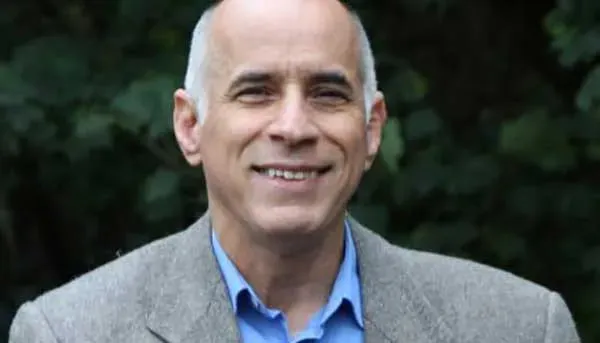
Mahmoud Delkhasteh, a political sociologist and alumnus of the London School of Economics (LSE), is an author who focuses on re-examining the first two years following the 1979 Revolution and analyzing the relationship between religion and power. In this article, we take a comprehensive look at his background, education, media commentaries in The Huffington Post, and his intellectual stances regarding contemporary Iranian history.
Here is the professional and fluent English translation of the text, maintaining its academic, structured, and formal tone:
Who is Mahmoud Delkhasteh?
Mahmoud Delkhasteh is a political sociologist, researcher, and Iranian-British author who holds a PhD in Sociology from the London School of Economics and Political Science (LSE). He is a prominent researcher in the field of the 1979 Iranian Revolution and an active figure within the intellectual current closely aligned with Abolhassan Banisadr in exile. Over the past two decades, by focusing on a theoretical-historical re-examination of the Islamic Revolution, its transition process into what he terms "religious totalitarianism," and the pivotal role of Banisadr within this narrative, Delkhasteh has become a distinct analyst in the field of contemporary Iranian political sociology.
Delkhasteh's significance within the Iranian research and intellectual landscape can be analyzed from several key dimensions:
Academic Contribution: His doctoral dissertation at LSE, titled "Islamic Discourses of Power and Freedom in the Iranian Revolution, 1979-81," stands as one of the few systematic academic studies focusing specifically on the first two years following the revolution and the complex transitional process to the post-revolutionary regime—a historical pocket that has often received less rigorous academic attention.
Theoretical Framework: Delkhasteh specializes in providing a "non-deterministic" theoretical framework for understanding revolutions. This framework simultaneously encompasses both structure and agency, allowing him to challenge overly simplistic or reductionist narratives regarding the Iranian Revolution.
Historical Research: His involvement in a highly discussed project titled "The Genealogy of the June 20, 1981 Coup"—an extensive research initiative he published regarding the events leading up to the dismissal of Banisadr and what he characterizes as a "coup"—has been one of his most notable research and political contributions.Here is the professional and fluent English translation of the remaining sections of the text, keeping the high-quality academic and analytical register:
Delkhasteh is also highly active in the media landscape. His writings are routinely published in English-language outlets (including The Huffington Post) and Persian-language platforms (most notably the website Enghelab-e Eslami dar Hejrat ["Islamic Revolution in Exile"], Medium, and other independent media). His primary areas of expertise encompass Iranian and Middle Eastern politics, Islam, democracy, and human rights.
Life and Background
Published information regarding the early life, exact birth date, and family background of Mahmoud Delkhasteh remains limited in the public domain. This characteristic is relatively common among diaspora Iranian scholars whose primary focus rests on academic and intellectual output rather than personal branding. Available accounts indicate that Delkhasteh spent a portion of his life in Iran before migrating to the United Kingdom to pursue his higher education and academic career.
A prominent feature of Delkhasteh's intellectual and political background is a generational experience closely tied to the 1979 Revolution and its immediate aftermath—particularly the presidency of Banisadr and the events of June 1981. This generational backdrop directly informs his research focus on this specific era and shapes his distinct perspective on the character and historical position of Banisadr.
Education
Delkhasteh pursued his postgraduate studies at one of the world's most prestigious centers for the social sciences. He successfully earned his PhD in Sociology from the London School of Economics and Political Science (LSE)—an institution consistently ranked among the top 5 to 10 globally for sociology and political science.
His doctoral dissertation, completed in 2007, was titled "Islamic Discourses of Power and Freedom in the Iranian Revolution, 1979-1981." This 325-page dissertation, defended at LSE, pursued two key objectives: first, to expand the academic understanding of the Iranian Revolution and its "transition to religious totalitarianism"; and second, to formulate a non-deterministic theoretical framework for understanding revolutions broadly—a framework that integrates both structure and the agency of actors. This dissertation formed the cornerstone of Delkhasteh's subsequent theoretical work, and he has spent the years since adapting it into a comprehensive book on the same topic.
Delkhasteh’s academic training at LSE positions him within the tradition of historical sociology and political sociology. In the UK, this tradition is championed by figures such as Michael Mann and John A. Hall, focusing heavily on the analysis of power, discourse, and the processes of socio-political transformation.
Research and Areas of Specialization
Throughout his research career, Mahmoud Delkhasteh has focused on several interconnected domains:
The Sociology of the 1979 Iranian Revolution: He focuses specifically on the first two years following the revolution's victory (1979–1981), an era defined by competing political-Islamic discourses vying to define the nature of the new regime. In this arena, Delkhasteh argues that the transition from revolution to what he terms "religious totalitarianism" was not a deterministic, structurally inevitable process, but rather the outcome of choices made by specific actors at pivotal historical junctures.
The Political Sociology of Iran and the Middle East: Within this domain, he analyzes power dynamics, democracy, human rights, and the relationship between religion and politics in the region.
Islam and Democracy: Extending the intellectual tradition of Banisadr, Delkhasteh presents interpretations of Islam that are inherently compatible with democracy, popular sovereignty, and human rights, deliberately positioning these interpretations in direct opposition to the "authoritarian-totalitarian (Velayi) reading."
Human Rights and Civil Liberties in Contemporary Iran: A theme regularly reflected in his numerous commentaries and articles across English-language media platforms.
The Project on "The Genealogy of the June 20, 1981 Coup"
One of Delkhasteh's most significant research and political contributions is his detailed study titled "The Genealogy of the June 20, 1981 Coup." This research, primarily published on the Enghelab-e Eslami dar Hejrat website and initially serialized by Radio Zamaneh, re-examines the events that culminated in the impeachment and removal of Abolhassan Banisadr from the presidency in June 1981.
Delkhasteh's central thesis in this study is that the events of June 20, 1981, did not constitute a standard, legal impeachment process; rather, they bore the structural hallmarks of a "coup" against the regime's constitutional-republican architecture and against its first president elected by direct popular vote. Drawing on document analysis, historical narratives, and theoretical framing, the study endeavors to show that the events of that period—from the impeachment proposal to the subsequent mass arrests and executions—were part of a systematic project to eliminate the republican alternative from the power structure.
This research triggered significant counter-reactions. According to Delkhasteh, following its publication, the Islamic Revolutionary Guard Corps (IRGC) released a book in response, and journalist Akbar Ganji penned a series of 14 articles countering his thesis. Ganji's series culminated in a final piece titled "Cut from the Same Cloth" ("Az Sar o Tah-e Yek Karbas"), an essay Delkhasteh views as an attempt to popularize the narrative that "Khomeini and Banisadr were ultimately cut from the same cloth" (a historical conclusion Delkhasteh categorically rejects). Additionally, certain independent websites initially carried the text of this study but subsequently pulled it down—an issue Delkhasteh attributes to self-censorship.
Media and Writing Activities
In recent years, Delkhasteh has been one of the most active Iranian-born commentators in English-language media. The Huffington Post (HuffPost)—one of the world's most widely read online media networks—has served as a primary platform for his English-language analytical essays.
Furthermore, Delkhasteh is active on the Medium platform, where he publishes analytical-philosophical essays covering topics such as "Why must we fight?", political engagement under adverse conditions, and the meaning of agency within a repressive environment.
In the Persian-language sphere, Delkhasteh is a staff writer for the websites Enghelab-e Eslami dar Hejrat (Enghelabe-Eslami) and Majame-e Eslami-ye Iranian ("The Iranian Islamic Assemblies"). These platforms operate along the lines of Banisadr's intellectual school and, during his lifetime, served as the primary hubs for publishing the stances, statements, and works of the political-intellectual current close to post-revolutionary Iran's first president.
Perspectives and Stances
Throughout his years of activity, Mahmoud Delkhasteh has formulated a coherent intellectual framework that aligns with the intellectual school of Banisadr, while infusing it with a richer academic-sociological dimension.
For an analysis of the power structure and political forecasts, you can watch the interview with Dr. Mahmoud Delkhasteh discussing the 2024 elections and the future outlook of Iran on Abdi Media.Defending Banisadr's Intellectual Legacy
Delkhasteh is one of the most dedicated defenders of Abolhassan Banisadr's intellectual legacy. In numerous commentaries, he argues that over more than half a century, Banisadr authored more than 30 books and hundreds of articles spanning philosophy, theology, sociology, politics, and economics. He contends that most of Banisadr's critics (particularly within monarchist and secular currents) pass judgment on him without any serious familiarity with this heritage. In Delkhasteh's view, this unfamiliarity with Banisadr's intellectual works is a primary cause of the distorted narratives surrounding him.
Critique of the "Official Narrative" of the Revolution
In line with his non-deterministic theoretical framework, Delkhasteh critiques narratives that depict the 1979 Revolution's transition into religious despotism as an "inevitable," "structural," or "predetermined" outcome. In his view, this transition was the result of active—and avoidable—choices made by specific individuals and groups at pivotal historical junctures. This framework allows him to maintain the possibility of "alternative paths," rejecting the notion that the current autocracy was the definitive, absolute outcome of the revolution.
Critique of Velayat-e Faqih and Defense of Popular Sovereignty
Extending the intellectual school of Banisadr, Delkhasteh is a severe critic of the institution of Velayat-e Faqih (Guardianship of the Islamic Jurist) and the power structure of the Islamic Republic. He champions popular sovereignty, national independence, liberty, and an interpretation of Islam that is inherently compatible with democracy and human rights.
Critique of Censorship within Intellectual Spaces
A recurring theme in Delkhasteh's writings is his critique of "self-censorship" and explicit censorship within the Iranian media landscape—including on Reformist and Nationalist-Religious (Melli-Mazhabi) websites—directed against the stances of the current close to Banisadr. He has repeatedly pointed out instances where his comments or articles written in defense of Banisadr were either rejected for publication or deleted by various media outlets.
Controversies and Intellectual Challenges
Despite his academic credentials, Delkhasteh has faced significant challenges within the Iranian intellectual sphere. The primary challenge stems from his confrontations with Banisadr's critics across various opposition factions.
In numerous essays, Delkhasteh has engaged in intense debates with well-known figures such as Akbar Ganji, Hasan Yousefi Eshkevari, and other critics of Banisadr. For instance, following an article penned by Yousefi Eshkevari, Delkhasteh proposed a formal debate. Eshkevari accepted on the condition that the debate be held with Banisadr himself, though it ultimately never materialized. These episodes have established Delkhasteh as one of the most visible faces dedicated to the persistent defense of Banisadr in the Iranian media space.
Another notable point is that while Delkhasteh's intellectual alignment with Banisadr's movement is unmistakable, public records indicate that—unlike Mehran Mostafavi (Banisadr's son-in-law)—he has no familial ties to Banisadr. His connection to this movement is strictly intellectual and political.
Affiliations with Figures and Currents
In the Iranian intellectual-political landscape, Mahmoud Delkhasteh’s name is tied to a specific network of figures and institutions, at the center of which lie Abolhassan Banisadr and his intellectual legacy. Delkhasteh has frequently participated in panel discussions, co-authored notes, and engaged in joint media activities alongside Mehran Mostafavi (Banisadr’s son-in-law, a professor at Paris-Saclay University, and a fellow contributor to the same platforms) and other figures active in Banisadr’s intellectual tradition in exile.
At the academic level, Delkhasteh is rooted in the sociological traditions of LSE and British universities. In media debates, his career is marked by dialogue and disputes with figures like journalist Akbar Ganji, religious scholar Hasan Yousefi Eshkevari, and various other opposition analysts.
Discursively, Delkhasteh belongs to the Nationalist-Religious Republican current close to the tradition of Banisadr. This current deliberately distances itself from monarchist, leftist, and Mojahedin-e Khalq (MEK) factions, as well as from most Reformist spectrums within the regime, choosing instead to emphasize the original ideals of the 1979 Revolution (popular sovereignty, independence, and liberty) as a vital heritage.
Conclusion
Mahmoud Delkhasteh is a prominent researcher in contemporary Iranian political sociology among British-Iranians and one of the most active intellectual figures within the political current aligned with Abolhassan Banisadr. His career—spanning a PhD in Sociology from the London School of Economics, extensive research into the 1979 Revolution and the period leading up to June 1981, media contributions to The Huffington Post and Persian websites, and a dedicated defense of Banisadr’s legacy—presents the portrait of a "researcher-activist" who leverages his academic credentials to actively intervene in Iranian political discourse.
Kholodi's defining characteristic, on the first level, is his deep academic specialization in a specific era of contemporary Iranian history (1979 to 1981) which, despite its critical importance, has rarely received systematic academic analysis. This specialization lends scholarly weight to his analyses, particularly regarding the transitional process into the post-revolutionary order. On the second level, his non-deterministic theoretical framework, which integrates structure and agency simultaneously, represents a serious attempt to transcend simplistic, reductionist narratives of the Iranian Revolution.
Analytically, Delkhasteh's role exemplifies the complex position of a "researcher-activist" within the Iranian opposition discourse—a phenomenon where academic analysis merges with the intellectual-political defense of a specific tradition (in this case, Banisadr's school of thought). While this positioning brings distinct strengths, such as analytical precision and theoretical backing, it also presents challenges regarding maintaining a critical distance from the object of study—a challenge routinely highlighted by his critics.
What remains clear from today's perspective is that the questions Delkhasteh raises in his research—ranging from the fate of the 1979 Revolution and its potential paths to the true nature of June 1981 and Banisadr's intellectual legacy—remain living, vital subjects of debate within the Iranian intellectual and political discourse. As debates over the historiography of the revolution and the re-evaluation of its key figures continue, Delkhasteh’s analytical voice, along with the controversies surrounding it, will remain an enduring part of this conversation.
Frequently Asked Questions (FAQs)
Who is Mahmoud Delkhasteh and what is his specialization? Mahmoud Delkhasteh is a political sociologist, researcher, and Iranian-British author. His areas of specialization include Iranian and Middle Eastern politics, Islam and democracy, human rights, and particularly the sociology of the 1979 Iranian Revolution. He operates within the intellectual current close to Abolhassan Banisadr and is a prominent researcher of the immediate two-year post-revolutionary period.
What is Mahmoud Delkhasteh’s educational background? Delkhasteh earned his PhD in Sociology from the London School of Economics and Political Science (LSE), one of the world's premier institutions for the social sciences. His 2007 doctoral dissertation, titled "Islamic Discourses of Power and Freedom in the Iranian Revolution, 1979-1981," analyzed the transitional process from the revolution to the post-revolutionary regime.
What is Mahmoud Delkhasteh’s most significant research project? In addition to his doctoral dissertation, one of Delkhasteh's most prominent research-political projects is his extensive study, "The Genealogy of the June 20, 1981 Coup." Published across various platforms, he argues in this study that the removal of Banisadr in June 1981 possessed the structural dynamics of a "coup" against the regime's legal-republican framework. The study drew heavy counter-responses, including a book published by the IRGC and a 14-article response by Akbar Ganji.
What is Mahmoud Delkhasteh’s view on the 1979 Revolution? Delkhasteh views the 1979 Revolution through a "non-deterministic" framework. This means he does not view the revolution's transition into what he terms "religious totalitarianism" as an inevitable or structurally mandated outcome, but rather as the result of deliberate choices made by specific actors and groups at key historical moments. In his view, the original ideals of the revolution (sovereignty of the people, independence, and liberty) were authentic and were derailed through an avoidable process.
What is Mahmoud Delkhasteh’s relationship with Abolhassan Banisadr? Delkhasteh is one of the most consistent intellectual defenders of the legacy of Abolhassan Banisadr (post-revolutionary Iran's first president). He has emphasized in numerous writings that Banisadr authored over 30 books and hundreds of articles over fifty years, and argues that many critics dismiss him without any knowledge of this corpus. Delkhasteh’s link to Banisadr is entirely intellectual and political, not familial (unlike Mehran Mostafavi, who is Banisadr's son-in-law).
Where does Mahmoud Delkhasteh publish his work? Delkhasteh is active across several media platforms. In the English-language sphere, The Huffington Post (HuffPost) and Medium are his primary outlets. In the Persian-language sphere, he is a regular contributor to the websites Enghelab-e Eslami dar Hejrat (Enghelabe-Eslami) and Majame-e Eslami-ye Iranian, both of which operate within the intellectual tradition of Banisadr.
With which figures has Mahmoud Delkhasteh engaged in intellectual disputes? In recent years, Delkhasteh has been involved in major intellectual disputes with figures such as journalist and author Akbar Ganji and religious scholar and intellectual Hasan Yousefi Eshkevari. These debates have centered primarily on the historical assessment of Banisadr, the nature of the events of June 1981, and the roles of various factions during the 1979 Revolution.
Is Mahmoud Delkhasteh still active? Yes, Mahmoud Delkhasteh remains active as a researcher and writer. He is currently working on a book based on his doctoral dissertation (titled Islamic Discourses of Power and Freedom in the Iranian Revolution) and regularly publishes analytical essays in both Persian and English media. His presence within the political-intellectual discourse of diaspora Iranians, particularly within the tradition of Banisadr's school of thought, remains substantial.
Take less than a minute, register and share your opinion under this post.
Insulting or inciting messages will be deleted.
Sign Up