
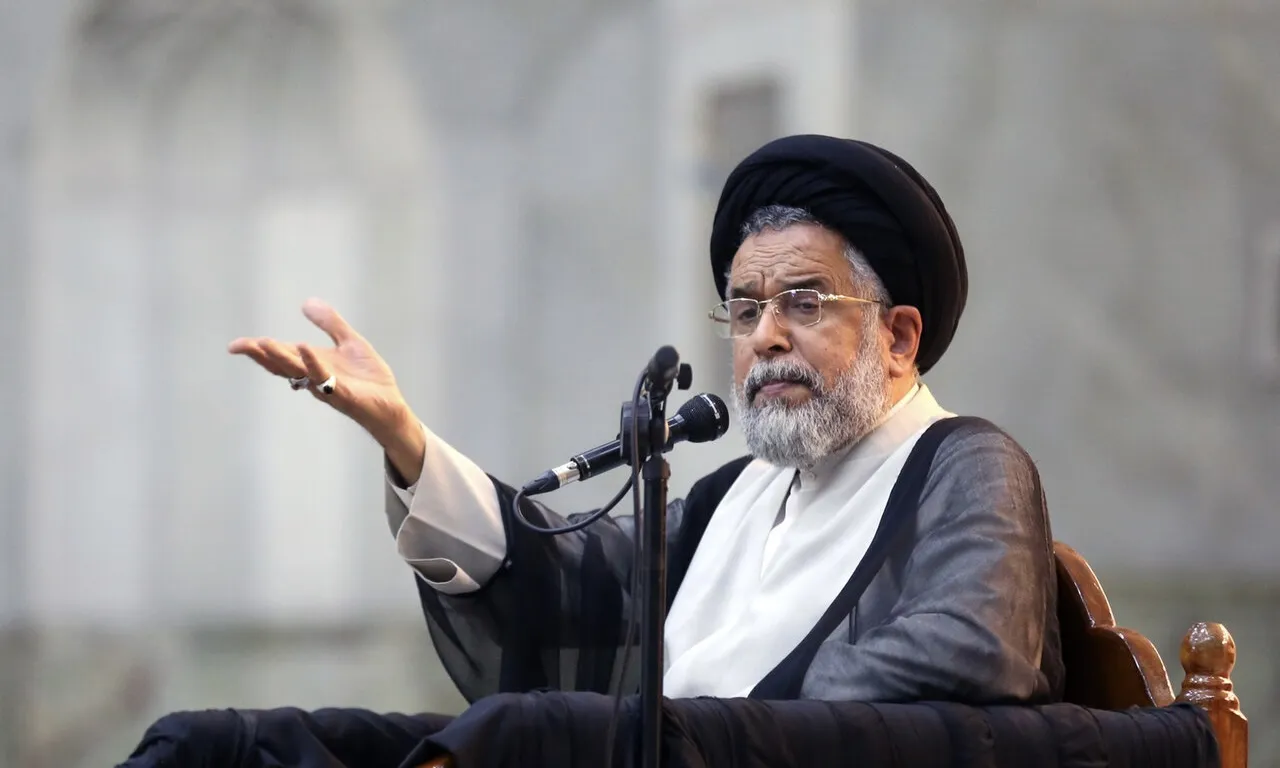
Hojjat al-Islam Dr. Seyyed Mahmoud Alavi is a Shiite cleric, a reformist-moderate politician, former Minister of Intelligence for two terms under the administration of Hassan Rouhani (2013-2021), former head of the Political-Ideological Organization of the Army for 9 years (2000-2009), former representative of Tehran in the Assembly of Experts for Leadership (2009-2024) with over 2 million votes, former representative of Lamerd for 4 terms in the Islamic Consultative Assembly, and current special assistant to President Masoud Pezeshkian and head of the Council for Ethnic, Religious and Denominational Affairs. He ranks among the most widely-reported and most prominent composite clerical-parliamentary-military-intelligence figures of post-revolutionary Iran over the past four decades. With a combined seminary-academic educational background (a PhD in jurisprudence and the foundations of Islamic law from Ferdowsi University of Mashhad) and a family background as the son of Ayatollah Seyyed Reza Alavi, he has experienced a trajectory from pre-revolutionary activities to serving as a representative for 4 parliamentary terms, heading the Political-Ideological Organization of the Army for 9 years by decree of the Supreme Leader, and serving as Minister of Intelligence for 8 years. On November 18, 2020, he was sanctioned by the United States. Alavi, who was twice disqualified from running in the 9th parliamentary elections, was appointed as Pezeshkian's special assistant in December 2024, and in August 2025, he was hospitalized after suffering a stroke, with Hassan Rouhani visiting him.
Hojjat al-Islam Dr. Seyyed Mahmoud Alavi (born April 24, 1954, in Lamerd County, Fars Province) is a prominent Shiite cleric, an Iranian reformist-moderate politician, former Minister of Intelligence of the Islamic Republic of Iran for two terms under the 11th and 12th administrations of Hassan Rouhani from August 15, 2013, to August 3, 2021, for 8 consecutive years, former head of the Political-Ideological Organization of the Army of the Islamic Republic of Iran for 9 consecutive years from 2000 to 2009 by decree of the Supreme Leader, former representative of the people of Tehran Province in the Assembly of Experts for Leadership from June 2009 to the end of the fifth term in 2024 for over 15 years (having secured over 2 million votes from the people of Tehran Province for this position), former representative of the people of Mehr and Lamerd counties for 4 terms in the Islamic Consultative Assembly (1st, 2nd, 4th, and 5th terms), current special assistant to President Masoud Pezeshkian and head of the Council for Ethnic, Religious and Denominational Affairs from December 2024 to the present, current Deputy for Supervisory and Coordination Affairs of the Vice Presidency for Parliamentary Affairs by decree of Mohsen Esmaeili from July 31, 2025, former representative of Imam Khomeini's office in Lamerd County during 1979-1980, former representative of the Central Headquarters of the Islamic Revolution in southern Fars during 1978-1979, former Deputy for Supervision and Inspection and former Deputy for Public Relations and Propaganda of the Political-Ideological Organization of the Ministry of Defense and Armed Forces Logistics during 1989-1991, former Vice Chairman of the Council and Internal Affairs Commission of the Islamic Consultative Assembly in the 4th term, former Vice Chairman of the Foreign Policy and Internal Regulations Commissions of the Islamic Consultative Assembly in the 5th term, former head of the Iran-Kuwait Parliamentary Friendship Group in the 4th and 5th terms of the Islamic Consultative Assembly, former head of the Iran-Morocco Parliamentary Friendship Group in the 5th term of the Islamic Consultative Assembly, the eldest son of Ayatollah Haj Seyyed Reza Alavi (a prominent scholar of principles and beliefs in southern Fars Province who passed away on February 20, 2021, at the age of 97 due to COVID-19), father of Seyyed Mohsen Alavi (former representative of Lamerd in Parliament, born 1980), a distinguished graduate with a PhD in jurisprudence and the foundations of Islamic law from Ferdowsi University of Mashhad and a bachelor's degree in educational sciences from the University of Qom, a distinguished seminary graduate from Najaf, Abadan, Qom, and Tehran, who donned the clerical robe in 1970, a figure twice disqualified by the Guardian Council in the 9th parliamentary and by-elections citing "Clause 1 of Article 28 of the Constitution regarding lack of practical commitment to Islam and the system," a widely-reported figure sanctioned by the US Department of the Treasury on November 18, 2020 (Aban 28, 1399) for a "key role in the suppression of protests by the Iranian people," a widely-reported emigrant at the age of 2 to Najaf (where his father studied) and a graduate of the Alavi Iranian elementary and high school in Najaf, a prominent pre-revolutionary activist in founding the Islamic Association of Abadan Youth (1971) and the Islamic Center of Qom Youth (1973), a former leader of a paramilitary guerrilla group in Qom in 1978, a unique figure as the "Minister of Intelligence who, despite multiple disqualifications in the 9th Parliament, served as Minister of Intelligence for two terms in the Rouhani administration," an active figure in the post-ministerial period regarding the widely-reported condolence message on the killing of Seyyed Hassan Nasrallah in October 2024, a figure who confronted the fateful development of a widely-reported stroke in August 2025, which was followed by a widely-reported visit from Hassan Rouhani and explanations by Vice President Mohsen Esmaeili, and at the same time one of the most widely-reported, most prominent, and at the same time most distinctive composite clerical-parliamentary-military-intelligence figures of post-revolutionary Iran over the past four decades, ranking among the central figures of the security-clerical reformist-moderate discourse in contemporary Iran.
Hojjat al-Islam Dr. Seyyed Mahmoud Alavi, with a unique trajectory — from a prominent family-religious background in Lamerd County, Fars Province — one of the prominent counties in southern Fars, as the son of Ayatollah Haj Seyyed Reza Alavi — a prominent scholar of principles and beliefs in southern Fars Province and Lamerd County — who for years was consulted by the people of this region in religious and legal matters, to his widely-reported emigration at the age of 2 to Najaf with his family — where his father was studying — and completing his elementary and early secondary education at the Alavi Iranian elementary and high school in Najaf, to his return to Iran and the beginning of his seminary education, which included studying at the Najaf Seminary, Abadan, the Qom Seminary, and Tehran, to donning the clerical robe in 1970 — which formed the foundation of his enduring prominent clerical identity, to pursuing a distinguished combined academic educational path that included earning a bachelor's degree in educational sciences from the University of Qom and a master's degree and PhD in jurisprudence and the foundations of Islamic law from Ferdowsi University of Mashhad, to beginning his prominent pre-revolutionary activities, which included founding the Islamic Association of Abadan Youth in 1971, founding the Islamic Center of Qom Youth in 1973, establishing several libraries in various regions of Fars Province from 1975 to 1978, cultural-educational and propagational activities regarding the younger generation in various parts of Fars Province, organizing and leading demonstrations against the Pahlavi regime in Qom and the southern Fars regions including Lar, Gerash, and Lamerd, and leading a paramilitary guerrilla group in Qom in 1978, to assuming the widely-reported position of representative of the Central Headquarters of the Islamic Revolution in southern Fars during 1978-1979, to assuming the widely-reported position of representative of Imam Khomeini's office in Lamerd County during 1979-1980 — which formed the foundation of his prominent foundational-revolutionary background, to his widely-reported victory in the elections of the first term of the Islamic Consultative Assembly in 1979 from the Lamerd constituency — which formed the foundation of the beginning of his prominent 4-term parliamentary record, to assuming the widely-reported position of rapporteur and spokesperson for the Council and Internal Affairs Commission, the Special Commission for Public Service, and the Special Commission for the Duties and Authorities of the President in the 1st and 2nd terms of the Islamic Consultative Assembly, to assuming the widely-reported role of mobilizing forces from Lamerd and Lar counties and his continuous presence at the front and visits to combatants on the front lines during his tenure as representative in the 1st and 2nd terms — which formed the foundation of his prominent revolutionary-war identity, to assuming the position of Deputy for Supervision and Inspection and Deputy for Public Relations and Propaganda of the Political-Ideological Organization of the Ministry of Defense and Armed Forces Logistics during 1989-1991, to his widely-reported victory in the elections of the 4th term of the Islamic Consultative Assembly in 1992 and the 5th term in 1996 from the Lamerd constituency and assuming the Vice Chairmanship of the Council and Internal Affairs Commission in the 4th term and the Vice Chairmanship of the Foreign Policy and Internal Regulations Commissions in the 5th term, to assuming the chairmanship of the Iran-Kuwait Parliamentary Friendship Groups (in the 4th and 5th terms) and Iran-Morocco (in the 5th term), to assuming the widely-reported position of head of the Political-Ideological Organization of the Army of the Islamic Republic of Iran for 9 consecutive years from 2000 to 2009 by decree of the Supreme Leader — which ranks among the most prominent clerical-military responsibilities of post-revolutionary Iran, to his widely-reported victory in the elections of the 4th term of the Assembly of Experts for Leadership on June 16, 2009, from the Tehran Province constituency with over 2 million votes from the people of Tehran — which formed the foundation of his prominent assembly-endurance, to confronting the widely-reported controversial development on February 21, 2012, when in the elections of the 9th term of the Islamic Consultative Assembly and the by-elections, he was disqualified by the Guardian Council citing "Clause 1 of Article 28 of the Constitution regarding lack of practical commitment to Islam and the system," to his widely-reported participation in Hassan Rouhani's campaign headquarters as a senior member in the 11th presidential election in 2013 and his widely-reported presence as Rouhani's representative in meetings with the marja' and scholars of Qom, to assuming the widely-reported position of Minister of Intelligence in the 11th administration of Hassan Rouhani from August 15, 2013, when at the end of Rouhani's inauguration ceremony, he was proposed via a letter to the Islamic Consultative Assembly and received a vote of confidence from the Parliament, to his widely-reported management of the Ministry of Intelligence during the fateful post-JCPOA period, the December 2017 protests, the widely-reported US withdrawal from the JCPOA on May 8, 2018, the November 2019 protests, the assassination of Major General Qasem Soleimani by American forces on January 3, 2020, and the COVID-19 outbreak from March 2020, to continuing as Minister of Intelligence in the 12th administration after Rouhani's victory in the May 19, 2017 election and his re-introduction on August 8, 2017, and receiving a second vote of confidence from Parliament, to confronting the widely-reported controversial development on November 18, 2020 (Aban 28, 1399), when the US Department of the Treasury sanctioned him for a "key role in the suppression of protests by the Iranian people," to confronting the widely-reported death of his prominent father Ayatollah Haj Seyyed Reza Alavi on February 20, 2021, due to COVID-19 at the age of 97 in Lamerd County, to the end of his ministerial term on August 3, 2021, after the end of the Rouhani administration, to the end of his representation in the Assembly of Experts for Leadership at the end of the fifth term in 2024, to assuming the widely-reported position of special assistant to the president and head of the Council for Ethnic, Religious and Denominational Affairs from December 2024 in the 14th administration of Masoud Pezeshkian, to assuming the widely-reported position of Deputy for Supervisory and Coordination Affairs of the Vice Presidency for Parliamentary Affairs by decree of Mohsen Esmaeili on July 31, 2025, and finally, confronting the fateful development of a widely-reported stroke in August 2025, when he was hospitalized in the ICU and on August 12, 2025, Vice President Mohsen Esmaeili explained that his treatment was being followed by a team of experienced physicians, and on August 15, 2025, Hassan Rouhani visited him in the hospital — he has become one of the most enduring and at the same time most widely-reported composite clerical-parliamentary-military-intelligence figures of post-revolutionary Iran.
The significance of Hojjat al-Islam Dr. Seyyed Mahmoud Alavi in the historical-political sphere of contemporary Iran can be examined from several aspects. First, the widely-reported Minister of Intelligence for two terms under the Rouhani administration for 8 consecutive years — as the prominent architect of the security-intelligence discourse during the fateful moderation era — is one of the notable aspects of his intelligence durability. Second, the widely-reported head of the Political-Ideological Organization of the Army for 9 years by decree of the Supreme Leader — as the prominent architect of the post-revolutionary ideological-military discourse — is one of the notable aspects of his clerical-military durability. Third, the widely-reported representative of the people of Tehran in the Assembly of Experts for Leadership for over 15 years with over 2 million votes — as a figure who ranks among the most prominent representatives of the post-revolutionary Assembly of Experts in Iran — is one of the notable aspects of his assembly-endurance. Fourth, the widely-reported representative of Lamerd for 4 terms in the Islamic Consultative Assembly — as a figure who ranks among the most prominent parliamentary figures of the post-revolutionary era — is one of the notable aspects of his parliamentary durability. Fifth, the unique phenomenon as the "Minister of Intelligence who, despite multiple disqualifications, became Minister of Intelligence and experienced US sanctions" — as one of the most prominent instances of the post-revolutionary political paradox phenomenon — is one of the notable aspects of his phenomenological significance.
Important Note: Hojjat al-Islam Dr. Seyyed Mahmoud Alavi's record and performance in the Persian-language media-political sphere are met with sharply divergent perspectives. In the discourse of supporters of moderation and reform, he is known as the "prominent Minister of Intelligence under Rouhani for two terms," the "prominent representative of Tehran in the Assembly of Experts," and the "current special assistant to Pezeshkian." In the discourse of prominent critics from human rights activists and the opposition, his performance during his tenure as Minister of Intelligence — particularly regarding the suppression of the December 2017 and November 2019 protests, which formed the basis of the widely-reported US Department of the Treasury sanctions on November 18, 2020 — has been seriously criticized. In the discourse of prominent critics from the principlist (conservative) faction, his widely-reported disqualifications in the 9th Parliament and by-elections — in which the Guardian Council disqualified him citing "lack of practical commitment to Islam and the system" — have been noted. In the discourse of critics from human rights activists, the security-judicial cases during his ministerial term have been criticized. This profile presents the narrative published in prominent Persian-language media-historical sources with an analytical-neutral stance.
Life and Family Background
Hojjat al-Islam Dr. Seyyed Mahmoud Alavi was born on April 24, 1954, in Lamerd County, Fars Province — one of the prominent counties in southern Fars.
Father: Ayatollah Haj Seyyed Reza Alavi
The most central aspect of Seyyed Mahmoud Alavi's family-religious background was his connection to Ayatollah Haj Seyyed Reza Alavi — a prominent scholar of principles and beliefs in southern Fars Province and Lamerd County.
According to published reports: "Ayatollah Haj Seyyed Reza Alavi, a prominent scholar of principles and beliefs in southern Fars Province and Lamerd County, was the father of Seyyed Mahmoud Alavi. For years, he was consulted by the people of this region in religious and legal matters."
Death of Father Due to COVID-19 (February 20, 2021)
According to published reports: "Ayatollah Haj Seyyed Reza Alavi, father of Seyyed Mahmoud Alavi, the Minister of Intelligence, passed away on Thursday afternoon due to COVID-19 at the hospital at the age of 97. The body of Ayatollah Haj Seyyed Reza Alavi was laid to rest this morning, February 20, in Lamerd County, Fars Province."
Emigration to Najaf at the Age of 2
According to published reports: "Mahmoud Alavi was born into a clerical family in Lamerd; at the age of 2, he moved with his family to Najaf (where his father was studying) and completed his elementary and early secondary education at the Alavi Iranian elementary and high school in Najaf."
Eldest Son: Seyyed Mohsen Alavi
Take less than a minute, register and share your opinion under this post.
Insulting or inciting messages will be deleted.
Sign Up