
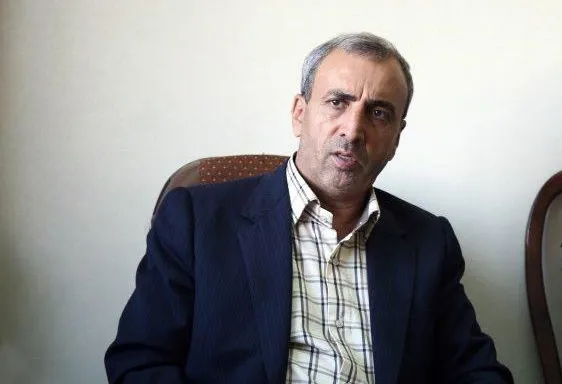
Jalal Jalalizadeh—a former representative of Sanandaj in the Sixth Majles and a member of the Central Council of the Union of Islamic Iran People Party—is one of the few Sunni figures with a history of continuous participation at the highest levels of national Reformist parties. This article provides a comprehensive look at his academic education in the Faculty of Theology, the controversy surrounding the opposition to his presence on the Sixth Majles presiding board, his 2005 legal case, and his exclusive interviews with Abdi Media.
Who is Jalal Jalalizadeh?
Dr. Jalal Jalalizadeh, born on June 24, 1960, in Sanandaj, is a distinguished Iranian academic, author, translator, reformist politician, and one of the most prominent Sunni political figures in contemporary Iran. He famously served as the representative for Sanandaj, Divandarreh, and Kamyaran in the landmark Sixth Majles. Over nearly three decades of academic and political engagement, Jalalizadeh has synthesized a unique profile: a foremost academic expert on Shafi'i jurisprudence (the school of law followed by the majority of Iran's Sunni Kurds), an enduring strategist within national Reformist parties, and an uncompromising advocate for the civil rights of religious and ethnic minorities.
Jalalizadeh’s significance within the sociopolitical landscape of Iran is defined by several historic milestones:
Pioneer in National Party Leadership: He holds the unique distinction of being the only Sunni Muslim to serve on the Central Council of Iran’s premier national Reformist parties—first with the Islamic Iran Participation Front (from 2000 to 2010) and subsequently with the Union of Islamic Iran People Party. This has made him one of the very few Sunni politicians to actively shape the strategic architecture of mainstream, national-level political parties in Iran.
Institutionalization of Sunni Parliamentary Advocacy: During his tenure in the Sixth Majles (2000–2004), Jalalizadeh founded and chaired the Sunni Fraction (Majma-e Namayandegan-e Ahl-e Sonnat) in the Islamic Consultative Assembly. This was the first formal parliamentary caucus dedicated specifically to consolidating, coordinating, and advancing the legal and structural demands of Iran's Sunni minority.
Linguistic and Cultural Milestone: He delivered the first-ever pre-agenda parliamentary speech in the Kurdish language in the history of the Islamic Republic of Iran. In a legislative chamber where Persian is the sole official language, this act served as a historic milestone for ethnic and linguistic representation.
In academia, Jalalizadeh is a Full Professor at the University of Tehran and a senior faculty member of the Department of Shafi'i Jurisprudence and Law at the Faculty of Theology—the primary academic hub for Sunni Islamic jurisprudence within Iran's state university network. He is also the former managing editor of Sirwan (a prominent weekly publication in Iranian Kurdistan), a member of the historic first Islamic City Council of Sanandaj, a former advisor to the Minister of Interior, and the Secretary of the Kurdish Reformist Coordination Council. He is exceptionally fluent in four languages: Persian, Kurdish, Arabic, and English.
Life and Background
Jalal Jalalizadeh was born in Sanandaj, the provincial capital of Kurdistan Province, on June 24, 1960. As a major epicenter of Kurdish culture and political consciousness, Sanandaj has historically served as a fertile cradle for successive generations of Kurdish intellectual, religious, and political activists.
Jalalizadeh was raised in a Kurdish, Sunni Muslim family adhering to the Shafi'i school of jurisprudence. Navigating life within a country governed by a Shi'ite, Persian-dominated state apparatus profoundly shaped his intellectual framework, instilling a lifelong focus on rectifying structural disparities and defending minority rights.
His childhood and youth directly overlapped with the systemic upheavals leading up to the 1979 Revolution and the volatile post-revolutionary crises in Iranian Kurdistan, which included armed conflict between the central government and Kurdish factions. Experiencing these regional tensions firsthand deeply informed his realistic, legally driven approach to ethnic and regional grievances in Iran.
Education and Linguistic Profile
Jalalizadeh focused his academic pursuits on Islamic theology, law, and jurisprudence, achieving deep mastery of Shafi'i law, one of the four primary schools of Sunni Islamic jurisprudence. Within Iran’s higher education system, advanced research in this field is heavily concentrated within the specialized department at the University of Tehran's Faculty of Theology, where Jalalizadeh eventually climbed the academic ranks to full professorship.
His advanced academic specialization gives him a unique layer of authority: he is not merely a Sunni politician operating on identity politics, but a credentialed jurist and scholar of the very school of law practiced by the majority of Iran’s Sunni population. This expertise provides a rigorous, legally sound baseline when he challenges the state on minority religious rights.
Furthermore, his fluency in four languages—Persian, Kurdish, Arabic, and English—greatly expands his reach. While his mastery of Arabic is essential for deep jurisprudential analysis, his multilingualism allows him to seamlessly bridge the gap between traditional domestic fields, Arabic-language theological discourses, and secular international academic circles.
Academic Career and Early Politics
At the University of Tehran, Jalalizadeh's department stands as one of the very few state-sanctioned institutional frameworks designed to train jurists and address the higher educational needs of the country's Sunni minority. Alongside his teaching duties, he has written and translated numerous volumes covering Islamic jurisprudence, minority legal rights, theology, and socio-political affairs.
The First City Council of Sanandaj
Before entering the national legislature, Jalalizadeh successfully ran for a seat on the first-ever Islamic City Council of Sanandaj. Formed in the wake of the historic March 1999 local elections—one of the foundational democratic achievements of President Mohammad Khatami's reform era—the initial city councils served as a crucial laboratory for local democracy and decentralization.
Jalalizadeh’s work on the council alongside fellow Kurdish reformists marked his entry into the formal political sphere of the Islamic Republic, embedding him within a powerful network of progressive Kurdish and Sunni activists.
Tenure in the Sixth Majles (2000–2004)
The definitive turning point in Jalalizadeh's political career occurred in February 2000, when he was elected to represent Sanandaj, Divandarreh, and Kamyaran in the Sixth Majles. Swept by an absolute Reformist landslide, this parliament remains one of the most progressive and confrontational legislative terms in modern Iranian history.
The Sunni Parliamentary Fraction
Jalalizadeh’s signature achievement during this legislative term was the conceptualization, founding, and leadership of the Sunni Fraction. This bloc unified Sunni parliamentarians from various ethnic backgrounds—including Kurds, Balochis, Turkmen, and southern Sunni Arabs—into a cohesive legislative unit. Under his chairmanship, the caucus systematically lobbied for a greater Sunni share in cabinet positions, provincial governance, the protection of minority cultural rights, and increased infrastructure budgeting for marginalized border provinces.
Historic Kurdish Address
In a highly publicized legislative session, Jalalizadeh delivered the first-ever pre-agenda address partially spoken in the Kurdish language from the floor of the parliament. In a political system that strictly mandates Persian as the exclusive language of state governance, this bold rhetorical move was celebrated by cultural activists as a powerful manifestation of Iran's multi-ethnic reality.
Constitutional Defiance
Demonstrating his willingness to directly confront senior security organs, Jalalizadeh became one of the first MPs in the history of the parliament to issue a formal, written warning (Tadakkor) directly to the Minister of Intelligence—a testament to his constitutional oversight approach during an era of intense security pressures.
The Presiding Board Controversy and "Hidden Powers"
One of the most revealing incidents of his legislative career occurred when Jalalizadeh put his name forward to join the ruling Presiding Board of the Parliament. In accounts later shared with human rights organizations, Jalalizadeh detailed how structural bias blocked his path:
"During the Sixth Majles, when I ran as a candidate for the parliamentary presiding board, a senior Shi'ite Marja (Source of Emulation) in Qom dispatched a delegation to Tehran explicitly stating that a Sunni Muslim must never occupy a seat on the presiding board. Faced with this pressure, the Reformist leadership chose to back down."
For Jalalizadeh, this incident remains a primary example of structural exclusion. He frequently references this event to illustrate how "hidden powers" (Ghodrat-ha-ye Penhan) operate behind the scenes to overrule democratic outcomes, arguing that the public must be made aware of these unconstitutional interventions.
Regional Infrastructure Achievements
In addition to his symbolic and national advocacy, Jalalizadeh focused heavily on regional developmental projects for Sanandaj. His efforts successfully secured dedicated national budget lines for the construction of the Sanandaj Eastern Bypass highway, the expansion of natural gas grids to the marginalized suburban district of Hasanabad, and rural electrification across the province.
Party Strategy and Loyal Opposition
Over the past two decades, Jalalizadeh has maintained a steady presence within the upper echelons of Iran's formal party structures:
The Islamic Iran Participation Front (2000–2010)
From 2000 to 2010, Jalalizadeh served as the sole Sunni member of the Central Council of the Islamic Iran Participation Front (Mosharekat). Established by top intellectual and political allies of the reform movement, the Front was the most powerful and highly organized political party of the reform era. Jalalizadeh’s prominent role within its central leadership demonstrated the party's structural commitment to integrating minority voices into national decision-making. Following the mass crackdowns on civil society after the disputed 2009 presidential election, the party was formally banned and dissolved by the judiciary in 2010.
The Union of Islamic Iran People Party
Following the dissolution of Mosharekat, Jalalizadeh helped organize its ideological and political successor, the Union of Islamic Iran People Party (Ettehad-e Mellat), established in 2015. Formed alongside prominent figures like Mostafa Tajzadeh, this party became a central hub for reformist strategy throughout the late 2010s and early 2020s, with Jalalizadeh continuing his vital role on its Central Council.
Kurdish Reformist Coordination Council
Concurrently, Jalalizadeh serves as the General Secretary of the Kurdish Reformist Coordination Council, an umbrella organization tasked with aligning reformist strategies across Iran’s Kurdish-populated provinces, solidifying his role as a premier political voice for Kurdish reformists.
Legal Prosecution and 2005 Imprisonment Sentence
In the volatile political environment following the end of the Khatami presidency, Jalalizadeh faced direct judicial prosecution. On June 6, 2005, during the heat of the ninth presidential election campaign, Jalalizadeh delivered a major public address in the town of Aq Qala—a predominantly Sunni Turkmen region in Golestan Province—campaigning heavily for the leading Reformist candidate.
In his speech, Jalalizadeh forcefully advocated for his core platform: absolute freedom of expression, freedom of conscience, freedom of the press, and an equitable distribution of national wealth and political power to all Iranians, regardless of ethnicity or sect. He sharply critiqued the institutionalized marginalization of Sunni border regions.
The judiciary subsequently prosecuted Jalalizadeh, relying on what he and his legal team described as "highly edited and truncated audio clippings" of his remarks. He was convicted of national security-related speech violations and sentenced to one year of imprisonment, highlighting the legal and political risks faced by minority critics during that era.
Intellectual Perspectives and Philosophy
Jalalizadeh’s long career is defined by several core philosophical tenets:
Critique of Structural Disparities
The absolute center of Jalalizadeh’s platform is the systematic dismantling of structural barriers facing Iran's Sunni minority (who comprise roughly 10% of the population, predominantly residing in Kurdish, Balochi, Turkmen, and southern Arab regions). He argues that these disparities are not merely accidental policy errors, but are actively maintained by conservative factions. He has noted:
"Unfortunately, there is a total lack of institutional will within the core power structure to truly include Sunni Muslims in high-level governance."
Exclusive Video on Abdi Media: Watch Dr. Jalal Jalalizadeh’s exhaustive analysis regarding the representation of ethnic and religious minorities within presidential cabinets.
Click here to watch the full exclusive broadcast.
Legislative Autonomy and Accountability
Jalalizadeh holds a highly critical view of recent iterations of the Iranian parliament, viewing them as heavily watered-down by structural vetting. In a widely cited critique regarding the parliament's right to judge cabinet performance, he stated:
"In my view, a parliament can only grade others when it has managed to achieve a passing grade itself. It is entirely clear that the current parliament cannot even secure a basic passing grade, let alone hand out failing marks to ministries."
Institutional Transparency
Jalalizadeh emphasizes that while the Constitution explicitly outlines the duties of each governing branch, underground security networks and unelected committees routinely paralyze formal state institutions. He argues that whenever these "hidden powers" override the rule of law, reformist politicians have an obligation to transparently expose these mechanisms to the electorate.
Political Network and Alliances
Jalalizadeh has maintained deep strategic alliances across both regional and national political spheres. Regionally, his most celebrated partnership was with the late Bahaedin Adab (the fellow charismatic MP for Sanandaj in the Sixth Majles), creating a powerful, unified Kurdish-reformist front in the parliament.
Nationally, his party obligations have closely linked him with the senior command of the Reformist movement, including former Mosharekat General Secretary Mohammad-Reza Khatami, Mostafa Tajzadeh, Mohsen Armin, Morteza Moballegh, and prominent reformist journalists like Mashallah Shamsolvaezin. Within the broader Sunni intellectual landscape, Jalalizadeh serves as an essential bridge, linking the demands of peripheral ethnic-religious communities directly with the mainstream political discourse of the capital.
Conclusion
Dr. Jalal Jalalizadeh is a premier political representative for Iran's Sunni community. His career presents a unique synthesis of advanced academic expertise in Shafi'i law and long-term participation within mainstream national parties, offering an alternative to localized or radical identity politics.
His legacy represents the complex challenge of minority representation within a system featuring an official state religion. While his career boasts notable successes—including historic legislative victories, founding the Sunni parliamentary fraction, and securing central committee seats within major parties—it also highlights deep institutional barriers, illustrated by the blocking of his presiding board candidacy and his 2005 political imprisonment. As Iran continues to navigate complex internal demands regarding ethnic and religious diversity, Jalalizadeh’s measured, legally grounded, and structurally experienced voice remains an important reference point for peaceful civil rights advocacy.
Frequently Asked Questions (FAQs)
Who is Jalal Jalalizadeh? Dr. Jalal Jalalizadeh (born June 24, 1960, in Sanandaj) is a prominent Iranian academic, author, translator, and Reformist politician. He served as the MP for Sanandaj, Divandarreh, and Kamyaran in the Sixth Majles, is the Secretary of the Kurdish Reformist Coordination Council, and stands as a foremost political leader for Iran's Sunni minority.
What is his academic specialization? He is a Full Professor at the University of Tehran and a senior faculty member of the Department of Shafi'i Jurisprudence and Law at the Faculty of Theology. He is an expert in Shafi'i law (the dominant school of jurisprudence among Iran's Sunni Kurds) and is fully fluent in Persian, Kurdish, Arabic, and English.
What makes his position within Reformist parties unique? Jalalizadeh is celebrated as the only Sunni Muslim to hold a continuous seat on the Central Councils of Iran's primary national Reformist parties, specifically the Islamic Iran Participation Front and the subsequent Union of Islamic Iran People Party.
What were his major achievements in the Sixth Majles? His legislative milestones include founding and chairing the first-ever Sunni Parliamentary Fraction, delivering the first-ever address in the Kurdish language from the floor of the house, issuing unprecedented formal constitutional warnings to the Minister of Intelligence, and securing key infrastructure funding for the Kurdistan province.
What was the controversy surrounding his candidacy for the Majles Presiding Board? Jalalizadeh revealed that when he ran for a seat on the parliament's ruling presiding board during the Sixth Majles, a high-ranking conservative Marja (Shi'ite source of emulation) in Qom intervened, declaring that a Sunni Muslim must never hold a leadership position in the chamber, which forced the Reformist leadership to withdraw their support for his bid.
Why was he sentenced to prison in 2005? During the 2005 presidential campaign, Jalalizadeh gave a highly critical speech in the Sunni Turkmen town of Aq Qala, demanding absolute freedom of speech, an end to ethnic-religious discrimination, and an equitable distribution of national wealth. The judiciary used edited audio recordings of the speech to convict him, issuing a one-year prison sentence.
What is his perspective on the status of Sunni Muslims in Iran? Jalalizadeh maintains that the Sunni minority faces deeply entrenched structural inequalities regarding high-level political appointments and regional economic development. He frequently asserts that there is a distinct lack of institutional will within unelected "hidden powers" to allow minorities a meaningful share in state governance.
Is Jalal Jalalizadeh still active in public life? Yes. He continues to teach as a Full Professor at the University of Tehran, serves on the Central Council of the Union of Islamic Iran People Party, and writes detailed political analyses for domestic media and independent Telegram channels focusing on minority rights, constitutional reform, and civil liberties.
Take less than a minute, register and share your opinion under this post.
Insulting or inciting messages will be deleted.
Sign Up