
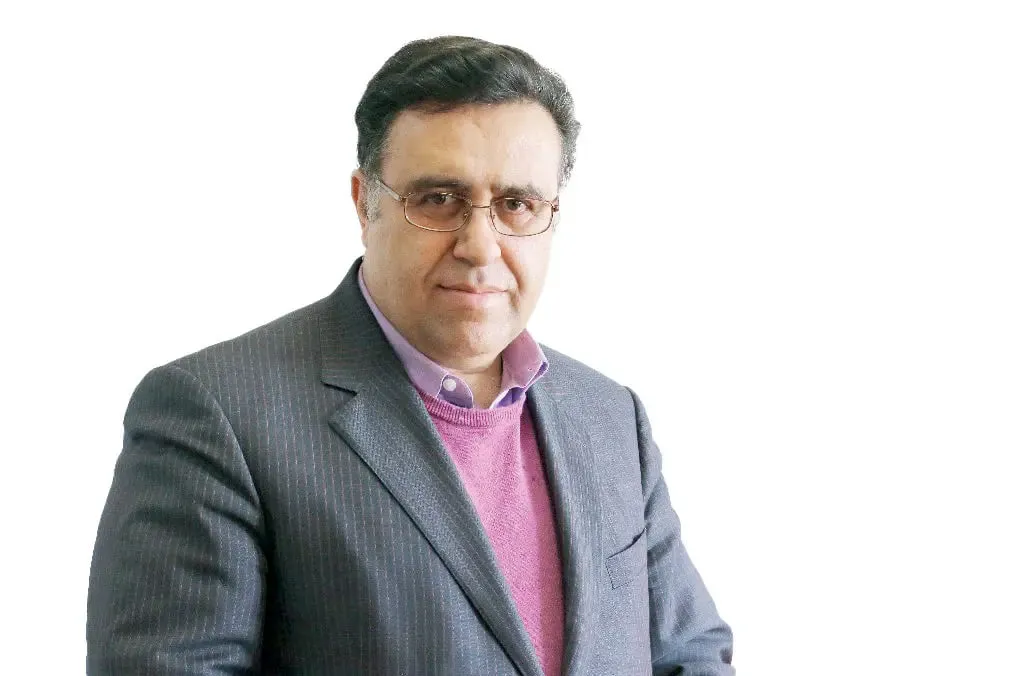
Jahanbakhsh Khanjani—a politician, electoral technocrat, and former spokesperson for the Ministry of Interior during the Reform Era—is one of the most pivotal and enduring operatives of the reformist movement and the Executives of Construction Party over the past three decades. Khanjani’s career is a complex blend of senior executive management, enduring lengthy periods of solitary confinement and imprisonment following the 2009 election unrest, and playing strategic roles within the presidential campaigns of Hassan Rouhani and Masoud Pezeshkian. Having served as the deputy head of Pezeshkian's campaign, he played a central role in mobilizing the middle-class vote. He now analyzes the structural challenges of the fourteenth administration as an pragmatic, internal observer. This profile provides a comprehensive analysis of his historical career alongside the release of an exclusive, candid interview with him addressing the performance of the new administration, titled "The Pezeshkian Administration and its Cabinet: Hope or Despair?"
Who is Jahanbakhsh Khanjani?
Jahanbakhsh Khanjani—a reformist politician, executive director, and political analyst born in 1966 in Kelachay, Rudsar, Gilan Province—is one of the prominent and enduring figures of the Executives of Construction Party (Hezb-e Kargozaran-e Sazandegi) and the broader reformist movement over the past three decades. Khanjani’s career is a complex blend of senior executive management within public institutions (serving as director-general and spokesperson for the Ministry of Interior during the Reform Era, managing provincial appointments at the Ministry of Culture, and advising the CEO of the Tehran Metro), high-level political party leadership, and a long-standing role as an electoral campaign strategist. Simultaneously, his lengthy solitary confinement and heavy judicial sentencing following the 2009 presidential election unrest have cemented his position as a key operative within the reformist-moderate coalition.
The significance of Jahanbakhsh Khanjani in Iran’s political sphere can be analyzed through several dimensions. First, his continuous involvement in pivotal presidential campaigns—ranging from serving as the deputy head of advertising in Tehran for Mir-Hossein Mousavi’s 2009 campaign, to active involvement in Hassan Rouhani's campaigns, and ultimately serving as the deputy head of Masoud Pezeshkian's national campaign—establishes him as a professional technocrat of reformist electoral campaigns. Second, his judicial fate following 2009—which included his arrest on June 14, 2009, enduring over 144 days in solitary confinement, and a combined 7-year prison sentence (one year for "propaganda against the state" and six years for "assembly and collusion against national security")—places him among the figures who paid a high personal price for their alignment with the Green Movement. Third, as a member of the Central Council of the Executives of Construction Party, he acts as an influential voice for the pragmatic, development-oriented wing of the reformfront.
Khanjani is also a recurring analyst and political commentator on the digital media platform Abdi Media (Abdimedia), where his long-form interviews focus on evaluating the performance of the Pezeshkian administration, electoral participation dynamics, security vetting processes for cabinet selection, and contemporary internal developments in Iran.
Early Life and Background
Jahanbakhsh Khanjani was born in 1966 in the coastal town of Kelachay, located in the Rudsar County of Gilan Province. Positioned along the Caspian Sea in eastern Gilan, Kelachay is recognized for its culturally and politically active community.
Khanjani's youth coincided with the events leading up to the 1978–1979 Revolution and the subsequent Iran-Iraq War. This generation formed the ideological and professional cohort that entered public administration and executive management throughout the construction and reform periods of the Islamic Republic. His geographical ties to Gilan resurfaced prominently, when his name emerged as a leading candidate for the governorship of Gilan Province under the Pezeshkian administration.
Public Administration in the Reform Era (1997–2005)
The foundational chapter of Khanjani's executive career was established within the Ministry of Interior under the reformist presidency of Mohammad Khatami. During this period, Khanjani held several high-profile portfolios:
Spokesperson for the Ministry of Interior: Serving as the ministry's official public face, Khanjani became a prominent media figure, articulating the government's official stances on domestic security, municipal development, and electoral management.
Director-General of Public Relations: He managed the institutional framework governing the Ministry's official interactions with domestic press corps and public information channels.
Advisor to the Minister of Interior: This role placed him within the immediate policy-making circle of the ministry during an era defined by political development, the introduction of Iran’s first city and village council elections, and the expansion of civil society institutions.
The 2009 Presidential Election and Campaign Roles
A major turning point in Khanjani's political trajectory occurred during the highly contested tenth presidential election in June 2009. Within the campaign apparatus of reformist candidate Mir-Hossein Mousavi, Khanjani assumed the position of Deputy Head of Advertising for Tehran Province. Given that the capital represented the largest electoral district and the epicenter of political mobilization against incumbent Mahmoud Ahmadinejad, this was a highly strategic post. Concurrently, he served as the deputy of the advertising and information committee for the Reformist Coalition Campaign, highlighting his coordination role within the broader reformist front.
Arrest, Solitary Confinement, and Sentencing
Following the disputed election results of June 12, 2009, and the outbreak of the Green Movement protests, security forces initiated sweeping arrests of leading reformist figures. Khanjani was among the first targeted:
Detention: Khanjani was arrested on June 14, 2009—just two days after the election—and transferred to Evin Prison.
Solitary Confinement: He spent over 144 days in solitary confinement, an extended duration that carried severe psychological and physical strains.
Judicial Sentencing: On December 8, 2009, the Revolutionary Court handed down a heavy combined sentence of 7 years of imprisonment: one year for "propaganda against the state" (Fa'aliat-e Tablighi Alayhe Nezam) and six years for "assembly and collusion to act against national security" (E اجتماع و تبانی برای اقدام علیه امنیت).
Temporary Release: Following substantial domestic and international pressure regarding the status of political detainees, Khanjani was released from Evin Prison on February 27, 2010, after approximately eight months in detention, upon posting a heavy bail of 500 million Tomans.
Post-Imprisonment Executive and Advisory Portfolios
Unlike many political figures who faced permanent exclusion from public frameworks after 2009, Khanjani gradually returned to professional operations within the administrative structure.
Management at the Ministry of Culture and Islamic Guidance
Early in the first administration of Hassan Rouhani (2013), Khanjani was appointed as the Head of Provincial Appointments within the Ministry of Culture and Islamic Guidance. This position gave him a direct hand in managing human resources and regional administrative directors across the country's cultural apparatus.
Advisory Role at Tehran Metro
For over a decade following his release, Khanjani has served as a senior advisor to the Managing Director of the Tehran Urban and Suburban Railway Operation Company (Tehran Metro). As one of the largest municipal infrastructure projects in the capital, this position has provided him with a stable institutional platform.
Deputy Head of Pezeshkian's 2024 Presidential Campaign
During the fourteenth presidential election, held ahead of schedule following the death of Ebrahim Raisi in a helicopter crash, Khanjani returned to senior national campaign operations. He was appointed Deputy Head of Masoud Pezeshkian’s national election campaign. In this capacity, he helped coordinate campaign strategies that successfully mobilized middle-class and urban voters, contributing to Pezeshkian's victory.
Perspectives and Political Ideology
Khanjani has articulated a distinct, pragmatic political framework centered around several key principles:
Technocratic Development: As a member of the Central Council of the Executives of Construction Party—a party historically founded by technocrats close to Akbar Hashemi Rafsanjani—Khanjani subscribes to an economic development-centric philosophy. He views economic revitalization, modernization, and the expansion of the middle class as the primary engines of national progress.
The Role of the Middle Class: Khanjani has contributed research focused on the intersection of the middle class and the public sphere in Iran. He argues that during the Reform Era (1997–2005), the entry of the modern middle class into the socio-political arena catalyzed the expansion of an independent public sphere, a process deeply intertwined with the economic transformations of the preceding Reconstruction Era.
Pragmatic Assessment of the Pezeshkian Administration: In his regular analyses on Abdi Media, Khanjani strikes a balance between systemic support and pragmatic critique. He frequently warns against creating unrealistic public expectations that can lead to societal disillusionment, noting that "state governing structures cannot be altered overnight." He maintains that the presidency must demand concrete, programmatic output from its cabinet ministers.
Awareness of Vetting Processes: Khanjani speaks openly about the institutional constraints of governance in Iran, noting in his commentary that several of Pezeshkian’s initial choices for government positions faced rejection during the vetting procedures carried out by state security agencies.
Operating Within the Systemic Framework: Khanjani emphasizes the constitutional reality of Iranian politics, acknowledging that macro-level foreign policies and confrontations with hostile states are Ultimately determined by the Supreme Leader. He often frames high voter turnout as a strategic asset for the ruling system, advocating for reformist participation strictly through legal and electoral channels.
Critique of Strategic Campaign Errors: Through his personal writings, he frequently analyzes past tactical missteps made by reformist coalitions, pointing to organizational errors in municipal councils or criticizing the inclusion of figures who lack a genuine commitment to systemic problem-solving.
Connections and Alliances
Khanjani is embedded within an extensive network of centrist and reformist elites. His primary institutional alignment remains with the Executives of Construction Party, a faction originally formed by figures like Gholamhossein Karbaschi, Abdollah Nouri, and Ataollah Mohajerani. His campaign management background connects him directly to the networks of Mir-Hossein Mousavi, Hassan Rouhani, and Masoud Pezeshkian. On a media level, his regular appearances on Abdi Media, the Iranian Labour News Agency (ILNA), Fararu, and Ensaf News reflect a broad analytical network within independent and reformist press circles.
Conclusion
Jahanbakhsh Khanjani stands as an enduring operative within contemporary Iranian reformist politics. His path—spanning from his roots in Gilan to serving as the media face of the Ministry of Interior, managing a critical wing of the 2009 campaign, enduring heavy judicial sentencing, and returning to direct provincial appointments and national campaigns—presents a multi-dimensional portrait of an electoral technocrat.
Khanjani’s defining attribute is his institutional resilience; despite facing severe judicial penalties and solitary confinement, he successfully maintained his standing within political circles and re-emerged as a core strategist in subsequent presidential elections. His career exemplifies the "party-politician-executive" model within Iran, where an operative maintains a continuous presence across decades of shifting political alignments. As the Pezeshkian administration navigates its executive challenges, Khanjani’s structural insights and pragmatic critiques continue to serve as an important reference point for discussions surrounding the future of the reformfront and contemporary governance in Iran.
Frequently Asked Questions (FAQs)
Who is Jahanbakhsh Khanjani? Jahanbakhsh Khanjani (born 1966 in Kelachay, Gilan) is a reformist politician, executive manager, and a member of the Central Council of the Executives of Construction Party. He is a former spokesperson and director-general of public relations for the Ministry of Interior and has served as a senior campaign strategist in major presidential elections.
What government and executive roles has Khanjani held? His prominent portfolios include serving as the spokesperson and director-general of public relations for the Ministry of Interior during the Khatami administration, Deputy Head of Advertising for Tehran Province during the 2009 Mousavi campaign, Head of Provincial Appointments at the Ministry of Culture under the Rouhani administration, Senior Advisor to the Managing Director of the Tehran Metro, and Deputy Head of Masoud Pezeshkian’s 2024 campaign.
Why was Khanjani arrested in 2009? Following his active role managing the advertising apparatus for Mir-Hossein Mousavi’s campaign in Tehran, Khanjani was arrested on June 14, 2009—two days after the election. His detention was part of a broader sweep targeting high-profile reformist operatives during the Green Movement protests.
What was Khanjani's judicial sentence? Khanjani was tried by the Revolutionary Court and sentenced to one year in prison for "propaganda against the state" and six years for "assembly and collusion against national security," totaling a 7-year sentence. He spent over 144 days in solitary confinement before being released on a 500-million-Toman bail in February 2010.
What was his role in Masoud Pezeshkian’s election? Khanjani served as the Deputy Head of Pezeshkian's national presidential campaign, playing a role in organizing campaign messaging and mobilizing urban middle-class voters. Following the election, his name was widely discussed in media outlets as a potential nominee for the governorship of Gilan Province.
What is Khanjani's perspective on the Pezeshkian cabinet? In his interviews with Abdi Media, Khanjani advocates for a realistic assessment of the government, warning that inflated public expectations could trigger severe social disillusionment. While supporting the administration, he emphasizes that the president must enforce rigorous accountability among his ministers, and has openly discussed how security vetting processes limited some of the administration's initial appointment choices.
Is Jahanbakhsh Khanjani still politically active? Yes. Khanjani remains an active member of the Central Council of the Executives of Construction Party, continues his advisory duties at the Tehran Metro, and regularly provides political analysis to independent media platforms, most notably Abdi Media.
Take less than a minute, register and share your opinion under this post.
Insulting or inciting messages will be deleted.
Sign Up