
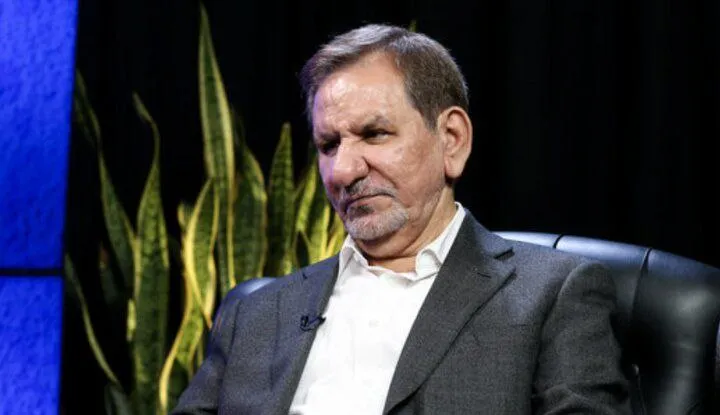
Dr. Eshaq Jahangiri Koohshahi is a prominent Iranian reformist politician, industrial engineer, former First Vice President of Iran for two terms under Hassan Rouhani (2013-2021), former Minister of Industries and Mines for two terms under Seyyed Mohammad Khatami (1997-2005), former Governor of Isfahan (1992-1997), former member of parliament from Jiroft (1984-1991), and a founding member of the Executives of Construction Party. He is one of the most widely discussed and prominent executive-reformist figures of post-revolutionary Iran over the past three decades. From a rural-labor background in the Koohshah district of Sirjan, with a bachelor's degree in physics from the University of Kerman, a master's degree in industrial engineering from Sharif University of Technology, and a PhD in industrial management from Azad University, he has traversed the path of parliamentary representation, governorship, ministry, and the first vice presidency. In the 2017 elections, with his widely discussed revelations in debates and his withdrawal in favor of Rouhani, he became one of the most prominent "cover candidates" in post-revolutionary history. Jahangiri, who faced repeated disqualifications by the Guardian Council in 2021 and 2024, described his disqualification in a statement on June 11, 2024, as "inconsistent with the fundamental rights of the nation and national interests."
Who is Eshaq Jahangiri?
Dr. Eshaq Jahangiri Koohshahi (born January 10, 1958, in Koohshah village, Sirjan county, on the border of Kerman and Hormozgan provinces) is a prominent Iranian reformist politician, industrial engineer, senior executive manager, former First Vice President of the Islamic Republic of Iran for two terms in the 11th and 12th governments of Hassan Rouhani from August 5, 2013, to August 3, 2021, former Minister of Industries and Mines for two terms under Seyyed Mohammad Khatami from 1997 to 2005, former Governor of Isfahan during Akbar Hashemi Rafsanjani's administration from 1992 to 1997, former representative of Jiroft in the 2nd and 3rd terms of the Islamic Consultative Assembly from 1984 to 1991, a founding member of the Executives of Construction Party of Iran, former head of the Central Council of the Executives of Construction Party, a member of the Supreme Council of the Baran Foundation, former candidate in the 12th presidential election in 2017, disqualified candidate in the 13th presidential election in 2021, disqualified candidate in the 14th presidential election in 2024, and at the same time one of the most widely discussed, prominent, and distinctive executive-reformist figures of post-revolutionary Iran over the past three decades, he is among the central figures of the reformist movement and moderate governments.
Eshaq Jahangiri, with a unique path—from a distinguished rural-labor family background as the son of Hassan Jahangiri Koohshahi and the second son of the family—to pursuing a distinguished scientific-technical educational path including a bachelor's degree in physics from the University of Kerman, a master's degree in industrial engineering from Sharif University of Technology, and a PhD in industrial management from Islamic Azad University, to beginning his political activity in 1979 in the Construction Jihad, to taking on stable provincial responsibilities in Kerman, to his notable representation in the 2nd and 3rd terms of the parliament from Jiroft in 1984 and 1988, to his notable appointment as Governor of Isfahan in 1992 during Hashemi Rafsanjani's first administration, to his notable participation in the founding of the Executives of Construction Party in 1995, to taking on the Ministry of Mines and Metals in Khatami's first administration in 1997, to taking on the Ministry of Industries and Mines after the merger of the two ministries until the end of Khatami's second term in 2005, to his membership in the faculty of the Baran Foundation in the post-reform period, to his notable appointment as First Vice President in Rouhani's 11th government from August 5, 2013, and continuing in this position in the 12th government until August 3, 2021, to his notable candidacy in the 12th presidential election on May 19, 2017—which was accompanied by his qualification by the Guardian Council and his notable revelations in the election debates against Ebrahim Raisi and Mohammad Bagher Ghalibaf—to his withdrawal in favor of Hassan Rouhani in the final days, which placed him among the most prominent "cover candidates" in post-revolutionary Iranian history, to his notable disqualification in the 13th presidential election in June 2021 by the same Guardian Council that had approved him four years earlier, to his relative retirement from active political activity in the post-2021 period, and finally, to his notable re-disqualification in the 14th presidential election in June 2024—which was held following the death of Ebrahim Raisi in a helicopter crash on May 19, 2024, and ultimately led to the victory of Masoud Pezeshkian—he has become one of the most prominent executive-reformist figures of post-revolutionary Iran.
The importance of Eshaq Jahangiri in Iran's contemporary historical-political sphere can be examined from several angles. First, the most important reformist figure in Rouhani's government—as one of the longest-serving First Vice Presidents in post-revolutionary history—is one of the notable aspects of his career. Second, as a founding member of the Executives of Construction Party—one of Iran's most prominent moderate-reformist parties—is one of the notable aspects of his party activity. Third, his notable revelations in the 2017 election debates—which are among the most notable moments in the history of post-revolutionary election debates—are one of the notable aspects of his electoral career. Fourth, his repeated disqualification in the 2021 and 2024 elections—which formed the foundation of the prominent discourse surrounding the Guardian Council's behavior—is one of the notable aspects of his controversial role. Fifth, his career trajectory from representative of Jiroft to First Vice President—which took place over about four decades of sustained executive activity—is one of the notable aspects of his political persistence.
Important Note: Eshaq Jahangiri's career and performance are met with different views in the Persian-language media-political space. In the discourse of reformist supporters and the Executives of Construction Party, he is known as the "most important reformist figure in Rouhani's government," a "stable First Vice President," and a "critical voice against wrong policies from within the system." In the discourse of prominent critics—especially from principlists and some radical reformists—his performance in Rouhani's second term has been criticized as "isolated and lacking serious impact." According to published reports: "Eshaq Jahangiri was isolated in the second term of the government due to problems created by some forces close to Rouhani, and it was practically the president's entourage who sometimes acted in the capacity of the First Vice President." This profile presents the narrative published in prominent Persian-language media-historical sources with an analytical-neutral position.
Life and Family Background
Eshaq Jahangiri was born on January 10, 1958, in Koohshah village—a village in the south of Sirjan county, Kerman province, on the border with Hormozgan province.
Father: Hassan Jahangiri Koohshahi
The central aspect of Jahangiri's family background is his connection to Hassan Jahangiri Koohshahi—who was a laborer at the Abdasht chromite mine and later migrated to Sirjan and became an employee of the Sirjan Agricultural Office. This working-class-rural background formed the foundation of his lasting working-class-revolutionary identity.
Second Son of the Family
According to published reports: "Eshaq Jahangiri is the second son of the family."
Brother: Mehdi Jahangiri
The most prominent figure in the Jahangiri family is his younger brother Mehdi Jahangiri. According to published reports: "His younger brother, Mehdi Jahangiri, during the time of Esfandiar Rahim Mashaei's leadership of the Cultural Heritage and Tourism Organization, held the position of Deputy for Investment of this organization and was forced to resign in 2008. He then proceeded to establish the Cultural Heritage and Tourism Investment Company of Iran and the Tourism Bank."
This family relationship, in which Eshaq Jahangiri's brother—a prominent reformist figure—was active in Ahmadinejad's government and in proximity to Esfandiar Rahim Mashaei, is among the controversial yet interesting aspects of his family career.
Education
Eshaq Jahangiri has a distinguished scientific-technical educational background.
Bachelor's Degree in Physics from the University of Kerman
After completing his secondary education, Jahangiri studied at the University of Kerman and earned a bachelor's degree in physics.
Master's Degree in Industrial Engineering from Sharif University of Technology
Jahangiri earned a master's degree in industrial engineering from Sharif University of Technology—one of Iran's most prominent technical universities.
PhD in Industrial Management from Azad University
Jahangiri earned a PhD in industrial management from the Islamic Azad University of Tehran.
Political Path: Beginning in the Construction Jihad (1979)
The most notable chapter of the beginning of Jahangiri's political career was his activity in the Construction Jihad from 1979.
According to published reports: "[Jahangiri] began his political activity in 1979 in the Construction Jihad and was promoted to provincial responsibilities in Kerman." This path formed the foundation of his lasting base in Kerman province.
Parliamentary Representation from Jiroft (1984-1991)
The most notable chapter of the beginning of Jahangiri's parliamentary career was his representation of two terms in the parliament from Jiroft.
According to published reports: "Eshaq Jahangiri was the representative of Jiroft in the 2nd and 3rd terms of the Islamic Consultative Assembly from 1984 to 1991."
This representation, which took place during the peak of the Iran-Iraq war and the post-war period, formed the foundation of his lasting parliamentary base.
Governorship of Isfahan (1992-1997)
The most notable chapter of Jahangiri's provincial career was taking on the governorship of Isfahan during Akbar Hashemi Rafsanjani's administration.
According to published reports: "He was appointed as the Governor of Isfahan province in 1992 during Hashemi Rafsanjani's government, replacing Mohammad Reza Vaqefi Emamzadeh."
This position, which took place during the reconstruction and economic development era, formed the foundation of Jahangiri's lasting executive experience in one of Iran's most prominent industrial provinces.
Founding of the Executives of Construction Party (1995)
The central chapter of Jahangiri's party career was his notable participation in the founding of the Executives of Construction Party of Iran in 1995.
According to published reports: "[Jahangiri] is a founder of the Executives of Construction Party and is currently a member of its Central Council."
The Executives of Construction Party—founded around prominent figures of Akbar Hashemi Rafsanjani's government, including Gholamhossein Karbaschi, Mohammad Atrianfar, Hossein Marashi, and others—is among Iran's most prominent moderate-reformist parties. Jahangiri later served as the head of the Central Council of this party.
Ministry of Industries and Mines in Khatami's Government (1997-2005)
The most notable chapter of Jahangiri's ministerial career was taking on the Ministry of Mines and Metals and then the Ministry of Industries and Mines for two terms under Seyyed Mohammad Khatami.
According to published reports: "Jahangiri was elected as the Minister of Mines and Metals in 1997 in Khatami's government, and after the merger of the Ministry of Industries and the Ministry of Mines and Metals, he was appointed as the Minister of Industries and Mines. He was the Minister of Industries and Mines for both terms of Mohammad Khatami's presidency."
This eight-year ministry formed the foundation of Jahangiri's notable career in the field of industry and mining.
Post-Reform Period: Baran Foundation (2005-2013)
The most notable chapter of Jahangiri's post-ministerial period was his membership in the faculty of the Baran Foundation—a prominent intellectual-political institution belonging to Seyyed Mohammad Khatami.
According to published reports: "Before serving as the First Vice President of Hassan Rouhani's government, he was a faculty member of the Baran Foundation." This membership formed the foundation of Jahangiri's lasting stability in the reformist structure.
First Vice Presidency in Rouhani's Government (August 5, 2013 - August 3, 2021)
The central historical-destiny chapter of Eshaq Jahangiri's career was taking on the First Vice Presidency for two terms under Hassan Rouhani.
Appointment on August 5, 2013
According to published reports: "The President of Iran appointed Eshaq Jahangiri as the First Vice President on August 5, 2013." This appointment, which took place on the first day of the 11th government, formed the foundation of the most important presence of reformists in the moderate government.
Notable Role in the First Term
According to published reports: "Jahangiri was and is the most important reformist force present in the government, especially in the first term, he was able to distance the government's atmosphere from a principlist atmosphere."
Isolation in the Second Term
According to published reports: "Eshaq Jahangiri was isolated in the second term of the government due to problems created by some forces close to Rouhani, and it was practically the president's entourage who sometimes acted in the capacity of the First Vice President. He claims he stayed in the government because of the promise he made to the people."
This controversial isolation is among the widely discussed aspects of Jahangiri's career in Rouhani's second government.
2017 Presidential Election: A Notable Cover Candidate
The most notable chapter of Jahangiri's electoral career was his notable candidacy in the 12th presidential election on May 19, 2017.
Qualification
Jahangiri's qualification was approved by the Guardian Council, and the Ministry of Interior announced it on the evening of April 10, 2017. This approval, which took place in the context of widespread disqualifications of other reformist figures, formed the foundation of his entry into the election.
Notable Revelations in Debates
The most notable moments of Jahangiri's electoral career were his notable revelations in the election debates—especially against Ebrahim Raisi and Mohammad Bagher Ghalibaf. These revelations are among the most notable moments in the history of post-revolutionary election debates.
Cover Candidate
According to published reports: "Jahangiri ran for the presidency in the 2017 presidential election, who was introduced by the media as the cover candidate of President Rouhani, and ultimately withdrew in favor of Dr. Rouhani."
This withdrawal is among the most notable electoral withdrawals in post-revolutionary Iran and formed the foundation of Hassan Rouhani's notable victory in the first round.
Disqualification in the 2021 Election
The most notable controversial chapter of Jahangiri's electoral career was his notable disqualification in the 13th presidential election in June 2021.
Candidacy
Jahangiri registered as a presidential candidate in 2021 and was selected as the main candidate by the reformist consensus-building body. Among the candidates of the reformist consensus-building body, he received the most votes after Mohammad Javad Zarif.
Controversial Disqualification
Jahangiri's qualification was not approved by the Guardian Council. This disqualification, which took place following widespread disqualifications including Ali Larijani, Masoud Pezeshkian, and Mahmoud Ahmadinejad, formed the foundation of Ebrahim Raisi's unopposed victory.
Jahangiri's Notable Protest
According to published reports, Jahangiri said: "The Guardian Council approved me in 2016, and four years later they disqualified me. One of the brothers from a security agency spoke with me; I told him I don't know why." Jahangiri also demanded the open publication of the reasons for his disqualification—a demand that the Guardian Council did not respond to.
Re-Disqualification in the 2024 Election
The central controversial final chapter of Jahangiri's career was his re-disqualification in the 14th presidential election in June 2024.
Election Context
This election was held following the death of Ebrahim Raisi in a helicopter crash on May 19, 2024.
Disqualification
On June 11, 2024, Jahangiri issued a statement in which his disqualification was described as "clearly inconsistent with the fundamental rights of the nation, national interests, and the necessity of planning for the country to overcome current and future challenges."
According to published reports: "[Jahangiri] demanded an explanation from the Guardian Council regarding his disqualification and wrote that he has a serious demand for the open and transparent publication of the reasons for his disqualification. In this letter, he wrote that due to Iran's 'critical situation,' especially the 'difficult economic conditions' and 'sensitive international situation,' he intended to participate in the election."
Victory of Masoud Pezeshkian
Ultimately, Masoud Pezeshkian—who had also been disqualified in 2021—was qualified in this election and won in the second round on July 6, 2024.
Intellectual-Political Framework
Throughout his long political-executive career, Eshaq Jahangiri has formulated a distinctive intellectual-political framework.
Executive-Technocratic Reformism
Jahangiri's most central intellectual framework is executive-technocratic reformism—a framework that, while maintaining commitment to the Islamic Republic system, emphasizes efficient management, economic development, and structural reforms in the fields of industry, production, and mining.
Economic Rationality
A distinguishing feature of Jahangiri's framework is his sustained emphasis on economic rationality and mismanagement. According to his discourse: "Mismanagement can set the country's resources on fire."
Opposition to Cultural Statism
Another distinguishing feature of Jahangiri's framework is his opposition to statism in the field of culture. According to his discourse: "Instead of making culture governmental, we create a cultural government."
Critique of Populist Policies
A sustained feature of Jahangiri's framework is his sustained critique of populist policies—reflected in his discourse on previous Ahmadinejad governments—which is one of the notable aspects of his discourse.
Connections with Figures and Currents
Eshaq Jahangiri is situated within a widely discussed network of political-party connections with prominent figures of the Islamic Republic of Iran.
Executives of Construction Party
Jahangiri's most central party network is the Executives of Construction Party and its prominent figures—including Gholamhossein Karbaschi, Mohammad Atrianfar, Hossein Marashi, and other prominent figures.
Prominent Reformist Leaders
At the reformist structure level, Jahangiri's notable relationships with Seyyed Mohammad Khatami, Akbar Hashemi Rafsanjani, and Hassan Rouhani formed the sustained reformist-moderate network.
Baran Foundation
At the institutional level, Jahangiri's notable relationship with the Baran Foundation—of which he is a member of the Supreme Council—forms his close intellectual-political network.
Prominent Reformist Figures
At the reformist spectrum level, Jahangiri's notable relationships with Mohammad Reza Aref, Mohammad Javad Zarif, Ali Larijani, Masoud Pezeshkian, and other prominent figures formed his sustained political network. All of these figures have faced disqualification by the Guardian Council.
Brother Mehdi Jahangiri
At the family level, Jahangiri's notable relationship with his brother Mehdi Jahangiri—the founder of the Tourism Bank and a prominent economic figure—who had previously been active in Ahmadinejad's government—formed his close family network.
Conclusion
Dr. Eshaq Jahangiri Koohshahi is one of the most widely discussed, prominent, and distinctive executive-reformist figures of post-revolutionary Iran over the past three decades. With a unique combination of a distinguished rural-labor family background in Koohshah village, Sirjan, as the son of Hassan Jahangiri, a distinguished scientific-technical education including a bachelor's degree in physics from the University of Kerman, a master's degree in industrial engineering from Sharif University of Technology, and a PhD in industrial management from Islamic Azad University, beginning his political activity in 1979 in the Construction Jihad, provincial responsibilities in Kerman, representation in the 2nd and 3rd terms of the parliament from Jiroft, his notable governorship of Isfahan during Akbar Hashemi Rafsanjani's administration, his notable participation in the founding of the Executives of Construction Party in 1995, his Ministry of Mines and Metals and then Ministry of Industries and Mines for two terms under Seyyed Mohammad Khatami, his membership in the faculty of the Baran Foundation in the post-reform period, his notable appointment as First Vice President in Rouhani's 11th government from August 5, 2013, and continuing in this position in the 12th government until August 3, 2021, for 8 consecutive years, his notable role in Rouhani's first government and his controversial isolation in the second term due to problems with senior members of the Moderation and Development Party, his notable candidacy in the 12th presidential election on May 19, 2017, with approval by the Guardian Council, his notable revelations in the election debates against Ebrahim Raisi and Mohammad Bagher Ghalibaf, his withdrawal in favor of Hassan Rouhani as the most prominent "cover candidate" in post-revolutionary Iranian history, his notable disqualification in the 13th presidential election in June 2021 by the same Guardian Council that had approved him four years earlier, his notable protest regarding the publication of the reasons for his disqualification, his relative retirement from active political activity in the post-2021 period, and finally, his notable re-disqualification in the 14th presidential election in June 2024—which was held following the death of Ebrahim Raisi in a helicopter crash on May 19, 2024, and ultimately led to the victory of Masoud Pezeshkian—he occupies a unique position in the contemporary political-executive structure of Iran.
Jahangiri's distinguishing feature, on the first level, as the most important reformist figure in Rouhani's government—as First Vice President for two consecutive terms for 8 years—is one of the notable aspects of his career. On the second level, as a founding member of the Executives of Construction Party—one of Iran's most prominent moderate-reformist parties—is one of the notable aspects of his party activity. On the third level, his notable revelations in the 2017 election debates—which are among the most notable moments in the history of post-revolutionary election debates—are one of the notable aspects of his electoral career. On the fourth level, his notable experience of repeated disqualification in the 2021 and 2024 elections—which formed the foundation of the prominent discourse surrounding the Guardian Council's behavior—is one of the notable aspects of his controversial role. On the fifth level, his career trajectory from the son of a laborer in Koohshah village to First Vice President—which took place over about four decades of sustained executive activity—is one of the notable aspects of his political persistence.
From an analytical perspective, Jahangiri's position exemplifies the phenomenon of the "prominent reformist executive manager with a combined parliamentary-provincial-ministerial-vice presidential career, with a sustained experience of disqualification in the final period of activity" in the contemporary political-executive history of Iran—a phenomenon in which a figure with a prominent technical-engineering background, over more than four decades of activity, plays a sustained role in various parliamentary, provincial, ministerial, and finally vice presidential arenas. This pattern, which is relatively unique among Iran's prominent executive managers, has found a special reflection in Jahangiri through his role as a founder of the Executives of Construction Party, his two-term First Vice Presidency, and his prominent disqualified figure.
What is clear from today's perspective is that the topics Jahangiri has addressed in his career and discourse—from executive-technocratic reformism, economic rationality, efficient management, critique of mismanagement, opposition to cultural statism, critique of populist policies, and finally, his sustained challenges with the Guardian Council—remain among the most debated topics in contemporary Persian-language political-economic discourse. In a situation where Iran is in one of its most tense periods of political-historical discourse—particularly after the 2022 uprising, the 12-day Iran-Israel war in June 2025, the U.S.-Israel war with Iran in February-March 2026, the assassination of Seyyed Ali Khamenei, the selection of Seyyed Mojtaba Khamenei as the third Supreme Leader, and the 14th government of Masoud Pezeshkian—Jahangiri's lasting career and legacy, with a combination of a prominent executive figure, two-term First Vice President of Rouhani, and a repeatedly disqualified candidate, remains one of the references of contemporary political-executive discourse in Persian-language media.
Frequently Asked Questions
Who is Eshaq Jahangiri?
Dr. Eshaq Jahangiri Koohshahi (born January 10, 1958, in Koohshah village, Sirjan) is a prominent Iranian reformist politician, industrial engineer, former First Vice President for two terms under Hassan Rouhani, former Minister of Industries and Mines for two terms under Khatami, former Governor of Isfahan, and a founding member of the Executives of Construction Party of Iran.
What is Eshaq Jahangiri's educational background?
Jahangiri has a distinguished scientific-technical educational path: a bachelor's degree in physics from the University of Kerman, a master's degree in industrial engineering from Sharif University of Technology, and a PhD in industrial management from the Islamic Azad University of Tehran.
Who is Eshaq Jahangiri's father?
Jahangiri's father is Hassan Jahangiri Koohshahi—who was a laborer at the Abdasht chromite mine and later became an employee of the Sirjan Agricultural Office. Jahangiri is the second son of the family.
Who is Eshaq Jahangiri's brother?
Jahangiri's younger brother is Mehdi Jahangiri—who held the position of Deputy for Investment of the Cultural Heritage and Tourism Organization during Esfandiar Rahim Mashaei's leadership and was forced to resign in 2008, then established the Cultural Heritage and Tourism Investment Company of Iran and the Tourism Bank.
What are Jahangiri's most important previous positions?
Jahangiri's prominent positions include: activity in the Construction Jihad from 1979, provincial responsibilities in Kerman, representation in the 2nd and 3rd terms of the parliament from Jiroft, Governorship of Isfahan, Ministry of Mines and Metals and Ministry of Industries and Mines for two terms under Khatami, membership in the faculty of the Baran Foundation, First Vice Presidency for two terms under Rouhani, and head of the Central Council of the Executives of Construction Party.
When did Jahangiri become First Vice President?
President Hassan Rouhani appointed Eshaq Jahangiri as First Vice President on August 5, 2013. Jahangiri continued in this position in Rouhani's second term until August 3, 2021—for 8 consecutive years.
Why was Jahangiri isolated in Rouhani's second term?
According to published reports: "Eshaq Jahangiri was isolated in the second term of the government due to problems created by some forces close to Rouhani, and it was practically the president's entourage who sometimes acted in the capacity of the First Vice President. He claims he stayed in the government because of the promise he made to the people."
What was Jahangiri's role in the 2017 election?
Jahangiri ran in the 2017 presidential election, who was introduced by the media as a cover candidate for President Rouhani. He made notable revelations in the election debates against Ebrahim Raisi and Mohammad Bagher Ghalibaf and ultimately withdrew in favor of Rouhani. This withdrawal formed the foundation of Rouhani's victory in the first round.
Why was Jahangiri disqualified in 2021?
In the 13th presidential election in June 2021, Eshaq Jahangiri's qualification was not approved by the Guardian Council—despite the Guardian Council's approval in 2017. Jahangiri demanded the open publication of the reasons for his disqualification—a demand that the Guardian Council did not respond to.
Why was Jahangiri re-disqualified in 2024?
In the 14th presidential election in June 2024—held following the death of Ebrahim Raisi in a helicopter crash on May 19, 2024—Jahangiri's qualification was again not approved by the Guardian Council. On June 11, 2024, Jahangiri issued a statement in which his disqualification was described as "clearly inconsistent with the fundamental rights of the nation, national interests, and the necessity of planning for the country to overcome current and future challenges."
What is the role of the Executives of Construction Party?
The Executives of Construction Party of Iran—founded in 1995 around prominent figures of Akbar Hashemi Rafsanjani's government, including Gholamhossein Karbaschi, Mohammad Atrianfar, Hossein Marashi, and Eshaq Jahangiri—is among Iran's most prominent moderate-reformist parties. Jahangiri served as the head of its Central Council.
What is Jahangiri's intellectual-political framework?
Jahangiri's most central intellectual-political framework includes: executive-technocratic reformism, economic rationality, efficient management, critique of mismanagement, opposition to cultural statism, critique of populist policies, and commitment to the Islamic Republic system.
What role did the Baran Foundation play in Jahangiri's career?
Before serving as First Vice President of Rouhani's government, Jahangiri was a faculty member of the Baran Foundation—a prominent intellectual-political institution belonging to Seyyed Mohammad Khatami. He is currently a member of its Supreme Council. This membership formed the foundation of Jahangiri's lasting stability in the reformist structure.
What are Jahangiri's most important quotes?
Among Jahangiri's most important quotes are: 1) "Mismanagement can set the country's resources on fire," 2) "The passage of time shows the honesty of governments," 3) "Instead of making culture governmental, we create a cultural government."
What discursive challenges are raised about Jahangiri's career?
Among the most important discursive challenges about Jahangiri's career are: 1) isolation in Rouhani's second term due to problems with the Moderation and Development Party, 2) the challenge regarding his role as a "cover candidate" in the 2017 election, 3) repeated disqualification in three elections, 4) sustained challenges with the Guardian Council, and 5) challenges related to the economic activities of his brother Mehdi Jahangiri.
What is Jahangiri's relationship with Masoud Pezeshkian?
Jahangiri and Pezeshkian were both disqualified by the Guardian Council in 2021. In 2024, Jahangiri was again disqualified while Pezeshkian was qualified and ultimately elected president. This difference in trajectory is among the widely discussed aspects of the contemporary discourse surrounding the Guardian Council's behavior. Both are among the prominent reformist figures.
This response is AI-generated, for reference only.
Take less than a minute, register and share your opinion under this post.
Insulting or inciting messages will be deleted.
Sign Up