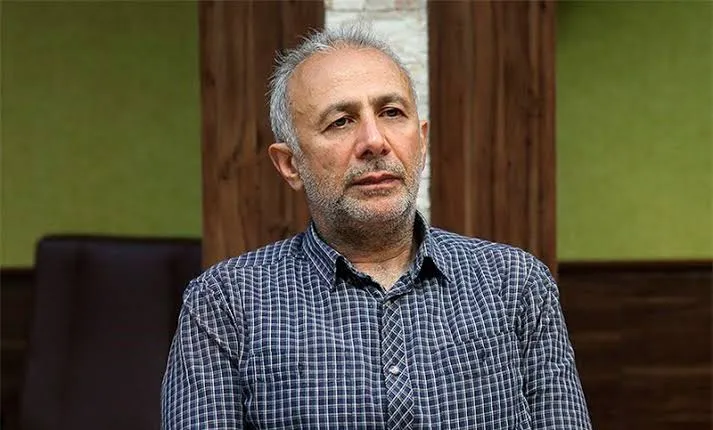
Dr. Ebrahim Motaghi is a prominent political science and international relations scholar, a full professor, and the Dean of the Faculty of Law and Political Science at the University of Tehran . He is one of the most experienced and cited experts in the fields of strategic studies, U.S. foreign policy, and the Middle East in contemporary Iran. With nearly half a century of academic activity, the publication of dozens of books and hundreds of scientific-research articles, and the supervision of generations of political science researchers, he has become one of the main references of Iran's theoretical-strategic discourse. Motaghi, who was appointed Dean of the Faculty of Law and Political Science at the University of Tehran in December 2021, has consistently been one of the most cited analysts of Iran's foreign policy space in Persian-language media, with his distinct analytical framework in the areas of national interests, neighborhood policy, and balance of power.
Who is Ebrahim Motaghi?
Dr. Ebrahim Motaghi is a prominent political science and international relations scholar, a full professor at the Faculty of Law and Political Science at the University of Tehran, and the current dean of this faculty (one of the most prestigious and oldest political science faculties in Iran), born in 1959. He is one of the most experienced and cited experts in the fields of strategic studies, U.S. foreign policy, the Middle East, and defense diplomacy in contemporary Iran. Motaghi, with nearly half a century of consistent academic activity, the publication of dozens of books and hundreds of scientific-research articles in the most prominent domestic journals, and the supervision of generations of political science researchers, has become one of the main references of Iran's theoretical-strategic discourse. He is currently at the intersection of classical academic political science, pivotal institutional role-playing at the University of Tehran, and a sustained analytical presence in the public discourse.
The importance of Dr. Ebrahim Motaghi in Iran's academic-analytical sphere can be examined from several angles. First, his prominent institutional position—as the Dean of the Faculty of Law and Political Science at the University of Tehran—which is among the oldest and most prestigious law and political science faculties in Iran and the Middle East. This faculty, active since 1934, has trained several generations of Iran's prominent jurists, politicians, and diplomats. Second, his triple academic background at Iran's prestigious universities—BA from the University of Tehran (1980-1984), MA and PhD from Tarbiat Modares University (1985-1996)—which has shaped his distinct intellectual-methodological framework. Third, his prolific academic output—including dozens of books on U.S. foreign policy, the Middle East, defense diplomacy, and regional security—which places him among the most prolific political science professors in Iran. Fourth, his distinguished expertise in U.S. studies—reflected in prominent works such as "Developments in U.S. Foreign Policy 1945-1997," "Iran in the View of American Think Tanks," "Iran in the View of Elites of Social Institutions and U.S. Political Structure," and "Trump, the Islamic Republic of Iran, and International Politics"—making him one of the main references for analyzing U.S. foreign policy in Iran. Fifth, his sustained analytical presence in public discourse—through notable interviews with media close to the official structure and other Persian-language media—making him one of the most cited analysts of Iran's foreign policy space.
Over the past decades, Motaghi's intellectual framework—in which "geopolitical, structural, political culture, and international indicators" are identified as the foundations for understanding national interests—has been one of the most enduring theoretical frameworks of Iran's national security discourse. In one of his notable analytical positions, Motaghi stated: "The Islamic Revolution is strengthened when an 'other' exists; otherwise, it collapses. The greatest damage we inflict on ourselves is the attempt to eliminate the other."
Life and Background
Dr. Ebrahim Motaghi was born in 1959. This generation, born in the late 1950s, came of age during the events of the 1979 Islamic Revolution and began their academic careers as part of the first generation of post-revolution students.
Detailed information about Motaghi's exact birthplace and family background is limited in open media sources—a characteristic relatively common among prominent academic political science professors, who primarily focus on their specialized scientific activities. What is clear from his professional path is that Motaghi belongs to the middle-eldest generation of Iranian political science researchers and has been consistently active in Iran's academic structure—particularly at the University of Tehran and Tarbiat Modares University—for nearly half a century.
Education
Motaghi's educational path was shaped at two of Iran's prominent universities—the University of Tehran and Tarbiat Modares University—ultimately leading to a PhD in International Relations.
BA in Political Science from the University of Tehran (1980-1984)
Motaghi completed his BA in Political Science from 1980 to 1984 at the University of Tehran—Iran's most prestigious university and one of the oldest in the Middle East. This period, which coincided precisely with the early post-revolution years and the onset of the Iran-Iraq war, formed his academic foundation in the tense revolutionary-war atmosphere.
MA in Political Science from Tarbiat Modares University (1985-1989)
Motaghi's MA in Political Science was completed from 1985 to 1989 at Tarbiat Modares University—one of Iran's most prestigious research-educational centers in the humanities. Tarbiat Modares University, considered one of the most important centers for training post-revolutionary political science and political thought specialists in Iran, is one of the prominent hubs of this field.
PhD in International Relations from Tarbiat Modares University (1990-1996)
Motaghi completed his PhD in International Relations from 1990 to 1996 at Tarbiat Modares University. This specialization—International Relations, which is among the interdisciplinary branches of political science involving the analysis of interactions between countries, the international system, and global dynamics—formed the foundation of Motaghi's subsequent expertise in strategic studies and foreign policy.
Academic Activity: University of Tehran
The turning point of Motaghi's academic career is his sustained membership in the faculty of the Faculty of Law and Political Science at the University of Tehran—Iran's most prestigious political science faculty.
Full Professor Rank
Motaghi is a full professor of political science at the Faculty of Law and Political Science, University of Tehran. The rank of "Full Professor" is among the highest academic ranks in Iran, based on prolific research output, scientific impact, and long academic experience.
The Faculty of Law and Political Science, University of Tehran
The Faculty of Law and Political Science at the University of Tehran, rooted in the establishment of the School of Political Science in 1919 and formed as one of the original faculties of the University of Tehran in 1934, is among the oldest and most prestigious law and political science faculties in the Middle East. Several generations of Iran's prominent jurists, politicians, diplomats, and professors have graduated from this faculty.
Dean of the Faculty of Law and Political Science (December 2021)
Motaghi's most prominent executive-academic position was his appointment as Dean of the Faculty of Law and Political Science at the University of Tehran.
Appointment by Dr. Seyyed Mohammad Moghimi
In December 2021, Dr. Seyyed Mohammad Moghimi, then Acting Head of the University of Tehran, appointed Dr. Ebrahim Motaghi as the new Dean of the Faculty of Law and Political Science. This appointment, considered one of the most important administrative developments at the University of Tehran during that period, was a sign of Motaghi's academic-executive credibility in Iran's higher education sphere.
Scope of Role
The deanship of the Faculty of Law and Political Science at the University of Tehran gave Motaghi a strategic role in the academic policy-making of one of the most important centers for training specialists in political science, law, and international relations—a center where numerous generations of Iran's prominent diplomats, politicians, jurists, and researchers are trained.
Scientific Supervisor of the Middle East Strategic Studies Research Institute
In addition to his academic positions, Motaghi serves as the "Scientific Supervisor of the Middle East Strategic Studies Group" at the Middle East Strategic Studies Research Institute. This institute, one of Iran's prominent strategic research centers in the Middle East field, is one of the important platforms for producing Motaghi's specialized content.
Scientific-Research Works
Dr. Ebrahim Motaghi is the author of dozens of books and hundreds of scientific-research articles, placing him among Iran's most prolific political science professors.
Prominent Books on U.S. Foreign Policy
"Developments in U.S. Foreign Policy 1945-1997" (Tehran: Documentation Center) — one of the reference books on U.S. foreign policy analysis during and after the Cold War.
"Iran in the View of American Think Tanks" (co-authored with Zohreh Poustinchi, Mizan Publishing, 2014) — an examination of American think tanks' views on Iran.
"Iran in the View of Elites of Social Institutions and U.S. Political Structure" (co-authored with Zohreh Poustinchi, Mizan Publishing, 2014).
"Trump, the Islamic Republic of Iran, and International Politics" — an analysis of Donald Trump's foreign policy toward Iran.
"Developments in U.S. Middle East Plans" (Institute for Islamic Culture and Thought, 2014).
Prominent Books on Security and Defense Diplomacy
"Regional Security in Chaotic Conditions: Strong State or Strong Region" (co-authored with Zohreh Poustinchi, National Defense University, 2020) — one of the key analyses of Middle East regional security.
"Approaches and Processes of Defense Diplomacy in the National Security Strategy of the Islamic Republic of Iran" (co-authored with Zohreh Poustinchi, Center for Strategic Defense Research, 2016).
"Necessities and Requirements of a Defense Pact for the Islamic Republic of Iran" (co-authored with Zohreh Poustinchi, 2017).
"The Theory of Historical Complexity and Role-Finding of Resistance in the Structure of the International System" (co-authored with Marjan Koohkheil and Mojgan Pazan, Center for Strategic Defense Research, 2015).
"Indicators and Processes of Escalation of Saudi Arabia's Crisis in Confronting the I.R.I."
Prominent Books on the Middle East and Turkey
"The Greater Middle East and the Islamic Middle East" (Kanoun-e Andisheh-e Javan Publishing, 2015).
"Symmetric Balancing in Turkey's Foreign Policy" (co-authored with Fatemeh Neko'lal-e Azad, Sedaghat Publishing, 2014).
Prominent Articles
Among Motaghi's most important articles are:
"Analysis of Israel's Behavior Toward the Islamic Republic of Iran" (Defense Policy, 1997).
"Function of the International System in the Imposed War Against the Islamic Republic" (Defense Policy, 1997).
"America's Regional Balancing Strategy in the Iran-Iraq War" (Defense Policy, 2000).
"Impact of U.S. Economic Sanctions on the National Security of the Islamic Republic of Iran" (Political Science, 2000).
"Geopolitics of Balance and Soft Balance: A Case Study of the Middle East 2001-2009" (Geopolitics, 2009).
"The Doctrine of Constructive Engagement in the Country's Foreign Policy" (co-authored with Manouchehr Mohammadi, 2005).
"Comparative Middle East Policy of Trump and Biden: From Military Balance to Offshore Balance" (Political Science Quarterly, 2023).
"Policies of the United States in Confronting China's Emerging Hegemony in the Oil and Energy Sector" (Political Studies Quarterly, 2022).
"The Impact of the Advancement and Development of the Islamic Republic of Iran's Missile Systems on U.S. Security Strategy in West Asia During Donald Trump's Presidency" (Defense Policy, 2021).
"The Analytical Capability of Structural and Institutional Theory for Analyzing Iran's Agency in the Two Events of the Nationalization of the Oil Industry and the JCPOA" (Political Science Quarterly, 2022).
This prolific collection, covering a range of topics from the history of U.S. foreign policy to JCPOA analysis, from balance of power to the theory of historical complexity, from the Greater Middle East to the political economy of the Sacred Defense, is a sign of the breadth of Motaghi's intellectual scope.
Views and Theoretical Frameworks
Throughout his intellectual-research career, Dr. Ebrahim Motaghi has formulated a clear intellectual framework, traceable in several axes.
Multidimensional Framework of National Interests
The most central theoretical framework of Motaghi is the multidimensional analysis of national interests. In his view: "To understand the national interests of any country, including the Islamic Republic of Iran, it is necessary to consider geopolitical, structural, political culture, and international indicators. Understanding national interests is directly related to the historical and identity processes of each society."
This framework, in which the issue of national interests is analyzed multidimensionally and in connection with structural-identity indicators, is one of the notable aspects of his theoretical framework.
The Concept of "Neighborhood Policy"
One of Motaghi's distinctive theoretical concepts is "neighborhood policy." In his view: "The concept raised in the framework of neighborhood policy points to the need to expand our foreign policy and relations, in the first instance, with actors who share relatively similar perceptual, cultural, and structural frameworks with us." He continues: "Iran's foreign policy trends, without attention to neighborhood, civilizational, and identity frameworks, will not have desirability or significant results."
This position, which recognizes the priority of neighbors and culturally similar countries in Iran's foreign policy, is one of the prominent aspects of his strategic perspective.
The Concept of "Other" and Preserving the Revolution
In one of his notable analytical positions, Motaghi stated: "The Islamic Revolution is strengthened when an 'other' exists; otherwise, it collapses. The greatest damage we inflict on ourselves is the attempt to eliminate the other. To elevate ourselves, we should not degrade the other or use rent."
This position, in which the concept of the "Other"—defined in contemporary political philosophy as the opposite of the "Self's" identity—is identified as a necessity for the survival of the Islamic Revolution, is one of his distinctive theoretical stances.
Critique of American Hegemonism
In one of his notable theoretical positions, Motaghi critiqued "American hegemonism": "Whenever a country seeks to achieve surplus strategic power, other countries and actors resist it. In the new geopolitical geometry, American hegemonism has faced signs of widespread reciprocal reaction."
This position, aligned with the official discourse of the system regarding the challenge of American hegemony, is one of the prominent aspects of his strategic perspective.
Emphasis on Balance of Power
In one of his notable strategic positions, Motaghi stated: "Any agreement requires the formation of a balance of power and a balance of expectations; therefore, Iran seeks to shape its public diplomacy in the framework of 'track two mechanisms' in the process of agreement and cooperation with other influential actors."
This position, in which balance of power is identified as a prerequisite for any agreement in international relations, is one of the prominent aspects of his realist view of international politics.
The Concept of "Track Two Mechanisms"
Motaghi is a serious advocate of the concept of "Track Two Diplomacy" in Iran's international relations—a concept in which official diplomacy is complemented by informal-public diplomacy.
Prominent Media Presence
In addition to his academic activities, Dr. Motaghi has a prominent presence in numerous Iranian media outlets.
Full audio file of Abdi Media's exclusive conversation with Dr. Ebrahim Motaghi, Professor and Faculty Member of the Political Science Department, Faculty of Law and Political Science, University of Tehran.
Listen unfiltered on the Abdi Media Castbox.
Interviews with the Office of the Supreme Leader's Website (Khamenei.ir)
One of the notable aspects of Motaghi's media presence is his numerous interviews with the "Office of the Supreme Leader's Information Website." These interviews, in which Motaghi has addressed topics such as "the Supreme Leader's message to the pilgrims of the House of God, analysis of Islamic unity, the forthcoming world order, and neighborhood policy," are a sign of his connection to the official discourse of the system.
Interviews with Tabnak
Motaghi also appears as a prominent analyst in various media outlets such as Tabnak, Mehr News Agency, Rooz-e 24, and Fararu. His numerous interviews in these media are among the most cited analyses of Iran's foreign policy-security space.
Presence at Prominent Meetings
One of Motaghi's notable controversies was his prominent presence at a meeting at the University of Tehran in the presence of Mohammad Javad Zarif, where Motaghi recounted a story from an Iranian delegation's meeting with a Russian delegation, in which "the Iranian side did not shake hands with Russian women, and a Russian woman who knew Persian said: 'Iranian men do everything except shake hands!'" This story, which received widespread coverage in Iranian media, was one of Motaghi's notable controversies.
Connections with Figures and Currents
Dr. Ebrahim Motaghi operates within a network of academic ties with prominent figures in Iranian political science.
Scientific-Research Colleagues
One of the notable aspects of Motaghi's activity is his collaborative production with academic colleagues. His most important scientific collaborator is Zohreh Poustinchi, with whom he has co-authored dozens of books and articles—a collaboration reflected in works such as "Regional Security in Chaotic Conditions," "Iran in the View of American Think Tanks," "Approaches and Processes of Defense Diplomacy," and other works.
Motaghi's other notable collaborators include Manouchehr Mohammadi, Fatemeh Neko'lal-e Azad, Marjan Koohkheil, Mojgan Pazan, Mohsen Palizban, Alireza Rezaei, Saeed Jahangiri, Fariborz Pirou, Mehrdad Navabakhsh, and Mohammad Sotoudeh.
Institutional Network
At the institutional level, Motaghi's relationship with the University of Tehran (particularly the Faculty of Law and Political Science), Tarbiat Modares University, the National Defense University, the Center for Strategic Defense Research, the Institute for Islamic Culture and Thought, and the Middle East Strategic Studies Research Institute forms his institutional network.
At the media level, his relationship with the Office of the Supreme Leader's Information Website (Khamenei.ir), Mehr News Agency, Tabnak, Fararu, Rooz-e 24, and other prominent Persian-language media forms his media communication network.
Conclusion
Dr. Ebrahim Motaghi is one of the most experienced, most cited, and, at the same time, most widely reflected academic figures in contemporary Iranian political science. With a unique combination of a prominent academic background (BA in Political Science from the University of Tehran, MA and PhD in International Relations from Tarbiat Modares University, with nearly half a century of consistent academic activity), a pivotal institutional position (as a full professor and Dean of the Faculty of Law and Political Science at the University of Tehran—Iran's most prestigious political science faculty), prolific research output (including dozens of books and hundreds of scientific-research articles), distinguished expertise in the fields of strategic studies, U.S. foreign policy, the Middle East, and defense diplomacy, a distinct theoretical framework in analyzing national interests, neighborhood policy, and balance of power, and finally, a sustained analytical presence in Iran's public discourse, he occupies a unique position in Iran's academic-analytical structure. His career—from his birth in 1959, his education at the University of Tehran and Tarbiat Modares University, attaining the rank of full professor, his deanship of the Faculty of Law and Political Science at the University of Tehran from December 2021, his work as a scientific supervisor at the Middle East Strategic Studies Research Institute, his prolific academic production with prominent colleagues such as Zohreh Poustinchi, his production of reference works on U.S. foreign policy and regional security, and his sustained presence in Iranian media discourse (particularly through interviews with Khamenei.ir)—presents a picture of a multidimensional "researcher-theorist-professor-academic manager."
Motaghi's distinguishing feature, on the first level, is his exceptional ability to link classical international relations analysis with the current issues of Iran's foreign policy—a characteristic in which theoretical frameworks of international relations (such as balance of power, hegemony, public diplomacy, and track two mechanisms) are consistently applied to the analysis of current developments in Iran and the Middle East. This linkage is relatively rare among contemporary Iranian political science professors. On the second level, his special focus on U.S. studies—reflected in prominent works such as "Developments in U.S. Foreign Policy 1945-1997," "Iran in the View of American Think Tanks," "Iran in the View of Elites of Social Institutions and U.S. Political Structure," and "Trump, the Islamic Republic of Iran, and International Politics"—has made him one of the main references for analyzing America in Iran. On the third level, his sustained ability in theoretical-media discourse—in which, with nearly half a century of consistent activity, he remains one of the most cited analysts of Iran's foreign policy space—is one of the notable aspects of his character.
From an analytical perspective, Motaghi's position exemplifies the phenomenon of the "prominent academic-manager researcher of the official structure" in contemporary Iran—a phenomenon in which a figure with a deep academic background and sustained experience, while being prominent at the academic level, also maintains a close connection with the official discourse of the system and an analytical presence in media close to the power structure. This pattern, which has other examples among prominent contemporary Iranian political science professors, has found a special reflection in Motaghi through his special focus on strategic studies and his prolific record of academic production.
What is clear from today's perspective is that the topics Motaghi has addressed in his works and positions—from developments in U.S. foreign policy, American think tanks' views on Iran, regional security in the Middle East, defense diplomacy, neighborhood policy, balance of power, analysis of the JCPOA and Iran's missile systems, and the multidimensional framework of national interests—remain among the most enduring topics in contemporary Iranian scientific-analytical discourse. In a situation where Iran is in one of the most tense periods of its foreign policy-security history—particularly after the 12-day Iran-Israel war in June 2025 and the escalation of regional tensions—Motaghi's analytical voice, with a combination of deep academic credibility, distinguished expertise in the fields of the United States and the Middle East, and a pivotal institutional position at the University of Tehran, is one of the main references for this discourse in Iran's academic-media discourse.
Frequently Asked Questions
Who is Ebrahim Motaghi?
Dr. Ebrahim Motaghi (b. 1959) is a prominent political science and international relations scholar, a full professor at the Faculty of Law and Political Science at the University of Tehran, and the current dean of this faculty. He is one of the most experienced and cited experts in the fields of strategic studies, U.S. foreign policy, the Middle East, and defense diplomacy in contemporary Iran.
What is Ebrahim Motaghi's educational background?
Motaghi completed his BA in Political Science at the University of Tehran from 1980 to 1984. He then received his MA in Political Science (1985-1989) and PhD in International Relations (1990-1996) from Tarbiat Modares University.
When was Ebrahim Motaghi appointed Dean of the Faculty of Law and Political Science at the University of Tehran?
In December 2021, Dr. Seyyed Mohammad Moghimi, then Acting Head of the University of Tehran, appointed Dr. Ebrahim Motaghi as the new Dean of the Faculty of Law and Political Science.
What are Ebrahim Motaghi's most important works?
Among Motaghi's most important works are the following books: "Developments in U.S. Foreign Policy 1945-1997," "Regional Security in Chaotic Conditions: Strong State or Strong Region" (co-authored with Zohreh Poustinchi), "Trump, the Islamic Republic of Iran, and International Politics," "Iran in the View of American Think Tanks," "Iran in the View of Elites of Social Institutions and U.S. Political Structure," "The Greater Middle East and the Islamic Middle East," "Approaches and Processes of Defense Diplomacy in the National Security Strategy of the Islamic Republic of Iran," and "Necessities and Requirements of a Defense Pact for the Islamic Republic of Iran."
What is Ebrahim Motaghi's scientific expertise?
Motaghi's main expertise lies in the fields of strategic studies, politics and government in great powers (particularly the United States), crisis and international conflict management, balance of power, the formation of alliances and coalitions in international relations, U.S. foreign policy, the Middle East, national interests, and defense diplomacy.
What is Motaghi's theoretical framework on national interests?
Motaghi's central theoretical framework is the multidimensional analysis of national interests. In his view: "To understand the national interests of any country, including the Islamic Republic of Iran, it is necessary to consider geopolitical, structural, political culture, and international indicators. Understanding national interests is directly related to the historical and identity processes of each society."
What is Motaghi's view on "neighborhood policy"?
Motaghi is a serious advocate of "neighborhood policy" in Iran's foreign policy. In his view: "We should expand our foreign policy and relations, in the first instance, with actors who share relatively similar perceptual, cultural, and structural frameworks with us... Iran's foreign policy trends, without attention to neighborhood, civilizational, and identity frameworks, will not have desirability or significant results."
What is Motaghi's view on the concept of the "Other"?
In one of his notable analytical positions, Motaghi stated: "The Islamic Revolution is strengthened when an 'other' exists; otherwise, it collapses. The greatest damage we inflict on ourselves is the attempt to eliminate the other. To elevate ourselves, we should not degrade the other or use rent."
Who is Motaghi's most important scientific collaborator?
Motaghi's most important scientific collaborator is Zohreh Poustinchi, with whom he has co-authored dozens of books and articles. Their joint works include "Regional Security in Chaotic Conditions," "Iran in the View of American Think Tanks," "Iran in the View of Elites of Social Institutions and U.S. Political Structure," "Approaches and Processes of Defense Diplomacy," and other works.
Is Ebrahim Motaghi still active?
Yes, Dr. Ebrahim Motaghi, as the current Dean of the Faculty of Law and Political Science at the University of Tehran, a full professor of political science, and a scientific supervisor at the Middle East Strategic Studies Research Institute, is one of the most prominent analytical figures in Iran's academic-media space. His recent analyses following the 12-day Iran-Israel war in June 2025, developments in U.S. foreign policy, nuclear negotiations, and regional dynamics have received widespread coverage in Persian-language media. His sustained presence on the Office of the Supreme Leader's Information Website (Khamenei.ir), Mehr News Agency, Tabnak, and other prominent media outlets is a sign of his enduring role in contemporary Iranian analytical-academic discourse
Take less than a minute, register and share your opinion under this post.
Insulting or inciting messages will be deleted.
Sign Up