
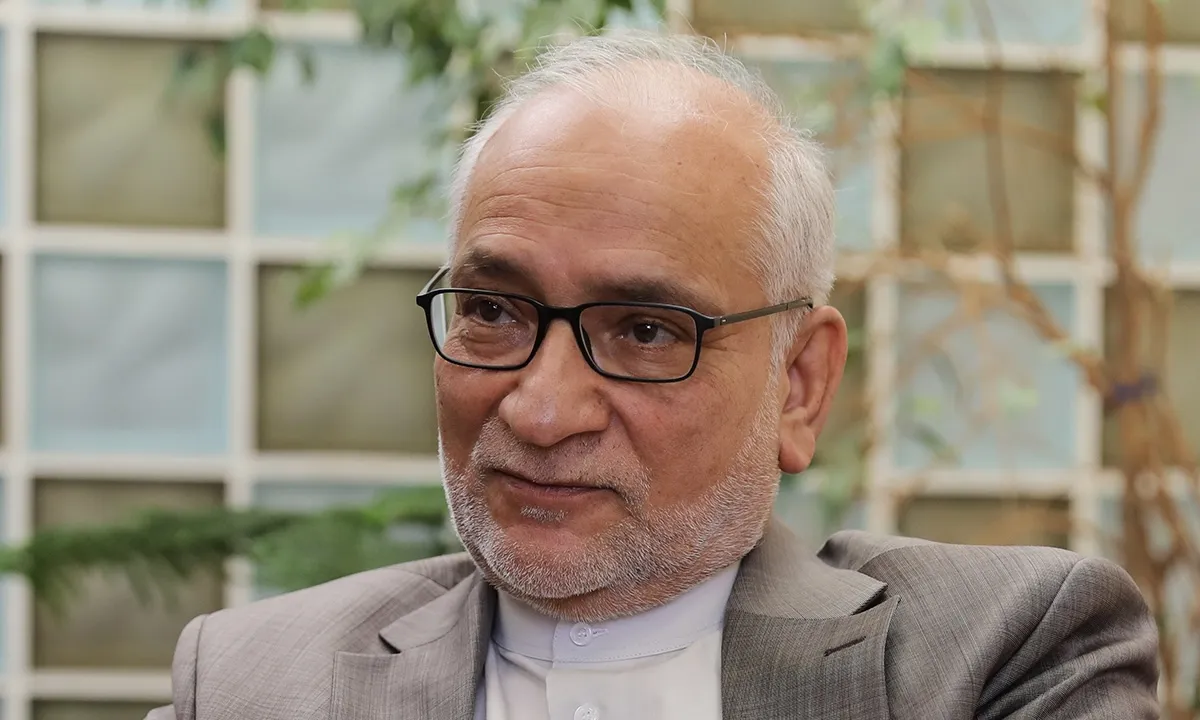
Seyyed Hossein Mara'ashi is a prominent reformist-moderate politician and Iranian party activist, the current Secretary-General of the Executives of Construction Party of Iran (since November 9, 2021), former spokesman of the party, former representative of the 5th and 6th terms of the Parliament from Kerman, former Governor of Kerman for 8 years (during the Mousavi and Hashemi administrations), former head of Akbar Hashemi Rafsanjani's office in the second Construction government, and former Vice President of Seyyed Mohammad Khatami and head of the Cultural Heritage and Tourism Organization. He ranks among the most widely-reported composite parliamentary-executive-party figures of the moderate-reformist post-revolutionary Iran over the past four decades. With a family background as the cousin of Eftekhar Mara'ashi (wife of Akbar Hashemi Rafsanjani) and a bachelor's degree in economics, he has experienced a trajectory from founding the Islamic Society of the University of Kerman in 1978 to an 8-year governorship and heading Hashemi's office. In the 2009 elections, he was the most prominent figure of the Executives of Construction Party supporting Mir-Hossein Mousavi, and was arrested afterward. Mara'ashi became the Secretary-General of the Executives of Construction Party on November 9, 2021, after 26 years of Karbaschi's secretariat, and in recent years, with positions such as "we run away from party and organizational work" and criticism of Hossein Shariatmadari, he has become one of the prominent voices of the reformist discourse.
Seyyed Hossein Mara'ashi (born July 29, 1958, in Aliabad-e Sadat, Rafsanjan, Kerman Province), is a prominent reformist-moderate politician and Iranian party activist, the current Secretary-General of the Executives of Construction Party of Iran since November 9, 2021 (after the transfer of the secretary-generalship by Gholamhossein Karbaschi), former spokesman of the Executives of Construction Party, former representative of the people of Kerman in the 5th and 6th terms of the Islamic Consultative Assembly (Majlis), former Governor of Kerman for 8 years in the two administrations of Mir-Hossein Mousavi and Akbar Hashemi Rafsanjani, former head of President Akbar Hashemi Rafsanjani's office in the second Construction government, former Vice President of Seyyed Mohammad Khatami and head of the Cultural Heritage and Tourism Organization in the second reformist government, a widely-reported figure removed from the presidency of the Cultural Heritage Organization by Mahmoud Ahmadinejad in July 2005, a prominent founding member of the Executives of Construction Party of Iran in 1995, former member of the Central Council, head of the Political Committee, and head of the party congress, the widely-reported founder of the Islamic Society of the University of Kerman in 1978, former head of the Construction Jihad of Kerman Province, former Deputy Political Governor of Kerman, a figure from the close family circle of the prominent Hashemi Rafsanjani family (cousin of Eftekhar Mara'ashi, wife of Akbar Hashemi Rafsanjani), a widely-reported figure arrested after the 2009 elections as the most prominent figure of the Executives of Construction Party supporting Mir-Hossein Mousavi, and at the same time one of the most widely-reported, prominent, and at the same time most distinctive composite parliamentary-executive-party figures of the moderate-reformist post-revolutionary Iran over the past four decades. He ranks among the central figures of the discourse of construction-reform in contemporary Iran.
Seyyed Hossein Mara'ashi, with a unique trajectory — from a distinguished family-religious-agricultural background in Aliabad-e Sadat, Rafsanjan — one of the most prominent cultural-agricultural regions of Kerman Province — as the son of Seyyed Mohammad Taghi Mara'ashi (a poet and farmer from Rafsanjan), to pursuing a distinguished academic educational path which included obtaining a bachelor's degree in economics, to his widely-reported participation in founding the Islamic Society of the University of Kerman in 1978 — which formed the foundation of the beginning of his student-revolutionary record, to assuming prominent institutional positions in the early post-revolutionary years in Kerman Province which included the headship of the Construction Jihad of Kerman Province and the Deputy Political Governor of Kerman, to assuming the widely-reported governorship of Kerman during the administrations of Mir-Hossein Mousavi and Akbar Hashemi Rafsanjani for 8 consecutive years — which formed the foundation of his enduring moderate identity, to his widely-reported participation in the founding of the Executives of Construction Party of Iran in 1995 — as one of the prominent founders of one of the most prominent moderate-reformist parties of post-revolutionary Iran, to his widely-reported victory in the elections of the 5th term of the Islamic Consultative Assembly in 1995 from the Kerman constituency — which was conducted with a joint list of the Executives of Construction Party and the Combatant Clergy Association of Tehran, to assuming the position of Chief of Staff of President Akbar Hashemi Rafsanjani in the second Construction government — which formed the foundation of Hashemi Rafsanjani's prominent trust in Mara'ashi, to his widely-reported victory in the elections of the 6th term of the Islamic Consultative Assembly in 1999 from the Kerman constituency — which took place during the peak of the reform movement, to his widely-reported resignation from the 6th parliamentary term at the end of the term to assume the presidency of the newly-established Cultural Heritage and Tourism Organization — which was done with a different motive from the participatory reformists who were resigning in protest against the qualification vetting process, to assuming the position of Vice President of Seyyed Mohammad Khatami and head of the Cultural Heritage and Tourism Organization until the end of Khatami's term on August 3, 2005, to his widely-reported removal from the presidency of the Cultural Heritage Organization by Mahmoud Ahmadinejad in July 2005 — which formed the foundation of his exit from the formal structure of power, to assuming the role of spokesman and membership in the Central Council of the Executives of Construction Party — which was accompanied by notable endurance in criticizing Ahmadinejad's policies, to assuming a prominent role in the 10th presidential election in 2009 in which he acted as the most prominent figure of the Executives of Construction Party supporting Mir-Hossein Mousavi — despite the fact that the party's Secretary-General (Gholamhossein Karbaschi) supported Mehdi Karroubi, to his widely-reported arrest after the 2009 protests along with Hedayat Aghaei, Mohammad Atrianfar, Fa'eh Hashemi, Roshanak Siyasi, Aida Mesbahi, Jahanbakhsh Khanjani, and Morteza Alviri — which formed the foundation of the beginning of the prison era of prominent reformists of the Executives of Construction, to his eventual release and continuation of sustained discursive-party activities, to assuming the position of Secretary-General of the Executives of Construction Party on November 9, 2021 — after 26 years of Gholamhossein Karbaschi's secretary-generalship — which formed the foundation of prominent leadership of one of the most enduring moderate parties of the post-revolutionary era, and finally, widely-reported positions regarding the 14th administration of Pezeshkian and contemporary reformist challenges, in which sustained discursive criticism of the Pezeshkian administration, criticism of Hossein Shariatmadari (managing director of Kayhan), criticism of recent arrests of reformists, and sustained defense of party and organizational work were made — particularly with his prominent statement: "It is not expected of reformist politicians in the reformist front to speak in a tone and language that implies separation from the government and separation from the system of the Islamic Republic" — he has become one of the most enduring and at the same time most widely-reported composite parliamentary-executive-party moderate-reformist figures of post-revolutionary Iran.
The significance of Seyyed Hossein Mara'ashi in the historical-political sphere of contemporary Iran can be examined from several aspects. First, the enduring Secretary-General of the Executives of Construction Party of Iran — as the current leader of the most prominent moderate-reformist party of post-revolutionary Iran — is one of the notable aspects of his party role. Second, the widely-reported 8-year Governor of Kerman — as a figure who ranks among the longest-serving governors of one of Iran's most important provinces — is one of the notable aspects of his executive durability. Third, the Chief of Staff of Akbar Hashemi Rafsanjani — as a figure who ranks among the closest prominent figures to the "Commander of Construction" — is one of the notable aspects of his enduring political network. Fourth, the Vice President and head of the Cultural Heritage and Tourism Organization in Khatami's government — as a figure who ranks among the most prominent figures of the second reformist government — is one of the notable aspects of his executive role. Fifth, his connection to the prominent Hashemi Rafsanjani family — as the cousin of Eftekhar Mara'ashi, wife of Akbar Hashemi Rafsanjani — is one of the notable aspects of his prominent family-political connection to the "Commander of Construction."
Important Note: Seyyed Hossein Mara'ashi's record and performance in the Persian-language media-political sphere are met with differing perspectives. In the discourse of supporters of moderation and reform, he is known as the "Secretary-General of the Executives of Construction Party," the "confidant of the Commander of Construction," and the "liberal reformist." In the discourse of prominent critics from the principlist (conservative) faction, his performance during his governorship of Kerman, his tenure as Hashemi's chief of staff, and his vice presidency have been criticized. His controversial letter of recommendation during his tenure as Hashemi's chief of staff to the District 2 municipality to resolve issues regarding the change of use of dozens of prohibited gardens — ranks among the enduring challenges surrounding his record. In the discourse of civil activists, his recent criticisms regarding the arrest of reformists and the policies of the Pezeshkian administration have been noted. This profile presents the narrative published in prominent Persian-language media-historical sources with an analytical-neutral stance.
Life and Family Background
Seyyed Hossein Mara'ashi was born on July 29, 1958, in Aliabad-e Sadat, Rafsanjan County, Kerman Province.
Rafsanjan Origin
According to published reports: "Hossein Mara'ashi was born in 1958 in Aliabad-e Sadat in Rafsanjan." Rafsanjan ranks among the most prominent cities of Kerman Province and the birthplace of Akbar Hashemi Rafsanjani.
Father: Seyyed Mohammad Taghi Mara'ashi
According to published reports: "His father, Seyyed Mohammad Taghi Mara'ashi, was from Rafsanjan and was a poet and farmer."
Family Connection to the Hashemi Rafsanjani Family
The most widely-reported aspect of Mara'ashi's family-political network was his connection to the prominent Hashemi Rafsanjani family. According to published reports: "Hossein Mara'ashi... has a family relationship with Eftekhar Mara'ashi, the wife of Ali Akbar Hashemi Rafsanjani, and is her cousin."
This family-political connection formed the foundation of the enduring relationship and prominent trust of Hashemi Rafsanjani in Mara'ashi — which was reflected in prominent positions such as his role as Hashemi's chief of staff in the second Construction government.
Education
Seyyed Hossein Mara'ashi has a distinguished academic educational background.
According to published reports: "Mr. Seyyed Hossein Mara'ashi... holds a bachelor's degree in economics..."
This educational background formed the foundation of his enduring economy-oriented identity, which was reflected in his prominent executive positions.
Student-Revolutionary Activities (1978)
The most widely-reported chapter of the beginning of Mara'ashi's record was his participation in founding the Islamic Society of the University of Kerman in 1978.
According to published reports on the official website of the Executives of Construction Party: "Founding and serving in the Islamic Society of the University of Kerman in 1978."
This activity formed the foundation of the beginning of Mara'ashi's prominent Islamic-political identity.
Early Post-Revolutionary Path in Kerman Province
The most widely-reported chapter of the middle period of Mara'ashi's record was his assumption of prominent institutional positions in Kerman Province from the early post-revolutionary years.
Head of the Construction Jihad of Kerman Province
According to published reports, Mara'ashi was the head of the Construction Jihad of Kerman Province in the early post-revolutionary years.
Deputy Political Governor of Kerman
Among Mara'ashi's other prominent positions was the Deputy Political Governor of Kerman — which formed the foundation of the beginning of his prominent provincial record.
Governorship of Kerman (8 Years)
The most central historical-fateful chapter of Mara'ashi's provincial record was his assumption of the governorship of Kerman for 8 consecutive years.
According to published reports: "He was also the Governor of Kerman for 8 years." And "his presence in the governorship of Kerman was also done with the consultation of Hashemi Rafsanjani."
This 8-year governorship, which took place during the administrations of Mir-Hossein Mousavi and Akbar Hashemi Rafsanjani, formed the foundation of Mara'ashi's enduring provincial base.
Participation in the Founding of the Executives of Construction Party (1995)
The most central historical-fateful chapter of Mara'ashi's party record was his widely-reported participation in the founding of the Executives of Construction Party of Iran in 1995.
According to published reports: "[Mara'ashi] is a member of the founding board of the Executives of Construction Party of Iran."
This party, which was established on the eve of the 5th parliamentary elections by Mara'ashi along with a number of other ministers and deputies of Akbar Hashemi Rafsanjani, ranks among the most prominent moderate-reformist parties of post-revolutionary Iran.
Representation in the 5th Parliament from Kerman (1995-1999)
The most widely-reported chapter of the beginning of Mara'ashi's parliamentary record was his widely-reported victory in the elections of the 5th term of the Islamic Consultative Assembly in 1995 from the Kerman constituency.
This representation, which was conducted with a joint list of the Executives of Construction Party and the Combatant Clergy Association of Tehran, formed the foundation of the beginning of Mara'ashi's prominent parliamentary identity.
Chief of Staff of Akbar Hashemi Rafsanjani (Second Construction Government)
The most widely-reported chapter of Mara'ashi's chief-of-staff record was his assumption of the chief of staff position of President Akbar Hashemi Rafsanjani in the second Construction government.
According to published reports: "Mara'ashi became Hashemi Rafsanjani's chief of staff in the second Hashemi administration and became closer than ever to this veteran politician." And "the period of presence in the presidential office showed the level of trust between these two figures."
This position formed the foundation of Hashemi Rafsanjani's enduring trust in Mara'ashi.
Controversial Letter of Recommendation
According to published reports: "Mr. Hossein Mara'ashi (deputy of Mr. Karbaschi in the Executives of Construction Party), who at that time was responsible for the office of the then-president (Mr. Hashemi Rafsanjani), in a letter of recommendation to the District 2 municipality, requested the resolution of issues (change of use of dozens of gardens for which demolition and clearing was prohibited by law) of Mr. Yousefi."
This letter of recommendation ranks among the enduring challenges surrounding Mara'ashi's record.
Representation in the 6th Parliament from Kerman (1999-2003)
The most central subsequent parliamentary chapter of Mara'ashi was his widely-reported victory in the elections of the 6th term of the Islamic Consultative Assembly in 1999 from the Kerman constituency.
Widely-Reported Resignation at the End of the Term
According to published reports: "With the end of the 6th Parliament and at a time when participatory reformists were resigning from parliamentary representation in protest against the qualification vetting process, Hossein Mara'ashi resigned from parliamentary representation for a different reason — to head the newly-established Cultural Heritage and Tourism Organization."
This resignation, which was done with a different motive from the participatory reformists, ranks among the most widely-reported distinctive aspects of his record during the reformist era.
Vice Presidency and Headship of the Cultural Heritage Organization (Second Khatami Government)
The most central chapter of Mara'ashi's executive record was his assumption of the position of Vice President of Seyyed Mohammad Khatami and head of the Cultural Heritage and Tourism Organization in the second reformist government.
Take less than a minute, register and share your opinion under this post.
Insulting or inciting messages will be deleted.
Sign Up