
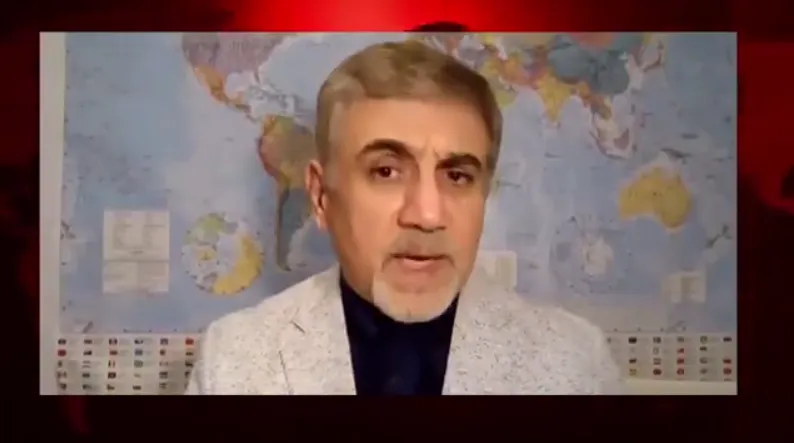
Hossein Alizadeh—a former diplomat, international relations researcher, and political analyst—has a 22-year record of service within the diplomatic framework of the Islamic Republic of Iran, including working as an economic officer in Cairo and as the Chargé d'Affaires ad interim of the Iranian Embassy in Helsinki, Finland. In September 2010, in protest against the events following the 2009 presidential election, he resigned from his post and joined the "Green Embassies Campaign." After receiving political asylum in Finland, he has collaborated with international media outlets as a writer and expert. This article explores his diplomatic career, the documents he disclosed, and his intellectual positions.
Who is Hossein Alizadeh?
Hossein Alizadeh, born on June 22, 1965, is a former diplomat of the Islamic Republic of Iran who currently works as an author, researcher, and independent political analyst focusing on international affairs. He is one of the most prominent figures among the wave of Iranian diplomats who resigned in protest following the crackdowns on the 2009 presidential election opposition. Furthermore, he is widely recognized for leaking critical internal directives concerning the state's media management on that highly controversial election day.
With a 22-year career inside Iran’s Ministry of Foreign Affairs—including 16 years stationed within international postings—Alizadeh stepped down from his high-ranking role as the Chargé d'Affaires ad interim of the Iranian Embassy in Helsinki, Finland, in September 2010. Following his resignation, he transitioned into a vocal and consistent analytical voice within the Iranian political opposition based in the West.
Alizadeh’s significance in modern Iranian political and diplomatic history is characterized by several key aspects:
The Guardian Council Directive Leak: Relying on his direct access to embassy communications, Alizadeh leaked a sensitive internal document issued by the Guardian Council to all overseas Iranian embassies on election day (June 12, 2009). The directive ordered embassies to strictly withhold any public dissemination of local ballot counts. This leak became a cornerstone document for the Green Movement and supporters of candidate Mir-Hossein Mousavi, who pointed to it as empirical evidence that the official election results were being preemptively controlled and manufactured by the state.
A Symbol of Institutional Defection: Alizadeh is among a small, notable group of Islamic Republic diplomats who chose to sacrifice their lifelong diplomatic careers to align with the domestic Green Movement. This wave of defections initially began with Mohammad Reza Heydari (the consul at the Iranian Embassy in Norway). Upon his own departure, Alizadeh famously noted to international media that he "would not be the last" diplomat to defect.
Multilingual Analytical Contributions: Over the decade and a half following his resignation, Alizadeh built an extensive portfolio as an independent journalist, publishing over 600 analytical articles in Persian, Arabic, and English. His frequent appearances on major international broadcasting networks have established him as a highly visible expert on Iranian foreign policy and Middle Eastern geopolitics.
Upon leaving his diplomatic post, Alizadeh applied for and received political asylum for himself and his family from the government of Finland, where he has since resided. He collaborates with a broad network of international Persian, Arabic, and English media outlets, including the BBC, Voice of America (VOA), Radio Free Europe/Radio Liberty (Radio Farda), Iran International, Afghanistan International, TRT Arabic, and Radio Zamaneh.
Life and Background
Hossein Alizadeh was born on June 22, 1965. His formative youth and university years coincided with the aftermath of the 1979 Islamic Revolution and the protracted Iran-Iraq War. This generation grew up deeply immersed in the state's foundational revolutionary values, and many of its educated professionals subsequently filled the technical, administrative, and expert ranks of the new governing apparatus.
While detailed accounts of his early personal life and undergraduate education remain limited in public records, his subsequent career trajectory reflects specialized training in economic relations, international law, and diplomacy. A distinguishing feature of Alizadeh's professional profile is his advanced multilingual fluency; he is fully proficient in Persian, English, and Arabic, and possesses working knowledge of Finnish and Swedish.
Diplomatic Career (22 Years)
Alizadeh dedicated more than two decades to serving as a career expert within the diplomatic structure of the Islamic Republic of Iran, ultimately spending 16 of his 22 years of service deployed on foreign assignments.
Mission to Egypt
One of Alizadeh's foundational foreign assignments was serving as an economic officer at the Iranian Interests Section in Cairo, Egypt. Despite the persistent, deeply entrenched diplomatic tensions that characterized relations between Tehran and Cairo during the presidency of Hosni Mubarak, Egypt remained a vital geostrategic hub in the Arab world, making the Iranian diplomatic presence there highly sensitive.
Years after his defection, state-aligned conservative media outlets in Iran published sharp criticisms regarding his performance during his tenure in Egypt. These reports alleged that he lacked the requisite technical background for economic diplomacy and accused him of utilizing his diplomatic position for private commercial ventures. These claims, common in state media campaigns directed at high-profile defectors, have been rejected by Alizadeh and are treated with skepticism by independent political analysts, who view them as standard character-deprecation tactics deployed by the state against former officials.
Chargé d’Affaires in Finland
The pinnacle of Alizadeh's diplomatic career was his assignment to the Iranian Embassy in Helsinki, Finland. Having entered the station as a counselor (variously cited as second or third counselor across official diplomatic rosters), he eventually rose to the rank of Chargé d'Affaires ad interim—rendering him the second-in-command and the acting head of the mission in the absence of an ambassador.
This leadership position placed Alizadeh at the apex of Iran's bilateral relationship with Finland, a Nordic country with significant economic and diplomatic ties to Tehran. Crucially, the role granted him direct clearance to handle top-secret, high-priority communications sent from the Ministry of Foreign Affairs headquarters in Tehran, setting the stage for his subsequent historical disclosure.
The 2009 Election and the Guarded Document
The definitive turning point in Alizadeh's life occurred during the political upheaval surrounding the tenth presidential election on June 12, 2009. The official declaration of a landslide victory for incumbent President Mahmoud Ahmadinejad triggered immediate allegations of widespread systemic fraud, sparking massive street demonstrations by the supporters of opposition candidates Mir-Hossein Mousavi and Mehdi Karroubi, and giving rise to the Green Movement.
The Leaked Directive
Operating from the embassy in Helsinki, Alizadeh preserved and subsequently leaked an internal, high-priority cable sent by the Guardian Council—the body tasked with overseeing Iranian elections—to all diplomatic missions abroad on June 12, 2009. The directive was dispatched while polling stations were still open and voting was actively underway, explicitly ordering all embassies to completely refrain from announcing or certifying any local voting figures.
Conclusion
Hossein Alizadeh remains a highly visible and structurally significant figure among the modern wave of defected Iranian diplomats. His unique professional profile combines over two decades of insider experience within the Ministry of Foreign Affairs with an extensive, multilingual career in independent media and research.
Analytically, Alizadeh represents the phenomenon of the "internal expert turned outside critic." His disclosure of the Guardian Council's internal election-day orders provided a crucial piece of documentation for the historical record of the 2009 crisis. By continuing to produce regular, highly detailed analyses in Persian, Arabic, and English for nearly fifteen years after his defection, Alizadeh has transitioned from a temporary news figure into a permanent, authoritative voice within the international discourse on Iranian diplomacy and Middle Eastern politics.
Frequently Asked Questions (FAQs)
Who is Hossein Alizadeh? Hossein Alizadeh (born June 22, 1965) is a former career diplomat for the Islamic Republic of Iran who now works as an independent author, international relations researcher, and political analyst. He served within Iran’s diplomatic corps for 22 years, most notably holding the position of Chargé d'Affaires ad interim at the Iranian Embassy in Finland before resigning in September 2010.
Why did Hossein Alizadeh resign from his diplomatic post? Alizadeh resigned in protest against the state's heavy-handed suppression of the peaceful domestic protests that followed the disputed 2009 presidential election. Upon resigning, he publicly declared his allegiance to the democratic aspirations of the Iranian people and the Green Movement led by Mir-Hossein Mousavi. Following his resignation, he sought and obtained political asylum in Finland.
What was the specific document leaked by Hossein Alizadeh? Alizadeh leaked an official internal directive sent by the Guardian Council to all Iranian embassies on the day of the election (June 12, 2009). The document explicitly ordered embassy staff to withhold all local ballot counting data and refrain from public reporting while voting was still underway. Opposition analysts have consistently used this document to argue that the state was actively managing and manipulating the final figures prior to the closing of the polls.
Which international media networks does he work with? Alizadeh is a regular contributor and broadcast analyst across several major networks, including Radio Farda, BBC Persian, Voice of America (VOA), Iran International, Afghanistan International, TRT Arabic, and Radio Zamaneh.
How large is his published body of work? Since leaving his diplomatic career, Alizadeh has published over 600 analytical articles and commentaries focusing on Iranian foreign policy, UN Security Council resolutions, and broader Middle Eastern politics. He has also authored several specialized academic papers on international relations.
What languages does Hossein Alizadeh speak? Alizadeh is fully fluent in Persian, English, and Arabic, which allows him to regularly write and conduct live broadcast interviews for diverse audiences across the Western and Arab worlds. He also possesses a working knowledge of Finnish and Swedish.
What is his connection to Mohammad Reza Heydari? Mohammad Reza Heydari was the Iranian consul in Oslo, Norway, who resigned in early 2010 over the post-election crackdowns, effectively starting the "Green Embassies Campaign." Heydari actively supported Alizadeh's subsequent defection in Finland, confirming to media outlets that Alizadeh had faced severe administrative pressure and threats from his superior ambassador before making his public break with the government.
Is Hossein Alizadeh still politically active? Yes, Alizadeh remains a highly active independent analyst. He frequently appears on international broadcasting networks to provide real-time strategic commentary on Iranian geopolitical decisions, regional conflicts, and diplomatic affairs. His extensive professional portfolio and historical archives are curated on his official website, hosseinalizadehdiplomat.com.
Take less than a minute, register and share your opinion under this post.
Insulting or inciting messages will be deleted.
Sign Up