
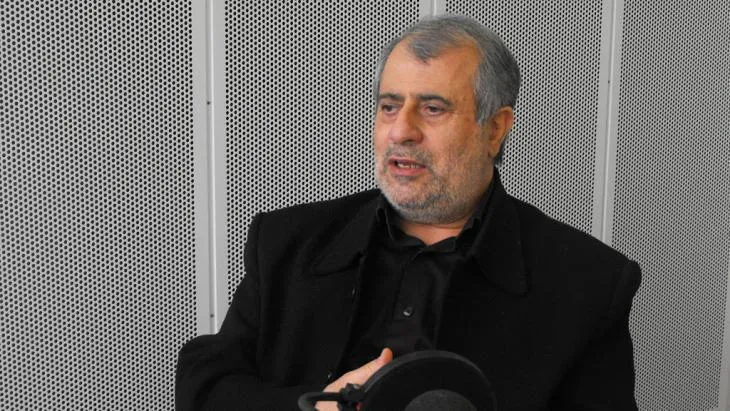
Hassan Yousefi Eshkevari—a representative of the First Majles and a researcher for the Center for the Great Islamic Encyclopedia—is among the dissident clerics whose judicial case following the Berlin Conference drew widespread domestic and international attention. This article provides a comprehensive look at his academic and seminary life, the internal discursive challenges of the intellectual movement, and his recent positions in exclusive interviews with Abdi Media.
Who is Hassan Yousefi Eshkevari?
Hassan Yousefi Eshkevari, born on August 11, 1949, in the mountainous region of Eshkevar (located between Rudbar and Ramsar in northern Iran), is a prominent Iranian author, researcher, theologian, journalist, and one of the most distinguished figures of religious intellectualism (Nowandishi-ye Dini) and the Nationalist-Religious (Melli-Mazhabi) movement in contemporary Iran. Over nearly half a century of intellectual and political activism, Eshkevari has played a persistent and influential role across several critical chapters of modern Iranian history. His journey spans fifteen years of seminary studies in Qom, serving as a representative in the First Majles, founding the Ali Shariati Cultural Research Center, participating in the controversial 2000 Berlin Conference, facing a death sentence by the Special Clerical Court, and ultimately living in exile in Germany.
Eshkevari’s significance within Iran's intellectual and political landscape can be analyzed through several key dimensions:
Democratic Reinterpretation of Tradition: He stands among contemporary Iranian religious intellectuals who have sought to draw upon Islamic tradition to present a modern interpretation compatible with human rights, liberty, and democracy. This intellectual lineage connects him directly to figures like Ali Shariati, Mehdi Bazargan, Ayatollah Mahmoud Taleghani, and Muhammad Iqbal—who have been the primary influences on his thought.
Founding Parliamentary Experience: Serving in the first-ever legislative term of the Islamic Consultative Assembly (1980–1984) as the representative for Shahsavar (Tonekabon) and Ramsar linked him with the founding generation of Iran's post-revolutionary parliamentary system. In the Majles, he formed close relationships with figures like Mehdi Bazargan and Ezzatollah Sahabi, an encounter that initiated a new chapter in his intellectual and political life.
The Berlin Conference Judicial Milestone: His prosecution following the Berlin Conference remains one of the most publicized and high-profile legal cases involving religious intellectuals in the history of the Islamic Republic. Initially sentenced to death by the Special Clerical Court, his sentence was eventually commuted to seven years in prison along with formal clerical defrocking (Khal-e Lebas).
Eshkevari currently resides in Germany, where he continues to be an active voice among Iranian religious-political intellectuals, regularly publishing theoretical works, essays, and critical commentaries.
Life and Background
Hassan Yousefi Eshkevari was born on August 11, 1949, in the Eshkevarat (Eshkevar) region—a remote, mountainous area in northern Iran nestled between the districts of Rudbar in Gilan Province and Ramsar in Mazandaran Province. Known for its rich cultural and historical background, this region is a traditional heartland of northern Iran, and his surname directly reflects this birthplace.
Eshkevari spent his childhood and youth in a traditional, religious environment. Following a path common for young men from devout families during that era, he eventually turned toward formal Islamic seminary studies.
Seminary Education: 15 Years in Qom
The first major turning point in Eshkevari's life was his fifteen-year tenure at the Qom Seminary, where he studied until 1978. As the primary epicenter of Shi'ite clerical authority in Iran, Qom was a major crucible for the development of religious-political thought during that period. The seminarians of his generation formed the cadre that would later build the institutional foundations of the Islamic Republic.
During these fifteen years, Eshkevari mastered traditional seminary sciences—including jurisprudence (Fiqh), principles of jurisprudence (Usul), philosophy, Quranic exegesis (Tafsir), Hadith studies, and scholastic theology (Kalam). By the time of the 1979 Revolution, he was a fully trained cleric with a deep foundational knowledge of the Shi'ite religious tradition. This seminary background provided him with the necessary scholarly credentials to later pursue religious reform and challenge mainstream, orthodox interpretations of Islam.
What set Eshkevari apart from many of his peers was his continuous engagement with the ideas of modern Muslim reformers. From his days as a young seminarian, he read widely and was deeply influenced by Muhammad Iqbal, Mehdi Bazargan, Ayatollah Taleghani, and most notably, Ali Shariati. These thinkers offered modern, critical alternative interpretations of Islam that stood in stark contrast to the traditional, jurisprudence-centric approaches taught in the seminaries.
Tenure in the First Majles (1980–1984)
Following the victory of the 1979 Revolution and the institutional formation of the new state, Eshkevari transitioned from the seminaries of Qom into the political arena. In the first-ever parliamentary elections of the Islamic Consultative Assembly, he successfully ran as the representative for Shahsavar (Tonekabon) and Ramsar, returning politically to his native northern region.
The First Majles (1980–1984), convening amidst intense post-revolutionary political rivalries and the outbreak of the Iran-Iraq War, is widely regarded as one of the most dynamic parliaments in modern Iranian history. It featured a diverse array of political factions, including revolutionary clerics, the Islamist left, Nationalist-Religious figures, and liberal-Islamists.
For Eshkevari, his time in this parliament was transformative. It brought him into close contact with Mehdi Bazargan (the Prime Minister of the Interim Government and leader of the Nationalist-Religious movement) and Ezzatollah Sahabi (a close associate of Bazargan and a leading figure in the Freedom Movement). Mohammad Tavasoli, the General Secretary of the Freedom Movement of Iran, later remarked that this period marked "the beginning of a new chapter in Eshkevari's social life," integrating him into the cultural and political networks of Iran's secular and religious democratic opposition.
Intellectual and Institutional Work After Parliament
After completing his parliamentary term, Eshkevari withdrew from state governance to focus full-time on intellectual production, religious reform, and journalism. He played a central role in establishing several influential cultural and intellectual institutions.
The Ali Shariati Cultural Research Center
One of Eshkevari's primary institutional achievements was the founding of the Ali Shariati Cultural Research Center in 1997, coinciding with the rise of President Mohammad Khatami’s reform administration. Established alongside several like-minded scholars, the center sought to preserve, catalog, and critically expand upon the intellectual legacy of Ali Shariati. Over the years, it became a major hub for contemporary discourse surrounding Shariati's thought in Iran, and Eshkevari continues to serve as its director.
The Mehdi Bazargan Cultural Foundation
Eshkevari also co-founded the Mehdi Bazargan Cultural Foundation, established following Bazargan’s passing in 1995. The foundation was designed to preserve and promote Bazargan’s intellectual and democratic legacy, serving as a key center for the Nationalist-Religious movement in the post-Bazargan era.
Research for the Center for the Great Islamic Encyclopedia
In the realm of formal academic research, Eshkevari maintained a long-standing scholarly collaboration with the Center for the Great Islamic Encyclopedia (Da'erat al-Ma'aref-e Bozorg-e Eslami). As one of the most prestigious research institutions for Islamic studies in Iran, his extensive work there solidified his academic credentials as a scholar of religion. Eshkevari has frequently referred to this encyclopedic research as the "core" of his academic and scientific career.
Extensive Career in Journalism
Over the past three decades, Eshkevari has been an exceptionally prolific essayist, contributing to a vast array of Iranian newspapers and journals across the political spectrum:
The 1980s: Regular contributions to Keyhan and Ettela'at (the two primary national dailies of the era).
The 1990s and 2000s (The Reform Era): Columnist and contributor for key progressive and reformist dailies including Jame'eh, Toos, Neshat, Khordad, Sobh-e Emrooz, Manategh-e Azad, Ham-Mihan, Asr-e Azadegan, Shargh, Kargozaran, Etemad, and Aftab-e Yazd.
Specialized Intellectual Journals: Articles published in Aban, Mobin, Payam-e Hajar, Hatef, Omid-e Zanjan, Payam-e Hamoun, Madreseh, and Aeen.
Encyclopedic References: Scholarly entries written for the Encyclopedia of the Quran and Farhang-e Asar (The Culture of Literary Works).
The Berlin Conference and Judicial Prosecution
The definitive turning point in Eshkevari's public life occurred in the spring of 2000, leading to one of the most controversial and highly publicized security trials in the history of the Islamic Republic: his participation in the Berlin Conference.
The Berlin Conference
In April 2000, the Heinrich Böll Foundation—a political-cultural foundation closely affiliated with the German Green Party—hosted an international conference in Berlin titled "Iran After the Elections." Organized shortly after the landslide victory of Reformist factions in the Sixth Majles elections, the conference aimed to analyze the shifting political and intellectual dynamics within Iran. It drew a broad spectrum of Iranian secular intellectuals, reformist journalists, human rights defenders, and Nationalist-Religious activists.
The list of domestic participants was highly diverse. Eshkevari attended as a key speaker, delivering an address focused on the intersection of Islam, modern human rights, civil liberties, the mandatory hijab, and the conceptual boundaries of religious intellectualism.
Backlash and Arrest
Inside Iran, the conference was met with intense political and media backlash orchestrated by conservative factions and state security apparatuses. State media outlets heavily broadcasted footage of peripheral disruptions and protests inside the conference hall by expatriate opposition groups, framing the entire event as a foreign-backed "conspiracy against the state."
Upon returning to Iran, several high-profile speakers—including Akbar Ganji, Mehrangiz Kar, Shahla Lahiji, Ezzatollah Sahabi, and Ali Afshari—were arrested by security forces. Because of his formal clerical status, Eshkevari was singled out to be tried before the specialized and restrictive Special Clerical Court in Tehran, while the secular participants were prosecuted in the Revolutionary Courts.
Death Sentence and Subsequent Commutation
Eshkevari’s trial before the Special Clerical Court went through several volatile stages. In the court of first instance, the prosecutor secured a rarely issued conviction carrying the death penalty for apostasy and subversion. The ruling triggered immediate domestic and international outrage, drawing sharp condemnation from global human rights organizations, statements of protest from Iranian intellectuals, and formal diplomatic concerns from European governments.
Following sustained domestic and international pressure, the Supreme Court overturned the capital sentence, and the case was remanded to an appellate clerical chamber. The court subsequently commuted the sentence, sentencing Eshkevari to seven years in prison and ordering his formal defrocking—a severe sentence that stripped him of his clerical robes and status.
Release and Exile to Germany
Eshkevari was ultimately released from prison in February 2005, having served nearly five years of his sentence. His release occurred during the final months of the Khatami administration, on the eve of the contentious ninth presidential election.
Faced with a restrictive political atmosphere and ongoing judicial surveillance within Iran, Eshkevari eventually chose to leave the country, obtaining political asylum and settling in Germany. Moving to the nation that had hosted the fateful Berlin Conference marked the end of his career within Iran and the beginning of his work in diaspora.
In Germany, free from state censorship and judicial pressures, Eshkevari resumed his writing, publishing, and public speaking. He became a regular contributor to Zeitoon—a leading Persian-language analytical website run by exiled Nationalist-Religious activists—and frequently provides expert commentary on contemporary Iranian affairs across major international Persian media networks.
Core Intellectual Views and Philosophies
Throughout his extensive career, Eshkevari has articulated a well-defined theological and political framework centered around several main pillars:
Religious Intellectualism (Nowandishi-ye Dini)
Eshkevari's core identity is rooted in Islamic reformism. He argues that historical, institutionalized Islam must be clearly distinguished from Islam as an eternal, spiritual message. In his view, a significant portion of traditional jurisprudence (Fiqh) and canonical rulings—including those governing criminal law and civil status—are the direct products of the socio-historical conditions of early Islamic societies. Consequently, he asserts that these laws are open to modern reinterpretation to align with contemporary global standards of human rights, gender equality, and democratic governance.
The Nationalist-Religious Line
Politically, Eshkevari is an iconic representative of the Nationalist-Religious (Melli-Mazhabi) current, an intellectual movement shaped by historical figures like Mehdi Bazargan and Ayatollah Taleghani, and later carried forward by Ezzatollah Sahabi and Habibollah Peyman. This movement seeks to harmonize democratic nationalism (emphasizing Iranian sovereignty, civil rights, and independence) with an ethical, egalitarian reading of Islam that rejects standard clerical autocracy.
Critique of the Ruling Theocracy
Eshkevari is a structural critic of the political framework of the Islamic Republic. Writing from a position of theological expertise, his critiques target the doctrine of the Guardianship of the Islamic Jurist (Velayat-e Faqih), the politicization of the judiciary, the persecution of dissident clerics, and the state's departure from the democratic promises of the 1979 Revolution.
Advocacy for Women’s Rights
A central component of Eshkevari's reformist project is the defense of women's rights through a progressive theological lens. His historic speech at the Berlin Conference, which questioned the theological basis of state-enforced compulsory hijab, underscored his willingness to publicly tackle highly sensitive issues regarding gender within Islamic law.
Intra-Opposition Debates and the Critique of Akbar Ganji
In exile, Eshkevari has engaged in rigorous debates within the Iranian opposition and reformist circles. Notably, he wrote a series of high-profile critiques addressing the political and philosophical stances of prominent journalist and activist Akbar Ganji. These intellectual exchanges highlighted the deep internal, discursive debates taking place within the broader Iranian religious intellectual movement regarding secularism, strategy, and the future of reform.
Discourse Analysis: The Political Network
Eshkevari occupies a central position within a dense network of modern Iranian religious and political thinkers:
Within this network, Shariati and Bazargan remain his primary intellectual inspirations. Among his peers, he maintained deep connections with Ezzatollah Sahabi, Yadollah Sahabi, Mohammad Bastehnegar, Mohammad Tavasoli, Habibollah Peyman, and Abdulali Bazargan.
In the realm of clerical dissent, Eshkevari’s trajectory follows the tradition of the late Grand Ayatollah Hossein-Ali Montazeri, who famously used his theological standing to defend civil rights and critique state power from within the Shi'ite clerical establishment. In the contemporary era, Eshkevari’s work shares a clear discourse with scholars like Mohsen Kadivar (an exiled reformist theologian in the US), as well as domestic dissident clerics who have faced recent judicial prosecutions for criticizing the state, such as Shahabuddin Haeri Shirazi in Shiraz and Mohammadtaghi Akbarnejad in Qom.
Conclusion
Hassan Yousefi Eshkevari remains an important figure of religious intellectualism and the Nationalist-Religious movement in contemporary Iran. His life presents a unique combination of formal seminary training, early legislative experience, extensive journalism, and a willingness to face severe judicial consequences—including a death sentence, imprisonment, and defrocking—in defense of his principles.
From an analytical perspective, Eshkevari represents the phenomenon of the "dissident cleric" in modern Iran: an insider who emerged from the religious establishment to become a vocal critic of the official state ideology. His academic credentials in traditional Islamic sciences give his reformist arguments a distinct layer of scholarly authority. As contemporary Iranian society continues to debate the relationship between religion, state, and civil liberties, Eshkevari's extensive body of work remains an essential point of reference for progressive theological discourse.
Frequently Asked Questions (FAQs)
Who is Hassan Yousefi Eshkevari? Hassan Yousefi Eshkevari (born August 11, 1949, in Eshkevar) is a prominent Iranian writer, researcher, theologian, and journalist. He is a leading figure within the religious intellectual movement (Nowandishi-ye Dini) and the Nationalist-Religious political current. He served as a Member of Parliament in the First Majles and has spent decades advocating for a democratic interpretation of Islam.
What is his educational background? Eshkevari spent approximately fifteen years studying traditional Islamic jurisprudence and advanced theological sciences at the Qom Seminary until 1978. Alongside his classical training, he focused on the works of modern Islamic reformers, most notably Ali Shariati and Mehdi Bazargan.
What was the Berlin Conference controversy and his subsequent death sentence? In April 2000, Eshkevari spoke at the Heinrich Böll Foundation's "Iran After the Elections" conference in Berlin, where he discussed progressive views on Islamic law, human rights, and the hijab. The event was heavily criticized by conservative factions in Tehran. Upon his return, Eshkevari was arrested and tried by the Special Clerical Court, which initially handed down a death sentence for apostasy. Following international outcry, the sentence was overturned, and he was ultimately sentenced to seven years in prison and formally stripped of his clerical status. He was released in early 2005.
What is the Ali Shariati Cultural Research Center? Founded by Eshkevari and several fellow intellectuals in 1997 during the Khatami reform era, the center is dedicated to preserving, cataloging, and studying the intellectual and sociological legacy of Dr. Ali Shariati. Eshkevari has served as its director since its inception.
What are the primary tenets of his religious philosophy? Eshkevari advocates for religious intellectualism, maintaining that many traditional jurisprudential rulings are time-bound products of early Islamic socio-political contexts rather than immutable divine mandates. He argues for a reinterpretation of Islamic tradition that is fully compatible with modern values such as democratic governance, individual liberties, and comprehensive women's rights.
Which publications has he been associated with? Over a thirty-year career in journalism, Eshkevari has written for dozens of publications. In the 1980s, he contributed to Keyhan and Ettela'at. During the Reform Era, he wrote for landmark progressive dailies like Jame'eh, Toos, Neshat, and Shargh. Academically, he performed extensive encyclopedic research for the Center for the Great Islamic Encyclopedia.
Where is he currently located and is he still active? Yes, Eshkevari remains highly active. He currently resides in Germany, where he regularly writes for the analytical website Zeitoon and appears on international Persian-language media networks to discuss contemporary Iranian politics, human rights, and theological reform. He also continues his institutional work as the head of the Ali Shariati Cultural Research Center in diaspora.
Take less than a minute, register and share your opinion under this post.
Insulting or inciting messages will be deleted.
Sign Up