
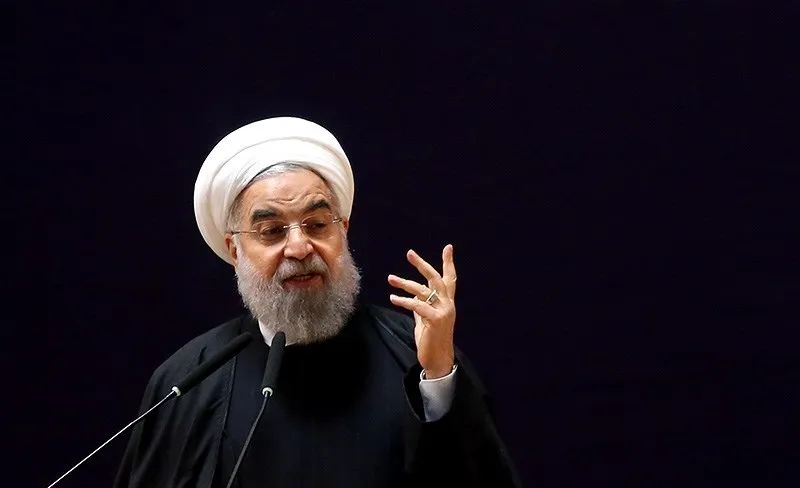
Hassan Rouhani is a Shia cleric, diplomat, and prominent Iranian politician. He served as the 7th President of the Islamic Republic of Iran for two consecutive terms (2013–2021), was the former Secretary of the Supreme National Security Council for 16 years (1989–2005), the former head of Iran's nuclear negotiating team (2003–2005), and the lead negotiator of the JCPOA. He is one of the most widely discussed, prominent, and enduring figures combining clerical, diplomatic, security, and parliamentary roles in post-revolutionary Iran over the past five decades. With a combined educational background in seminary studies (level of ijtihad in Shia jurisprudence) and academia (PhD in Law from the University of Caledonia, Glasgow), he has served as a representative for five parliamentary terms and as Deputy Speaker of the 4th and 5th Parliaments, held prominent commands during the Iran-Iraq war, and served as the head of the Strategic Research Center for 21 years. On April 11, 2013, he entered the presidential election with the slogan "Prudence and Hope" and the symbol of a purple key, winning on June 15, 2013, with 18,613,329 votes. The signing of the JCPOA on July 14, 2015, in Vienna is the most significant diplomatic achievement of his presidency. In his condolence message on March 17, 2025, on the occasion of Ali Larijani's death, Rouhani mentioned their 46 years of collaboration.
Hassan Rouhani (born November 12, 1948, with the former name Hassan Fereydoun in the city of Sorkheh, Semnan Province), a Shiite cleric, diplomat, and prominent Iranian politician, the seventh President of the Islamic Republic of Iran for two consecutive terms from August 3, 2013, to August 3, 2021, for a total of 8 years, succeeding Mahmoud Ahmadinejad; former Secretary of the Supreme National Security Council of the Islamic Republic of Iran for 16 consecutive years from November 13, 1989, to August 15, 2005, during the presidencies of Akbar Hashemi Rafsanjani and Seyyed Mohammad Khatami (which ranks among the longest secretariats of the post-revolutionary Supreme National Security Council of Iran); former head of Iran's nuclear negotiating team in talks with the European Three (Germany, France, and the UK) from September 28, 2003, to August 15, 2005; chief negotiator of the JCPOA (Joint Comprehensive Plan of Action), which was signed on July 14, 2015, in Vienna; former representative of the Supreme Leader of the Islamic Republic of Iran, Ayatollah Seyyed Ali Khamenei, on the Supreme National Security Council from 1989 to 2013 (for 24 years); former member of the Expediency Discernment Council from 1991 to 2013 and head of its Political-Security-Defense Commission; former head of the Center for Strategic Research from 1992 to 2013 for 21 years; former representative of the people of Semnan and Tehran for 5 terms in the Islamic Consultative Assembly (Majlis); former Vice Speaker of the Islamic Consultative Assembly in the 4th and 5th terms from May 23, 1992, to June 16, 2000; former representative of the Assembly of Experts for Leadership from the Semnan Province constituency from February 18, 2000, to February 27, 2007; former representative of the Assembly of Experts from the Tehran constituency and a member of its presidium; former Secretary-General of the Non-Aligned Movement from August 3, 2013, to September 17, 2016; prominent commander in the Iran-Iraq war with positions including membership in the Supreme Defense Council from 1982 to 1988, Deputy Commander of the War from 1983 to 1985, Chief of Staff of the Khatam al-Anbiya Central Headquarters from 1985 to 1987, Commander of the National Air Defense from 1985 to 1991, and Deputy to the Deputy Commander-in-Chief of the Armed Forces from 1988 to 1989; former head of the supervisory council of the Islamic Republic of Iran Broadcasting (IRIB) from 1980 to 1983; prominent figure in the September 11, 2001 (September 11, 2001) speech that laid the foundation for keeping Iran out of the crosshairs of American attacks in the post-Taliban era; prominent figure in the founding of the "Government of Prudence and Hope" with the slogan of moderation on April 11, 2013; and at the same time one of the most prominent, distinguished, and most durable composite clerical-diplomatic-security-parliamentary figures of post-revolutionary Iran over the past five decades, counted among the central figures of the discourse of moderation and nuclear diplomacy in contemporary Iran.
Hassan Rouhani, with a unique trajectory—from a distinguished family-commercial background in Sorkheh, Semnan Province, as the son of Haj Asadollah Fereydoun (a shopkeeper in the Semnan bazaar) and Sakineh Peyvandi (a homemaker), and one of 7 children of the Fereydoun family, in which an older sister and brother died in childhood and the surviving siblings included Hossein Fereydoun (prominent brother), Touba Fereydoun, Fatemeh Fereydoun, and Tahereh Fereydoun; to pursuing a distinguished combined seminary-academic educational path in which he achieved the level of ijtihad in Shiite jurisprudence and a PhD in law from the University of Caledonia Glasgow in Scotland; to the significant name change from "Hassan Fereydoun" to "Hassan Rouhani"—which formed the foundation of his enduring clerical identity; to sustained participation in anti-Pahlavi regime activities during the pre-Islamic Revolution era; to assuming prominent institutional positions in the early post-revolutionary years which included the presidency of the supervisory council of the Islamic Republic of Iran Broadcasting (IRIB) from 1980 to 1983; to pursuing a distinguished military command path in the Iran-Iraq war which included membership in the Supreme Defense Council, Deputy Commander of the War, Chief of Staff of the Khatam al-Anbiya Central Headquarters, Commander of the National Air Defense, and Deputy to the Deputy Commander-in-Chief of the Armed Forces; to the widely-reported victory in the elections for the first term of the Islamic Consultative Assembly in 1979 from the Semnan constituency which laid the foundation for the beginning of a distinguished 5-term parliamentary record; to continuing parliamentary representation for 5 consecutive terms from the first to the fifth terms; to assuming the widely-reported Vice Speakership of the Parliament in the fourth and fifth terms from May 23, 1992, to June 16, 2000; to confronting the widely-reported fateful transformation on November 13, 1989, when, after the revision of the Constitution of the Islamic Republic of Iran and the formation of the Supreme National Security Council, he was appointed as the representative of the Leader Ayatollah Seyyed Ali Khamenei on this council and headed the Secretariat of the Supreme National Security Council for 16 consecutive years; to assuming widely-reported membership in the Expediency Discernment Council from 1991 to 2013 and the chairmanship of its Political-Security-Defense Commission; to assuming the presidency of the Center for Strategic Research from 1992 to 2013 for 21 consecutive years; to the widely-reported victory in the by-elections of the third term of the Assembly of Experts for Leadership on February 18, 2000, from the Semnan constituency; to the widely-reported speech on September 11, 2001, after the September 11 attacks—which laid the foundation for keeping Iran out of the crosshairs of American attacks in the post-Taliban era; to confronting the post-2003 nuclear challenges which included assuming the presidency of Iran's nuclear negotiating team in talks with the European Three (Germany, France, and the UK) from September 28, 2003, to August 15, 2005; to the widely-reported exit from the Secretariat of the Supreme National Security Council on August 15, 2005, after the inauguration of the Mahmoud Ahmadinejad administration; to continuing sustained discursive-research activities during the Ahmadinejad administrations; to the widely-reported announcement of candidacy in the 11th presidential election on April 11, 2013, with the slogan of the "Government of Prudence and Hope," the discourse of moderation, and the symbol of the purple key; to the widely-reported victory in the 11th presidential election on June 15, 2013, with 18,613,329 votes; to the widely-reported endorsement by the Supreme Leader on August 3, 2013; to the beginning of a new chapter of Iran's nuclear negotiations with the P5+1 countries which included prominent negotiations with Barack Obama, Federica Mogherini, and US Secretary of State John Kerry; to the widely-reported signing of the JCPOA (Joint Comprehensive Plan of Action) nuclear agreement on July 14, 2015, in Vienna; to the widely-reported victory in the 12th presidential election on May 19, 2017; to confronting the widely-reported fateful transformation on May 8, 2018, when US President Donald Trump officially withdrew from the JCPOA and fifty foreign companies left Iran; to confronting the official announcement of a new round of sanctions against Iran on November 5, 2018; to confronting the fateful developments of the December 2017 and November 2019 protests; to the widely-reported confrontation with the assassination of Major General Qasem Soleimani by American forces in January 2020 and the missile attack on the Ain al-Asad American base in Iraq by the Islamic Revolutionary Guard Corps (IRGC); to the end of his presidential term on August 3, 2021; to continuing sustained discursive-research activities in the post-presidential period; and finally, widely-reported positions regarding the fateful developments of 2025, particularly the widely-reported condolence message on March 17, 2025, regarding the passing of Dr. Ali Larijani, in which he stated, "We were together and colleagues for 46 years, from the beginning until the last days of his blessed life in various responsibilities," as a prominent position regarding this fateful event—he has become one of the most durable and at the same time most widely-reported composite clerical-diplomatic-security-parliamentary figures of post-revolutionary Iran.
The significance of Hassan Rouhani in the historical-political sphere of contemporary Iran can be examined from several aspects. First, the seventh President of Iran for two 8-year terms—as a figure who ranks among the most prominent presidents of post-revolutionary Iran—is one of the notable aspects of his executive durability. Second, the widely-reported Secretary of the Supreme National Security Council for 16 consecutive years—as the longest secretariat of the post-revolutionary Supreme National Security Council of Iran—is one of the notable aspects of his security-diplomatic durability. Third, the chief negotiator of the JCPOA and head of Iran's nuclear negotiating team during the European Three period—as the prominent architect of the most widely-reported diplomatic agreement of post-revolutionary Iran—is one of the notable aspects of his diplomatic legacy. Fourth, a 5-term parliamentary representative and Vice Speaker of the 4th and 5th Parliaments—as a figure who ranks among the most prominent parliamentary figures of the post-revolutionary era—is one of the notable aspects of his parliamentary role. Fifth, a prominent commander of the Iran-Iraq war—as Deputy Commander of the War, Commander of Air Defense, and Deputy to the Deputy Commander-in-Chief of the Armed Forces—is one of the notable aspects of his military-defense legacy.
Important Note: Hassan Rouhani's record and performance in the Persian-language media-political sphere are met with sharply divergent perspectives. In the discourse of moderation supporters, he is known as the "architect of the JCPOA," the "prominent diplomat of the Government of Prudence and Hope," and the "president of moderation." In the discourse of prominent critics from the principlist (conservative) faction, his performance during his presidency—particularly regarding the suppression of the December 2017 and November 2019 protests, the enforcement of mandatory hijab in government offices, internet filtering, and the fate of the JCPOA after the US withdrawal—has been seriously criticized. In the discourse of prominent opposition figures, his performance during his presidency—particularly regarding mass executions, the suppression of protests, and economic policies—has been seriously criticized. In the discourse of critics within the reformist camp, the failure to fulfill campaign promises and the lifting of house arrest have been criticized. This profile presents the narrative published in prominent Persian-language media-historical sources with an analytical-neutral stance.
Life and Family Background
Hassan Rouhani was born on November 12, 1948, with the former name Hassan Fereydoun, in the city of Sorkheh, Semnan Province—one of the most prominent historical cities in northern Iran.
Father: Haj Asadollah Fereydoun
According to published reports: "His father, Haj Asadollah Fereydoun, was a shopkeeper in the Semnan bazaar." This family-commercial background formed the foundation of Rouhani's enduring revolutionary-commercial identity.
Mother: Sakineh Peyvandi
According to published reports: "His mother, Sakineh Peyvandi, was a homemaker."
Siblings
According to published reports: "He grew up in a family with 7 brothers and sisters. Hassan Rouhani's older sister and brother died in childhood; Hossein, Touba, Fatemeh, and Tahereh are his brother and sisters."
Prominent Brother: Hossein Fereydoun
The most widely-reported aspect of Hassan Rouhani's family network was his connection to Hossein Fereydoun—his prominent brother who was counted among the prominent close figures during Rouhani's presidency.
Son: Mohammad Fereydoun
The most widely-reported personal-family event of Hassan Rouhani was the mysterious death of his prominent son, Mohammad Fereydoun, in the 1990s. According to published reports: "Mohammad Fereydoun was one of the children of former President Hassan Rouhani who died mysteriously in the 1990s, at the age of nearly 20."
Son-in-law: Kambiz Mehdizadeh
According to published reports: "Kambiz Mehdizadeh, the son-in-law of Hassan Rouhani, published a new photo of the former president that revealed his current condition."
Education
Hassan Rouhani has a distinguished combined seminary-academic educational path.
Seminary Education
Hassan Rouhani achieved the level of ijtihad in Shiite jurisprudence and is counted among the prominent post-revolutionary jurists (mujtahids).
Academic Education
Hassan Rouhani also obtained a PhD in law from the University of Caledonia Glasgow in Scotland.
This distinguished combined educational background formed the foundation of his enduring clerical-legal identity.
Early Post-Revolutionary Path
The most widely-reported chapter of Hassan Rouhani's early post-revolutionary period was his assumption of prominent institutional positions.
Presidency of the IRIB Supervisory Council (1980-1983)
According to published reports: "[Rouhani's]... membership and presidency of the supervisory council of the IRIB from 1980 to 1983 were among his other responsibilities in the post-revolutionary period."
Military Command in the Iran-Iraq War
The most central historical-fateful chapter of Hassan Rouhani's military record was his assumption of widely-reported command positions in the Iran-Iraq war.
According to published reports: "Rouhani held numerous positions, including membership in the Supreme Defense Council (from 1982 to 1988), membership in the Supreme War Support Council and head of its Executive Committee (from 1986 to 1988), Deputy Commander of the War (from 1983 to 1985), Chief of Staff of the Khatam al-Anbiya Central Headquarters (from 1985 to 1987), and Commander of the National Air Defense (from 1985 to 1991)."
According to published reports: "Rouhani was appointed as Deputy to the Deputy Commander-in-Chief of the Armed Forces between 1988 and 1989."
Representation in the Islamic Consultative Assembly (5 Terms)
The most central chapter of Hassan Rouhani's parliamentary record was his widely-reported representation for 5 consecutive terms in the Islamic Consultative Assembly from the Semnan and Tehran constituencies.
According to published reports: "[Rouhani]... has a record of five terms of representing the people in the Islamic Consultative Assembly..."
Vice Speakership of the 4th and 5th Parliaments
According to published reports: "Rouhani was the Vice Speaker of the Islamic Consultative Assembly in the 4th and 5th terms..." This position continued from May 23, 1992, to June 16, 2000.
Secretary of the Supreme National Security Council (November 13, 1989 - August 15, 2005)
The most central historical-fateful chapter of Hassan Rouhani's security-diplomatic record was his assumption of the widely-reported Secretariat of the Supreme National Security Council for 16 consecutive years.
According to published reports: "Hassan Rouhani was appointed as the representative of the Leader on the Supreme National Security Council on November 13, 1989. He was responsible for the Secretariat of the Supreme National Security Council for 16 years from 1989; a position he received during the Hashemi administration and continued during the presidency of Seyyed Mohammad Khatami."
This secretariat, which ranks among the longest secretariats of the post-revolutionary Supreme National Security Council of Iran, formed the foundation of Hassan Rouhani's enduring security-diplomatic identity.
Representative of the Leader on the Supreme National Security Council
According to published reports: "From 1989 to 2013, he was a member of the Supreme National Security Council representing the Leader of the Islamic Republic of Iran, Seyyed Ali Khamenei."
Membership in the Expediency Discernment Council (1991-2013)
The most widely-reported chapter of Hassan Rouhani's institutional record was his 22-year membership in the Expediency Discernment Council and the chairmanship of its Political-Security-Defense Commission.
According to published reports: "Rouhani was a member of the Expediency Discernment Council from 1991 to 2013. During his membership, he also served as the head of the council's Political-Security-Defense Commission."
Presidency of the Center for Strategic Research (1992-2013)
The most widely-reported chapter of Hassan Rouhani's research-scientific record was his assumption of the presidency of the Center for Strategic Research for 21 consecutive years.
This center ranks among the most prominent strategic research centers of post-revolutionary Iran and formed the foundation of the enduring moderate network.
Representation in the Assembly of Experts for Leadership
The most widely-reported chapter of Hassan Rouhani's clerical-assembly record was his widely-reported representation in the Assembly of Experts for Leadership from February 18, 2000.
According to published reports: "Rouhani was elected as a representative in the by-elections of the third term of the Assembly of Experts for Leadership on February 18, 2000, from the Semnan Province constituency..."
According to published reports: "Also, in the third term of the Assembly of Experts for Leadership, he was the representative of the people of Semnan Province and later the representative of the people of Tehran Province in this assembly and a member of its presidium."
Widely-Reported Speech on September 11, 2001 (Post-9/11)
The most widely-reported diplomatic chapter of Hassan Rouhani during the reformist era was his widely-reported speech on September 11, 2001, after the September 11 attacks—which ranks among the most prominent post-9/11 speeches in Iran.
This speech laid the foundation for keeping Iran out of the crosshairs of American attacks in the post-Taliban era.
Nuclear Negotiations with the European Three (2003-2005)
The most central historical-fateful chapter of Hassan Rouhani's post-reformist diplomatic record was his assumption of the presidency of Iran's nuclear negotiating team in talks with the European Three (Germany, France, and the UK).
According to published reports, Rouhani was the "head of the nuclear team and Iran's senior negotiator with the three European countries of Germany, France, and the UK regarding Iran's nuclear program" from September 28, 2003, to August 15, 2005.
These negotiations formed the foundation of the beginning of Iran's enduring nuclear diplomacy.
Presidency for Two Terms (August 3, 2013 - August 3, 2021)
The most central historical-fateful chapter of Hassan Rouhani's record was his assumption of the presidency for two consecutive 8-year terms.
Widely-Reported Victory in the 11th Presidential Election (June 15, 2013)
According to published reports: "Rouhani was elected as the people's president on June 15, 2013, with 18,613,329 votes."
Candidacy Announcement on April 11, 2013
According to published reports: "On April 11, 2013, Hassan Rouhani announced his candidacy for the presidency with the name 'Government of Prudence and Hope,' the slogan of moderation, and the symbol of a purple key (wrench)."
Endorsement by the Supreme Leader (August 3, 2013)
According to published reports: "The Supreme Leader endorsed the vote of the Iranian nation in electing Hassan Rouhani in the 11th presidential election on August 3, 2013."
Widely-Reported Signing of the JCPOA (July 14, 2015)
The most central historical-fateful chapter of Hassan Rouhani's diplomatic record was the widely-reported signing of the JCPOA (Joint Comprehensive Plan of Action) nuclear agreement on July 14, 2015, in Vienna.
According to published reports: "Among the important events of his presidency was the nuclear agreement with the so-called P5+1 powers (JCPOA)..."
Widely-Reported Victory in the 12th Presidential Election (May 19, 2017)
Hassan Rouhani won the 12th presidential election on May 19, 2017, and began his second presidential term.
Widely-Reported US Withdrawal from the JCPOA (May 8, 2018)
According to published reports: "Following the US attempt to withdraw from the JCPOA, the United States officially withdrew from the JCPOA on May 8, 2018, and subsequently, due to fears of sanctions and US pressure, fifty foreign companies left Iran."
Official Announcement of a New Round of Sanctions (November 5, 2018)
According to published reports: "Ultimately, the United States officially announced a new round of sanctions against the Islamic Republic of Iran on November 5, 2018."
Assassination of Major General Qasem Soleimani (January 2020)
According to published reports: "Among the important events of his presidency were... the martyrdom of Major General Haj Qasem Soleimani, the commander of the IRGC's Quds Force, at the hands of American forces in January 2020, and subsequently, the missile attack on the Ain al-Asad American base in Iraq by the Islamic Revolutionary Guard Corps."
December 2017 and November 2019 Protests
According to critics' reports: "The suppression of the December 2017 protests with at least 40 killed and thousands injured is among other instances of his involvement in human rights violations."
Secretary-Generalship of the Non-Aligned Movement (2013-2016)
The most widely-reported chapter of Hassan Rouhani's international record was his assumption of the Secretary-Generalship of the Non-Aligned Movement from August 3, 2013, to September 17, 2016.
Post-Presidential Period (August 3, 2021 - Present)
The most widely-reported chapter of Hassan Rouhani's post-presidential period was his continuation of sustained discursive-research activities.
Widely-Reported Message Regarding the Passing of Ali Larijani (March 17, 2025)
The most widely-reported recent discursive chapter of Hassan Rouhani was his widely-reported condolence message regarding the passing of Dr. Ali Larijani on March 17, 2025.
According to published reports: "Hassan Rouhani wrote in a condolence message: 'Dr. Ali Larijani, with whom we were together and colleagues for 46 years, from the beginning until the last days of his blessed life in various responsibilities, was undoubtedly one of the political-religious figures of the country and one of the brilliant figures in service to Iran and Islam. The loss of such personalities in these sensitive circumstances is a heartbreaking tragedy, although at the same time, the departure of these dear ones multiplies the spirit of sacrifice and devotion of our beloved people. He achieved his long-held wish... [to be martyred].'"
This message ranks among the most widely-reported positions of Hassan Rouhani regarding the fateful events of 2025.
Intellectual-Political Framework
Throughout his long clerical-diplomatic-security-parliamentary career, Hassan Rouhani has formulated a distinct intellectual-political framework.
Moderation
The most central intellectual framework of Hassan Rouhani is moderation—a framework in which, while maintaining adherence to the system of the Islamic Republic, sustained emphasis is placed on active diplomacy, economic development, and balance between principlist (conservative) and reformist currents. "The Government of Prudence and Hope" was the prominent name of his discourse.
Nuclear Diplomacy
The distinguishing feature of Hassan Rouhani's framework is his sustained commitment to nuclear diplomacy—which was reflected in his leadership of the nuclear negotiating team from 2003 to 2005, and then the signing of the JCPOA in 2015—one of the notable aspects of his diplomatic legacy.
National Security
Another distinguishing feature of Hassan Rouhani's framework is his sustained commitment to national security—which was reflected in his 16-year secretariat of the Supreme National Security Council—one of the notable aspects of his security legacy.
Commitment to the System
A consistent feature of Hassan Rouhani's framework is his sustained commitment to the system of the Islamic Republic—which was reflected in his 24-year sustained representation of the Leader on the Supreme National Security Council—one of the notable aspects of his discourse.
Relationships with Figures and Currents
Hassan Rouhani exists within a widely-reported network of clerical-diplomatic-security connections with prominent figures of the Islamic Republic of Iran.
Supreme Leader of the Islamic Republic
The most central political relationship of Hassan Rouhani was his sustained relationship with Ayatollah Seyyed Ali Khamenei (Supreme Leader of the Islamic Republic)—for whom Hassan Rouhani served as the representative of the Leader on the Supreme National Security Council for 24 years.
Akbar Hashemi Rafsanjani
Among the most widely-reported political relationships of Hassan Rouhani was his sustained relationship with Akbar Hashemi Rafsanjani—during whose presidency Hassan Rouhani became the Secretary of the Supreme National Security Council.
Seyyed Mohammad Khatami
Among the most important political relationships of Hassan Rouhani was his sustained relationship with Seyyed Mohammad Khatami—during whose presidency Hassan Rouhani was the Secretary of the Supreme National Security Council and the head of the nuclear negotiating team.
Ali Larijani
Among the most widely-reported relationships of Hassan Rouhani was his sustained 46-year relationship with Ali Larijani—which ended with Larijani's passing on March 16, 2025.
Prominent Figures of the Government of Prudence and Hope
At the level of the Government of Prudence and Hope's structure, Hassan Rouhani's widely-reported relationships with Mohammad Javad Zarif (Minister of Foreign Affairs), Eshaq Jahangiri (First Vice President), Ali Rabiei (Minister of Labor), Mahmoud Vaezi (Chief of Staff), Abdolnaser Hemmati (Governor of the Central Bank), Mohammad Shariatmadari, Hossein Fereydoun (brother and aide), Mohammad Fazeli, and other prominent figures—formed his sustained governmental network.
Masoud Pezeshkian
At the level of the current Pezeshkian administration's structure, Hassan Rouhani's prominent relationship with Masoud Pezeshkian (the 14th President)—ranks among the sustained relationships with the moderate circle.
Conclusion
Hassan Rouhani is one of the most widely-reported, prominent, and at the same time most durable composite clerical-diplomatic-security-parliamentary figures of post-revolutionary Iran over the past five decades. With a unique combination of a distinguished family-commercial background in Sorkheh, Semnan Province, as the son of Haj Asadollah Fereydoun (a shopkeeper in the Semnan bazaar) and Sakineh Peyvandi (a homemaker), one of 7 children of the Fereydoun family with surviving siblings Hossein, Touba, Fatemeh, and Tahereh; distinguished combined seminary-academic education including the level of ijtihad in Shiite jurisprudence and a PhD in law from the University of Caledonia Glasgow in Scotland; the distinguished name change from "Hassan Fereydoun" to "Hassan Rouhani"; sustained participation in anti-Pahlavi regime activities; presidency of the supervisory council of the Islamic Republic of Iran Broadcasting (IRIB) from 1980 to 1983; distinguished commands in the Iran-Iraq war including membership in the Supreme Defense Council from 1982 to 1988, membership in the Supreme War Support Council from 1986 to 1988, Deputy Commander of the War from 1983 to 1985, Chief of Staff of the Khatam al-Anbiya Central Headquarters from 1985 to 1987, Commander of the National Air Defense from 1985 to 1991, and Deputy to the Deputy Commander-in-Chief of the Armed Forces from 1988 to 1989; widely-reported representation of the people of Semnan and Tehran for 5 terms in the Islamic Consultative Assembly; Vice Speakership of the 4th and 5th Parliaments from May 23, 1992, to June 16, 2000; widely-reported Secretariat of the Supreme National Security Council for 16 consecutive years from November 13, 1989, to August 15, 2005, during the presidencies of Akbar Hashemi Rafsanjani and Seyyed Mohammad Khatami; representation of the Leader on the Supreme National Security Council for 24 years from 1989 to 2013; widely-reported membership in the Expediency Discernment Council from 1991 to 2013 and the chairmanship of its Political-Security-Defense Commission; widely-reported presidency of the Center for Strategic Research from 1992 to 2013 for 21 consecutive years; representation in the Assembly of Experts for Leadership from the Semnan Province constituency from February 18, 2000, and then Tehran and membership in its presidium; the widely-reported speech on September 11, 2001, after the September 11 attacks which laid the foundation for keeping Iran out of the crosshairs of American attacks; the presidency of Iran's nuclear negotiating team in talks with the European Three (Germany, France, and the UK) from September 28, 2003, to August 15, 2005; the widely-reported announcement of candidacy in the 11th presidential election on April 11, 2013, with the slogan of the "Government of Prudence and Hope" and the symbol of the purple key; the widely-reported victory in the 11th presidential election on June 15, 2013, with 18,613,329 votes; endorsement by the Supreme Leader on August 3, 2013; the widely-reported signing of the JCPOA nuclear agreement on July 14, 2015, in Vienna; the widely-reported victory in the 12th presidential election on May 19, 2017; confronting Trump's official withdrawal from the JCPOA on May 8, 2018; the official announcement of a new round of sanctions on November 5, 2018; confronting the December 2017 and November 2019 protests; confronting the assassination of Major General Qasem Soleimani by American forces in January 2020 and the missile attack on Ain al-Asad; the Secretary-Generalship of the Non-Aligned Movement from August 3, 2013, to September 17, 2016; the end of his presidential term on August 3, 2021; continuing sustained discursive-research activities in the post-presidential period; the mysterious death of his prominent son Mohammad Fereydoun in the 1990s; the widely-reported role of his prominent brother Hossein Fereydoun as an aide during his presidency; and finally, the widely-reported condolence message on March 17, 2025, regarding the passing of Dr. Ali Larijani with reference to 46 years of shared collaboration—he has occupied a unique position in the political-clerical-diplomatic-security structure of contemporary Iran.
The distinguishing feature of Hassan Rouhani is, at the first level, the seventh President of Iran for two 8-year terms—as a figure who ranks among the most prominent presidents of post-revolutionary Iran—one of the notable aspects of his executive durability. At the second level, the widely-reported Secretary of the Supreme National Security Council for 16 consecutive years—as the longest secretariat of the post-revolutionary Supreme National Security Council of Iran—one of the notable aspects of his security-diplomatic durability. At the third level, the chief negotiator of the JCPOA—as the prominent architect of the most widely-reported diplomatic agreement of post-revolutionary Iran—one of the notable aspects of his diplomatic legacy. At the fourth level, a 5-term parliamentary representative and Vice Speaker of the 4th and 5th Parliaments—as a figure who ranks among the most prominent parliamentary figures of the post-revolutionary era—one of the notable aspects of his parliamentary role. At the fifth level, a prominent commander of the Iran-Iraq war—as Deputy Commander of the War, Commander of Air Defense, and Deputy to the Deputy Commander-in-Chief of the Armed Forces—one of the notable aspects of his military-defense legacy.
From an analytical perspective, Hassan Rouhani's position is an example of the phenomenon of the "prominent moderate clerical-diplomat with a composite military-parliamentary-security-diplomatic-presidential record, with combined seminary-academic education including the level of ijtihad and a PhD in law from Caledonia Glasgow, and the prominent architecture of a 16-year secretariat of the Supreme National Security Council and widely-reported nuclear negotiations" in contemporary Iran's political-clerical-diplomatic history; a phenomenon in which a figure with a distinguished family-commercial background, over more than five decades of activity, sustainedly plays roles in various arenas—clerical, military, parliamentary, security, diplomatic, institutional, and ultimately, the presidency. This pattern, which is relatively unique among prominent clerics of the Islamic Republic, has found special reflection in Rouhani with the characteristics of the seventh President, the 16-year Secretary of the Supreme National Security Council, the chief negotiator of the JCPOA, a 5-term parliamentary representative, and a prominent commander of the Iran-Iraq war.
What is clear from today's perspective is that the subjects that Hassan Rouhani addressed in his record and discourse—from moderation, nuclear diplomacy, national security, commitment to the system, and ultimately, sustained challenges with the principlist (conservative) faction and the fate of the JCPOA after the US withdrawal—remain among the most debated subjects of contemporary Persian-language political-clerical-diplomatic discourse. At a time when Iran is in one of the most tense periods of its political-historical discourse—particularly after the 2022 uprising, the 12-day Iran-Israel war in June 2025, the US-Israel war with Iran in March 2025, the assassination of Seyyed Ali Khamenei, the election of Seyyed Mojtaba Khamenei as the third Leader, the killing of Ali Larijani on March 16, 2025, and the 14th administration of Masoud Pezeshkian—Hassan Rouhani's record and enduring legacy, with the combination of the seventh President, the 16-year Secretary of the Supreme National Security Council, the chief negotiator of the JCPOA, a 5-term parliamentary representative, and a prominent commander of the Iran-Iraq war, is considered one of the primary references of contemporary political-clerical-diplomatic discourse in the Persian-language media space.
Frequently Asked Questions
Who is Hassan Rouhani?
Hassan Rouhani (born November 12, 1948, with the former name Hassan Fereydoun in the city of Sorkheh, Semnan Province), a Shiite cleric, diplomat, and prominent Iranian politician, the seventh President of the Islamic Republic of Iran (2013-2021), former Secretary of the Supreme National Security Council for 16 years, former head of Iran's nuclear negotiating team, and the chief negotiator of the JCPOA.
What is the background of Rouhani's family?
According to published reports: "His father, Haj Asadollah Fereydoun, was a shopkeeper in the Semnan bazaar. His mother, Sakineh Peyvandi, was a homemaker... He grew up in a family with 7 brothers and sisters. Hassan Rouhani's older sister and brother died in childhood; Hossein, Touba, Fatemeh, and Tahereh are his brother and sisters."
What happened to Rouhani's son?
According to published reports: "Mohammad Fereydoun was one of the children of former President Hassan Rouhani who died mysteriously in the 1990s, at the age of nearly 20."
What has been Rouhani's education?
Hassan Rouhani achieved the level of ijtihad in Shiite jurisprudence and also obtained a PhD in law from the University of Caledonia Glasgow in Scotland.
Take less than a minute, register and share your opinion under this post.
Insulting or inciting messages will be deleted.
Sign Up