
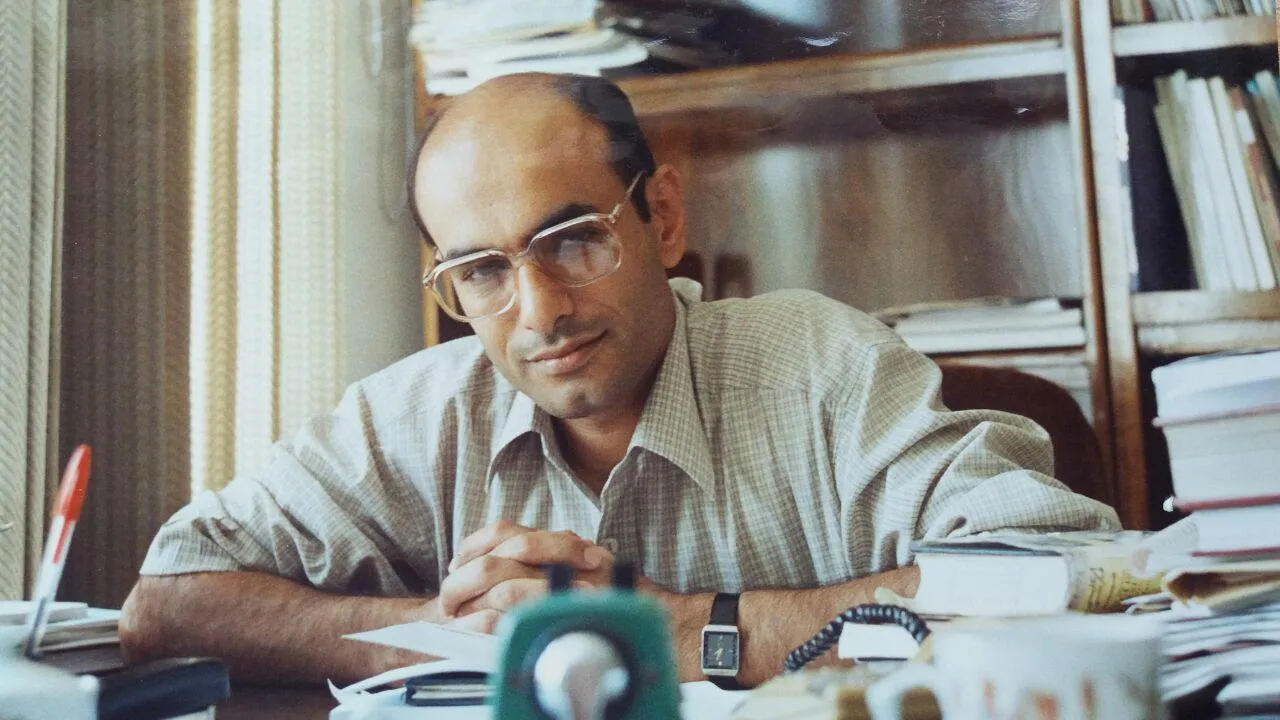
Hasan Mohaddesi Gilvaei, a researcher in the sociology of religion and an assistant professor, analyzes the intellectual and religious transformations of Iranian society, focusing on critical theology and the social theories of Ali Shariati. In this article, we take a comprehensive look at his academic trajectory, research fields, publications, and critical stances within the public sphere.
Here is the professional and fluent English translation of the biography of Dr. Hasan Mohaddesi Gilvaei, keeping the structured formatting and formal academic tone:
Who is Hasan Mohaddesi Gilvaei?
Dr. Hasan Mohaddesi Gilvaei is a sociologist, university professor, researcher of religion, and one of the prominent and controversial figures in the sociology of religion in contemporary Iran. Born in 1966 in the city of Rasht, he is an assistant professor at Islamic Azad University, Central Tehran Branch, and an active researcher in the fields of the sociology of knowledge, the sociology of religion, and critical theology. In recent years, through a combination of extensive academic output, explicit critiques of the official religious structure in the Islamic Republic, and a passionate re-examination of Ali Shariati's ideas, Mohaddesi has become a distinct voice in Iran's intellectual and social sphere.
Mohaddesi's significance in the Iranian intellectual landscape can be analyzed from several dimensions:
Academic Focus: He is one of the few sociologists who has consistently and academically focused on the sociology of religion in Iran. In this field, his multi-volume book titled Sociology of Religion: An Iranian Narrative serves as a specialized reference text.
Institutional Role: As the former head of the Sociology of Religion Working Group at the Iranian Sociological Association (ISA), he is a recognized institutional figure within the discipline nationally.
Public Presence: Perhaps the most controversial aspect of his public persona stems from his fiery debate on January 3, 2018, on the program Zaviyeh broadcast live on IRIB Channel 4. Amid the widespread January 2018 protests, Mohaddesi accused the state broadcaster (IRIB) of practicing "systematic lying" during the live broadcast, turning him into a well-known public figure overnight.
Furthermore, Mohaddesi is one of the most active intellectual figures in reinterpreting the thought of Ali Shariati. This effort is built on the premise that Shariati is not merely a religious thinker, but a "social theorist" whose insights remain vital for navigating the challenges of contemporary Iranian society. This intellectual project has established Mohaddesi as a primary reference point for the "Return to Shariati" discourse among the new generation of Iranian intellectuals.
Life and Background
Hasan Mohaddesi Gilvaei was born in 1966 in Rasht, the capital of Gilan Province. His ties to Gilan are reflected both in his surname (Gilvaei) and his cultural background. His childhood and adolescence coincided with the final years of the Pahlavi monarchy and the subsequent Islamic Revolution.
An experience that left an enduring mark on Mohaddesi’s personal and intellectual trajectory was his compulsory military service during the Iran-Iraq War. On March 6, 1986, after failing to secure a spot in his preferred fields of study in that year's national university entrance exam (Konkur), he entered military service. He served for 28 months, 16 of which were spent directly on the front lines of the war. This direct experience of conflict occurred during a critical period of his intellectual and political development, deeply influencing his subsequent perspectives on society, religion, and politics.
Another intellectual turning point often cited in biographical accounts of Mohaddesi is his initial encounter with the works of Ali Shariati in 1985. By his own account, this introduction happened entirely by chance; however, in the years that followed, Mohaddesi consistently immersed himself in Shariati’s texts, establishing a connection that formed one of the vital pillars of his future intellectual path.
Education and Academic Career
Upon returning from military service, Mohaddesi pursued his higher education in the field of sociology. He completed both his Bachelor’s and Master’s degrees at the University of Tehran—the country's most prestigious academic institution. This period provided him with the opportunity to integrate into the academic tradition of sociology in Iran and to solidify his specialization in the sociology of religion.
To pursue his doctoral studies, Mohaddesi attended the Islamic Azad University, where he successfully earned his PhD in Sociology. Following graduation, he joined the faculty of the Islamic Azad University, Central Tehran Branch, as an assistant professor of sociology—an academic position he maintains to this day.
His primary areas of teaching and research encompass:
Sociology of Religion
Sociology of Knowledge
Sociological Theories
Critical Theology
Shariati's Social Theories
Role in the Iranian Sociological Association
A prominent institutional aspect of Mohaddesi’s career is his involvement with the Iranian Sociological Association (ISA), the most significant professional and scientific body for sociologists in Iran. Mohaddesi served as the head of the association's Sociology of Religion Working Group for two years. This position positioned him as one of the key institutional representatives and spokespersons for this specialized domain in Iran.
Additionally, in recent years, Mohaddesi has been an active participant in debates surrounding the Iranian Sociological Association, including discussions regarding the association's official stances on socio-political developments. According to documented accounts, he has occasionally been a vocal critic of the stances taken by certain directors within the association.
Reinterpreting Shariati's Thought
A hallmark intellectual project of Mohaddesi is the systematic re-reading of Ali Shariati’s thoughts. This project, which occupies a major share of his research and intellectual endeavors, is founded on the belief that Shariati—moving past the label of a mere revolutionary ideologue or a purely religious thinker—is fundamentally a "social theorist" whose ideas are still key to decoding and addressing the structural crises of Iranian society.
Within this framework, Mohaddesi strives to separate the sociological, anthropological, and epistemological dimensions of Shariati's thought from its ideological-religious shell. He aims to demonstrate how Shariati can be read as a serious social theorist within global traditions, alongside figures such as Frantz Fanon.
This approach places Mohaddesi at the intersection of two distinct intellectual currents: on one side, the older generation of "Shariatists" who sought to preserve his legacy, and on the other, a new generation of intellectuals seeking a critical, scientifically rigorous re-examination of that very heritage.
A notable feature of this project is the distinction Mohaddesi makes between his own nuanced re-reading and the "broad, sweeping critiques" of Shariati that have become fashionable among certain contemporary intellectuals over recent decades. In his view, generalized dismissals of Shariati are frequently made without a deep familiarity with the structural dimensions of his social theory, and such critiques cannot serve as a substitute for a rigorous textual engagement with his thought.The Controversial Debate of January 3, 2018
The most widely reacted-to event in Mohaddesi’s public life was his televised debate on January 3, 2018, on the program Zaviyeh (broadcast on IRIB Channel 4), alongside Hadi Sadeghi (a religious scholar active in official cultural institutions).
This live broadcast took place exactly as the January 2018 unrest—a series of widespread protests that originated in Mashhad and spread to dozens of Iranian cities—was reaching its peak. In the highly volatile atmosphere of that evening, Mohaddesi took the rare step of launching a sharp critique against the structure of the state broadcaster. During the debate, he castigated Islamic Republic of Iran Broadcasting (IRIB) for practicing "systematic lying," stating that "even the voice of the nation's elected president is not properly reflected in this media outlet."
These statements, delivered live on official state television at the height of social unrest, triggered widespread public and media reactions. Across social media networks, Mohaddesi was recognized as a figure who seized a rare opportunity to use an official platform to candidly critique the state's media apparatus. This debate became a defining media milestone in his career and is consistently referenced in later biographical accounts as an example of courage in public critique.
Publications and Books
Throughout his research career, Mohaddesi has published several books and dozens of scholarly papers. His most significant works include:
Sociology of Religion: An Iranian Narrative (Yadavaran Publications, 2012): Mohaddesi's seminal work in the field. This two-volume collection is the culmination of extensive studies and a synthesis of his essays on the sociology of religion within the Iranian context. Written in a highly specialized and academic prose style, it is primarily intended for expert audiences in the discipline.
Critical Theology: An Alternative yet Unknown Approach (Yadavaran, 2009): A major text introducing and analyzing the tradition of "critical theology"—a relatively unrecognized tradition in Iran that sits at the intersection of theology, social critique, and critical theory.
Sociology of Islamic Countries (Jame'e-shenasan Publishing): A volume in which Mohaddesi participated as a co-author.
Haji, That's You! (Haji Khodati!): Another of his works that approaches Iran’s socio-religious culture from a critical, sociological perspective.
A Theory on Religion and Happiness: A specialized text in the sociology of religion exploring the relationship between religiosity and the experience of joy.
As a translator, Mohaddesi has also been involved in rendering several major works of sociology and social science into Persian, including a book by Timothy Sisk, which he co-translated with Shabanali Bahrampour (published by Ney Publishing in 2000).
In addition to books, Mohaddesi has published dozens of research papers in peer-reviewed journals such as The Sociology of Social Institutions and Cultural Social Research. The topics of these articles span a wide spectrum: from the evolution of religiosity across different generations and the religious conversion patterns of young girls and women, to general patterns of religiosity in contemporary Iranian society.
Perspectives and Stances
Over his years of activity, Hasan Mohaddesi has formulated a distinct intellectual framework positioned at the crossroads of critical sociology, critical theology, and the intellectual legacy of Ali Shariati.
Critique of the Official Religious Structure in the Islamic Republic
As a sociologist of religion, Mohaddesi has consistently critiqued the official religious architecture and policies of the Islamic Republic. In his view, what is promoted as "official religion" by the state represents merely a single interpretation of faith, while alternative readings—including critical, experiential, and mystical ones—have been systematically marginalized in public discourse. This position aligns him conceptually with the religious intellectual movement (Nowandishi-ye Dini), though he prefers to maintain a strictly critical-sociological approach.
Critique of the Lack of Civil Society and Accountability Culture
In one of his widely discussed analyses, Mohaddesi critiqued the structural state of Iranian society, arguing that "at least five thousand saviors have been recorded throughout Iranian history." He uses this metaphor to describe a cultural obsession with seeking messianic figures and expecting liberation through a heroic savior—a cultural trait he views as a major barrier to the formation of collective civic responsibility and non-governmental organizations (NGOs). In his view, due to this "hero-seeking" tendency and a deficit in institutional accountability, the Iranian public rarely leans toward building civil institutions; consequently, he argues that the duty of intellectuals is to strengthen these civil structures as the sole path to surviving structural crises.
Critique of the Politicization of Social Sciences
A recurring theme in Mohaddesi’s essays is his critique of the ideological weaponization of social sciences in post-revolutionary Iran. He maintains that a primary challenge facing the social sciences in Iran is the institutional tendency to view these fields as "a body of knowledge carrying secular and Western ideological assumptions and values"—a perception that has historically driven state attempts to replace them with an "Islamic Social Science." Mohaddesi rejects this approach as fundamentally flawed and champions the relative independence of social science from political-religious ideologies.
Defending Shariati as a Social Theorist
As previously noted, Mohaddesi views Shariati not merely as a revolutionary ideologue but as a "social theorist" whose concepts remain highly operational for contemporary Iranian society. This stance remains a hallmark feature of his broader intellectual framework.
Critique of State Media and Freedom of Expression
Over the years, Mohaddesi has consistently spoken out against restrictions on free speech and the structural performance of state media, particularly the IRIB. His controversial 2018 debate marked the peak of this public critique, but he has routinely reiterated this stance in numerous subsequent notes and interviews.
Affiliations with Figures and Currents
Throughout his career, Mohaddesi has been connected to a network of intellectual figures and academic movements. Within academia, his primary links are with the Iranian Sociological Association and its prominent sociologists. On an intellectual level, the legacy of Ali Shariati and a continuous dialogue with his texts serve as a constant anchor for his work.
In translation and scientific collaboration, Mohaddesi has worked with figures like Shabanali Bahrampour. In the arena of media debates and discussions, his name has been linked with figures such as Hadi Sadeghi, alongside various other intellectual-religious commentators.
Discursively, Mohaddesi occupies the space between religious intellectualism, critical sociology, and the heritage of Shariati—a position that defines him as part of a distinct generation of Iranian intellectuals who utilize modern social science tools to re-evaluate Iran's socio-religious traditions.
Conclusion
Hasan Mohaddesi Gilvaei stands out as a unique figure in the contemporary Iranian sociology of religion, occupying a distinct space through a combination of rigorous academic work, an intellectual commitment to Shariati's legacy, and a candid, critical presence in the public sphere. His professional trajectory—from studying at the University of Tehran and teaching at Azad University to heading the ISA Working Group on the Sociology of Religion, authoring and translating numerous works, and participating in the fiery 2018 debate—presents the portrait of a "sociologist-intellectual" showing a persistent commitment to critique and public dialogue at the intersection of academia and the public square.
Mohaddesi's defining attribute, on the first level, is his ability to bridge the academic tradition of the sociology of religion with the intellectual legacy of Shariati—a synthesis that remains rare among his peers. On the second level, his candor and courage in articulating critical stances—especially within highly controlled official venues like live state television—have made him a singular figure among university faculty members in Iran.
Analytically, Mohaddesi’s role exemplifies the complex position of an "academic-intellectual" operating within a society where free intellectual expression faces severe structural boundaries. His efforts to offer critical interpretations of religion and society—whether in the classroom, in print, or through broadcast media—form part of a larger, ongoing debate regarding the relationship between faith, social sciences, and the public sphere in Iran.
What remains clear from today's perspective is that the core issues Mohaddesi focuses on—ranging from the transformation of religiosity among younger generations to the lack of a robust civil society, the role of official media, and the re-reading of Shariati—remain vital, living topics within Iran's intellectual and social discourse. As Iranian society navigates profound shifts in religiosity, cultural beliefs, and social lifestyle patterns, Mohaddesi's sociological analyses, with all their critical and challenging traits, will continue to be an enduring part of this national conversation.
Frequently Asked Questions (FAQs)
Who is Hasan Mohaddesi Gilvaei and what is his specialization? Hasan Mohaddesi Gilvaei (born 1966 in Rasht) is an Iranian sociologist and an assistant professor at Islamic Azad University, Central Tehran Branch. His areas of specialization include the sociology of religion, the sociology of knowledge, critical theology, and the reinterpretation of Ali Shariati's thoughts. He is widely considered one of the most active figures in the contemporary Iranian sociology of religion.
What is Hasan Mohaddesi’s educational background? Mohaddesi earned his Bachelor's and Master's degrees in Sociology from the University of Tehran, subsequently obtaining his PhD in Sociology from Islamic Azad University. In his youth, he also completed 28 months of compulsory military service, 16 months of which were spent on the front lines of the Iran-Iraq War.
What was Hasan Mohaddesi’s role in the Iranian Sociological Association? Mohaddesi served as the head of the Sociology of Religion Working Group at the Iranian Sociological Association (ISA) for two years. This institutional position made him a key representative and voice for this specialized field within Iran's academic landscape.
What was Hasan Mohaddesi’s controversial debate in January 2018? On January 3, 2018—coinciding with the peak of that month's nationwide protests—Mohaddesi participated in a debate against Hadi Sadeghi on the program Zaviyeh on IRIB Channel 4. During the live broadcast, he sharply criticized the state broadcasting apparatus for "systematic lying," pointing out that even the voice of the nation's elected president was suppressed on the network. The remarks, delivered live on official television, generated immense public interest.
What are Hasan Mohaddesi’s most important books? Among his most notable publications are Sociology of Religion: An Iranian Narrative (Yadavaran, 2012, two volumes), Critical Theology: An Alternative yet Unknown Approach (Yadavaran, 2009), Sociology of Islamic Countries (as a co-author), Haji, That's You!, and A Theory on Religion and Happiness.
Why is Hasan Mohaddesi focused on Shariati’s thought? Mohaddesi views Shariati not merely as a revolutionary ideologue or a religious thinker, but as a structural "social theorist" whose insights remain vital for diagnosing the issues of contemporary Iranian society. In his intellectual project, he strives to extract the sociological and anthropological dimensions of Shariati's thought from its ideological layers, presenting it as a rigorous social theory worthy of academic analysis.
What is Hasan Mohaddesi’s view on Iranian society? In one of his widely discussed commentaries, Mohaddesi described the pervasive culture of "hero-seeking" and "savior-seeking" in Iranian culture as a psychological barrier to collective accountability and the growth of civil institutions. Noting that "at least five thousand saviors have been recorded in Iranian history," he argues that the path to resolving systemic crises lies in strengthening grassroots civic organizations and fostering a culture of mutual responsibility.
Is Hasan Mohaddesi still active? Yes, Hasan Mohaddesi remains active as an assistant professor at Islamic Azad University, Central Tehran Branch, and as a dedicated researcher in the sociology of religion. He regularly shares his latest analyses, media interviews, and scholarly articles regarding contemporary religious, social, and intellectual issues via his personal digital channels and academic journals.
Take less than a minute, register and share your opinion under this post.
Insulting or inciting messages will be deleted.
Sign Up