
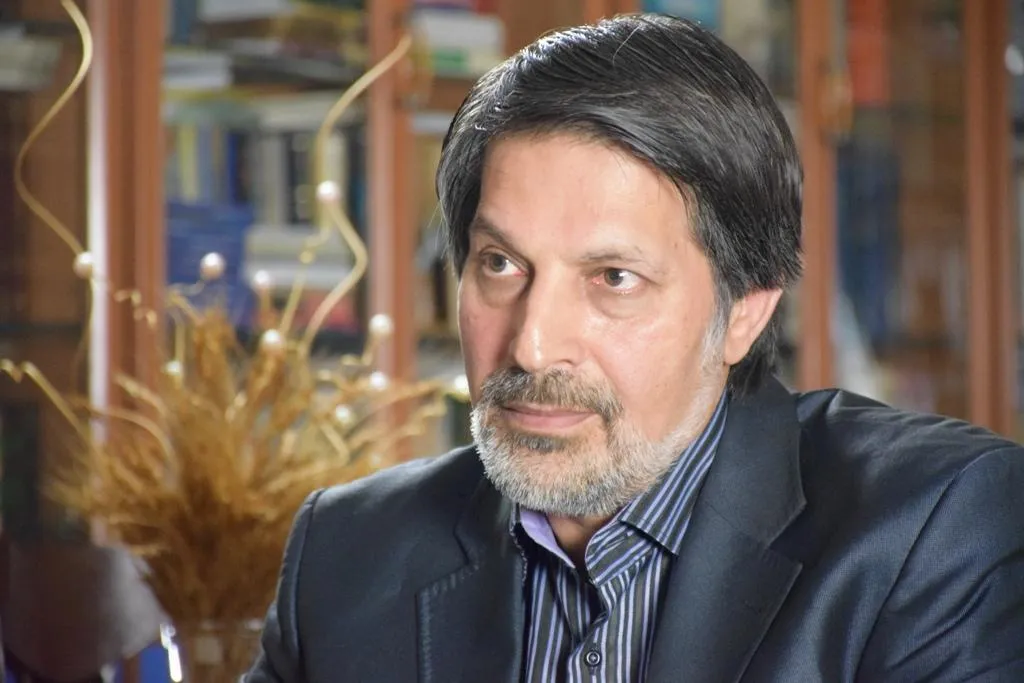
Who is Emadeddin Baghi?
Emadeddin Baghi, a historian, researcher, writer, journalist, and well-known Iranian human rights activist, born on 5 Ordibehesht 1341 (April 25, 1962), is one of the most influential figures in contemporary religious reformist thought, reformist journalism, and the defense of prisoners’ rights in modern Iran. His record over nearly four decades of activity is shaped by a unique combination of publishing dozens of research books in the fields of contemporary history, sociology of religion, and human rights; journalism in major reformist publications; the founding and leadership of the “Association for the Defense of Prisoners’ Rights”; and several periods of imprisonment due to his civil activities.
The importance of Emadeddin Baghi in Iran’s intellectual and political sphere can be examined from several perspectives:
First, he is one of the few researchers who has systematically and academically addressed highly sensitive and controversial issues such as the death penalty, qisas (retributive justice), prisoners’ rights, Shiite jurisprudence in relation to human rights, and the chain murders.
Second, his name is tied in the history of modern Iranian journalism to the book “The Tragedy of Democracy in Iran” (with the subtitle “Re-reading the Chain Murders”), published in 1999. At the time, this book was one of the most important narrative-analytical sources on the chain murders of intellectuals in the autumn of 1998, and its publication resulted in significant legal consequences for the author.
Third, Baghi is the founder of the “Association for the Defense of Prisoners’ Rights” (2003), making him one of the first figures in Iranian civil society to establish an organized institution dedicated to systematically defending prisoners’ rights.
Throughout his career, Emadeddin Baghi has received several major international awards in the field of human rights and journalism, including the British Press Foundation Award (2008), the Parkinson Civil Courage Award (2004), the French National Human Rights Commission Award, and the Martin Ennals Award (2009). He currently lives in Iran and, despite significant restrictions, continues his research, writing, and commentary on human rights issues.
Life and Background
Emadeddin Baghi was born on 5 Ordibehesht 1341 (April 25, 1962). His paternal family originates from Shahreza in Isfahan Province, while his maternal family is from Isfahan itself. He was born into a religious and relatively well-off family that also had connections with traditional clerical networks. His father, Habibollah Baghi, was a well-known merchant with commercial ties to countries in the southern Persian Gulf. This religious, economic, and clerically connected family environment played a role in shaping Baghi’s early intellectual tendencies.
His adolescence coincided with the events leading up to the 1979 Revolution. During this period, he enrolled in a seminary school in the city of Shush, where he studied Arabic literature, logic, and preliminary seminary subjects. From late 1982 to the end of 1989, for about eight years, he continued his advanced religious studies in the Qom seminary. This seminary education, combined with his later studies in sociology, history, and political science, became one of the distinctive foundations of his intellectual approach in writing on jurisprudence, human rights, and religion.
After completing his seminary studies in Qom, Baghi gradually shifted toward academic research and journalism. During this period, his early writings in official publications of the 1980s began, and in later years he became one of the most active researchers and journalists of Iran’s reform era.
Beginning of Research Work and First Book
Emadeddin Baghi’s first official book, titled “On Understanding the Party of the ‘Quitters of the Time’”, was published in 1983 by Danesh-e Eslami Publishing, affiliated with the Qom seminary office. The book, which focused on the critique of the Hojjatieh Society, was released in a period when this religious-ideological group was a subject of intense debate in post-revolutionary Iran. The book was well received by official institutions, and even the president of the time reportedly referred to it as a valuable work in a speech.
Interestingly, in later years Baghi himself reassessed this book and criticized its approach as an example of his early, one-sided youthful writing. This intellectual shift is considered one of the signs of his broader ideological evolution over the following decades.
The Reform Era and Journalism Activity
A turning point in Baghi’s intellectual and political career came with the victory of Mohammad Khatami in the May 23, 1997 presidential election and the flourishing of reformist journalism. Between 1998 and 2000, Baghi became one of the most active journalists and researchers in reformist newspapers, writing for publications such as Jameeh, Tous, Neshat, Khoradad, Asr-e Azadegan, and Fath.
Research on the Chain Murders
With the revelation of the chain murders of intellectuals in December 1998 and the official admission by the Ministry of Intelligence that “rogue elements” were involved, Baghi became one of the most persistent independent researchers of this case. During 1999 and 2000, he published dozens of articles, interviews, and studies analyzing various dimensions of the case.
These investigations, focusing on the role of the Ministry of Intelligence, structural violence, and hidden narratives surrounding officials such as Ali Fallahian and Saeed Emami, were eventually compiled into a two-volume book titled “The Tragedy of Democracy in Iran: Re-reading the Chain Murders”, published by Ney Publishing. The first volume, released in 1999, quickly became one of the best-selling political-research books of that period.
High School Modern History Textbook
In the late 1990s, Imaduddin Baqi was selected as the author of the modern history textbook for high schools across Iran. This book, which was taught within Iran’s official education system, presented an approach different from earlier official narratives about Iran’s contemporary history. At the time, it was considered one of the rare examples of introducing a research-based perspective into official Iranian school textbooks.
Arrests and Imprisonment
Baqi’s journalistic and research activities in 1998 and 1999—particularly his investigations into the serial killings of intellectuals and his articles criticizing capital punishment and qisas (retributive justice)—led to multiple legal cases that ultimately resulted in a prolonged period of imprisonment.
First Prison Period (1999–2001)
On June 7, 2000, Baqi was arrested during a wave of mass detentions of reformist journalists following the electoral victory of reformists in the Sixth Parliament elections. In his trial, which was led by Saeed Mortazavi, then Tehran’s prosecutor, several charges were brought against him:
- 4 years in prison for publishing an article on the death penalty and qisas (the introduction to his book Death Penalty and Qisas).
- 3 years in prison for publishing articles on the serial killings.
- 6 months in prison for insulting the Guardian Council.
In total, Baqi was sentenced in the initial court to 7.5 years in prison (5.5 years custodial and 2 suspended years, which were later converted into custodial time on appeal). In the appeals court, the sentence was reduced to 3 years in prison. He was released on February 6, 2003, after serving nearly three years.
Second Prison Period (2007–2008)
Following the publication of The Tragedy of Democracy in Iran in later editions and his continued human rights activities, a new legal case was opened against him. In March 2008, the trial of those accused in connection with the publication of The Tragedy of Democracy in Iran was held. During this period, Baqi spent several months in prison.
Third Prison Period (2009–2010)
In the wake of the activities of the Society for the Defense of Prisoners’ Rights and Baqi’s statements regarding political prisoners after the 2009 elections, he was once again arrested in December 2009. The official charge in this case was “conspiracy against national security.” After about a year in detention, Baqi was acquitted of this charge and released on June 20, 2011.
International Support
During Baqi’s multiple arrests, numerous academics, human rights activists, and international organizations reacted to his situation. In January 2011, more than 130 scholars and academics worldwide signed a letter to Iran’s Supreme Leader, Ayatollah Ali Khamenei, calling for the “immediate and unconditional release” of political prisoners in Iran, including Imaduddin Baqi. Amnesty International also recognized Baqi as a “prisoner of conscience” during these periods.
Society for the Defense of Prisoners’ Rights
One of Imaduddin Baqi’s most important institutional achievements was the founding of the “Society for the Defense of Prisoners’ Rights.” Established in 2003 after his release from his first prison term, with the participation of human rights activists and lawyers, it was one of the first independent civil society organizations in Iran dedicated to the systematic defense of prisoners’ rights.
Between 2003 and 2009, the organization carried out significant activities in:
- Documenting prison conditions and reporting on Iranian prisons
- Providing legal defense for prisoners, especially in qisas and death penalty cases
- Campaigning against the execution of juvenile offenders
- Offering legal training to prisoners’ families
After the events of the Green Movement in 2009, the organization’s office was sealed, and its activities were shut down. This closure was part of a broader crackdown on independent civil society institutions following the 2009 elections.
Human Rights Activities and International Awards
Over three decades of human rights work, Imaduddin Baqi has received several major international awards, including:
- Parkinson Civil Courage Award (2004): awarded to civil activists worldwide for advancing democratic values.
- British Press Awards Foundation Prize (2008): recognizing his role in independent journalism in Iran.
- French National Human Rights Commission Award: given to human rights defenders around the world.
- Martin Ennals Award (2009): awarded annually in memory of Martin Ennals, former Secretary-General of Amnesty International. Baqi, due to a travel ban, was the first recipient unable to attend the ceremony in Geneva in person; the award was presented in his absence.
Works and Books
Imaduddin Baqi has published dozens of books across various fields, many of which have been banned or denied publication permits in Iran. His major works include:
Modern History:
- The Tragedy of Democracy in Iran: Revisiting the Serial Murders (Vol. 1, 1999; later volumes)
- The Lower Classes and the Upper Classes: Oral History of the Revolution
- Iran’s official high school modern history textbook (late 1990s)
Human Rights and Islamic Jurisprudence:
- Rights of Opponents
- The Right to Life: Human Rights in Religious Discourse
- Death Penalty and Qisas
- Sociology of Imam Hussein’s Uprising and the People of Kufa
- Democratic Reform Movement in Iran
Sociology of Religion:
- Sociology of Religion, one of his key theoretical works on the relationship between religion and society
Journalism and Intelligence Ministry Studies:
- For History: A Collection of Articles on the Ministry of Intelligence and the Assassination of Hojjariyan, including an interview with Saeed Hojjariyan
Critical Thought:
- On Understanding the Party of the Stay-at-Homes of the Era (1983), his first work on the Hojjatiyeh movement
In addition to his books, Baqi has published hundreds of academic articles and analytical essays in Iranian and international media and maintains a personal website containing an extensive archive of his writings.
Views and Positions
Over four decades, Baqi has developed clear positions in several areas:
Opposition to the Death Penalty:
One of his main research and activism areas is opposition to capital punishment in Iran. In numerous works—including Death Penalty and Qisas—he argues, based on religious, historical, and international human rights sources, for limiting executions, stopping juvenile executions, and fundamentally reforming Iran’s penal system. This stance has been a major cause of legal pressure against him.
Alternative Narrative of Ashura and Karbala:
In his book Sociology of Imam Hussein’s Uprising and the People of Kufa, he presents a sociological and historical reinterpretation of the Karbala event, which has been criticized by some traditional clerics but is considered significant within religious intellectual reformist circles.
Defense of Prisoners and Protesters:
He has consistently defended political prisoners and protesters in numerous statements and interviews, especially after the 2009 Green Movement, the 2019 protests, and the 2022 uprising. He has maintained an independent and moderate position, criticizing both the authorities’ response and some opposition groups abroad.
Forced Confessions:
Baqi has strongly criticized the practice of forced confessions in Iran’s judicial and security system, arguing—based on the views of late Grand Ayatollah Montazeri—that confessions obtained under pressure violate human dignity and Islamic principles.
Controversies
Baqi’s career has not been without controversy. In 2015, his comments on same-sex marriage on Twitter sparked widespread criticism from LGBTQ activists and social media users. The Martin Ennals Foundation also stated it would review the matter. Baqi responded by distinguishing between “defending rights” and “endorsing acts,” but critics found his explanation unconvincing.
On the other hand, conservative media outlets have often portrayed his human rights work and international awards as “Western alignment.” Baqi has rejected these claims, describing his work as grounded in universal human dignity beyond political divisions.
Connections and Networks
Baqi has been connected to several key intellectual and activist networks:
- Religious intellectualism: Ayatollah Montazeri, Mohsen Kadivar, Hassan Yousefi Eshkevari, Abdolkarim Soroush
- Reformist journalism: Saeed Hajjarian, Akbar Ganji, Mashallah Shamsolvaezin, Isa Saharkhiz, Ahmad Zeidabadi
- Human rights activism: Shirin Ebadi (Nobel Peace Prize laureate), Nasrin Sotoudeh, and others
He also has a family link to journalist Mohammad Quchani, who is married to Baqi’s daughter, Maryam Baqi—symbolically connecting two generations of reformist journalists.

Take less than a minute, register and share your opinion under this post.
Insulting or inciting messages will be deleted.
Sign Up