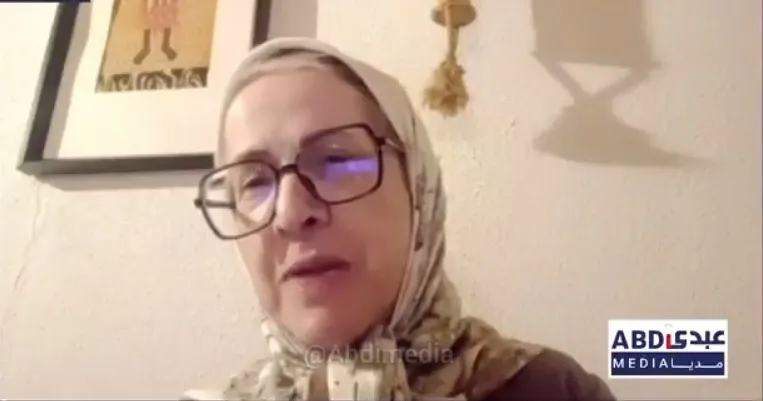
Dr. Elaheh Koolaee (Tabarestani), full professor of regional studies at the Faculty of Law and Political Science of the University of Tehran, researcher, translator, author, reformist political activist, and former member of the Sixth Parliament, is one of the most experienced and well-known female figures in the academic fields of political science, international relations, and reformist politics in Iran. Born on December 30, 1956, in Tehran, she received her PhD in International Relations from Tarbiat Modares University and, over three decades of academic activity, has become one of the main reference points for the analysis of Russia, Central Asia, and the Caucasus in Iran. Alongside her scientific activities — with works such as "Politics and Government in the Russian Federation" and "The Soviet Union and the Islamic Revolution of Iran" — in the political arena, she has also played a role as a representative of Tehran in the Sixth Parliament, a member of the Central Council and Political Bureau of the Islamic Iran Participation Front, and a member of the Coordinating Council of the Reformist Women's Assembly. She has also been an exclusive guest of Abdi Media, in an interview titled "Iran and Geopolitical Realities," analyzing Iran-Russia relations and the challenges facing the country's foreign policy.
Who is Elaheh Koolaee?
Dr. Elaheh Koolaee (Tabarestani), full professor of regional studies at the Faculty of Law and Political Science of the University of Tehran, researcher, translator, author, reformist political activist, and former member of the Sixth Parliament, born on December 30, 1956, in Tehran, is one of the most experienced and, at the same time, most well-known female figures in the academic fields of political science, international relations, and reformist politics in Iran over the past three decades. Koolaee, with a unique combination of deep academic background (PhD in International Relations from Tarbiat Modares University in 1995), distinguished expertise in the field of regional studies of Russia, Central Asia, and the Caucasus, parliamentary experience (representative of Tehran in the Sixth Parliament, 2000-2004), and sustained activity in the structure of Iran's reformist front — particularly through membership in the Central Council and Political Bureau of the Islamic Iran Participation Front and the Coordinating Council of the Reformist Women's Assembly — is considered one of the few bridge-building figures between academic and socio-political arenas in contemporary Iran.
The importance of Dr. Elaheh Koolaee in Iran's academic-political sphere can be examined from several perspectives. First, her position as one of the pioneering female specialists in the field of international relations and regional studies — in a discipline that in the post-revolution decades was mainly dominated by male figures, she has been able to achieve the rank of full professor — is an example of the success of academic women in Iran's higher education structure. Second, her focused expertise on the study of Russia, Central Asia, and the Caucasus — which is one of the most specialized fields among Iran's international relations specialists — has made her one of the main reference points for analyzing Iran's relations with post-Soviet countries. Third, her sustained role in the socio-political activities of reformist women — through membership in the Coordinating Council of the Reformist Women's Assembly — has made her one of the prominent figures of the feminist-reformist discourse in contemporary Iran. Fourth, her name being raised among the serious candidates for the Vice Presidency for Women's Affairs of the fourteenth administration under Masoud Pezeshkian in 2024 (which ultimately led to the selection of Shindokht Behrouzazar) is an indication of her sustained position among the managerial-executive candidates of the reformist current.
Life and Background
Elaheh Koolaee was born on December 30, 1956, in Tehran — a generation born in the mid-1950s who spent their childhood and adolescence in the tense atmosphere of the 1960s and 1970s in Iran's capital.
Her full family name is "Koolaee Tabarestani," which indicates her family connection to the Tabaristan region (northern Iran — Mazandaran). This ethnic-regional background, which in the culture of northern Iranian families is mainly associated with a tradition of intellectual-political activity, is considered one of the notable aspects of Koolaee's personal background.
Participation in the Revolution
In the final years of the 1970s, on the eve of the victory of the 1979 Islamic Revolution, Koolaee, as a political science student, was active in the revolutionary-student activities. During this period, she collaborated with the Islamic Association of the Faculty of Economic Sciences at Shahid Beheshti University — associations that at that time were considered among the main centers of Islamic-revolutionary student activities.
Education
Elaheh Koolaee's educational path is considered one of the most focused and sustained examples among Iranian academic women:
Bachelor's Degree in Political Science from the National University of Iran (Shahid Beheshti)
Koolaee pursued her initial university education in political science at the National University of Iran — which was renamed Shahid Beheshti University after the Islamic Revolution. Shahid Beheshti University, one of Iran's most prestigious humanities universities, has trained prominent figures in the fields of political science, law, and international relations in the post-revolution decades.
Master's and PhD in International Relations from Tarbiat Modares University (1995)
After completing her bachelor's degree, Koolaee joined Tarbiat Modares University — considered among the most important research-educational universities in Iran in the humanities — and pursued her graduate studies in political science. Ultimately, in 1995, she succeeded in obtaining a PhD in International Relations from Tarbiat Modares University.
This achievement, at a time when women with doctorates in international relations in Iran were very limited, is considered an indication of Koolaee's pioneering role in the academic field of women.
Early Professional Activities
After graduation, Koolaee pursued her professional activity in the fields of journalism and diplomatic-administrative work:
Journalism at Ettela'at Newspaper
Koolaee worked as a journalist for some time at Ettela'at newspaper — one of the oldest and most reputable newspapers in Iran. This experience formed the foundation of her familiarity with the media arena — a familiarity that was reflected in her sustained presence in various media outlets in later years.
Collaboration with the Ministry of Foreign Affairs (early 1990s)
In the early 1990s, Koolaee collaborated with the Public Relations Department of Iran's Ministry of Foreign Affairs for two years in an advisory capacity. This experience formed the foundation of her close familiarity with the structure of Iranian diplomacy — a familiarity that was widely reflected in her later research in the field of foreign policy.
Academic Activity: Full Professor at the University of Tehran
The turning point in Koolaee's academic career was her faculty membership at the Faculty of Law and Political Science of the University of Tehran — Iran's most prestigious university in the fields of political science, law, and international relations. Over approximately three decades of academic activity, Koolaee advanced rapidly through the academic ranks and ultimately achieved the rank of full professor of regional studies — the highest academic rank.
This position is relatively rare among female academics in Iran's political science discipline and places Koolaee among the most pioneering female figures in this field.
Specialized Research Areas
The main axes of Koolaee's research throughout her academic career are:
Russia and Russian foreign policy (the main focus of her research)
Central Asia (the five post-Soviet republics)
The South and North Caucasus
Geopolitics and geno-geopolitics
Iran's relations with post-Soviet countries
Women's issues and development
The experience of women combatants in the Iran-Iraq war
This diversity of expertise indicates the breadth of Koolaee's intellectual scope and her ability to link classical regional studies with new topics related to gender and women.
Representation in the Sixth Parliament (2000-2004)
Koolaee's most notable political activity was her representation of the people of Tehran in the sixth term of the Islamic Consultative Assembly — a position she held from 2000 to 2004. The Sixth Parliament, which was formed with an overwhelming reformist majority following the victory of the Participation Front's list in the elections, is considered one of the most important parliaments in Iran's post-revolution history.
Koolaee's presence in this parliament was among the prominent women representatives in the Sixth Parliament — women among whom figures such as Fatemeh Haghighatjoo, Jamileh Kadivar, Elaheh Rastgoo, and others were also present. This parliament, with its notable positions on women's rights, civil liberties, and political reforms, is considered one of the most dynamic parliaments in Iran's contemporary history.
Organizational-Party Activity
Throughout her political career, Koolaee has had a sustained role in the formal structure of the reformist front:
Member of the Central Council and Political Bureau of the Islamic Iran Participation Front
Koolaee was a member of the Central Council and Political Bureau of the Islamic Iran Participation Front — the most prominent reformist party in Iran in the post-Khordad 1997 period. This party, which operated with the focus of figures such as Mohammad Reza Khatami, Saeed Hajjarian, Mohsen Mirdamadi, and Mostafa Tajzadeh, was considered one of the most sustained organizational centers of the reformist front.
After the events of 2009 and structural pressures on this party, the Participation Front was ultimately declared dissolved by the Revolutionary Court in 2010 — a decision considered in Iran's political literature as one of the most high-profile organizational developments after the 2009 events.
Member of the Coordinating Council of the Reformist Women's Assembly
Koolaee is also a member of the Coordinating Council of the Reformist Women's Assembly — an assembly in which prominent reformist women figures — including Shindokht Molaverdi, Azar Mansouri, and others — are active. This assembly is considered one of the most important organizational centers of reformist women in contemporary Iran.
Academic and Research Works
Koolaee is the author of a significant number of books and scientific-research articles in the fields of regional studies, international relations, and women's issues. Her most important works include:
Notable Books
"The Soviet Union and the Islamic Revolution of Iran"
"Politics and Government in Central Asia" (Samt Publications)
"The Islamic Movement in the North Caucasus"
"The Army and Government in Central Asia"
"The Contemporary Perspective of the Russian Army"
"The Economy of Central Asian and South Caucasus Countries"
"Contexts, Factors, and Consequences of Change in Russia's Middle East Policy"
"The Atlantic Treaty Organization" (translation)
These books, many of which have been published by Samt Publications — a prominent publisher of humanities academic textbooks in Iran — are recognized as textbook-research resources in Iranian universities.
Scientific-Research Articles
Koolaee is the author of dozens of scientific-research articles in reputable political science and international relations journals. Among her recent notable articles are:
"Russia's Use of Soft Power in Central Asia" (Political and International Research Quarterly, 2022)
"A Geopolitical Analysis of Iran-Russia Relations after the Islamic Revolution with an Emphasis on Morgenthau's Balance of Power Theory" (Political Geography Research Quarterly, 2022)
"A Comparison of Regionalism in ASEAN and the Arab League" (Fundamental and Applied Studies of the Islamic World Quarterly, 2021)
"An Analysis of Russia's Foreign Policy in the South Caucasus Based on Geno-Geopolitics" (Central Eurasian Studies, 2020)
"The Lived Experience of Women Combatants in the Iran-Iraq War and Rethinking Their Traditional Political and Social Roles" (Political Science Research Journal, 2021)
"The Impact of International Factors on Iran-Russia Economic Relations" (Global Politics Quarterly, 2021)
"Cultural Factors Affecting the Future of Iran-Turkey Relations" (Fundamental and Applied Studies of the Islamic World Quarterly, 2020)
"Geopolitical Components of Russia's Foreign Policy" (International Geopolitics Quarterly, 2018)
This extensive body of work has made Koolaee one of the most prolific theorists of regional studies in Iran in the field of Russia and Eurasia.
Possible Candidate for Vice Presidency for Women's Affairs in the Pezeshkian Administration (2024)
In the atmosphere after Masoud Pezeshkian's victory in the fourteenth presidential election in July 2024, Elaheh Koolaee's name was raised among the serious candidates for the Vice Presidency for Women's Affairs of the fourteenth administration. Ultimately, Shindokht Behrouzazar was selected for this position, but the mention of Koolaee's name among the final candidates — alongside figures such as Katayoun Masri, Athereh Nejad, and Parvin Dadandish — was an indication of her sustained position among the managerial-executive candidates of the reformist current.
According to a report by Ham-Mihan newspaper (citing KhabarOnline in August 2024), "Elaheh Koolaee, Katayoun Masri, and Athereh Nejad were among the other serious candidates for this position who were ultimately not selected."
Views and Positions
Throughout her intellectual-political career, Dr. Elaheh Koolaee has formulated a clear intellectual framework that can be traced in several axes.
Structural-Critical View of the Reformist Experience
The most central aspect of Koolaee's political character is her structural-critical view of the reformist experience in Iran. In one of her notable and, at the same time, controversial positions, she acknowledged a strategic mistake of the reformists: "One of our mistakes was that we invested in the macro-economy" — and added that this neglect of "ordinary people" paved the way for Mahmoud Ahmadinejad's victory in the 2005 election.
This position, which in the literature of Iranian reformism is considered one of the first relatively explicit internal critiques, was interpreted by critical media as a sign of the reformists' admission of a strategic mistake.
Connection to the Reformist-Feminist Tradition
An enduring feature of Koolaee's approach is her connection to the reformist tradition with an emphasis on women's rights. This approach is reflected in her sustained membership in the Coordinating Council of the Reformist Women's Assembly and in her notable research on "The Lived Experience of Women Combatants in the Iran-Iraq War" — research in which the role of women in contemporary Iran's socio-political structure is examined with a phenomenological-gender approach.
Realist View of Russia
In the field of regional studies, Koolaee has a realist view (emphasizing neo-realist and neo-classical theories) of Russia's foreign policy. In her view, "Russia, using its geopolitical advantages, seeks to revive its position as a great power" — an analysis in which Moscow's strategic behavior is understood not as an advantage for Iran, but as a structural reality that must be managed with caution.
This approach, reflected in Koolaee's numerous articles on Iran-Russia relations, stands in opposition to the dominant discourse among some analysts close to the formal structure (who consider Moscow a full strategic partner).
Structural Criticism of Iran's Academic Arena
In one of her critical positions, Koolaee stated: "In the field of political science, the presence of Iranian professors and researchers at the global and international level is not acceptable. When such deficiencies and shortages exist, it is obvious that they also manifest themselves in the translation of political books." This position indicates her critical view of the overall state of political science in Iran.
The Full Recording of Abdi Media's Interview with Elaheh Koolaee, Professor of Regional Studies at the University of Tehran
Listen to the full, unfiltered recording of Abdi Media's interview with Elaheh Koolaee on Castbox
Connections with Figures and Currents
Elaheh Koolaee is situated within a network of academic-political connections with prominent figures of Iran's reformist front. At the party level, her relationship with prominent figures of the Islamic Iran Participation Front — including Mohammad Reza Khatami, Saeed Hajjarian, Mohsen Mirdamadi, Mostafa Tajzadeh, and others — and among reformist women, her relationship with Shindokht Molaverdi, Azar Mansouri, Fatemeh Haghighatjoo, Jamileh Kadivar, and other prominent figures are considered among her key connections.
At the academic level, her relationship with the University of Tehran (her sustained academic workplace), Tarbiat Modares University (her graduate studies institution), and Samt Publications (publisher of her textbooks) are considered among her main connections.
At the peer-academic level, her relationship with prominent figures in Iran's international relations and regional studies discipline — including other specialists in the field of Russia and Eurasia — forms her academic network.
Conclusion
Dr. Elaheh Koolaee is one of the most pioneering and sustained female figures in the academic fields of political science, regional studies, and reformist politics in contemporary Iran. With a dense career over the past three decades — including distinguished academic education (BA from Shahid Beheshti, MA and PhD in International Relations from Tarbiat Modares University), advancement to the rank of full professor of regional studies at the University of Tehran, representing Tehran in the Sixth Parliament, sustained membership in the Central Council of the Islamic Iran Participation Front and the Coordinating Council of the Reformist Women's Assembly, publication of approximately 10 notable research books (especially in the field of Russia, Central Asia, and the Caucasus), and dozens of scientific-research articles — she has occupied a unique position. Her career — from her birth on December 30, 1956, in Tehran, activity in the Islamic Association of the Faculty of Economic Sciences at Shahid Beheshti University during the revolution, journalism at Ettela'at newspaper, two years of collaboration with the Ministry of Foreign Affairs, representing Tehran in the Sixth Parliament (2000-2004), membership in the leadership structure of the Participation Front, prolific teaching and research at the University of Tehran, and finally, being considered as one of the serious candidates for the Vice Presidency for Women's Affairs in Pezeshkian's administration in 2024 — presents a picture of a multidimensional "professor-politician-women's activist."
Koolaee's distinguishing feature, at the first level, is her focused expertise on regional studies of Russia and Eurasia — an expertise through which, over approximately three decades, she has become one of the main reference points in this field in Iran. This expertise has gained practical importance at a time when Russia has emerged as one of Iran's most important strategic partners over the past two decades. At the second level, her exceptional ability to navigate between academic, parliamentary, organizational, and women's activities — which is a rare example among middle-generation reformist women in Iran — is considered one of the notable aspects of her character.
From an analytical perspective, Koolaee's position exemplifies the phenomenon of the "reformist woman professor-political activist" in contemporary Iran — a phenomenon in which a figure with high academic expertise and, at the same time, socio-political commitment, operates in multiple arenas. This pattern, which has numerous examples among the middle-new generation of reformist women in Iran (such as Shindokht Molaverdi, Azar Mansouri, and others), has found particular reflection in Koolaee with her distinguished academic background in the field of international relations.
What is clear from today's perspective is that the issues Koolaee has addressed in her research and activities — from studies of Russia and Central Asia, Iran-Russia relations, Caucasus geopolitics, women's rights, women's experience in war, and critique of reformist discourse — remain among the most enduring topics of discussion in contemporary Iran's academic-political discourse. At a time when Iran is in one of the most tense periods of its contemporary history — especially in relations with Russia in the post-Ukraine war atmosphere and challenges related to northern neighbors — Koolaee's analytical-academic voice, combining deep expertise and a critical perspective, will remain one of the main references of this discourse.
Frequently Asked Questions
Who is Elaheh Koolaee?
Dr. Elaheh Koolaee (Tabarestani) (born December 30, 1956, in Tehran) is a full professor of regional studies at the Faculty of Law and Political Science of the University of Tehran, a researcher, translator, author, and Iranian reformist political activist. She was the representative of the people of Tehran in the sixth term of the Islamic Consultative Assembly (2000-2004), a member of the Central Council and Political Bureau of the Islamic Iran Participation Front, and a member of the Coordinating Council of the Reformist Women's Assembly.
What is Elaheh Koolaee's educational background?
Koolaee received her BA in Political Science from the National University of Iran (now Shahid Beheshti), and then her MA and PhD in International Relations in 1995 from Tarbiat Modares University. Her advancement to the rank of full professor of regional studies at the University of Tehran is relatively rare among female academics in Iran's political science discipline.
What is Elaheh Koolaee's main expertise?
The main axes of Koolaee's expertise and research are: Russia and Russian foreign policy (the main focus), Central Asia, the South and North Caucasus, geopolitics and geno-geopolitics, Iran's relations with post-Soviet countries, women's issues and development, and the experience of women combatants in the Iran-Iraq war. This diversity of expertise has made her one of the main reference points for analyzing Iran's relations with post-Soviet countries.
What are the most important books of Elaheh Koolaee?
Among Koolaee's most important works are the following books: "The Soviet Union and the Islamic Revolution of Iran," "Politics and Government in Central Asia" (Samt Publications), "The Islamic Movement in the North Caucasus," "The Army and Government in Central Asia," "The Contemporary Perspective of the Russian Army," "The Economy of Central Asian and South Caucasus Countries," "Contexts, Factors, and Consequences of Change in Russia's Middle East Policy," and "The Atlantic Treaty Organization" (translation).
What was Koolaee's role in the Sixth Parliament?
Koolaee served as the representative of the people of Tehran in the sixth term of the Islamic Consultative Assembly (2000-2004) — a parliament with an overwhelming reformist majority. This period, with its notable positions on women's rights, civil liberties, and political reforms, is considered one of the most dynamic parliaments in Iran's contemporary history.
Why was Elaheh Koolaee not appointed as Vice President for Women's Affairs in Pezeshkian's administration?
In the atmosphere after Masoud Pezeshkian's victory in the fourteenth presidential election in July 2024, Elaheh Koolaee's name was raised among the serious candidates for the Vice Presidency for Women's Affairs of the fourteenth administration. According to a report by Ham-Mihan newspaper, Elaheh Koolaee, Katayoun Masri, Athereh Nejad, and Parvin Dadandish were among the serious candidates for this position, but ultimately Shindokht Behrouzazar was selected for this position.
What is Koolaee's view on the reformists' mistake?
In one of her critical positions, Koolaee pointed to a strategic mistake of the reformists: "One of our mistakes was that we invested in the macro-economy" — and added that this neglect of "ordinary people" paved the way for Mahmoud Ahmadinejad's victory in the 2005 election. This position, in reformist literature, is considered an example of explicit internal critique.
What is Koolaee's view on Russia?
In the field of Russian studies, Koolaee has a realist view (emphasizing neo-realist theories). In her view, "Russia, using its geopolitical advantages, seeks to revive its position as a great power" — an analysis in which Moscow's strategic behavior is understood not as an advantage for Iran, but as a structural reality that must be managed with caution. This approach stands in opposition to the dominant discourse among some analysts close to the formal structure.
Is Elaheh Koolaee still active?
Yes, Elaheh Koolaee is simultaneously active in three arenas: academic activity (as a full professor of regional studies at the University of Tehran, with continuous teaching and publication of scientific-research articles), organizational-political activity (as a member of the Coordinating Council of the Reformist Women's Assembly), and analytical-media presence (as one of the prominent reference points for analyzing Russian and Central Asian issues in Iranian media). In 2024, her name was raised among the serious candidates for the Vice Presidency for Women's Affairs in Pezeshkian's administration — an indication of her sustained position among the managerial-executive candidates of the reformist current.
Take less than a minute, register and share your opinion under this post.
Insulting or inciting messages will be deleted.
Sign Up