
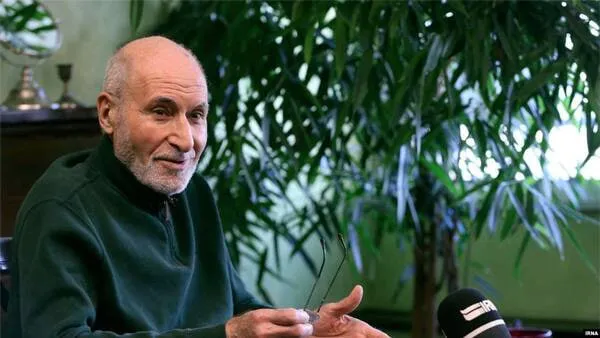
Behzad Nabavi—the Minister of Heavy Industries in Mir-Hossein Mousavi's administration and the Deputy Speaker of the Sixth Majles—is one of the few first-generation revolutionary figures who continues to firmly advocate for a structural, intra-systemic reformist approach. This article provides a comprehensive look at his role in the negotiations for the release of the American hostages, his participation in the Sixth Majles sit-in, his stances on the Green Movement, and how his perspectives differ from the radical wing of the reformist faction.
Who is Behzad Nabavi?
Behzad Nabavi, born in July 1942 in Tehran, is a veteran Iranian politician, senior member of the Mojahedin of the Islamic Revolution Organization (until its dissolution in 2010), and one of the most prominent figures of the Islamic Republic's leftist faction and the subsequent Reformist movement. Known widely in Iranian political discourse as the "Old Guerrilla" (Cherik-e Pir), Nabavi has spent nearly half a century at the absolute center of contemporary Iranian history. His enduring and frequently controversial career spans pre-revolutionary armed struggle against the Pahlavi regime, the drafting of the Algiers Accords to release the American hostages, a tenure as Minister of Heavy Industries during the Iran-Iraq War, the historic Sixth Majles parliamentary sit-in, and show trials following the 2009 post-election unrest.
Nabavi’s historical significance within the political and executive architecture of the Islamic Republic is anchored in several defining milestones:
Architect of Post-Revolutionary Diplomacy: As Iran's chief negotiator during the Algiers Accords (January 1981), he orchestrated the diplomatic resolution that freed the 52 American hostages captured during the US Embassy takeover, marking one of the most critical diplomatic chapters in modern Iranian foreign policy.
Wartime Economic Command: He served as Deputy Prime Minister for Executive Affairs across three successive administrations (under Mohammad-Ali Rajai, Mohammad-Reza Mahdavi Kani, and Mir-Hossein Mousavi) and subsequently as Minister of Heavy Industries during the height of the Iran-Iraq War, making him a principal administrator of Iran's wartime mobilization and state-directed economy.
Parliamentary Resistance: Elected to the reform-dominated Sixth Majles (2000–2004), Nabavi was chosen as Deputy Speaker of Parliament. In this role, he became a primary strategist and public face of the historic parliamentary sit-in staged by lawmakers protesting widespread electoral disqualifications by the Guardian Council.
A defining attribute of Nabavi’s political legacy is his ideological endurance. While many of his long-time allies (such as Mostafa Tajzadeh and Abolfazl Ghadyani) eventually shifted toward radical dissent or explicit opposition to the ruling system, Nabavi has remained structurally committed to the framework of the Islamic Republic and a traditional, intra-systemic reformist approach. Even after enduring nearly six years of imprisonment—predominantly spent in Islamic Revolutionary Guard Corps (IRGC) solitary confinement following the 2009 Green Movement crackdown—he rejected systemic departure. His defiant declaration during the 2009 mass show trials, "I will not betray Mir-Hossein Mousavi," stands as an enduring symbol of factional loyalty and non-violent resistance under intense judicial and security pressure.
Life and Background
Behzad Nabavi was born in Tehran in July 1942. His formative youth and university years coincided with the turbulent socio-political landscape of the 1950s and 1960s—marked fundamentally by the 1953 coup d'état against Prime Minister Mohammad Mossadegh, the rise of organized anti-Pahlavi underground movements, and the rapid spread of Marxist and Islamist political philosophies among university students.
Nabavi pursued his higher education at the Tehran Polytechnic (now known as the Amirkabir University of Technology), a premier center for technical education in Iran, graduating with a Bachelor of Science degree in Electronic Engineering. At the time, an engineering background was a common professional gateway into the technical and economic sectors of the state.
Following his graduation and prior to 1969, Nabavi worked in the telecommunications sector, providing technical services for American corporations operating in Iran—an irony that stood in stark contrast to the anti-imperialist, leftist ideologies he would soon embrace. Between 1969 and 1972, he established an independent telecommunications firm specializing in microwave engineering projects, running a private commercial enterprise.
Pre-Revolutionary Political Dissidence
The definitive turning point in Nabavi's life occurred in the late 1960s when he transitioned into clandestine political opposition to the Pahlavi monarchy. In 1968, Nabavi, alongside prominent Marxist theorist Mostafa Shoa'iyan, Reza Asgarieh, and Parviz Sadri, co-founded the People's Democratic Front (Jebhe-ye Demokratik-e Khalq). This underground, secular leftist organization integrated armed urban guerrilla tactics into its manifesto to overthrow the monarchy.
Nabavi’s early alignment with Mostafa Shoa'iyan and secular Marxist-Leninist cells remains a fascinating and highly debated chapter of his biography, given his subsequent rise within the strictly Islamic administration of the post-1979 state. Nevertheless, this early immersion in leftist ideology left an indelible mark on his political identity, manifesting in his lifelong focus on state-managed social justice, fierce anti-imperialism, and methodical organizational tactics.
Nabavi was eventually arrested by SAVAK and sentenced to prison. Behind bars, his worldview shifted dramatically as he roomed with prominent religious-revolutionary figures, most notably Mohammad-Ali Rajai (the future Prime Minister and President) and Abbas Douzduzani. These prison relationships re-oriented Nabavi's ideological trajectory away from secular Marxism and toward an Islamic-revolutionary framework.
When the People's Mojahedin Organization of Iran (MEK) underwent a seismic internal ideological purge in 1975—formally declaring a transition from Islam to Marxism—Nabavi was among the prominent political prisoners who completely broke away from the group, rejecting their methodology.
In his later reflections, Nabavi expressed profound ideological revisionism regarding his years in the armed underground. In a major retrospective interview, he noted:
"Today, I no longer believe in guerrilla warfare. I believe that back then, we mistakenly thought we were doing something grand, when in reality, those methods could never have successfully overthrown the existing regime."
This explicit denunciation of militancy underscores the deep evolution of his political philosophy over the decades.
The Mojahedin of the Islamic Revolution Organization
Following the victory of the 1979 Islamic Revolution, Nabavi emerged as a founding architect of the Mojahedin of the Islamic Revolution Organization (Sazman-e Mojahedin-e Enghelab-e Eslami). The organization was forged through the merger of seven distinct pre-revolutionary Islamic militant groups that had fought the Pahlavi state. In the immediate aftermath of the revolution, the group maintained a strict ideological, political, and paramilitary structure designed to safeguard the newborn state against counter-revolutionary forces and internal armed insurgencies.
Nabavi himself traced his enduring moniker to this precise era, stating:
"The early doctrine of the Mojahedin of the Islamic Revolution integrated military operations into its program. My membership in that specific organization is the reason I became universally known as the 'Old Guerrilla'—a nod to my history of armed struggle mixed with my seniority in age."
During these chaotic early years, Nabavi also represented the organization within the Central Islamic Revolutionary Committees (Komiteh). For three decades, the organization functioned as an intellectual powerhouse and organizational pillar for the political Left, and subsequently the Reformist camp, until it was formally banned and dissolved by the judiciary in 2010 amid the post-election security crackdowns.
Deputy Premiership and the Algiers Accords
Nabavi's transition into high-level executive state management came with his appointment as Deputy Prime Minister for Executive Affairs. Demonstrating an exceptional level of administrative trust, Nabavi maintained this powerful position across three consecutive, ideologically distinct administrations:
The Administration of Mohammad-Ali Rajai (who served as Prime Minister under President Abolhassan Banisadr, and later as President until his assassination in August 1981).
The Interim Administration of Mohammad-Reza Mahdavi Kani (who assumed brief emergency leadership following the Rajai assassination).
The Administration of Mir-Hossein Mousavi (the longest-serving wartime Prime Minister, spanning 1981 to 1989).
The Algiers Accords and the Hostage Crisis
The most critical international assignment of Nabavi's career was his appointment as the head of the Iranian negotiating team tasked with resolving the Iran hostage crisis, which began when militant students seized 52 American diplomats on November 4, 1979.
Operating under intense geopolitical pressure, Nabavi managed months of indirect, complex negotiations mediated by the government of Algeria. His efforts culminated on January 19, 1981, with the signing of the Algiers Accords, timed precisely alongside the conclusion of Jimmy Carter’s presidency and the inauguration of Ronald Reagan. Serving simultaneously as Deputy Prime Minister and Government Spokesperson, Nabavi acted as the principal architect behind the resolution of the diplomatic impasse, securing the frozen asset releases and ending the 444-day crisis.
Economic Mobilization Command
Concurrently, as the devastating Iran-Iraq War intensified, Nabavi was appointed Chairman of the Economic Mobilization Headquarters (Setad-e Basij-e Eghtesadi). This vital wartime directorate was handed absolute authority over the rationing, distribution, and management of the nation's scarce economic commodities, rendering Nabavi a central manager of Iran's survival economy under blockade.
Ministry of Heavy Industries
Recognizing his organizational efficiency, Prime Minister Mir-Hossein Mousavi elevated Nabavi to the cabinet position of Minister of Heavy Industries. This ministry was the crown jewel of Iran’s wartime industrial sector, exercising complete oversight over steel production, automotive manufacturing, machine-building, and heavy manufacturing plants.
Nabavi’s ministerial tenure was defined by severe systemic crises: fighting a total war, navigating tightening international sanctions, managing severe foreign exchange shortages, and protecting industrial infrastructure from Iraqi airstrikes. As a key intellectual of the Islamic Republic's economic Left, Nabavi aggressively championed centralized state-directed economic policies, strict resource allocation, and import substitution to maintain domestic industrial self-reliance.
The Sixth Majles and Parliamentary Sit-In
Following the conclusion of the Mousavi premiership in 1989, Nabavi stepped back from frontline executive roles for a decade, re-emerging in February 2000 when he won a seat in the historic Sixth Majles. This parliament, swept by an absolute Reformist landslide, became the storm center of modern Iranian legislative history.
Nabavi was elected by his peers as the Deputy Speaker of the Parliament, placing him at the helm of the legislative leadership alongside Speaker Mehdi Karroubi. Throughout the four-year term, Nabavi functioned as a premier strategist for the Reformist majority faction, directly confronting conservative institutional pushback.
The Parliamentary Sit-In
The defining crisis of the Sixth Majles occurred ahead of the 2004 legislative elections, when the conservative Guardian Council issued blanket disqualifications against thousands of Reformist candidates, including dozens of sitting MPs. In response, Nabavi co-organized and led a historic, weeks-long sit-in (Tahassor) inside the parliament building in January and February 2004. Nabavi's frontline participation underscored his willingness to expend immense personal political capital to defend the electoral integrity of the reform process.
The 2009 Post-Election Crackdown and Imprisonment
Following the disputed June 2009 presidential election and the subsequent rise of the Green Movement, Nabavi—as a staunch and vocal surrogate for opposition candidate Mir-Hossein Mousavi—was immediately swept up in a massive wave of security detentions.
Nabavi was placed under arrest by intelligence apparatuses. In an incident widely mocked by independent media and public opinion, one of the official charges leveled against the aging statesman was "disrupting traffic patterns in Tehran." This absurd misdemeanor charge, bundled alongside severe national security indictments, highlighted the punitive nature of the judicial crackdown against veteran revolutionaries.
Defiance in the Show Trials
Nabavi was subsequently paraded in televised mass show trials organized by the judiciary to extract forced public retractions and confessions from reformist elites. When pressured to denounce the Green Movement leadership and confess to engineering sedition, Nabavi famously looked at the court and stated:
"I will not betray Mir-Hossein Mousavi."
This refusal to yield under severe psychological and physical duress was cemented into modern Iranian political folklore, becoming a defining symbol of factional integrity within the Reformist identity.
Five Years in Solitary Confinement
Nabavi was ultimately sentenced to six years of imprisonment. He spent nearly five years of this sentence inside isolation cells and solitary confinement units run by the IRGC intelligence branch. Despite advanced age and deteriorating health under isolation, he refused to break with his convictions. Nabavi was visited by opposition figures Mir-Hossein Mousavi and Zahra Rahnavard during brief medical leaves before they were placed under permanent house arrest, cementing his status in the core circle of the Green Movement. He was finally released from prison in May 2014.
Post-Release Political Role and Recent Controversies
Following his release, Nabavi immediately resumed his role as a senior political and intellectual gravity well for the Reformist camp inside Iran. As the broader political landscape fractured—with long-time associates like Mostafa Tajzadeh advocating for "conditional electoral participation" and others like Abolfazl Ghadyani moving toward explicit regime-change positions—Nabavi intentionally chose the path of loyal opposition, preserving his commitment to peaceful, intra-systemic advocacy.
The Mohammad-Reza Naghdi Spy Allegation Controversy
In recent years, Nabavi re-entered the media spotlight following explosive public comments regarding internal security failures within the establishment. He publicly stated that two individuals working inside the offices of Mohammad-Reza Naghdi (the hardline former commander of the Basij) had been quietly arrested on charges of espionage for Israel. The disclosure provoked a furious counter-reaction from Naghdi, who flatly denied the claim and initiated defamation lawsuits against Nabavi, proving that the "Old Guerrilla" remains a potent force in political discourse.
Advocacy for Electoral Participation
A central tenet of Nabavi’s contemporary platform is his absolute rejection of election boycotts. At a time when significant factions of the Reformist front and the wider public have entirely abandoned the ballot box, Nabavi routinely argues that reformism is conceptually meaningless without electoral engagement. He continues to assert that abandoning the ballot box yields entirely to hardline consolidation, arguing for pragmatic engagement even within highly restricted spaces.
Intellectual Perspectives and Philosophy
Over fifty years of political engagement, Behzad Nabavi has synthesized a precise, highly pragmatic political methodology:
Loyalty to the Constitutional Framework
The bedrock of Nabavi's philosophy is an unwavering adherence to the legal and constitutional framework of the Islamic Republic. In his estimation, pursuing incremental reform from within the state structure—regardless of how flawed, restrictive, or oppressive it manifests—remains far more rational and realistic than the unpredictable, destructive chaos of revolution or systemic overthrow.
Complete Renunciation of Political Violence
A crucial aspect of Nabavi's intellectual evolution is his total rejection of his own pre-revolutionary militancy. He views urban guerrilla warfare and violent resistance as structurally incapable of building stable democratic outcomes, viewing his early radicalism as a naive miscalculation.
Pragmatic Realism Over Radicalism
Nabavi represents the voice of absolute political realism within Iran’s domestic opposition. While his moderate positions often draw intense criticism from radical reformists and exiled dissidents who view his stances as accommodationist, Nabavi asserts that politics is the art of the possible, prioritizing institutional survival and gradual concessions over high-stakes, maximum-pressure confrontations with the ruling apparatus.
Exclusive Video on Abdi Media: For the first time, Behzad Nabavi delivers an exclusive, firsthand account of the covert logistical and military assistance provided by North Korea to the Islamic Republic of Iran during the height of the Iran-Iraq War and international blockades.
Click here to watch this exclusive broadcast and hear the accounts of the Old Guerrilla.
Network and Political Alliances
Throughout his lifetime, Nabavi has maintained a vast web of political relationships across the Iranian state. At the absolute center of this network sits Mir-Hossein Mousavi—the wartime Prime Minister to whom Nabavi served as a deputy, and the Green Movement leader to whom Nabavi pledged absolute fealty in prison.
Within his own party framework, Nabavi maintains generational ties with the central committee of the Mojahedin of the Islamic Revolution Organization, including Mostafa Tajzadeh, Mohammad Salamati, Abolfazl Ghadyani, Feyzollah Arabsorkhi, and Hossein Rezaei. His pre-revolutionary history ties him to leftist thinker Mostafa Shoa'iyan, as well as early martyrs like Mohammad-Ali Rajai.
Within the broader Reformist elite, his political maneuvers have been tightly coordinated with former President Mohammad Khatami, Mehdi Karroubi, Mohammad-Reza Khatami, and Abdollah Nouri, rendering him a primary elder statesman of the faction.
Conclusion
Behzad Nabavi stands as one of the most durable, structurally resilient, and ideologically evolved statesmen in the modern history of Iranian politics. His fifty-year trajectory—moving seamlessly from pre-revolutionary urban guerrilla cells to high-stakes diplomatic tables, wartime economic cabinets, legislative leadership, and years in solitary confinement—embodies the complex history of the Islamic Republic itself. The title "Old Guerrilla" perfectly encapsulates this multi-layered journey.
Nabavi's legacy is defined by a rare combination of personal bravery and immense tactical patience. While many of his peers either escalated into outright rebellion or withdrew into disillusioned retirement, Nabavi remains determined to work within the system. His willingness to repeatedly pay severe personal costs—surviving SAVAK prisons, leading the Majles sit-in, and enduring the IRGC's isolation blocks in his late sixties—has granted him an undeniable moral authority across the factional spectrum. He represents a generation of young, anti-imperialist radicals who built a state, managed its economy during a total war, recognized its structural flaws during a period of reform, and chose to spend their final years attempting to peacefully repair it from within. Whether one agrees with his pragmatic realism or critiques his systemic loyalty, Nabavi's voice remains an essential, indispensable element of the ongoing discourse surrounding the future of governance in Iran.
Frequently Asked Questions (FAQs)
Who is Behzad Nabavi? Behzad Nabavi (born July 1942 in Tehran) is a veteran Iranian politician, a principal strategist of the Mojahedin of the Islamic Revolution Organization, and one of the most historically significant figures of the Islamic Republic's political Left and Reformist movements. He is widely referred to in Iran as the "Old Guerrilla."
What is Behzad Nabavi's educational and professional background? Nabavi holds a Bachelor of Science degree in Electronic Engineering from Tehran Polytechnic (Amirkabir University of Technology). Prior to his full-time political career, he worked as a telecommunications engineer for American firms in Iran and later founded a private technical enterprise specializing in microwave communication networks.
What were Behzad Nabavi’s primary executive positions within the state? His highest offices include serving as Deputy Prime Minister for Executive Affairs across three consecutive administrations (under Rajai, Mahdavi Kani, and Mousavi), Minister of Heavy Industries during the Iran-Iraq War, Chairman of the Economic Mobilization Headquarters during wartime rationing, and Deputy Speaker of the historic Sixth Majles.
What was Behzad Nabavi’s role in the hostage crisis and the Algiers Accords? As Deputy Prime Minister, Nabavi was appointed head of the Iranian diplomatic delegation tasked with resolving the US Embassy hostage crisis. Through intensive indirect negotiations brokered by Algeria, he successfully finalized the Algiers Accords on January 19, 1981, securing the release of the 52 American hostages and the return of frozen Iranian assets.
Why is Behzad Nabavi called the "Old Guerrilla"? The moniker stems from two distinct phases of his life: his pre-revolutionary history as a co-founder of the armed, underground "People's Democratic Front" in 1968, combined with his senior status as an elder statesman and military strategist during the founding of the Mojahedin of the Islamic Revolution Organization in 1979.
What is Nabavi's current view on armed struggle and radicalism? Nabavi has explicitly renounced his past involvement in armed militancy. He has publicly expressed regret over his pre-revolutionary guerrilla activities, characterizing urban militancy as a naive, ineffective methodology that was structurally incapable of successfully replacing the Pahlavi monarchy with a democratic alternative.
Why was Behzad Nabavi imprisoned following the 2009 elections? Following the disputed 2009 presidential election, Nabavi was arrested as a premier intellectual backer of Green Movement leader Mir-Hossein Mousavi. He was sentenced to six years in prison, spending nearly five of those years in IRGC solitary confinement. During televised show trials, he famously defied prosecutors by stating, "I will not betray Mir-Hossein Mousavi." He was released in May 2014.
Is Behzad Nabavi still politically active? Yes. Despite his advanced age, Nabavi remains a highly influential advisor and elder statesman within the domestic Reformist leadership. He remains a vocal proponent of institutional politics, aggressively arguing that Reformists must never boycott elections and must continuously utilize the ballot box to prevent hardline consolidation.
Take less than a minute, register and share your opinion under this post.
Insulting or inciting messages will be deleted.
Sign Up