
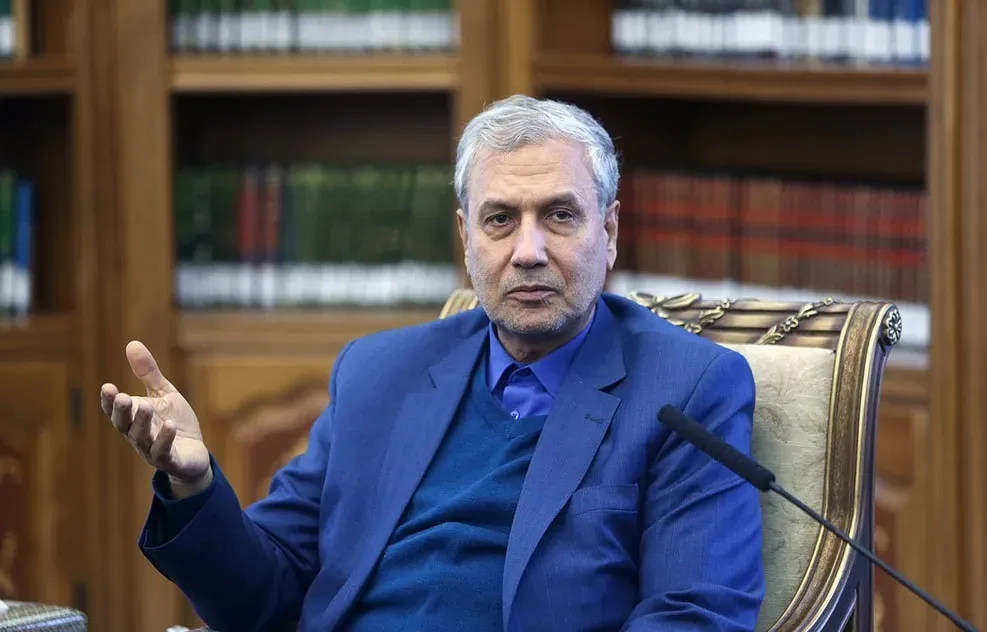
Dr. Ali Rabiei, an Iranian reformist politician, is the former Minister of Cooperatives, Labour, and Social Welfare during both terms of Hassan Rouhani’s government (2013–2018), the former spokesperson of Rouhani’s twelfth government (2019–2021), the former legal and parliamentary deputy of the Ministry of Intelligence (1987–1993), and a founding member of the Workers’ House. He ranks among the most high-profile and controversial combined security-executive-media figures of post-revolutionary Iran over the past five decades. Backed by his working-class origins in Tehran’s Javadiyeh neighborhood, a PhD in strategic management, and experience as a technician at the Arj factory, he progressed from responsibility for the workers’ branch of the Islamic Republican Party and command roles in the Revolutionary Guards to the deputy position at the Ministry of Intelligence and twelve years of executive responsibility at the Secretariat of the Supreme National Security Council (during Hassan Rouhani’s tenure as secretary). In Rouhani’s government he was dismissed from the Ministry of Labour following a third impeachment on 8 August 2018 with 129 affirmative votes. During his period as government spokesperson he faced controversial statements such as “the invention of the mobile phone by Iranians” and “Iran’s family health ranking among the top five countries in the world,” and in the 2009 election he is known as the only advisor to Mir-Hossein Mousavi who separated from him before the voting had ended.
Here is the complete English translation of the provided text:
Full Translation:
Dr. Ali Rabiei (born December 5, 1955, in the Javadiyeh neighborhood of south Tehran)—known by his pseudonym "Abbad"—is an Iranian reformist politician, former Minister of Cooperatives, Labour, and Social Welfare in Hassan Rouhani's 11th and 12th administrations from August 15, 2013, to August 8, 2018 (for a duration of 5 years), former government spokesperson for Rouhani's 12th administration from May/June 2019 to August 2021, former Deputy for Legal and Parliamentary Affairs at the Ministry of Intelligence of the Islamic Republic of Iran from 1987 to 1993 during the tenures of Mohammad Reyshahri and Ali Fallahian (for a duration of 6 years), former executive manager and head of the propaganda committee at the Secretariat of the Supreme National Security Council (SNSC) from 1993 to 2005 for a period of 12 years (during Hassan Rouhani's tenure as Secretary-General of the Council), former President of the Institute for Political Studies and Research from 1989 to 1994, continuous advisor to the Center for Strategic Research of the Expediency Discernment Council from 1995 to the present, former member of the Policy Council of the Presidential Center for Strategic Studies by presidential decree until August 2005, former member and prominent commander of the Islamic Revolutionary Guard Corps (IRGC), former head of the labor branch of the Islamic Republican Party until 1981, founding member and continuous prominent member of the Central Council of Worker House (Khaneh Kargar) since the beginning of the Revolution, a unique figure as "the only advisor to Mir-Hossein Mousavi who separated from him before the completion of voting in the 2008–2009 (2009) presidential election," a highly publicized impeached figure on August 8, 2018, with 129 votes in favor, 111 against, and 3 abstentions by the 10th Parliament (after surviving two previous unsuccessful impeachments), a controversial figure regarding prominent speeches including the "claim of the invention of the mobile phone by Iranians" and "announcing Iran's family health ranking among the top 5 countries in the world," a prominent graduate with a bachelor's degree in Public Administration from the University of Tehran, a master's degree in Cultural Affairs Management from Allameh Tabataba'i University, and a Ph.D. in Strategic Management, a former technician in prominent pre-revolutionary factories including the Arj factory, and simultaneously one of the most widely reported, prominent, and controversial composite security-intelligence-executive-media post-revolutionary Iranian figures over the past five decades, who ranks among the pivotal figures of the reformist-moderate security-welfare-media discourse in contemporary Iran.
Dr. Ali Rabiei—who, through a unique path, evolved from a prominent working-class family background in the Javadiyeh neighborhood of south Tehran (one of Tehran's most prominent working-class and religious areas) as a child of a working-class family, to the start of pre-revolutionary economic activities as an Arj factory technician (which formed the foundation of his enduring working-class identity), to sustained participation in Islamic Revolution activities and joining the post-revolutionary power structure, to assuming the widely reported responsibility of leading the labor branch of the Islamic Republican Party until 1981 (one of the most prominent post-revolutionary Islamic parties), to widely reported participation in founding Worker House as a founding member and continuous member of its Central Council (Iran's prominent post-revolutionary labor institution), to his widely reported joining of the Islamic Revolutionary Guard Corps and assuming a leadership role in it, to assuming the widely reported position of Deputy for Legal and Parliamentary Affairs at the Ministry of Intelligence from 1987 to 1993 for a duration of 6 years during the tenures of Mohammad Reyshahri and Ali Fallahian (which ranks among the most controversial periods of Iran's post-revolutionary Ministry of Intelligence), to assuming the widely reported presidency of the Institute for Political Studies and Research from 1989 to 1994, to assuming the widely reported position of executive manager and head of the propaganda committee at the Secretariat of the Supreme National Security Council from 1993 to 2005 for a period of 12 years (during which he served during Hassan Rouhani's tenure as Secretary-General of the SNSC, forming the foundation of his enduring relationship with Hassan Rouhani), to assuming the position of continuous advisor to the Center for Strategic Research of the Expediency Discernment Council from 1995 to the present, to assuming the position of member of the Policy Council of the Presidential Center for Strategic Studies by presidential decree until August 2005, to pursuing a prominent academic path that included earning a bachelor's degree in Public Administration from the University of Tehran, a master's degree in Cultural Affairs Management from Allameh Tabataba'i University, and a Ph.D. in Strategic Management, to assuming the widely reported role of advisor to Mir-Hossein Mousavi in the 10th presidential election in 2009 (in which he was the only advisor to Mir-Hossein Mousavi who separated from him before the completion of voting, ranking among the most controversial electoral separations of 2009), to continuing sustained activities during the Ahmadinejad administrations, to widely reported endorsement of Hassan Rouhani's candidacy in the 11th presidential election in 2013, to assuming the widely reported position of Minister of Cooperatives, Labour, and Social Welfare in Rouhani's 11th administration from August 15, 2013, to the widely reported appointment of a physician as head of the Social Security Organization (which took place despite contrary recommendations), to the widely reported transfer of the Health Insurance Organization from under the Ministry of Welfare to a subsidiary of the Ministry of Health, to continuing his ministry in Rouhani's 12th administration following his victory in the May 19, 2017 election, to facing the widely reported first impeachment by the 10th Parliament on March 13, 2018 (in which he was not dismissed), to facing the widely reported second impeachment (in which he was also not dismissed), to facing the widely reported third impeachment on August 8, 2018 (in which he was dismissed from the position of Minister of Cooperatives, Labour, and Social Welfare with 129 votes in favor of impeachment, 111 against, and 3 abstentions, ranking among the most prominent cases of dismissal of ministers in Rouhani's administration), to assuming the position of advisor to President Rouhani after his dismissal, to assuming the widely reported position of spokesperson for Rouhani's 12th administration from May/June 2019 to August 2021 (which ranks among the most controversial post-revolutionary Iranian government spokesmanships), to making prominent controversial statements during his tenure as spokesperson—including the "claim of the invention of the mobile phone by Iranians" and "announcing Iran's family health ranking among the top 5 countries in the world" (which rank among the most widely reported controversial statements post-revolution)—to facing widely reported life-changing personal developments that included facing his wife Narges Hosseinzadeh's cancer diagnosis in 2006 and the death of his son, and finally, his widely reported positions regarding Pezeshkian's 14th administration (in which a sustained discursive critique of Pezeshkian's government took place)—has become one of the most enduring and simultaneously controversial composite security-intelligence-executive-media post-revolutionary Iranian figures.
Dr. Ali Rabiei's importance in the historical-political sphere of contemporary Iran can be examined from several aspects. First, as the widely reported Minister of Cooperatives, Labour, and Social Welfare across two terms of Rouhani's administration—as a prominent architect of moderate welfare discourse—which is considered one of the notable dimensions of his welfare role. Second, as the widely reported spokesperson for Rouhani's 12th administration—as a prominent architect of the government's media discourse during the crucial post-US withdrawal from the JCPOA era, the November 2019 protests, the assassination of General Soleimani, and COVID-19—which is considered one of the notable dimensions of his media role. Third, as a 6-year Deputy for Legal and Parliamentary Affairs at the Ministry of Intelligence—as a figure who ranks among the most prominent post-revolutionary figures in Iran's Ministry of Intelligence—which is considered one of the notable dimensions of his security-intelligence background. Fourth, as a 12-year executive manager at the Secretariat of the Supreme National Security Council—as a figure who ranks among the longest-serving officials at the post-revolutionary Secretariat of the Supreme National Security Council—which is considered one of the notable dimensions of his security continuity. Fifth, as a founding member and continuous member of the Central Council of Worker House—as a prominent architect of Iran's prominent post-revolutionary labor institution—which is considered one of the notable dimensions of his labor-social role.
Important Note: Dr. Ali Rabiei's record and performance in Persian-language political-media circles are accompanied by starkly contrasting perspectives. In the reformist and moderate discourse, he is known as the "prominent labor minister and spokesperson for Rouhani's government." In the discourse of prominent critics from the principalist faction, his performance during his tenure as labor minister and government spokesperson—especially regarding multiple impeachments and controversial statements—came under serious criticism, forming the foundation of his widely reported impeachment on August 8, 2018. In the discourse of human rights activists and opposition critics, his prominent background in the Ministry of Intelligence and the IRGC has been sharply criticized. In the discourse of civil society activists, prominent controversial statements during his tenure as spokesperson—including the "claim of the invention of the mobile phone by Iranians"—were criticized as "unrealistic statements that surprised the media, even principalist media outlets." This profile presents the narrative published in prominent Persian-language media and historical sources from an analytical-neutral stance.
Early Life and Family Background
Dr. Ali Rabiei was born on December 5, 1955, in the Javadiyeh neighborhood of Tehran—one of the most prominent working-class and religious areas in south Tehran.
Working-Class Origins in South Tehran
According to published reports: "Ali Rabiei was born in 1955 in south Tehran and is an Iranian reformist politician," and "He grew up in a working-class family in Tehran's Javadiyeh neighborhood." These working-class origins formed the foundation of Ali Rabiei's enduring working-class identity—which was reflected in his prominent labor-welfare positions.
Pseudonym: "Abbad"
According to published reports: "Ali Rabiei... known as Abbad, is a politician and former Minister of Cooperatives, Labour, and Social Welfare of the Islamic Republic of Iran." This pseudonym formed the foundation of his prominent security-intelligence identity.
Wife: Narges Hosseinzadeh
According to published reports: "Dr. Ali Rabiei married his wife Narges Hosseinzadeh in 1980 at the age of 25, a marriage that resulted in three sons and one daughter." The most widely reported personal-family event for Ali Rabiei was facing his wife's cancer diagnosis in 2006. According to published reports: "In 2006, during a trip to the north, his wife experienced abdominal pain until, after returning to Tehran and conducting tests, it was revealed that she had cancer."
Death of Son
Among the most widely reported personal events for Ali Rabiei was the death of his prominent son—which ranks among his most impactful personal-family events.
Education
Dr. Ali Rabiei possesses a prominent composite academic background. According to published reports: "[Ali Rabiei] holds a bachelor's degree in Public Administration from the University of Tehran, a master's degree in Cultural Affairs Management from Allameh Tabataba'i University, and a Ph.D. in Strategic Management."
Bachelor's Degree in Public Administration (University of Tehran)
Ali Rabiei obtained a bachelor's degree in Public Administration from the University of Tehran.
Master's Degree in Cultural Affairs Management (Allameh Tabataba'i University)
Ali Rabiei obtained a master's degree in Cultural Affairs Management from Allameh Tabataba'i University.
Ph.D. in Strategic Management
Ali Rabiei obtained a Ph.D. in Strategic Management. This prominent educational background formed the foundation of his enduring identity as a strategic manager.
Pre-Revolutionary Activities
The most widely reported chapter of the beginning of Ali Rabiei's career was his pre-revolutionary economic activities in prominent factories.
Arj Factory Technician
According to published reports: "Born in south Tehran, before the Revolution he was a technician in factories such as Arj." The Arj factory ranked among Iran's most prominent industrial-consumer factories prior to the Revolution and was the prominent workplace for many notable labor-social figures. This experience formed the foundation of Ali Rabiei's enduring working-class/technician identity.
Responsibility for the Labor Branch of the Islamic Republican Party (until 1981)
The most widely reported chapter at the start of Ali Rabiei's post-revolutionary career was assuming responsibility for the labor branch of the Islamic Republican Party. According to published reports: "After the Islamic Revolution, he became head of the labor branch of the Islamic Republican Party until 1981." This position, which took place in one of the most prominent post-revolutionary Islamic parties, formed the foundation for the beginning of Ali Rabiei's prominent political-social identity.
IRGC Membership
The most widely reported chapter of Ali Rabiei's military career was his membership and command in the Islamic Revolutionary Guard Corps. According to published reports: "Rabiei joined the IRGC and was one of its commanders." This command formed the foundation of Ali Rabiei's enduring military-security background.
Founding Member of Worker House
The most widely reported chapter of Ali Rabiei's labor-social career was his participation in founding Worker House (Khaneh Kargar). According to published reports: "Since the beginning of the Revolution, he has been a founding member and member of the Central Council of Worker House." Worker House ranks among Iran's most prominent post-revolutionary labor institutions.
Deputy Minister for Legal and Parliamentary Affairs at the Ministry of Intelligence (1987–1993)
The most pivotal historical-crucial chapter of Ali Rabiei's security-intelligence career was assuming the widely reported position of Deputy for Legal and Parliamentary Affairs at the Ministry of Intelligence from 1987 to 1993 for a duration of 6 years. According to published reports: "From 1987 to 1993, during the ministerial tenures of Mohammad Reyshahri and Ali Fallahian, he served as Deputy for Legal and Parliamentary Affairs at the Ministry of Intelligence..." This position, which occurred during the controversial ministerial tenures of Mohammad Reyshahri and Ali Fallahian, formed the foundation of Ali Rabiei's enduring security-intelligence identity—ranking among the most controversial periods of post-revolutionary Iran's Ministry of Intelligence.
Presidency of the Institute for Political Studies and Research (1989–1994)
The most widely reported chapter of Ali Rabiei's research-academic career was assuming the presidency of the Institute for Political Studies and Research from 1989 to 1994. According to published reports: "President of the Institute for Political Studies and Research from 1989 to 1994."
Executive Responsibility at the SNSC Secretariat (1993–2005)
The most pivotal historical-crucial chapter of Ali Rabiei's security career was assuming the position of executive manager and head of the propaganda committee at the Secretariat of the Supreme National Security Council for 12 consecutive years. According to published reports: "[Ali Rabiei] was the executive manager and head of the propaganda committee at the Secretariat of the Supreme National Security Council from 1993 to 2005." This position, which took place during Hassan Rouhani's widely reported tenure as Secretary-General of the SNSC, formed the foundation of his enduring relationship with Hassan Rouhani and his enduring security-propaganda identity.
Advisory Role at the Expediency Council's Center for Strategic Research (since 1995)
The most widely reported chapter of Ali Rabiei's research-strategic career was assuming the position of continuous advisor to the Center for Strategic Research of the Expediency Discernment Council from 1995 to the present. According to published reports: "His role as advisor to the Center for Strategic Research of the Expediency Council has continued from 1995 to the present." This advisory role, which began during Hassan Rouhani's widely reported presidency over the Center for Strategic Research, formed the foundation of Ali Rabiei's enduring strategic network.
Controversial Role in the 2009 Election
The most widely reported controversial chapter of Ali Rabiei's career was assuming an advisory role to Mir-Hossein Mousavi in the 10th presidential election in 2009. According to published reports: "In the 2009 presidential election, Rabiei was the only advisor to Mir-Hossein Mousavi who separated from him before voting ended." This separation ranks among the most controversial phenomenological aspects of Ali Rabiei's career.
Ministry of Cooperatives, Labour, and Social Welfare (August 15, 2013 – August 8, 2018)
The most pivotal historical-crucial chapter of Ali Rabiei's ministerial career was assuming the widely reported position of Minister of Cooperatives, Labour, and Social Welfare across two terms of Hassan Rouhani's 11th and 12th administrations. According to published reports: "With the announcement of the candidacy of his former superior, Hassan Rouhani, he stood behind him until, after Rouhani's victory, he became Minister of Labour, Cooperatives, and Social Welfare on August 15, 2013," and "Minister of Cooperatives, Labour, and Social Welfare in the 11th and 12th administrations from August 2013 to August 2018."
Controversial Appointment of a Physician to the Social Security Organization
According to published reports: "In Rouhani's government, contrary to recommendations, he appointed a physician to head the Social Security Organization, which is a welfare institution in the country. Consequently, the Health Insurance Organization, which should be under the Ministry of Welfare, became a subsidiary of the Ministry of Health." This appointment ranks among the most controversial ministerial decisions by Ali Rabiei.
First Impeachment (March 13, 2018)
According to published reports: "He was impeached by the 10th Parliament on March 13, 2018, but was not dismissed."
Third Impeachment and Dismissal (August 8, 2018)
According to published reports: "Ultimately, for the third time in less than a year, on August 8, 2018, with 129 votes in favor of impeachment, 111 against, and 3 abstentions, he was removed from this position." This dismissal ranks among the most prominent ministerial impeachments during Rouhani's administration.
Advisor to President Rouhani
After his dismissal, Ali Rabiei served as advisor to President Hassan Rouhani.
Spokesperson for the 12th Administration (May/June 2019 – August 2021)
The most pivotal historical-crucial chapter of Ali Rabiei's media career was assuming the widely reported position of spokesperson for Rouhani's 12th administration from May/June 2019 to August 2021. According to published reports: "Ali Rabiei was then Rouhani's advisor until he became government spokesperson in May/June 2019." This spokesmanship occurred during the crucial post-US withdrawal from the JCPOA era, the November 2019 protests, the assassination of General Qasem Soleimani, and the COVID-19 outbreak—ranking among the most tense periods for a post-revolutionary Iranian government spokesperson.
Widely Reported Controversial Statements
The most widely reported controversial chapter of Ali Rabiei's media career involved notable statements during his tenure as government spokesperson.
Claim of the Invention of Mobile Phones by Iranians
According to published reports: "In a speech, he put forward the claim of the invention of mobile phones by Iranians."
Family Health Ranking in Iran
According to published reports: "Elsewhere, he described Iran's family health ranking as being among the top 5 countries in the world."
Surprise of Principalist Media
According to published reports: "In recent years, some of Rabiei's speeches and remarks have caused surprise among the media, even principalist outlets." These statements rank among the most widely reported instances of controversial statements by a post-revolutionary Iranian government spokesperson.
Ideological-Political Framework
Throughout his long security-intelligence-executive-media career, Dr. Ali Rabiei formulated a distinct ideological-political framework.
Reformism-Moderatism
The core ideological framework of Ali Rabiei is reformism-moderatism—a framework that highlights a continuous emphasis on social welfare, labor discourse, and active diplomacy while maintaining allegiance to the Islamic Republic system.
Labor Discourse
A distinct feature of Ali Rabiei's framework is an enduring commitment to labor discourse—reflected in his membership among the founders and Central Council of Worker House and his tenure at the Ministry of Labour—which is considered one of the notable dimensions of his discourse.
Strategic Management
Another prominent feature of Ali Rabiei's framework is a commitment to strategic management—reflected in his Ph.D. in Strategic Management, his advisory role at the Center for Strategic Research, and his executive responsibilities at the SNSC Secretariat—which is considered one of the notable dimensions of his legacy.
National Security
An enduring feature of Ali Rabiei's framework is a continuous commitment to national security—reflected in his prominent intelligence-security-IRGC background—which is one of the notable dimensions of his discourse.
Relationships with Figures and Factions
Dr. Ali Rabiei is situated within a widely reported network of security-intelligence-political ties with prominent figures of the Islamic Republic of Iran.
Hassan Rouhani
Ali Rabiei's core political relationship was his enduring relationship with Hassan Rouhani—Ali Rabiei worked with him for 12 years during Rouhani's tenure as Secretary-General of the SNSC, then served as Labour Minister in his government for 5 years and government spokesperson for 2 years.
Prominent Ministry of Intelligence Figures
Among Ali Rabiei's widely reported ties was his enduring relationship with Mohammad Reyshahri and Ali Fallahian—Ali Rabiei served as Deputy for Legal and Parliamentary Affairs at the Ministry of Intelligence for 6 years during their tenures as minister.
Prominent Worker House Figures
At the labor level, Ali Rabiei's widely reported relationships with prominent figures of Worker House—of which he was a founding member and continuous Central Council member—formed his close labor-social network.
Prominent Figures of Rouhani's Administration
Within the structure of Rouhani's 11th and 12th administrations, Ali Rabiei's widely reported relationships with Mohammad Javad Zarif (Foreign Minister), Eshaq Jahangiri (First Vice President), Ali Jannati (Culture Minister), Abdolnaser Hemmati (Central Bank Governor), Mahmoud Vaezi (Chief of Staff), and other prominent moderate figures formed his enduring government network.
Conclusion
Dr. Ali Rabiei is one of post-revolutionary Iran's most widely reported, prominent, and simultaneously controversial composite security-intelligence-executive-media figures of the past 5 decades. With a unique combination of working-class family origins in the Javadiyeh neighborhood of south Tehran, the prominent pseudonym "Abbad," a prominent composite educational background including a bachelor's in Public Administration from the University of Tehran, a master's in Cultural Affairs Management from Allameh Tabataba'i University, and a Ph.D. in Strategic Management, pre-revolutionary work as an Arj factory technician, head of the labor branch of the Islamic Republican Party until 1981, membership and command in the IRGC, continuous founding and Central Council membership in Worker House, a widely reported 6-year tenure as Deputy for Legal and Parliamentary Affairs at the Ministry of Intelligence from 1987 to 1993 during the tenures of Mohammad Reyshahri and Ali Fallahian, presidency of the Institute for Political Studies and Research from 1989 to 1994, 12 years as executive manager and head of the propaganda committee at the SNSC Secretariat from 1993 to 2005 during Hassan Rouhani's widely reported tenure as Secretary-General, continuous advisor to the Center for Strategic Research of the Expediency Council from 1995 to the present, member of the Policy Council of the Presidential Center for Strategic Studies until August 2005, widely reported advisor to Mir-Hossein Mousavi in the 2009 presidential election as the only advisor to Mir-Hossein Mousavi who separated from him before voting ended, widely reported endorsement of Hassan Rouhani's candidacy in the 2013 presidential election, a widely reported 5-year tenure as Minister of Cooperatives, Labour, and Social Welfare in Rouhani's 11th and 12th administrations from August 15, 2013, to August 8, 2018, controversial appointment of a physician to head the Social Security Organization, widely reported transfer of the Health Insurance Organization to a subsidiary of the Ministry of Health, surviving the first impeachment of the 10th Parliament on March 13, 2018, facing a third impeachment on August 8, 2018 with 129 votes in favor and being removed from his ministerial post, serving as presidential advisor post-dismissal, a widely reported tenure as spokesperson for Rouhani's 12th administration from May/June 2019 to August 2021 during the crucial post-US JCPOA withdrawal era, the November 2019 protests, the assassination of General Qasem Soleimani, and COVID-19, notable controversial statements including the "claim of the invention of mobile phones by Iranians" and "announcing Iran's family health ranking among the top 5 countries in the world," facing life-changing personal developments including his wife Narges Hosseinzadeh's cancer diagnosis in 2006 and the death of his son, and finally, widely reported positions regarding Pezeshkian's 14th administration, he occupies a unique place in the political-security-executive-media structure of contemporary Iran.
The distinguishing feature of Dr. Ali Rabiei, at the primary level, as the widely reported Minister of Cooperatives, Labour, and Social Welfare across two terms of Rouhani's administration—as a prominent architect of moderate welfare discourse—is considered one of the notable dimensions of his welfare role. At the second level, as spokesperson for Rouhani's 12th administration—as a prominent architect of the government's media discourse during a crucial period—it is considered one of the notable dimensions of his media role. At the third level, as a 6-year Deputy for Legal and Parliamentary Affairs at the Ministry of Intelligence—as a figure who ranks among the most prominent post-revolutionary figures in Iran's Ministry of Intelligence—it is considered one of the notable dimensions of his security-intelligence background. At the fourth level, as a 12-year executive manager at the SNSC Secretariat—as a figure who ranks among the longest-serving officials at the post-revolutionary SNSC Secretariat—it is considered one of the notable dimensions of his security continuity. At the fifth level, as a founding member and continuous member of the Central Council of Worker House—as a prominent architect of Iran's prominent post-revolutionary labor institution—it is considered one of the notable dimensions of his labor-social role.
From an analytical standpoint, Dr. Ali Rabiei's position represents an example of the phenomenon of "a prominent moderate security-politician with a composite labor-intelligence-security-ministerial-media background, with a prominent security-intelligence foundation including 6 years as Deputy Intelligence Minister and 12 years as SNSC executive manager, and a widely reported government spokesperson during a crucial period" in contemporary Iranian political-security-executive history. In this phenomenon, a figure with a prominent working-class family background, over more than five decades of activity, maintains sustained roles across labor, party, military, intelligence, security, research, ministerial, media, and ultimate discursive domains. This pattern, which is relatively unique among prominent politicians of the Islamic Republic, is uniquely reflected in Rabiei through his roles as Rouhani's 5-year Labour Minister, Rouhani's government spokesperson, a 6-year Deputy Intelligence Minister, a 12-year SNSC executive manager, and a founding member of Worker House.
What is clear from today's perspective is that the topics addressed by Dr. Ali Rabiei in his career and discourse—ranging from reformism-moderatism, labor discourse, strategic management, national security, state media, to ongoing debates with the principalist faction, human rights activists, and critics regarding his security-intelligence background and controversial statements—remain among the most discussed topics in contemporary Persian political-security discourse. As Iran experiences one of the most intense periods of its historical-political discourse—especially following the 2022 uprising, the 12-day Iran-Israel war in June 2025, the US-Israel war with Iran in March 2026, the assassination of Sayyid Ali Khamenei, the selection of Sayyid Mojtaba Khamenei as the third Supreme Leader, and Masoud Pezeshkian's 14th administration—Dr. Ali Rabiei's record and enduring legacy, combining a 5-year tenure as Rouhani's Labour Minister, Rouhani's government spokesperson, a 6-year Deputy Intelligence Minister, a 12-year SNSC executive manager, and a founding member of Worker House, serves as one of the controversial reference points in contemporary political-security-executive discourse within Persian-language media.
Frequently Asked Questions
Who is Dr. Ali Rabiei?
Dr. Ali Rabiei (born December 5, 1955, in the Javadiyeh neighborhood of south Tehran, known as "Abbad"), is an Iranian reformist politician, former Minister of Cooperatives, Labour, and Social Welfare in two terms of Hassan Rouhani's 11th and 12th administrations (2013–2018), former spokesperson for Rouhani's 12th administration (2019–2021), former Deputy for Legal and Parliamentary Affairs at the Ministry of Intelligence (1987–1993), former executive manager at the SNSC Secretariat (1993–2005), and a founding member and continuous member of the Central Council of Worker House.
What was Rabiei's education?
According to published reports: "[Ali Rabiei] holds a bachelor's degree in Public Administration from the University of Tehran, a master's degree in Cultural Affairs Management from Allameh Tabataba'i University, and a Ph.D. in Strategic Management."
What is Rabiei's family background?
According to published reports: "Dr. Ali Rabiei married his wife Narges Hosseinzadeh in 1980 at the age of 25, a marriage that resulted in three sons and one daughter." His wife Narges Hosseinzadeh was diagnosed with cancer in 2006. One of Ali Rabiei's sons also passed away.
What was Rabiei's background before the Revolution?
According to published reports: "Born in south Tehran, before the Revolution he was a technician in factories such as Arj."
What were Rabiei's most important previous positions?
Rabiei's prominent positions include: head of the labor branch of the Islamic Republican Party (until 1981), member and commander in the IRGC, founding and Central Council member of Worker House, Deputy for Legal and Parliamentary Affairs at the Ministry of Intelligence (1987–1993) during the tenures of Mohammad Reyshahri and Ali Fallahian, President of the Institute for Political Studies and Research (1989–1994), executive manager and head of the propaganda committee at the SNSC Secretariat (1993–2005), advisor to the Expediency Council's Center for Strategic Research (since 1995), member of the Policy Council of the Presidential Center for Strategic Studies, Minister of Cooperatives, Labour, and Social Welfare (2013–2018), and spokesperson for the 12th administration (2019–2021).
What was Rabiei's role in the Ministry of Intelligence?
According to published reports: "From 1987 to 1993, during the ministerial tenures of Mohammad Reyshahri and Ali Fallahian, he served as Deputy for Legal and Parliamentary Affairs at the Ministry of Intelligence..."
What was Rabiei's role at the SNSC Secretariat?
According to published reports: "[Ali Rabiei] was the executive manager and head of the propaganda committee at the Secretariat of the Supreme National Security Council from 1993 to 2005." This position took place during Hassan Rouhani's widely reported tenure as Secretary-General.
Why was Rabiei impeached in 2018?
According to published reports: "He was impeached by the 10th Parliament on March 13, 2018, but was not dismissed. However, ultimately, for the third time in less than a year, on August 8, 2018, with 129 votes in favor of impeachment, 111 against, and 3 abstentions, he was removed from this position."
When did Rabiei become government spokesperson?
According to published reports: "Ali Rabiei was then Rouhani's advisor until he became government spokesperson in May/June 2019." Ali Rabiei served as spokesperson for Rouhani's 12th administration from May/June 2019 to August 2021.
What was Rabiei's role in the 2009 election?
According to published reports: "In the 2009 presidential election, Rabiei was the only advisor to Mir-Hossein Mousavi who separated from him before voting ended."
What were Rabiei's controversial statements?
According to published reports: "In a speech, he put forward the claim of the invention of mobile phones by Iranians, and elsewhere he described Iran's family health ranking as being among the top 5 countries in the world," and "In recent years, some of Rabiei's speeches and remarks have caused surprise among the media, even principalist outlets."
What controversial appointment did Rabiei make at the Labour Ministry?
According to published reports: "In Rouhani's government, contrary to recommendations, he appointed a physician to head the Social Security Organization, which is a welfare institution in the country. Consequently, the Health Insurance Organization, which should be under the Ministry of Welfare, became a subsidiary of the Ministry of Health."
What is Rabiei's political-ideological framework?
Rabiei's core political-ideological framework includes: reformism-moderatism, labor discourse, strategic management, national security, state media, and allegiance to the Islamic Republic system.
What unique feature exists in Rabiei's career record?
The prominent unique feature in Rabiei's record is his composite role as Minister of Cooperatives, Labour, and Social Welfare across two terms of Rouhani's administration, spokesperson for Rouhani's 12th administration, a 6-year Deputy Intelligence Minister during the Reyshahri and Fallahian era, a 12-year SNSC executive manager during Rouhani's tenure as Secretary-General, and a founding member of Worker House—positioning him among post-revolutionary Iran's most prominent composite security-intelligence-executive-media figures.
What discursive challenges are raised regarding Rabiei's record?
Among the most key discursive challenges regarding Rabiei's record are: 1) ongoing challenges with opposition and human rights activists regarding his 6-year background at the Ministry of Intelligence during the Reyshahri and Fallahian era, 2) ongoing challenges with the principalist faction regarding multiple impeachments and his dismissal on August 8, 2018, 3) controversies surrounding notable statements such as the "claim of the invention of mobile phones by Iranians" during his tenure as spokesperson, 4) controversies surrounding the appointment of a physician as head of the Social Security Organization, and 5) controversies surrounding his separation from Mir-Hossein Mousavi before the end of voting in the 2009 election.
Take less than a minute, register and share your opinion under this post.
Insulting or inciting messages will be deleted.
Sign Up