
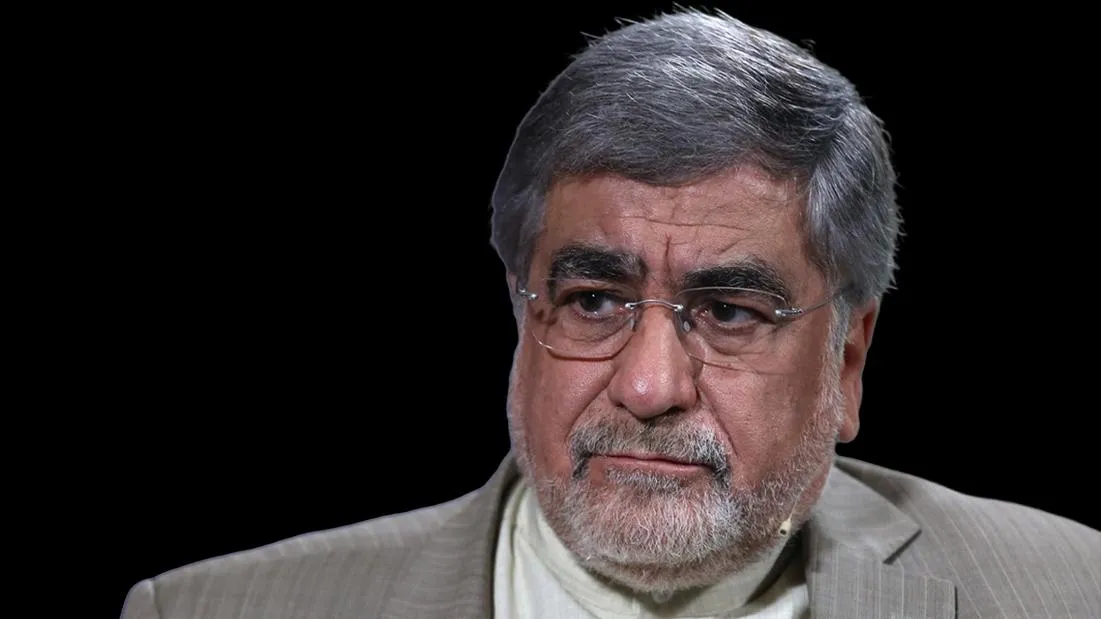
Ali Jannati—a moderate politician, diplomat, and seasoned executive manager—is one of the key figures within Iran's bureaucratic and diplomatic framework over the past four decades. His career features the governorship of two strategic provinces (Khuzestan during the war and Khorasan during the reconstruction era), a long-standing ambassadorship to Kuwait, and the political deputy position at the Ministry of Interior. In Hassan Rouhani's first administration, he took the helm of the Ministry of Culture and Islamic Guidance; a highly challenging period that ultimately led to his widely publicized resignation in 2016. The divergence in political leanings between him and his father (Ayatollah Ahmad Jannati), coupled with his professional durability across various administrations, has turned him into a black box of untold insights into the country's executive affairs. In this regard, Abdi Media, alongside a detailed examination of his career, presents its exclusive video interview with Ali Jannati focusing on post-war challenges in Iran and the reactions within the power structure.
Who is Ali Jannati?
Ali Jannati—a moderate politician, diplomat, and seasoned Iranian executive manager who served as the Minister of Culture and Islamic Guidance in the 11th administration (2013–2016), born on June 24, 1949—is one of the most resilient executive-diplomatic figures in the Islamic Republic over the past four decades. Jannati, the eldest son of Ayatollah Ahmad Jannati (the long-standing Secretary of the Guardian Council and current Chairman of the Assembly of Experts), represents one of the most fascinating examples of the "political divergence between father and son" in contemporary Iranian politics; a phenomenon where the father heads the most prominent conservative constitutional institution while the son operates within the moderate-reformist spectrum.
Ali Jannati’s four-decade career encompasses a wide array of managerial and diplomatic responsibilities: Governor of Khuzestan during the post-revolutionary years and amidst the war (1983–1987), Governor of Khorasan (1989–1992), Vice Minister for International Affairs at the Ministry of Culture and Islamic Guidance across three different ministerial tenures (Ali Larijani, Mostafa Mir-Salim, and Ataollah Mohajerani), Iran’s Ambassador to Kuwait during two separate periods (1998–2005 and 2006–2010), Political Deputy to the Minister of Interior at the beginning of the Ahmadinejad administration (2005–2006), Chairman of the Cultural-Social Committee of the Supreme National Security Council during Hassan Rouhani’s tenure as secretary, Minister of Culture and Islamic Guidance in the Rouhani administration (2013–2016), and ultimately, Advisor to the Chief of Staff of the Presidential Administration (August 2017 to November 2018).
The significance of Ali Jannati in Iran's political-executive sphere can be examined from several perspectives. First, his highly publicized resignation from the Ministry of Guidance on October 19, 2016—the reason for which he later explicitly declared as "the Supreme Leader's dissatisfaction"—stood as one of the most widely covered aspects of his career. Second, his rare capacity to transition smoothly across contrasting administrations and factions—serving under Mir-Hossein Mousavi, Akbar Hashemi Rafsanjani, Mohammad Khatami's reformist government, Mahmoud Ahmadinejad's conservative administration, and Hassan Rouhani's moderate presidency—highlights a unique professional-bureaucratic durability in the contemporary Iranian structure. Third, his unique familial link to a leading figure of conservatism (Ayatollah Ahmad Jannati), coupled with his intellectual alignment with the moderate spectrum, has introduced a political paradox into his persona that remains relatively rare among senior Iranian officials.
Life and Background
Ali Jannati was born on June 24, 1949—a generation raised in the tense atmosphere of the post-1953 coup era and the years leading up to the Islamic Revolution.
The Father: Ayatollah Ahmad Jannati
The most central aspect of Ali Jannati's family background is his relationship with his father, Ayatollah Ahmad Jannati (born in 1927)—one of the most prominent conservative-principalist figures in the Islamic Republic. Ayatollah Ahmad Jannati has served as the Secretary of the Guardian Council since 1988 (spanning two long intervals), the Chairman of the Assembly of Experts since 2016, and stands as a vital jurisprudential-political pillar of the establishment. Known for his uncompromising stances on approbatory supervision (Nezarat-e Estesvabi), widespread disqualifications, and his prominent standing among conservatives, Ayatollah Jannati is one of the most widely recognized yet controversial religious-political figures in contemporary Iran.
Throughout Ali Jannati's career, this familial tie has remained a striking element of his public profile: while the father occupies the apex of the system's conservative pillars, the son has consistently operated within the moderate-reformist camp, most notably during his time heading the Ministry of Culture. This divergence in political outlooks between father and son has become a frequent and intriguing topic in Iranian media discourse.
Early Executive Activities
Following the victory of the Islamic Revolution, Ali Jannati began his career within the executive framework of the Islamic Republic. His first major roles emerged during the premiership of Mir-Hossein Mousavi (who formed the government following the assassination of President Rajai) and right in the middle of the Iran-Iraq War.
Governorship of Khuzestan (1983–1987)
Ali Jannati's first prominent provincial appointment was the governorship of Khuzestan, a position he held from 1983 to 1987. This period coincided with the most critical years of the Iran-Iraq War—including Operations Valfajr, Khyber, Badr, and Karbala—positioning Khuzestan, as the primary frontline border province, at the very epicenter of the conflict.
Managing the Khuzestan governorship at the time carried immense executive weight. Beyond administering a vast and strategic province, it demanded constant coordination with military command structures, addressing the needs of internally displaced war refugees, and handling extensive infrastructural damage caused by active hostilities. Jannati's placement in this role at a relatively young age (34 to 38 years old) demonstrated the early trust the post-revolutionary power structure placed in him.
Governorship of Khorasan (1989–1992)
Following the end of the war and the launch of the reconstruction era under Hashemi Rafsanjani's first administration, Jannati was appointed Governor of Khorasan (which was then a single unified province before being divided into three separate administrative regions), serving from 1989 to 1992. Centers around the city of Mashhad and the Holy Shrine of Imam Reza, Khorasan holds immense cultural, religious, and economic weight in Iran, making its governorship highly prestigious within the state apparatus.
These two back-to-back governorships in vital, strategic provinces established the foundation of Ali Jannati's executive-managerial experience, transforming him into a well-known figure across the post-revolutionary administrative landscape.
Career in the Ministry of Culture and Islamic Guidance
The conclusion of his governorship in Khorasan marked the opening of a new chapter for Jannati, linking him directly to the cultural sphere and cultural diplomacy—a domain that would become a primary axis of his activities over the next two decades.
Vice Minister for International Affairs at the Ministry of Guidance
When Ali Larijani served as the Minister of Culture and Islamic Guidance under the Rafsanjani administration in 1992, he appointed Ali Jannati as the ministry's Vice Minister for International Affairs. This appointment marked a turning point, pivoting Jannati from local provincial governance into the cultural-diplomatic arena.
Notably, Jannati managed to retain his position as Vice Minister for International Affairs across the tenures of three distinct ministers: Ali Larijani, Mostafa Mir-Salim, and Ataollah Mohajerani. This continuity underscores his ability to navigate contrasting political environments, moving from Larijani's right-leaning tenure to Mir-Salim's more traditional conservative approach, and ultimately to Mohajerani's reformist administration.
Ambassador of Iran to Kuwait (1998–2005)
After roughly a year of working alongside Mohajerani at the dawn of the reformist era, Jannati was appointed Iran's Ambassador to Kuwait, a post he held from 1998 to 2005 (until the conclusion of Mohammad Khatami's presidency).
Despite its small geographic footprint, Kuwait represents a highly strategic Persian Gulf nation and a key member of the Gulf Cooperation Council (GCC). In the post-war era, heading the Iranian embassy in Kuwait was a sensitive diplomatic mission, as relations between Iran and its Arab neighbors required steady rebuilding following the strains of the 1980s war.
Political Deputy to the Minister of Interior (2005–2006)
Following the end of the reformist era and the rise of Mahmoud Ahmadinejad's administration, Jannati was unexpectedly appointed Political Deputy to the Minister of Interior in 2005. This appointment at the start of the 9th administration highlighted Jannati's skill in transitioning from a reform-oriented political landscape to a conservative-dominated one.
This tenure proved relatively short-lived, and by 2006, Jannati returned to the diplomatic corps.
Return to the Kuwait Embassy (2006–2010)
From 2006 to 2010, Jannati served a second term as Iran's Ambassador to Kuwait. Such repeat appointments are uncommon within the Iranian diplomatic framework and served as a testament to his specialized expertise and deep familiarity with Kuwait's diplomatic environment.
Chairmanship of the Cultural-Social Committee of the Supreme National Security Council
One of Jannati's most notable assignments was heading the Cultural-Social Committee of the Supreme National Security Council (SNSC). This responsibility was entrusted to him during the years Hassan Rouhani served as the Secretary of the SNSC (coinciding with Khatami's reformist administration from 1999 to 2005). This role laid the groundwork for a close professional relationship between Jannati and Rouhani, playing a foundational role in his later appointment to the Ministry of Guidance under the Rouhani presidency.
Ministry of Culture and Islamic Guidance (2013–2016)
The definitive peak of Ali Jannati's public career came with his appointment as the Minister of Culture and Islamic Guidance in the 11th administration led by Hassan Rouhani.
Parliamentary Vote of Confidence
In August 2013, Ali Jannati was introduced to the 9th Parliament as the nominee for the Ministry of Culture and Islamic Guidance. In the confidence vote, he secured the helm of the ministry with 234 votes in favor. Amidst the highly charged atmosphere following Rouhani's June 2013 election victory, this tally reflected a degree of parliamentary trust—though several critics at the time interpreted it as a "courtesy vote" influenced by his family ties to Ayatollah Ahmad Jannati.
A Tense Ministerial Tenure
Jannati's three-year tenure at the ministry was marked by persistent friction across various cultural domains:
The Music and Concert Sphere: One of the most contentious issues of this era was the issuance of permits for music concerts in various cities, particularly religious hubs like Mashhad, Qom, and Isfahan. These permits faced fierce opposition from conservative factions, right-wing MPs, senior clerics, and local prosecutors, frequently resulting in permitted concerts being summarily canceled by local authorities.
The Publishing and Book Sphere: During Jannati's tenure, Seyyed Abbas Salehi (who later succeeded him) was appointed Vice Minister for Cultural Affairs. This appointment aimed to ease sensitivities in Qom regarding book censorship and vetting. The approach illustrated Jannati's ongoing effort to strike a balance between the intellectual-cultural community and clerical sensibilities.
Dual-Sided Criticisms: A defining feature of Jannati's ministerial term was facing simultaneous criticism from both pro-government and opposition factions. The right wing strongly protested the approval of cultural and artistic events—especially concerts in religious cities. Concurrently, supporters of the Rouhani administration criticized Jannati for allegedly backing down in the face of pressure, questioning why officially permitted programs were allowed to be canceled. This two-front pressure became the primary hallmark of his time at the ministry.
Resignation and Its Causes
Ultimately, on October 19, 2016, Ali Jannati resigned from his post as Minister of Culture and Islamic Guidance, a resignation that was accepted by President Rouhani. Immediately following his departure, Seyyed Abbas Salehi was appointed acting head of the ministry.
The underlying reason for Jannati's resignation was explicitly revealed by Jannati himself years later. In a notable interview, he stated: "The path that both I and the President believed in did not meet the satisfaction of the Supreme Leader. I said to myself, when the Jurisprudential Leader (Vali-e Faqih) is not satisfied with my path, why should I continue?" Such a candid admission is relatively rare in official Iranian political discourse and cast light on the structural pressures faced by moderate-reformist administrations in the cultural arena.
Accounts published later indicated that Rouhani had previously reminded Jannati that the administration took its cultural platform seriously and expected firm alignment, with some analysts noting that "Jannati demonstrated he did not wish to match the administration's resolve in pushing back against strict cultural restrictions." This divergence in handling external pressures ultimately catalyzed his resignation.
Furthermore, some political analysts viewed Jannati's resignation through the lens of political maneuvering ahead of the 2017 presidential election—suggesting he was positioned as a concession to alleviate right-wing pressure on the administration.
Post-Ministerial Activities
Advisor to the Chief of Staff of the Presidential Administration (2017–2018)
Following Rouhani's victory in the 2017 presidential election and the launch of the 12th administration, Ali Jannati was appointed Advisor to the Chief of Staff of the Presidential Administration, serving from August 2017 to November 2018. This appointment showed that Jannati retained his ties to the inner circle of the Rouhani administration even after his high-profile resignation from the cabinet.
Analytical and Media Engagements
Since stepping back from formal executive roles, Jannati has remained active as a political commentator within Iranian media. His interviews and analyses are regularly featured across reformist and moderate outlets, including Etemad, Tasnim, Aftab News, and others.
Views and Positions
Throughout his extensive career, Ali Jannati has articulated a clear, moderate political-intellectual framework tracking across several core areas:
Exclusive Dialogue: Post-War Iran; From Referendums to the Institutional Response In an extensive and detailed exclusive interview with Abdi Media titled "Post-War Iran; From Referendums to the Institutional Response," Ali Jannati provides a retrospective look at untold dimensions of the country’s political, security, and executive dynamics in the decades following the end of the Iran-Iraq War.
Moderatism and Navigating Administrations: The defining element of Jannati's political profile is his pragmatism and capacity to operate across contrasting political alignments. His sustained presence in administrations ranging from Mousavi to Rafsanjani, Khatami, Ahmadinejad, and Rouhani reflects this adaptable approach.
An Open Outlook on Culture: During his tenure at the Ministry of Guidance, Jannati pursued a relatively open and flexible approach toward the cultural sector—an approach that ultimately ran into resistance from conservative power centers and higher levels of the establishment.
Critique of Corruption and Rent-Seeking: In his post-ministerial commentary, Jannati has been explicit in identifying "corruption and rent-seeking" among the "most serious challenges facing the country," maintaining that the government must implement clear programs to dismantle these structures, many of which he describes as legacies of the past.
Stance on Hassan Rouhani: In interviews following his time in the cabinet, Jannati consistently defended Rouhani. In one notable commentary, he emphasized that "neither is Rouhani the type to resign under pressure, nor are current conditions such that parliament would consider a vote of no confidence against him."
The Familial-Political Paradox: One of the most frequently discussed facets of Jannati's political persona is the stark contrast between his political leanings and those of his father, Ayatollah Ahmad Jannati. This dynamic—where a moderate-reformist figure serves in various centrist cabinets while his father stands at the vanguard of the ultra-conservative faction—remains one of the most compelling paradoxes in contemporary Iranian politics.
Relationships with Figures and Movements
Over his multi-decade career, Ali Jannati has maintained ties with a vast network of prominent figures within the Islamic Republic. At the heart of this network is his father, Ayatollah Ahmad Jannati—though their distinct political orientations have naturally made this relationship a subject of public complexity.
On the executive plane, his relationship with Hassan Rouhani remains a core professional connection. It was Rouhani who, as Secretary of the SNSC, appointed Jannati to lead its Cultural-Social Committee, and later, as President, selected him for the Ministry of Guidance and subsequent advisory roles. In the cultural sphere, his professional links extend to Ali Larijani, Mostafa Mir-Salim, and Ataollah Mohajerani—the three successive ministers under whom Jannati served as Vice Minister for International Affairs.
At the ministry itself, his working relationship with Seyyed Abbas Salehi (his cultural deputy who eventually succeeded him as minister) stood out as a key alliance during his ministerial term.
Conclusion
Ali Jannati stands as one of the most durable and multi-faceted executive-diplomatic figures within the contemporary Iranian administrative framework. His four-decade career—spanning the governorship of two strategic provinces (Khuzestan and Khorasan), vice-ministerial duties under three contrasting ministers of culture, two terms as ambassador to Kuwait, a political deputy role in the Ahmadinejad Interior Ministry, the chairmanship of an SNSC committee, and ultimately a cabinet post under Rouhani—places him uniquely within Iran's modern political-administrative history. His trajectory provides a clear archetype of a resilient, moderate bureaucrat-diplomat.
The defining feature of Ali Jannati lies first in his exceptional ability to bridge sharply contrasting administrations; navigating a polarized political structure to serve under figures as diverse as Mousavi, Rafsanjani, Khatami, Ahmadinejad, and Rouhani is an uncommon feat among senior Iranian officials. Second, his familial-political paradox—as a moderate son to one of the most powerful conservative pillars of the system—adds a distinct layer to his public identity.
From an analytical standpoint, Jannati exemplifies the "technocratic-diplomatic manager" within the Islamic Republic; a profile where practical administrative experience and technical competence take precedence over rigid ideological factionalism. This pattern, seen in other senior figures like Ali Akbar Salehi or Ali Larijani, finds an enduring representative in Jannati.
Ultimately, Jannati's candid acknowledgment that his 2016 resignation was due to "the Supreme Leader's dissatisfaction" remains an important historical narrative regarding the structural boundaries encountered by moderate and reform-leaning administrations in Iran. As debates surrounding cultural governance, artistic freedom, and the mandate of the Ministry of Guidance remain central to Iranian public discourse, Ali Jannati’s institutional experience and insights continue to serve as a key reference point for understanding these persistent challenges.
Frequently Asked Questions (FAQs)
Who is Ali Jannati? Ali Jannati (born June 24, 1949) is a moderate Iranian politician and diplomat who served as the Minister of Culture and Islamic Guidance in Hassan Rouhani's 11th administration from 2013 to 2016. He has also served as the Governor of Khuzestan (1983–1987), Governor of Khorasan (1989–1992), and twice as Iran's Ambassador to Kuwait.
What is Ali Jannati's relationship to Ahmad Jannati? Ali Jannati is the eldest son of Ayatollah Ahmad Jannati—the long-standing Secretary of the Guardian Council and Chairman of the Assembly of Experts. This relationship is a frequent point of public interest because the father represents the apex of Iran's conservative-principalist establishment, while the son is aligned with the moderate-reformist spectrum.
Why did Ali Jannati resign from the Ministry of Guidance? Ali Jannati resigned on October 19, 2016. Years later, he explicitly clarified the reason, stating: "The path that both I and the President believed in did not meet the satisfaction of the Supreme Leader. I said to myself, when the Jurisprudential Leader is not satisfied with my path, why should I continue?" His tenure was marked by intense pressure from the right wing over concert approvals in religious cities, alongside dissatisfaction from government supporters who felt he conceded too easily to external pressures.
What are the most notable positions Ali Jannati has held? His primary roles include: Governor of Khuzestan (1983–1987), Governor of Khorasan (1989–1992), Vice Minister for International Affairs at the Ministry of Guidance under three successive ministers (Larijani, Mir-Salim, Mohajerani), Ambassador to Kuwait across two tenures (1998–2005 and 2006–2010), Political Deputy at the Ministry of Interior (2005–2006), Chairman of the SNSC Cultural-Social Committee, Minister of Culture and Islamic Guidance (2013–2016), and Advisor to the Chief of Staff of the Presidential Administration (2017–2018).
What role did Ali Jannati play in Iran's cultural diplomacy? Jannati is considered a senior figure in Iran’s cultural diplomacy. He managed international cultural affairs as Vice Minister under three distinct ministers and executed long-term diplomatic missions as Ambassador to Kuwait, a highly strategic Persian Gulf neighbor. This combination makes him one of the country's most experienced hands at the intersection of culture and foreign policy.
What were the primary challenges during Jannati's ministerial tenure? The main challenges revolved around navigating a polarized cultural landscape. Key flashpoints included issuing permits for musical concerts in religious cities (like Mashhad, Qom, and Isfahan) which faced severe pushback from local and conservative authorities, and handling book censorship guidelines. Managing these issues while caught between conservative critics and reformist government supporters defined the friction of his tenure.
Who succeeded Ali Jannati as Minister of Culture? Following his resignation in October 2016, Seyyed Abbas Salehi—who had been serving as Jannati's Vice Minister for Cultural Affairs—was immediately appointed acting minister. Salehi was later officially appointed as the Minister of Culture and Islamic Guidance in Rouhani's 12th administration.
Is Ali Jannati still active in public affairs? Yes. While he no longer holds formal executive or diplomatic posts, Jannati remains active as a political analyst and commentator. His interviews, insights, and commentary on domestic politics and foreign policy are regularly published across prominent moderate and reformist Iranian media outlets like Etemad, Tasnim, and Aftab News.
Take less than a minute, register and share your opinion under this post.
Insulting or inciting messages will be deleted.
Sign Up