
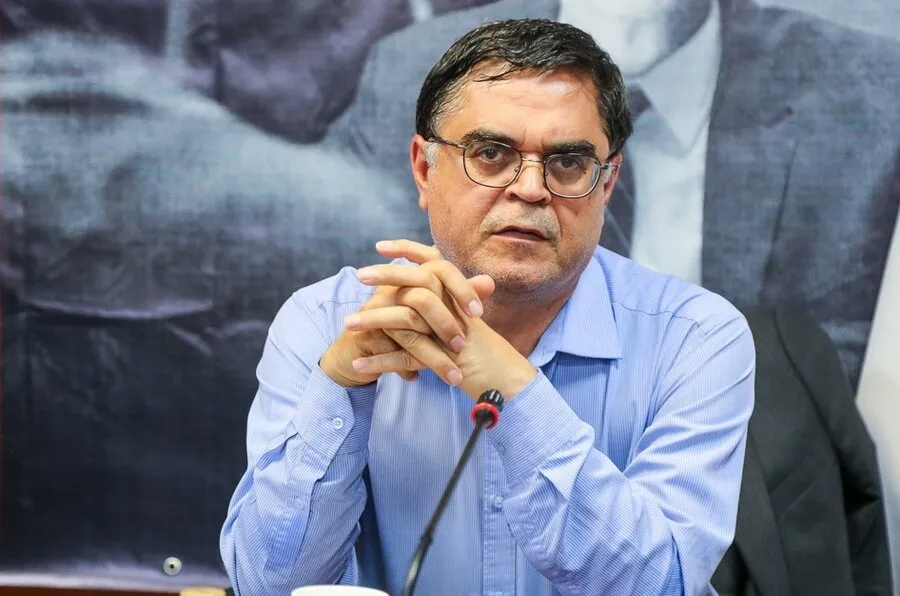
Ali Hashemi Bahramani—a politician, senior oil executive, and former Member of Parliament—is one of the veteran figures of the Hashemi Rafsanjani family whose name is tied to one of the most mysterious diplomatic cases in contemporary Iranian history: the "McFarlane Affair" (Iran-Contra). Acting at the age of 25 as the Deputy Minister of Petroleum and subsequently as the "Second Channel" for secret negotiations with the Ronald Reagan administration, he is one of the few Iranian figures to have experienced covert diplomatic missions in Washington. Following years of absence from official positions and parliamentary experience in the 6th Parliament, Hashemi Bahramani remains known as a pragmatic observer behind the scenes of foreign policy. In this piece, Abdi Media, alongside a historical analysis of his career, presents his exclusive video analytical interview regarding the new administration's diplomatic doctrine, answering the question: "Will Pezeshkian's Foreign Policy Lead to Engagement or Confrontation with the World?"
Who is Ali Hashemi Bahramani?
Ali Hashemi Bahramani—a politician, executive manager, and former Member of the Islamic Consultative Assembly—was born in 1961 in Rafsanjan. He is considered one of the prominent figures of the Hashemi Rafsanjani family and one of the youngest Iranian intermediaries in one of the most widely publicized diplomatic events in contemporary Iranian history: the McFarlane Affair (Iran-Contra). As the nephew of Ayatollah Akbar Hashemi Rafsanjani (the fourth president of Iran) and the son of the late Qasem Hashemi Bahramani (Akbar Hashemi's brother, who passed away in 1975), Ali Hashemi has operated at the intersection of three spheres over four decades of activity: covert foreign policy (in the Iran-Contra affair), the oil-energy economy (as Deputy Minister of Petroleum supervising oil sales), and parliamentary politics (as a reformist representative for Rafsanjan in the 6th Parliament).
The significance of Ali Hashemi Bahramani in contemporary Iranian history can be examined through several lenses. First, his strategic role in the second round of negotiations during the Iran-Contra affair—acting at around 25 years of age as the "Second Channel" of communication between the administration of Akbar Hashemi Rafsanjani and the administration of Ronald Reagan—made him one of the few Iranians to make a secret trip to Washington and hold direct meetings with White House officials during the early post-revolutionary era. In published American documents concerning this case, his name is primarily mentioned as "Eskandari" or the "nephew of Rafsanjani." Second, his presence at a relatively young age at the head of sensitive oil affairs—as Deputy Minister of Petroleum supervising oil sales—demonstrates the post-revolutionary power structure's trust in him during the intense years of the Iran-Iraq War. Third, his reformist representation in the 6th Parliament (2000–2004) from the Rafsanjan constituency—a prominent post-revolutionary parliament characterized by an overwhelming reformist majority—shows his alignment with the post-1997 reformist movement.
This career, in which a figure from the Hashemi Rafsanjani family operated in diverse roles across distinct historical periods, exemplifies the phenomenon of "familial political-managers" in post-revolutionary Iranian politics—a phenomenon where familial ties to prominent figures of the political system facilitate participation in multiple domains.
Early Life and Background
Ali Hashemi Bahramani was born in 1961 in the city of Rafsanjan—the central city of Rafsanjan County in Kerman Province. Situated in the heart of the Kerman desert and known as one of the most important centers of pistachio production in Iran, Rafsanjan has acquired a symbolic status in contemporary Iranian history due to its connection to the Hashemi family.
Ali Hashemi is the son of the late Qasem Hashemi Bahramani, one of the brothers of Ayatollah Akbar Hashemi Rafsanjani. Qasem Hashemi passed away in 1975, prior to the victory of the Islamic Revolution. This family background placed Ali Hashemi within the inner circle of the Hashemi family—a family that became one of the most prominent political-economic dynasties in post-revolutionary Iran. Ali Hashemi's mother is the sister of Akbar Hashemi Rafsanjani's wife, a connection that deepened his family ties with his uncle.
Complex familial relationships within the Hashemi family place Ali Hashemi inside a tight network of blood and marital ties. His sister, Fereshteh Hashemi, is married to Mehdi Hashemi (the controversial son of Akbar Hashemi Rafsanjani)—a marriage that stands as one of the key alliances among the second-generation descendants of the family.
During a certain period of his life, Ali Hashemi was known by the pseudonym "Eskandari"—a name widely used to refer to him in published American documents regarding the Iran-Contra case. This pseudonym was likely utilized to protect his identity during the covert negotiations with the Americans.
Early Career and the Ministry of Petroleum
One of the notable aspects of Ali Hashemi's career was his presence at a relatively young age at the head of sensitive oil affairs. According to published accounts, in the early years following the Islamic Revolution—when he was still around 25 years old—he was appointed as the Deputy Minister of Petroleum supervising oil sales.
This position carried immense strategic importance during the Iran-Iraq War (1980–1988), a time when oil sales to fund war expenses were among the country's highest priorities. The presence of a 25-year-old in such a role demonstrates the post-revolutionary power structure's trust in him, likely due to family connections and the credibility of the Hashemi family. This position in the oil sector simultaneously laid the groundwork for his subsequent involvement in the Iran-Contra case, where issues of oil, armaments, and regional strategic matters were on the negotiating table alongside the hostage crisis.
Role in the Iran-Contra Affair (McFarlane)
The most heavily publicized chapter of Ali Hashemi Bahramani's career was his role in the second round of the Iran-Contra Affair (known in Iran as the McFarlane Affair), during which the Ronald Reagan administration secretly sold weapons to Iran in exchange for Iranian assistance in securing the release of American hostages held in Lebanon.
Background of the Affair
Following the failure of the first round of negotiations—marked by the covert trip of Robert McFarlane (former US National Security Advisor) to Tehran in May 1986 and his failure to meet with senior Iranian officials—the need to establish a "Second Channel" of communication between the two sides became apparent. In this environment, the Americans sought to launch a new communication channel that could operate beyond the mediation of Manucher Ghorbanifar (an arms dealer with prior ties to the CIA and potentially Israeli intelligence).
The Belgium Meeting (September 16, 1986)
The turning point for Ali Hashemi's entry into this case was a meeting on September 16, 1986, in Belgium. During this meeting, Albert Hakim (an Iranian-American businessman and one of the primary American intermediaries), along with an advisor to the Reagan administration, met with Ali Hashemi at his hotel. Ali Hashemi noted in a subsequent interview that his entry into the affair occurred "completely by accident"—a narrative that simultaneously sheds light on how sensitive missions were allocated within the informal post-revolutionary power structure.
From this point forward, Ali Hashemi became one of the primary points of contact for the "Second Channel" between the administration of Akbar Hashemi Rafsanjani and the Reagan administration. He was accompanied on this mission by Fereydoun Verdinejad (operating under the pseudonym "Mehdinejad").
Secret Trip to Washington
The most prominent aspect of Ali Hashemi's role in the Iran-Contra case was his secret trip to Washington. This trip, designed with special arrangements due to political and security sensitivities, followed a complex route:
From Turkey via a small aircraft to Switzerland → from Switzerland to Iceland → and from Iceland to Washington.
This winding route, designed to conceal the journey, marked one of the few secret trips by Iranian figures to the United States after the Islamic Revolution. American source narratives note that this nephew of Rafsanjani "impressed the Americans enough that they arranged for him to secretly travel to Washington, which included a visit by [Oliver] North to the Oval Office." Ali Hashemi himself, in subsequent interviews, only confirmed a single trip to Washington to attend a meeting, without verifying the details of a visit to the Oval Office.
Negotiation Topics
The content of the negotiations through this Second Channel extended beyond the hostage issue to encompass broader strategic discussions: the situation in Afghanistan (in the context of the Cold War and the Soviet presence), oil prices, and even the potential removal of Saddam Hussein. However, as noted in reports, the American hostages remained at the center of the United States' concerns.
Ali Hashemi emphasized in a later interview that his role in the subsequent rounds of negotiations was limited: "From this point on, I no longer had personal involvement and only made a trip abroad to connect the forces introduced by the IRGC with the American forces."
Other Iranian Negotiators
In a subsequent interview, Ali Hashemi stated that Commander Ahmad Vahidi (who later became Minister of Defense) and likely Javad Larijani were also present in these negotiations. He also stated that the names of the IRGC commanders he "connected with the American forces" would remain "classified" because "they are still active in their work"—a phrase indicating that these figures held important positions within Iran's military-security apparatus in the years that followed.
Denial of Travel to Israel
One of the controversial topics was the claim that Ali Hashemi traveled to Israel for negotiations—a claim raised in certain sources. Ali Hashemi explicitly called this claim "sheer falsehood," stating: "I never went to the occupied territories for negotiations."
Disclosure of the Affair
The affair was ultimately exposed on November 3, 1986, by the Lebanese newspaper Al-Shiraa—an exposure that turned into a severe crisis for the Reagan administration and generated widespread repercussions inside Iran. Published accounts indicate that within Iran, Seyyed Mehdi Hashemi (the son-in-law of Ayatollah Montazeri) and the inner circle around Ayatollah Montazeri were instrumental in leaking these secret negotiations—an exposure that ultimately led to Mehdi Hashemi's execution in 1987.
Representation in the 6th Parliament (2000–2004)
After years of activity in executive and economic spheres, Ali Hashemi Bahramani entered the 6th Parliament following the elections of February 2000. In this election, he was chosen as the reformist representative for the Rafsanjan constituency in Kerman Province.
The 6th Parliament (2000–2004), formed with an absolute reformist majority following the victory of the Mosharekat list, is regarded as one of the most significant parliaments in post-revolutionary history. Ali Hashemi's presence as a reformist member of this parliament demonstrated his alignment with the post-1997 reformist movement.
While he maintained a family bond with his uncle Akbar Hashemi Rafsanjani—who was then the head of the Expediency Discernment Council and positioned in the centrist spectrum—this role indicated the alignment of the second generation of the Hashemi family with the reformist faction. Faezeh Hashemi (Akbar Hashemi's daughter) was also among the representatives for Tehran in the same parliament.
Post-Parliamentary Activity and Medical Travel
Following the conclusion of the 6th Parliament's term, Ali Hashemi Bahramani held no prominent official roles in the public arena and was primarily active in the private sphere and business. Published information regarding his recent activities in open sources remains limited.
One notable reference appears in the 2004 memoirs of Akbar Hashemi Rafsanjani, in which Akbar Hashemi mentions a trip by Ali Hashemi and his wife to London for medical treatment—an indication of his ongoing ties to the Hashemi family and his access to medical facilities abroad.
Perspectives and Stances
Because Ali Hashemi Bahramani has not maintained a highly visible public presence since the end of his parliamentary term, documented information regarding an independent conceptual framework is limited. However, his published interviews—particularly those concerning the McFarlane Affair—reveal a few key points:
A Pragmatic Approach to Foreign Policy: In interviews regarding the Iran-Contra affair, Ali Hashemi displayed a pragmatic and realistic approach toward Iranian foreign policy. In one prominent stance, he pointed to "the lack of planning, haste, and aggressive conduct of the Americans" during that period—an analysis that underscores his view on the necessity of precision in diplomacy.
Alignment with the Reformist Movement: By entering the 6th Parliament as a reformist representative, Ali Hashemi aligned himself with the reformist spectrum in the post-1997 political landscape—a position that extended the political-intellectual legacy of his uncle Akbar Hashemi Rafsanjani, who operated in the centrist faction.
Defense of His Narrative: In subsequent interviews, Ali Hashemi sought to cement his own narrative of the events of the McFarlane Affair against alternative claims—particularly the allegation of traveling to Israel, which he dismissed as "sheer falsehood."
Connections and Networks
Ali Hashemi Bahramani sits at the center of one of the most important political families in contemporary Iran. At the familial level, his relationship with Akbar Hashemi Rafsanjani (uncle, fourth president of Iran), Mohammad Hashemi (uncle, former head of the IRIB and former member of the Expediency Discernment Council), and Faezeh, Fatemeh, Mohsen, Yasser, and Mehdi Hashemi (cousins) constitutes his primary network. Mehdi Hashemi (Akbar Hashemi's son) is simultaneously the husband of Ali Hashemi's sister (Fereshteh)—a dual connection that is relatively common within the Hashemi family.
At the level of executive-political connections, his relationship with figures such as Mohsen Rezaee (then-commander of the IRGC, to whom Ali Hashemi recounts giving the report of the Belgium meeting), Commander Ahmad Vahidi (another negotiator in the McFarlane case and later Minister of Defense), Javad Larijani (a probable companion in the negotiations), and Fereydoun Verdinejad (his companion in the Second Channel under the pseudonym "Mehdinejad") forms his core network. According to some sources, Mohsen Rezaee was also considered a personal friend of Ali Hashemi.
Conclusion
Ali Hashemi Bahramani is one of the notable figures of the second generation of the Hashemi Rafsanjani family. He occupies a distinct place in contemporary Iranian history through a combination of blood ties to Akbar Hashemi (his uncle), a role in a heavily publicized historical-diplomatic case (the Iran-Contra affair) at a relatively young age, managerial experience in the sensitive oil sector, and reformist parliamentary presence in the 6th Parliament. His career—from his birth in Rafsanjan in 1961, to serving as Deputy Minister of Petroleum at around 25 years of age, his strategic role as the "Second Channel" in Iran-Contra (with the Belgium meeting on September 16, 1986, and the secret trip to Washington via Turkey, Switzerland, and Iceland), and finally representing Rafsanjan as a reformist in the 6th Parliament—presents the portrait of a "familial political-manager" who was placed in strategic roles at sensitive historical junctures.
The defining feature of Ali Hashemi Bahramani is, on one hand, his unusual presence at a young age in strategic nodes of the system; a phenomenon where a young man of about 25 found himself at the head of secret negotiations with the American superpower—a dynamic that in practice demonstrated the operation of the post-revolutionary power structure and the role of family ties in allocating sensitive missions. On the other hand, the diversity of his spheres of influence—ranging from covert foreign policy (Iran-Contra) to the oil economy and subsequently parliamentary politics—remains a notable aspect of his record.
Analytically, Ali Hashemi Bahramani's positioning serves as an example of the important phenomenon of the "second generation of political families" in post-revolutionary Iranian politics, where the children and nephews of prominent system figures have assumed various roles within the apparatus of power. This phenomenon, which has become a topic of discussion in structural critiques of the Islamic Republic over past decades, displays both its overt and covert dimensions within Ali Hashemi's career.
What remains clear from today's perspective is that Ali Hashemi's role in the Iran-Contra affair—independent of the political dimensions supporting or opposing those negotiations—constitutes a part of the historical memory of the Islamic Republic of Iran regarding covert relations with the West in the early years after the revolution. At a time when debates surrounding the historiography of pivotal events in contemporary Iran remain active, the testimonies and interviews of Ali Hashemi Bahramani will endure as primary sources for this history.
Frequently Asked Questions (FAQs)
Who is Ali Hashemi Bahramani? Ali Hashemi Bahramani (born in 1961 in Rafsanjan) is an Iranian politician and executive manager, a former reformist representative for the Rafsanjan constituency in the sixth term of the Islamic Consultative Assembly, and the nephew of Ayatollah Akbar Hashemi Rafsanjani (the fourth president of Iran). He played a key role as one of the "Second Channel" negotiators between the Iranian government and the Reagan administration during the Iran-Contra (McFarlane) Affair.
What is Ali Hashemi Bahramani's relationship to Akbar Hashemi Rafsanjani? Ali Hashemi Bahramani is the nephew of Akbar Hashemi Rafsanjani. He is the son of the late Qasem Hashemi Bahramani—one of Akbar Hashemi's brothers—who passed away in 1975. Ali Hashemi's sister, Fereshteh Hashemi, is married to Mehdi Hashemi (the son of Akbar Hashemi Rafsanjani).
What was Ali Hashemi Bahramani's role in the Iran-Contra (McFarlane) Affair? During the second round of the Iran-Contra affair, at around 25 years of age, Ali Hashemi Bahramani acted as the primary point of contact for the "Second Channel" of communication between the Hashemi Rafsanjani administration and the Ronald Reagan administration. This channel was launched in September 1986 following the failure of the first round of negotiations and McFarlane's unsuccessful trip to Tehran. In American documents, his name is primarily mentioned as "Eskandari" or the "nephew of Rafsanjani."
What was Ali Hashemi Bahramani's trip to Washington? Following the Belgium meeting on September 16, 1986, Ali Hashemi made a secret trip to Washington. To conceal the journey, its route was designed with special arrangements: from Turkey via a small aircraft to Switzerland, then to Iceland, and finally to Washington. American source narratives note that this trip included "a visit by [Oliver] North to the Oval Office"—though Ali Hashemi himself has only referred to attending a single meeting in Washington.
Did Ali Hashemi Bahramani travel to Israel? Ali Hashemi Bahramani has explicitly rejected the claim that he traveled to Israel for negotiations. In an interview with Fars, he stated: "I never went to the occupied territories for negotiations, and this is a sheer falsehood. I only had one trip to America via Turkey."
What other figures were present in the McFarlane negotiations? According to Ali Hashemi's account, the following figures were also present in the "Second Channel" negotiations alongside him: Commander Ahmad Vahidi (later Minister of Defense), likely Javad Larijani, and Fereydoun Verdinejad (under the pseudonym "Mehdinejad"). Ali Hashemi has also referred to the names of the IRGC commanders who were in contact with the Americans in this case as "classified," noting that "they are still active in their work."
How did Ali Hashemi Bahramani become Deputy Minister of Petroleum at such a young age? In the early years following the Islamic Revolution, at around 25 years of age, Ali Hashemi was appointed as the Deputy Minister of Petroleum supervising oil sales. This position carried immense strategic importance during the Iran-Iraq War, when oil sales to fund war expenses were among the country's highest priorities. The presence of a young man in such a position demonstrated the post-revolutionary power structure's trust in him, likely due to family connections and the credibility of the Hashemi family.
Is Ali Hashemi Bahramani still active? Following the conclusion of his term in the 6th Parliament in 2004, Ali Hashemi Bahramani has held no prominent official roles in the public arena and has been primarily active in the private sphere and business. In 2004, according to the memoirs of Akbar Hashemi Rafsanjani, he traveled to London for medical treatment. Documented information regarding his recent activities in open sources remains limited.
Take less than a minute, register and share your opinion under this post.
Insulting or inciting messages will be deleted.
Sign Up