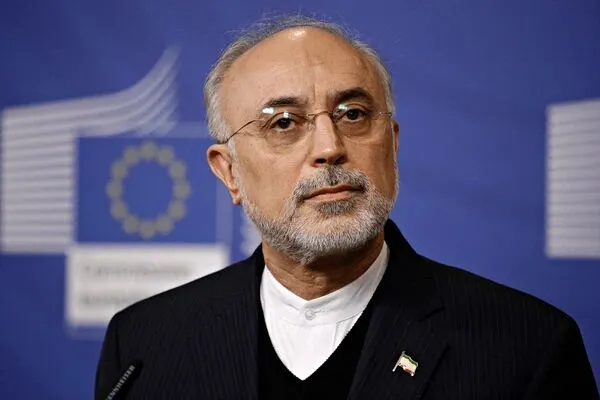
Ali Akbar Salehi—a politician, diplomat, nuclear physicist, university professor, and one of the long-standing senior managers of the Islamic Republic of Iran in scientific and diplomatic fields, born on March 24, 1949, in the city of Karbala, Iraq—is one of the few managers who, for nearly four decades within the power structure of the Islamic Republic, has played a pivotal role across several key chapters: from the nuclear file and the negotiations leading to the JCPOA, to the Ministry of Foreign Affairs, the presidency of the country's important universities, and ultimately cultural foundations. With a unique combination of specialized scientific background (a PhD in nuclear engineering from MIT), international diplomacy, and executive management, Salehi is recognized in Iranian political literature as an example of a "technocrat-diplomat."
Who is Ali Akbar Salehi?
Dr. Ali Akbar Salehi—a politician, diplomat, nuclear physicist, university professor, and one of the long-standing senior managers of the Islamic Republic of Iran in scientific and diplomatic fields, born on March 24, 1949, in the city of Karbala, Iraq—is one of the few managers who, for nearly four decades within the power structure of the Islamic Republic, has played a pivotal role across several key chapters: from the nuclear file and the negotiations leading to the JCPOA, to the Ministry of Foreign Affairs, the presidency of the country's important universities, and ultimately cultural foundations. With a unique combination of specialized scientific background (a PhD in nuclear engineering from MIT), international diplomacy, and executive management, Salehi is recognized in Iranian political literature as an example of a "technocrat-diplomat."
The significance of Ali Akbar Salehi in Iran's political-scientific history can be examined from several perspectives. First, his key role in Iran's nuclear file—particularly as a two-term head of the Atomic Energy Organization of Iran (AEOI) during the tenth administration under Mahmoud Ahmadinejad and the eleventh and twelfth administrations under Hassan Rouhani, and as one of the main architects of the 2015 nuclear deal (JCPOA)—placed him at the center of Iran's most important geopolitical file in recent decades. Second, his tenure as Minister of Foreign Affairs in the tenth administration (2011–2013), during one of the most tense periods of Iranian diplomacy, stands out as a prominent chapter in his career. Third, his extensive experience in nuclear diplomacy—ranging from representing Iran at the International Atomic Energy Agency (1998–2003) to the sensitive technical-political talks leading to the JCPOA with officials like Wendy Sherman (the US chief negotiator)—made him one of Iran's few technical negotiators who possessed a deep, simultaneous understanding of both the technical and political dimensions of the nuclear file.
Currently, since March 2025, by presidential decree and approval from the Supreme Council of the Cultural Revolution, Salehi serves as the president of the Iranology Foundation—a cultural-research institution dedicated to studies and the development of the culture, history, and civilization of Iran. This appointment, made while concurrently maintaining his position as the Vice President for Research and Deputy President of the Academy of Sciences of Iran (since September 2021), drew varied reactions in the Iranian media landscape; on one hand, it received official government backing, while on the other, critics questioned the non-specialized nature of this appointment within the field of Iranology.
Life and Background
Ali Akbar Salehi was born on March 24, 1949, in the holy city of Karbala in Iraq. His family is of Iranian origin; on his paternal side, his ancestors were from Taleqan—a mountainous and historic region northwest of Tehran on the slopes of the Alborz mountains. After migrating from Taleqan, his ancestors settled in the Baraghan region (near Karaj), and later on, his family migrated to Iraq for various reasons and settled in Karbala.
This background—being born in the traditional-religious environment of Karbala with Iranian-Taleqani roots—played a fundamental role in shaping Salehi's multicultural personality. His fluency in the Arabic language, which later took on special importance in his diplomatic career, is one of the outcomes of this background. During his youth, Salehi was raised in the environment of Karbala amid the religious and cultural activities of this major city.
Education
Salehi's educational path stands as one of the rarest academic records among senior managers of the Islamic Republic. He began his university education at one of the most reputable institutions in the region: the American University of Beirut (AUB)—one of the oldest and most prestigious universities in the Middle East—where he earned his Bachelor's degree in Physics.
Following this, Salehi went to the United States for his postgraduate studies, entering the Massachusetts Institute of Technology (MIT)—one of the world's most prestigious scientific and technical centers. At this university, he pursued his graduate studies in the field of nuclear engineering and in 1977, upon presenting his thesis titled "Resonance Region Neutronics of Unit Cells in Thermal and Fast Reactors," he successfully received his PhD in Nuclear Engineering from MIT.
This degree, particularly given MIT's global standing in nuclear physics, places Salehi among the few senior managers of the Islamic Republic who were experts and possessed academic training from top-tier global centers in one of the most specialized and sensitive technical fields. This scientific background served as one of his primary assets in the subsequent years while playing roles in Iran's nuclear file and international negotiations.
Entry into Academia and University Presidencies
Upon returning to Iran, Salehi began his academic career as a faculty member at Sharif University of Technology (formerly Aryamehr)—Iran's most prestigious technical university. He worked as a lecturer of energy engineering at this university and, over the decades, played a role in training generations of Iran's nuclear engineering students.
In addition to his teaching activities, Salehi was active in university administration. He served two terms as the president of Sharif University of Technology, a position that placed him at the helm of Iran's elite engineering education center. During his presidency at Sharif University, the institution experienced significant developments in expanding its research departments and elevating its international standing.
In addition to Sharif University, Salehi's record also includes serving as the president of Imam Khomeini International University (IKIU) in Qazvin. This university, founded in the post-revolutionary period with the objective of educating international students (particularly from Islamic countries), is considered one of Iran's prominent higher education centers at the international level.
Representation of Iran at the IAEA
Salehi's first major international role was serving as Iran's Permanent Representative to the International Atomic Energy Agency (IAEA) from 1998 to 2003. This position, entrusted to him during the reformist administration of Seyyed Mohammad Khatami, placed Salehi at the center of Iranian nuclear diplomacy during one of the nuclear file's most sensitive periods.
This period coincided with the expansion of Iran's nuclear activities—including the development of the Natanz enrichment center—and growing international concerns. As a specialized diplomat, Salehi became familiar with the technical and political aspects of the file and established an extensive communication network with IAEA officials and nuclear diplomats from various countries. This experience formed the foundation of his later roles in the nuclear file.
Deputy Secretary-General of the OIC
Following his term at the IAEA, Salehi was elevated to another international position: Deputy Secretary-General of the Organization of Islamic Cooperation (OIC). He held this responsibility from 2007 to 2009.
The OIC, with 57 member states, is considered one of the largest international organizations after the United Nations, and its second-highest position (Deputy Secretary-General) is one of the most important international posts entrusted to Iranians. This experience familiarized Salehi with the broader dimensions of international diplomacy beyond the nuclear file.
First Term as Head of the AEOI (2009–2010)
A turning point in Salehi's executive career was his appointment as Vice President and Head of the Atomic Energy Organization of Iran in 2009. This appointment, made during the tenth administration under Mahmoud Ahmadinejad, placed Salehi at the head of Iran's most critical nuclear institution.
This period coincided with major developments in Iran's nuclear file: the intensification of international sanctions, the expansion of enrichment activities, and the beginning of enhanced verification activities by the IAEA. The presence of a technical-academic expert with an MIT background at the helm of this organization signified the administration's efforts to mount a specialized defense of the nuclear program on the international stage.
Ministry of Foreign Affairs (2011–2013)
In January 2011, in a major advancement, Salehi was appointed from the presidency of the AEOI to the position of Minister of Foreign Affairs in the tenth administration. This appointment, following the dismissal of Manouchehr Mottaki, occurred within a highly tense atmosphere surrounding Iran's domestic and foreign relations.
Salehi's tenure as minister (January 2011 to August 2013) was accompanied by numerous challenges: the intensification of Western oil and banking sanctions, regional developments (particularly the Syrian crisis), relations with regional powers, and naturally, the nuclear file, which had reached one of its most complex stages at that time. Salehi's diplomatic style, characterized by a conservative approach, technical precision, and experience-based decision-making, was viewed favorably among both conservative (Principalist) and moderate factions.
Second Term as Head of the AEOI and the JCPOA (2013–2021)
With the inauguration of the eleventh administration led by Hassan Rouhani in August 2013, Salehi returned to his previous post as Vice President and Head of the Atomic Energy Organization of Iran. This return, which lasted for eight years (spanning the eleventh and twelfth administrations until September 2021), placed Salehi at the center of the most highly publicized chapter of the nuclear file: the negotiations leading to the JCPOA.
Role in the JCPOA Negotiations
Salehi played a pivotal and technical role in the nuclear negotiation process between Iran and the P5+1 countries, which intensified in 2013 and led to the signing of the Joint Comprehensive Plan of Action (JCPOA) in July 2015. While Mohammad Javad Zarif (the Minister of Foreign Affairs) led the diplomatic direction of the negotiations, Salehi, as the chief technical official, participated in bilateral and multilateral talks with IAEA officials and negotiating counterparts.
One of his prominent counterparts in these negotiations was Wendy Sherman, the US Under Secretary of State and chief negotiator. In his later accounts, Salehi shared details of his technical discussions with Sherman and other US officials, providing a look into the behind-the-scenes role of the technical negotiations.
Following the signing of the JCPOA and during its implementation phase, Salehi remained responsible for directing Iran's nuclear sector. In September 2017, ahead of the potential US withdrawal from the JCPOA by the Trump administration, he stated in an interview that if only the US withdrew from the deal and the other five nations remained committed, Tehran would also likely remain committed to the agreement—a stance that was frequently cited in subsequent years.
Salehi's Views on Uranium Stockpiles
In later narratives, Salehi pointed to important technical details regarding the nuclear program; including that producing 30 tons of enriched uranium requires 240 tons of natural uranium, and that Iran held a stockpile of 500 tons since the era of the Shah, to which another 450 tons were added after the JCPOA. He also noted the halting of a contract with Kazakhstan due to interventions by the Trump administration, and Iran's limitations in producing fuel with an enrichment level higher than 3.67% during the JCPOA era.
Activity in the Academy of Sciences and the Iranology Foundation
With the conclusion of the twelfth administration and the start of the thirteenth administration in September 2021, Salehi's tenure as head of the Atomic Energy Organization ended, and he entered a new chapter in his career.
Vice President for Research at the Academy of Sciences
Since September 2021, Salehi was appointed as the Vice President for Research and Deputy President of the Academy of Sciences of Iran. The Academy of Sciences is one of Iran's most prestigious scientific institutions, serving as the expert authority on science in the country. This position made Salehi one of Iran's senior scientific managers while shifting his activities away from the high-stress nuclear arena into a scientific-research environment.
Presidency of the Iranology Foundation
In March 2025, in a new appointment, Salehi became the president of the Iranology Foundation following approval by the Supreme Council of the Cultural Revolution and a decree by the President. The Iranology Foundation is a cultural-research institution operating in the field of studies and the development of Iranian culture, history, and civilization.
This appointment drew varied reactions. While the government spokesperson described it as "a valuable step along the path of recognizing and expanding the culture, history, and civilization of Iran," some media analysts—including in the newspaper Tabnak—criticized the non-specialized nature of Salehi's appointment in the field of Iranology, pointing out that despite his long history in scientific and diplomatic fields, he holds no formal expertise in Iranology. Critics also pointed to Salehi's age (75) and his recovery from a severe illness, suggesting that the energy required to manage this institution could face challenges.
Within the foundation's scope of activity, Salehi has participated in numerous specialized panels in recent months—including the panel "The Narrative of the Homeland in Iranian Cinema"—outlining a new approach for the foundation's research activities.
Views and Positions
Throughout his career, Ali Akbar Salehi has aligned with the moderate and technocratic spectrum of the Islamic Republic. His positions can be tracked across several key areas:
Support for Diplomacy and Realism in Negotiations
Salehi's most central position in the nuclear file domain is his support for a diplomatic approach and realism in negotiations. In one of his prominent stances, he stated: "In a negotiation, we must concede certain points so that the opposing side can present it as an achievement in their own country. If we take all the points and give nothing, there is no longer any need for negotiation." This stance reflects his pragmatic approach to nuclear diplomacy.
Conditional Optimism Toward New Nuclear Talks
In 2025, Salehi expressed optimism regarding new nuclear negotiations between Iran and the United States, but simultaneously warned against "the mischief of certain foreign actors and untimely domestic positioning." He emphasized the necessity of "swift and sound decision-making and policy formation."
Support for National Identity and a Balanced Cultural Approach
During his tenure as president of the Iranology Foundation, Salehi has emphasized that "safeguarding national identity requires an intelligent outlook free from extremes"—a stance reflecting his moderate and pragmatic approach within the cultural sphere.
Emphasis on Training for Social Responsibility
In an educational commentary, Salehi stated that "social responsibilities must be taught to students in schools so that when they grow up, they are familiar with their responsibilities and duties."
Relationship with Figures and Movements
Throughout his long career, Ali Akbar Salehi has been connected with an extensive network of Iranian political and scientific figures. Across various administrations, he played roles in the reformist government of Seyyed Mohammad Khatami (at the IAEA), the tenth government of Mahmoud Ahmadinejad (as head of the AEOI and later Foreign Minister), and the eleventh and twelfth governments of Hassan Rouhani (as head of the AEOI); this diversity of administrations signifies his non-partisan standing within the power structure.
In the realm of nuclear diplomacy, Salehi's name is tied to figures such as Mohammad Javad Zarif (the Foreign Minister of the Rouhani administration and leader of the JCPOA negotiating team), Saeed Jalili (Secretary of the Supreme National Security Council and former nuclear negotiator), Wendy Sherman (the US chief negotiator), and Yukiya Amano (the late Director General of the IAEA).
At the institutional level, his primary connections include Sharif University of Technology (his place of study and teaching), the Academy of Sciences of Iran, the Atomic Energy Organization, the Supreme Council of the Cultural Revolution (which appointed him to lead the Iranology Foundation), and the Iranology Foundation itself.
Conclusion
Dr. Ali Akbar Salehi is one of the most experienced and, at the same time, non-partisan senior managers of the Islamic Republic of Iran. He occupies a unique position through a rare combination of an excellent academic background, long experience in nuclear diplomacy, and a sustained presence within the power structure across various administrations. His career—spanning studies at MIT to the presidency of Sharif University of Technology, representation at the IAEA, Deputy Secretary-General of the OIC, two terms heading the AEOI, the Ministry of Foreign Affairs, a key role in the JCPOA negotiations, and ultimately the leadership of the Academy of Sciences and the Iranology Foundation—presents the picture of a "technocrat-diplomat" who has sat at the center of Iran's most critical technical-political files for four decades.
The distinguishing feature of Salehi, at the first level, is his specialized scientific background—a trait that sets him apart from many political managers of his era and lends a technical-expert weight to his positions on the nuclear file. At the second level, his ability to maintain his position across administrations with differing orientations (from reformist to conservative and moderate) demonstrates his diplomatic skill and non-partisan management style.
From an analytical standpoint, Salehi's career serves as an example of the role of "specialized managers" within a system where the line between technical and political roles is often blurred. Despite his continuous presence within the power structure, Salehi has strived to preserve his specialized-academic identity and utilize this identity as a source of legitimacy for performing diplomatic roles.
What remains clear from today's perspective is that despite concluding his tenure in nuclear executive management, Salehi remains active as an analytical reference in the field of Iran's nuclear file and diplomacy. At a time when Iran is experiencing a new round of nuclear negotiations and tensions, his analyses and views—relying both on past negotiation experience and backed by technical knowledge—will continue to form a part of the serious discourse surrounding this file. His presidency at the Iranology Foundation also opens a new chapter of activity in the cultural-research arena, where his managerial and scientific experience is directed toward the study of Iranian civilization.
Frequently Asked Questions (FAQs)
In what year and where was Ali Akbar Salehi born? Ali Akbar Salehi was born on March 24, 1949, in the city of Karbala in Iraq. His family is originally Iranian, and on his paternal side, they are from Taleqan (on the slopes of the Alborz), who settled in the Baraghan region after migrating from Taleqan and subsequently went to Iraq.
What is Ali Akbar Salehi's educational background? Salehi completed his undergraduate studies in physics at the American University of Beirut (AUB) and later received his PhD in Nuclear Engineering in 1977 from the Massachusetts Institute of Technology (MIT)—one of the world's most prestigious scientific institutions—with a thesis focused on "Resonance Region Neutronics of Unit Cells in Thermal and Fast Reactors."
What positions has Ali Akbar Salehi held? Among his most important positions are: Iran's Representative to the IAEA (1998–2003), Deputy Secretary-General of the OIC (2007–2009), Head of the Atomic Energy Organization of Iran across two terms (2009–2010 and 2013–2021), Minister of Foreign Affairs (January 2011 to August 2013), two terms as president of Sharif University of Technology, president of Imam Khomeini International University in Qazvin, Vice President for Research and Deputy President of the Academy of Sciences of Iran (since September 2021), and President of the Iranology Foundation (since March 2025).
What was Ali Akbar Salehi's role in the JCPOA nuclear agreement? As head of the Atomic Energy Organization during Rouhani's two terms, Salehi played a central and technical role in the negotiations leading to the JCPOA (July 2015). While Mohammad Javad Zarif led the diplomatic direction of the talks, Salehi, as the chief technical official, participated in sensitive technical-political discussions with IAEA officials and negotiating nations (including Wendy Sherman, the US chief negotiator).
Why did Ali Akbar Salehi's appointment to the Iranology Foundation cause controversy? This appointment, made in March 2025, met with varied reactions. While the government spokesperson described it as a "valuable step," some analysts pointed to the non-specialized nature of Salehi's appointment within the field of Iranology, noting that despite his long history in scientific and diplomatic fields, he holds no formal expertise in Iranology. Critics also pointed to his age (75) and his recovery from a severe illness.
What is Ali Akbar Salehi's view on nuclear negotiations? Salehi supports a diplomatic approach and realism in negotiations. In one of his positions, he emphasized: "In a negotiation, we must concede certain points so that the opposing side can present it as an achievement in their own country. If we take all the points and give nothing, there is no longer any need for negotiation." In 2025, he expressed optimism regarding new Iran-US talks but warned about "foreign mischief and untimely domestic positioning."
To which political faction does Ali Akbar Salehi belong? Salehi is situated within the moderate and technocratic spectrum of the Islamic Republic and is not tied to any specific political faction. This non-partisan standing allowed him to hold senior responsibilities across administrations with differing orientations—from the reformist government of Khatami and the conservative government of Ahmadinejad to the moderate government of Rouhani.
Is Ali Akbar Salehi still active? Yes, Ali Akbar Salehi remains active as the president of the Iranology Foundation and the Vice President for Research at the Academy of Sciences of Iran. Additionally, he appears in media and specialized panels as an analytical reference on the nuclear file and diplomacy, sharing his views regarding new Iran-US talks and cultural-research issues.
Take less than a minute, register and share your opinion under this post.
Insulting or inciting messages will be deleted.
Sign Up