
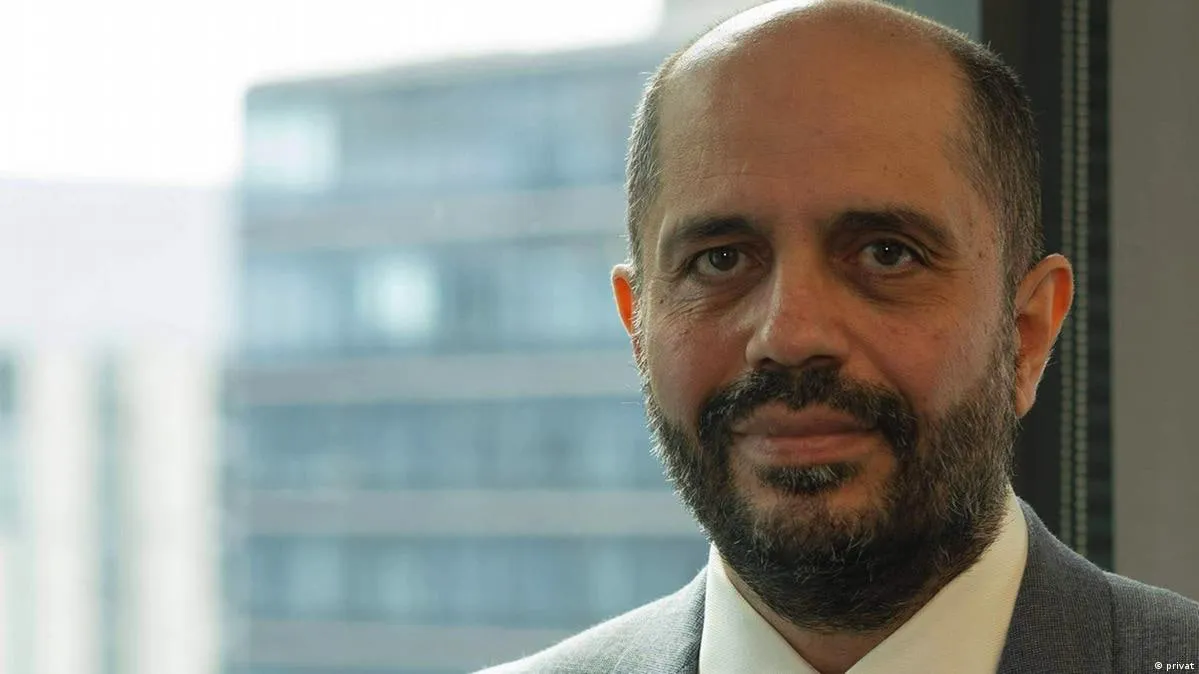
Ali Afshari, an Iranian political activist, researcher, and analyst born in 1973 in Qazvin, is one of the prominent figures of Iran’s student movement during the reform era and one of the leaders of the Office for Strengthening Unity (Daftar-e Tahkim-e Vahdat) in the late 1990s. His name in contemporary Iranian political history is tied to a series of key events.
Who is Ali Afshari?
Ali Afshari, an Iranian political activist, researcher, and analyst born in 1973 in Qazvin, is one of the prominent figures of Iran’s student movement during the reform era and one of the leaders of the Office for Strengthening Unity (Daftar-e Tahkim-e Vahdat) in the late 1990s. His name in contemporary Iranian political history is tied to a series of key events: participation in the July 1999 student unrest (18 Tir), attendance at the Berlin Conference, the formulation of the “Beyond Khatami” theory at the Gorgan gathering, repeated arrests and a prolonged period of solitary confinement, forced televised confessions followed by later revelations about interrogation practices, and eventually migration to the United States, where he became one of the prominent analysts of the opposition in Persian-language media abroad.
The importance of Afshari in modern Iranian political history can be analyzed from several perspectives. First, he represents one of the most significant intellectual shifts within the student movement in the late 1990s; a shift marked by criticism of Mohammad Khatami’s performance and a move away from unconditional alignment with the parliamentary strategy of government-aligned reformists. Second, his experience in prison and the issue of forced confessions on state television, followed by his later disclosures, are among the most important firsthand accounts of interrogation practices in Iran. Third, over roughly two decades of activity abroad, Afshari has become a prolific commentator for Persian-language international media outlets, including Radio Farda, BBC Persian, Voice of America, Euronews Persian, and Al Arabiya Persian.
Afshari currently resides in the United States. Alongside his media and research activities, he works on issues related to democracy development, human rights, contemporary Iranian history, social movements, and the political structure of the Islamic Republic of Iran. His positions in recent years are generally critical of the political system while remaining distant from extremist opposition currents.
Life and Background
Ali Afshari was born in 1973 in Qazvin. According to his own accounts in personal writings, he grew up in a culturally oriented family; his father was a literature teacher and the owner of a local weekly newspaper. His childhood and adolescence were spent in Qazvin, where his father’s library played an important role in shaping his intellectual interests.
After completing high school, he passed the national university entrance exam and was admitted to Amirkabir University of Technology (Polytechnic University of Tehran). He studied industrial engineering there and completed both his bachelor’s and master’s degrees in this field. Years later, during his stay in the United States, he earned a PhD in Systems Engineering from George Washington University.
His political activity began during his student years at Amirkabir University. He joined the Islamic Students’ Association of the university and served four terms on its central council, including three terms as its secretary. This experience became a stepping stone for his broader national role in the student movement through the Office for Strengthening Unity.
Beginning of Activity in the Office for Strengthening Unity
The Office for Strengthening Unity, established in 1979 and becoming the most influential student organization in Iran during the 1980s and 1990s, gained increased political significance after the election of Mohammad Khatami on 2 Khordad 1997 (May 1997). Afshari belonged to a new generation of leaders who became prominent after this political shift.
He served five terms as a member of the Central Council of the organization and held responsibility for its Political Unit for three terms. Between 1997 and 2000, the Office for Strengthening Unity reached its peak political influence and played an important role in supporting reformist candidates in the 2000 parliamentary elections (6th Majlis). Afshari was in charge of the organization’s election headquarters for that parliamentary election.
Role in the July 1999 (18 Tir) Events
Afshari was one of the key coordinating figures in the 1999 Tehran University dormitory protests. According to available accounts, he was responsible for organizing student demonstrations and sit-in programs at Tehran University and its dormitories on July 11 and July 13, 1999, which were organized by the Office for Strengthening Unity.
His role in this crisis helped establish him as one of the leading figures of a new generation of the student movement. However, this same role later became a target of criticism in conservative political narratives in Iran.
Berlin Conference and Legal Cases
A turning point in Afshari’s political life occurred in April 2000 when he attended the “Iran After the Elections” conference in Berlin, organized by the Heinrich Böll Foundation affiliated with Germany’s Green Party.
Afshari participated as the political secretary of the Office for Strengthening Unity alongside figures such as Akbar Ganji, Ezzatollah Sahabi, Mahmoud Dowlatabadi, Mehrangiz Kar, Shahla Lahiji, Jamileh Kadivar, and others. During the conference, some opposition activists disrupted the event with protests and symbolic actions, which were widely broadcast in Iranian media and used by conservative outlets to criticize reformists.
After returning to Iran in May 2000, Afshari was arrested and interrogated. After about two months in detention, he was temporarily released on bail of 50 million tomans. This arrest marked the beginning of sustained judicial and political pressure against him.
The “Beyond Khatami” Theory
In August 2000, at a meeting of student Islamic associations in Gorgan, Afshari delivered a controversial speech in which he argued for the need to critically reassess Mohammad Khatami’s performance and claimed that the student movement should not remain confined within the parliamentary framework of government-aligned reformists. This position became known as the “Beyond Khatami” theory.
In later years, particularly after the 1999 student unrest and the failure of reformist bills during Khatami’s first term, this idea gained traction among more radical segments of the student movement. Critics from moderate reformist circles argued that this position weakened the reformist camp and indirectly strengthened conservative forces.
باشه، این ترجمه انگلیسی متن کاملت:
Arrest in December 2000 and Solitary Confinement Period
In December 2000, Afshari was arrested after delivering a speech at a student gathering titled “Protest Against Political Stagnation” at Amirkabir University of Technology, organized by the Office for Strengthening Unity. The official charge was his sharp and explicit criticism of the leadership of the Islamic Republic and his call for pursuing reforms outside parliamentary and electoral frameworks.
This arrest marked the beginning of one of the longest periods of solitary confinement for a student activist during the reform era. According to Afshari’s later account, he spent 328 days in solitary confinement and in various security detention facilities, including Detention Center 59 of the Islamic Revolutionary Guard Corps (located in Ashrafi Barracks). In his account of this period, reflected in later open letters, severe physical and psychological torture, pressure to confess, and threats of execution were among the defining features of his detention.
Forced Confession on Television and Later Disclosure
One of the most sensitive chapters of Afshari’s political life was his forced televised confession in 2001. After months in solitary confinement, he appeared in a televised interview broadcast by Iranian state television, in which he expressed regret for his past actions and made accusations against reformist figures.
This confession, made during a highly tense political atmosphere and amid government pressure on the reform movement, initially dealt a heavy blow to his political credibility and to the Office for Strengthening Unity. However, shortly after the broadcast, Afshari’s family announced that he had been under pressure and that the confession had resulted from abnormal psychological and physical conditions during detention.
Afshari, who was transferred again to IRGC Detention Center 59 after this incident, carried out an unprecedented act of disclosure while still in solitary confinement there. According to his account, during this period of detention he reached the brink of suicide on several occasions, but eventually regained his resilience and decided to expose the interrogation process.
After his release in December 2001, Afshari publicly revealed the torture he had endured in detention, both in a press interview and in an open letter to Ayatollah Mahmoud Hashemi Shahroudi, then head of the Judiciary. In these disclosures, he named “Reza Sarradj” as his interrogator—a figure who later became known in Iran’s security and media apparatus.
This disclosure, one of the few documented first-hand prisoner accounts of interrogation practices in post-1979 Iran, gained a significant place in the memory of the student movement and in Iranian human rights literature.
Multiple Legal Cases
After his release, several additional legal cases were opened against Afshari. The court case related to the Berlin Conference sentenced him to one year in prison. In March 2002, he was transferred to the general ward of Evin Prison. At the same time, a new case was opened against him based on a complaint by General Heydar Lotfian, then head of the national police, resulting in another one-year sentence. This continuous cycle of legal pressure became one of the clearest examples of sustained judicial persecution of prominent activists of that period.
Migration to the United States and Analytical Career
Due to increasing pressure and restrictions on his academic and professional life after years of imprisonment, Ali Afshari left Iran in 2005. He initially moved to Dublin, Ireland, and later went to the United States to continue his studies. There, he studied Systems Engineering at George Washington University and earned a PhD.
In 2006, Afshari received the Hellman/Hammett Grant from Human Rights Watch—an annual award given to writers and activists who have faced persecution for expressing their views. In the same year, he worked as a researcher at the National Endowment for Democracy (NED).
From this period onward, Afshari became one of the prominent Iranian analysts based in Washington. He has regularly published articles and appeared in interviews across Persian-language media, including Radio Farda, BBC Persian, Voice of America, Euronews Persian, Rooz Online, Radio Zamaneh, and Al Arabiya Persian. His main analytical fields include the political structure of the Islamic Republic, Iran–US relations, the nuclear issue, domestic Iranian developments, contemporary history, social movements, human rights, and democratic discourse.
He has also been involved in organizing and designing multiple political and academic conferences in the United States. His participation in the “Friends of Iranian Culture Association” in Washington, D.C., and his numerous lectures at universities and research institutions form part of his intellectual activities during his time in the US.
Views and Positions
Over two decades of intellectual activity abroad, Ali Afshari has framed his views within a form of “democratic republicanism, secularism, and human rights advocacy.” While strongly critical of the Islamic Republic’s structure, he has also distanced himself from extremist opposition groups, advocating instead for civic struggle, human rights discourse, and democratic pressure.
Critique of the Political System of the Islamic Republic
Afshari has repeatedly challenged the legal and institutional structure of power in the Islamic Republic, including the doctrine of Velayat-e Faqih, the Guardian Council, and the system of electoral oversight (supervision by approval). He generally argues that fundamental reform of this structure requires constitutional change, which is impossible within the current framework. Based on his published positions, the experiences of the Khatami and Rouhani administrations demonstrate that structural constraints ultimately limit reformist approaches.
Iran–US Relations and Nuclear Issue
In analyses of Iran–US relations, Afshari has maintained a critical stance toward both sides. During different periods—whether the JCPOA negotiations, the Trump administration’s “maximum pressure” campaign, or the post–US withdrawal era—he has highlighted both strategic miscalculations by Iran and limitations of US policy. In recent years, his analysis of renewed regional tensions and prospects for negotiation has been widely discussed in Persian-language media.
Relationship with Opposition and Political Currents
Afshari is known for distancing himself from monarchist or armed opposition groups. At the same time, he has also criticized various segments of the diaspora opposition as well as certain reformist approaches inside Iran. This independent stance has at times placed him at the intersection of criticism from multiple sides.
Controversies and Criticism
Afshari’s political and media career has not been without controversy. In media outlets close to Iran’s conservative establishment, he has been portrayed as a key figure of “infiltration” within the student movement. His role in the July 1999 student protests, the Berlin Conference, and the “Beyond Khatami” theory have been cited as examples of alleged deviation within the student movement. Claims have also been made about financial links to certain figures, which Afshari and his supporters have denied.
On the other hand, parts of the reformist camp later viewed his early “Beyond Khatami” thesis as a factor that weakened reformist cohesion, while more radical student activists considered it a realistic recognition of structural limitations of reform from within.
The televised confession of 2001 and his subsequent retraction have also remained a subject of debate. Many human rights activists regard his later disclosures as an act of resistance under interrogation pressure, while official narratives continue to reference his original confession.
Publications and Research Activities
Afshari has published numerous analytical writings on topics including the structure of power in the Islamic Republic, Iranian contemporary history, social movements, Iran’s relations with global powers, ethnic issues, democratic discourse, and human rights.
Alongside regular contributions to Persian-language news websites, his appearances on international Persian-language TV programs such as BBC Persian, Voice of America, and Euronews Persian constitute a major part of his media activity. His personal website (aliafshari.com) also archives his writings and analyses.
Networks and Connections
During his student years in the Office for Strengthening Unity, Afshari worked alongside figures such as Akbar Attri, Abdullah Momeni, Mehdi Amini-Zadeh, Reza Delbari, and Ali Tavakoli, among others. His role in organizing the 1999 protests was part of this collective activity.
During the Berlin Conference, participants included Akbar Ganji, Ezzatollah Sahabi, Mehrangiz Kar, Shahla Lahiji, Jaleh Kadivar, and others who later became part of shared legal proceedings. In his detention accounts, names such as Saeed Mortazavi and Reza Sarradj appear.
In exile, Afshari has collaborated with Iranian journalists and analysts such as Mehdi Mohseni, Reza Haghighat-Nejad, and Ali-Reza Nourizadeh.
Conclusion
Ali Afshari is a member of the Iranian student generation of the 1990s whose political trajectory reflects that generation’s broader experience: early optimism during the Khatami era, confrontation with structural constraints in the 1999 student protests, imprisonment and interrogation, forced confession and later disclosure, and eventual exile and continued activism abroad.
Depending on perspective, he is either seen as a symbol of a democratic-minded student generation that paid a heavy price for its aspirations, or as a controversial figure whose early political positions had complex effects on Iran’s reform movement. Historically, however, his name is firmly associated with several key episodes in Iran’s recent political history.
Today, he is regarded as a prolific and independent analyst in Persian-language media, focusing on structural causes of Iran’s crises and possible paths toward democratic transition.
Take less than a minute, register and share your opinion under this post.
Insulting or inciting messages will be deleted.
Sign Up