
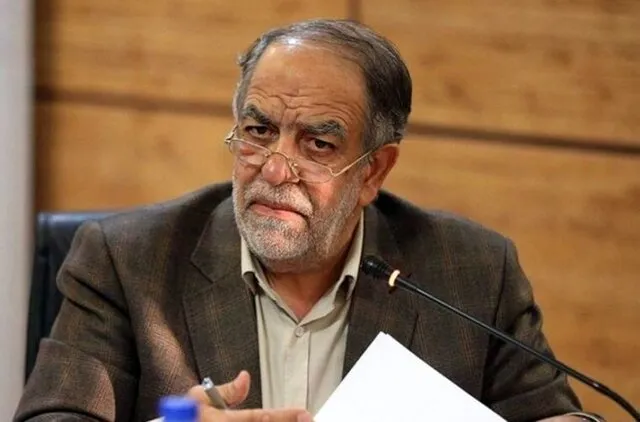
Engineer Akbar Torkan was a prominent Iranian centrist politician, a mechanical engineer and graduate of Sharif University of Technology, the former Minister of Defense and Armed Forces Logistics in the first administration of Hashemi Rafsanjani (as the "only civilian to reach the position of Minister of Defense in the Islamic Republic of Iran"), the former Minister of Roads and Transportation in the second administration of Hashemi Rafsanjani, the former Governor of Ilam and Hormozgan provinces, a founding member of the Moderation and Development Party of Iran, the former Senior Advisor to President Hassan Rouhani, the former Secretary of the Supreme Council of Free Trade-Industrial Zones, the former Acting Head of the Iranian Space Agency, and the former Head of the Construction Engineering Organization. He was one of the most widely discussed and distinctive figures combining engineering, executive, and political centrism in post-revolutionary Iran over four decades. From serving as the deputy head of Rouhani's campaign in 2013 to serving as Senior Advisor to the President for the eight years of the "Prudence and Hope" government, he was considered one of Rouhani's closest advisors. He was also active in Mir-Hossein Mousavi's campaign in the 2009 elections and supported Ali Akbar Nategh-Nouri in 1997. Torkan passed away on May 16, 2021, at the age of 69 due to diabetes.
Who is Akbar Torkan?
Engineer Akbar Torkan (born August 23, 1952, in Tehran — died May 16, 2021, at the age of 69 due to diabetes) was a prominent Iranian centrist politician, a distinguished mechanical engineer and graduate of Sharif University of Technology, the former Minister of Defense and Armed Forces Logistics in the first administration of Akbar Hashemi Rafsanjani (as the "only civilian to reach the position of Minister of Defense and Armed Forces Logistics in the Islamic Republic of Iran"), the former Minister of Roads and Transportation in the second administration of Akbar Hashemi Rafsanjani, the former Governor of Ilam from July 1981 to August 1982, the former Governor of Hormozgan from July 1983 to February 1985, the former Deputy Minister of Petroleum in the first cabinet of Mahmoud Ahmadinejad for four years, a prominent founding member of the Moderation and Development Party of Iran, the former Senior Advisor to President Hassan Rouhani, the former Secretary of the Supreme Council of Free Trade-Industrial and Special Economic Zones in the "Prudence and Hope" government, the former Acting Head of the Iranian Space Agency, a former member of the Supreme Council for Iranian Affairs Abroad, the former Deputy for International Affairs of the Presidency, a former member of the Non-Aligned Movement secretariat, the former Head of the Construction Engineering Organization from February 5, 2014, the former Deputy Head of Hassan Rouhani's campaign in the 11th presidential election in 2013, the former Head of the President's Advisory Group in the "Prudence and Hope" government, a founding member of the University of North in Amol, a former member of the Knowledge-Based Economy and Investment Council of the Islamic Azad University, a former member of the Board of Directors of the Social Security Investment Company (Shasta), a prominent figure in Mir-Hossein Mousavi's campaign in the 10th presidential election in 2009, a prominent figure supporting Ali Akbar Nategh-Nouri in the 1997 presidential election, a unique figure as the "only civilian Minister of Defense in post-revolutionary Iran," and at the same time one of the most widely discussed, prominent, and distinctive figures combining engineering, executive, and centrist politics in post-revolutionary Iran over four decades, he was among the central figures of the engineering-economics-centrist discourse in contemporary Iran.
Engineer Akbar Torkan, with a unique path—from a distinguished family-cultural background in Tehran, the capital of Iran, to pursuing a distinguished academic educational path that included graduation in mechanical engineering from Sharif University of Technology in 1970—which formed the foundation of his lasting engineering identity—to taking on prominent provincial positions in the early post-revolutionary years, including the Governorship of Ilam from July 1981 to August 1982 and the Governorship of Hormozgan from July 1983 to February 1985, to facing the notable transformative event in the first administration of Akbar Hashemi Rafsanjani, in which he, as the "only civilian to reach the position of Minister of Defense and Armed Forces Logistics in the Islamic Republic of Iran," formed the foundation of his notable defense identity, to taking on the notable position of Minister of Defense and Armed Forces Logistics in the first administration of Hashemi Rafsanjani during the decisive post-war and reconstruction era, to taking on the notable position of Minister of Roads and Transportation in the second administration of Hashemi Rafsanjani—which formed the foundation of his notable ministerial persistence, to his notable participation in the founding of the Moderation and Development Party of Iran—one of the most prominent post-revolutionary centrist parties in Iran and the main party supporting Hassan Rouhani—to his notable support for Ali Akbar Nategh-Nouri's candidacy in the 1997 presidential election—which is among the most controversial cases of support for a right-wing candidate in the middle period of Torkan's career—to taking on the notable position of Deputy Minister of Petroleum in the first cabinet of Mahmoud Ahmadinejad for four years—which is among the most controversial cases of centrists' cooperation with Ahmadinejad's government—to his notable dismissal on the eve of the 2009 presidential election, to his active and notable presence in Mir-Hossein Mousavi's campaign in the 10th presidential election in 2009 and voting for Mir-Hossein Mousavi—which formed the foundation of his lasting transition to the reformist-centrist current—to taking on the notable position of Deputy Head of Hassan Rouhani's campaign in the 11th presidential election in 2013—which formed the foundation of his lasting and close relationship with Hassan Rouhani—to taking on the notable position of Head of the President's Advisory Group after Rouhani's victory in 2013, to taking on multiple notable positions by decree of President Rouhani, including Advisor to the President, Secretary of the Supreme Council of Free Trade-Industrial and Special Economic Zones, Acting Head of the Iranian Space Agency, member of the Supreme Council for Iranian Affairs Abroad, Deputy for International Affairs of the Presidency, and member of the Non-Aligned Movement secretariat, to taking on the notable position of Head of the Construction Engineering Organization by decree of Hassan Rouhani on February 5, 2014, to his notable membership in the founding board of the University of North in Amol and the Knowledge-Based Economy and Investment Council of the Islamic Azad University, to his notable membership on the Board of Directors of the Social Security Investment Company (Shasta)—as a prominent architect of one of Iran's most important investment companies—to continuing his sustained activities as Senior Advisor to Hassan Rouhani during the 11th and 12th governments, and finally, to facing his notable diabetes disease and passing away on May 16, 2021, at the age of 69—which is among the most regrettable deaths of prominent centrists in the contemporary period—he became one of the most enduring and widely discussed figures combining engineering, executive, and centrist politics in post-revolutionary Iran.
The importance of Engineer Akbar Torkan in Iran's contemporary historical-political sphere can be examined from several angles. First, the only civilian Minister of Defense and Armed Forces Logistics in the Islamic Republic of Iran—as a figure who is among the most unique figures of the post-revolutionary Ministry of Defense—was one of the notable aspects of his phenomenology. Second, as a founding member of the Moderation and Development Party of Iran—as a prominent architect of the most prominent post-revolutionary centrist party and the main party supporting Hassan Rouhani—was one of the notable aspects of his party activity. Third, as the notable Senior Advisor to President Hassan Rouhani and Secretary of the Supreme Council of Free Zones—as a figure who was among the most prominent advisors of Rouhani's government—was one of the notable aspects of his executive persistence. Fourth, as Governor of two prominent provinces and Minister of two prominent ministries in Hashemi Rafsanjani's governments—as a figure who was among the most prominent executive figures of post-revolutionary Iran—was one of the notable aspects of his ministerial persistence. Fifth, as the notable Head of the Construction Engineering Organization—as a prominent architect of one of the most important post-revolutionary engineering organizations in Iran—was one of the notable aspects of his engineering legacy.
Important Note: Engineer Akbar Torkan's career and performance were met with different views in the Persian-language media-political space. In the discourse of centrist supporters, he was known as the "civilian Minister of Defense," a "prominent Senior Advisor to Rouhani," and a "founding member of the Moderation and Development Party." In the discourse of prominent critics from the principlist faction, his performance during his tenure as Deputy Minister of Petroleum under Ahmadinejad—especially regarding his dismissal on the eve of the 2009 election—was criticized. In the discourse of critics from media activists, the notable phenomenon of his political transition from supporting Nategh-Nouri in 1997 to Mousavi's campaign in 2009 and then to the Deputy Head of Rouhani's campaign in 2013—which is among the most controversial cases of post-revolutionary political transition—has been noted. In the discourse of friends and associates, his notable contributions in his final years as Senior Advisor to Rouhani and Head of the Construction Engineering Organization remained widely discussed. This profile presents the narrative published in prominent Persian-language media-historical sources with an analytical-neutral position.
Life and Family Background
Engineer Akbar Torkan was born on August 23, 1952, in the city of Tehran—the capital of Iran.
According to published reports: "Akbar Torkan (August 23, 1952 – May 16, 2021) was an Iranian politician, a founding member of the Moderation and Development Party..."
Education
Engineer Akbar Torkan had a distinguished academic educational path.
Graduation from Sharif University of Technology (1970)
According to published reports: "He graduated in mechanical engineering from Sharif University of Technology in 1970."
Sharif University of Technology was among the most prominent technical-scientific universities in Iran and the alma mater of many prominent engineering-political figures of post-revolutionary Iran.
This educational background formed the foundation of Torkan's lasting engineering identity.
Governorship of Ilam and Hormozgan (1981-1984)
The most notable chapter of the beginning of Torkan's post-revolutionary career was taking on prominent provincial positions during the decisive war period.
Governor of Ilam (July 1981 - August 1982)
According to published reports: "He served as the Governor of Ilam from July 1981 to August 1982 and as the Governor of Hormozgan from July 1983 to February 1985."
Ilam was among the most prominent border-war provinces of Iran during the Iran-Iraq war.
Governor of Hormozgan (July 1983 - February 1985)
After the end of his governorship in Ilam, Torkan was appointed as the Governor of Hormozgan—one of Iran's most prominent southern-coastal provinces.
This provincial experience formed the foundation of Torkan's notable executive-provincial identity.
Ministry of Defense and Armed Forces Logistics (First Administration of Hashemi Rafsanjani)
The central historical-destiny chapter of Torkan's defense career was taking on the notable position of Minister of Defense and Armed Forces Logistics in the first administration of Akbar Hashemi Rafsanjani.
According to published reports: "He was the Minister of Defense and Armed Forces Logistics in the first administration of Akbar Hashemi Rafsanjani..." and "Akbar Torkan was the only civilian to reach the position of Minister of Defense and Armed Forces Logistics."
This position, which is among the most unique cases of the post-revolutionary Ministry of Defense, formed the foundation of Torkan's notable defense identity.
Ministry of Roads and Transportation (Second Administration of Hashemi Rafsanjani)
The most notable subsequent chapter of Torkan's ministerial career was taking on the notable position of Minister of Roads and Transportation in the second administration of Akbar Hashemi Rafsanjani.
According to published reports: "[Torkan]... was the Minister of Roads and Transportation in his second administration."
This position formed the foundation of Torkan's notable ministerial persistence.
Support for Ali Akbar Nategh-Nouri (1997)
The most notable controversial chapter of Torkan's electoral career was his notable support for Ali Akbar Nategh-Nouri's candidacy in the 1997 presidential election.
According to published reports: "He supported Ali Akbar Nategh-Nouri's candidacy in the 1997 presidential election."
This support is among the most controversial cases of support for a right-wing candidate in Torkan's lasting career.
Deputy Ministry of Petroleum in Ahmadinejad's Cabinet (until 2009)
The most notable controversial chapter of Torkan's post-reform career was taking on the position of Deputy Minister of Petroleum in the first cabinet of Mahmoud Ahmadinejad for four years.
According to published reports: "Akbar Torkan served as Deputy Minister of Petroleum in the first cabinet of Mahmoud Ahmadinejad for four years, and was eventually dismissed on the eve of the 2009 presidential election."
This position is among the most controversial cases of centrists' cooperation with Ahmadinejad's government.
Notable Activity in Mousavi's Campaign (2009)
The central historical-destiny chapter of Torkan's political transition was his active and notable presence in Mir-Hossein Mousavi's campaign in the 10th presidential election in 2009.
According to published reports: "He was active in Mir-Hossein Mousavi's campaign in the 2009 election and voted for him."
This presence formed the foundation of his lasting transition to the reformist-centrist current.
Deputy Head of Rouhani's Campaign (2013)
The central historical-destiny chapter of Torkan's electoral career was taking on the notable position of Deputy Head of Hassan Rouhani's campaign in the 11th presidential election in 2013.
According to published reports: "He began his activity as the Deputy Head of Hassan Rouhani's campaign in the 2013 presidential election."
This position formed the foundation of his lasting and close relationship with Hassan Rouhani.
Multiple Notable Positions in Rouhani's Government (After August 3, 2013)
The most notable chapter of Torkan's executive career in Rouhani's government was taking on multiple notable positions by decree of President Hassan Rouhani.
According to published reports: "Shortly after his inauguration, President Hassan Rouhani appointed him as Advisor to the President and Secretary of the Supreme Council of Free Trade-Industrial and Special Economic Zones, Acting Head of the Iranian Space Agency, member of the Supreme Council for Iranian Affairs Abroad, Deputy for International Affairs of the Presidency, and member of the Non-Aligned Movement secretariat."
And "with the formation of the 'Prudence and Hope' government in the same year, he began his activity as the Head of the President's Advisory Group."
These multiple positions are among the most notable cases of multiple executive positions in Rouhani's government.
Head of the Construction Engineering Organization (February 5, 2014)
According to published reports: "On February 5, 2014, Hassan Rouhani appointed Akbar Torkan as the Head of the Construction Engineering Organization by decree."
Membership on the Board of Directors of Shasta
According to published reports: "He also served as a member of the Board of Directors of the Social Security Investment Company (Shasta)."
Shasta is among Iran's most prominent investment companies.
Regrettable Death (May 16, 2021)
The central regrettable chapter of Torkan's career was his death on May 16, 2021, at the age of 69 due to diabetes.
According to published reports: "Akbar Torkan suffered from kidney disease and was hospitalized in his final days, and ultimately passed away on the morning of Monday, May 16, 2021, due to diabetes."
This death is among the most regrettable deaths of prominent centrists in the contemporary period.
Intellectual-Political Framework
Throughout his long engineering-executive-political career, Engineer Akbar Torkan had formulated a distinctive intellectual-political framework.
Engineering Centrism
Torkan's most central intellectual framework was engineering centrism—a framework that, while maintaining commitment to the Islamic Republic system, emphasized specialized-engineering management, economic development, and the discourse of balance between political currents.
Engineering Economics
A distinguishing feature of Torkan's framework was his lasting commitment to engineering economics—reflected throughout his long executive career in the Ministry of Defense, the Ministry of Roads and Transportation, the Deputy Ministry of Petroleum, and the Secretariat of the Supreme Council of Free Zones—which was one of the notable aspects of his discourse.
Sustained Political Transition
Another distinguishing feature of Torkan's framework was his sustained political transition from supporting Nategh-Nouri in 1997 to Mousavi's campaign in 2009 and then to the Deputy Head of Rouhani's campaign in 2013—which is among the most controversial cases of post-revolutionary political transition in Iran—which was one of the notable aspects of his phenomenology.
Connections with Figures and Currents
Engineer Akbar Torkan was situated within a widely discussed network of political-executive-party connections with prominent figures of the Islamic Republic of Iran.
Akbar Hashemi Rafsanjani
Torkan's most central political relationship was his lasting relationship with Akbar Hashemi Rafsanjani—under whom Torkan served as Minister of Defense and Minister of Roads and Transportation in his two administrations.
Hassan Rouhani
The most notable lasting political relationship of Torkan was his lasting relationship with Hassan Rouhani—which began with his role as Deputy Head of Rouhani's campaign in 2013 and continued through 8 years of Rouhani's government with his senior advisory role and multiple positions.
Prominent Figures of the Moderation and Development Party
At the structure of the Moderation and Development Party, Torkan's notable relationships with Mahmoud Vaezi, Mohammad Baqer Nobakht, and other prominent figures of this party formed his lasting party network.
Mir-Hossein Mousavi
Among Torkan's most notable relationships was his notable support for Mir-Hossein Mousavi's candidacy in 2009—which formed the foundation of his transition to the reformist-centrist current.
Ali Akbar Nategh-Nouri
Among Torkan's lasting early relationships was his notable support for Ali Akbar Nategh-Nouri's candidacy in 1997.
Prominent Figures of Rouhani's Government
At the structure of Rouhani's 11th and 12th governments, Torkan's notable relationships with Eshaq Jahangiri, Mohammad Javad Zarif, Mahmoud Vaezi, Mohammad Baqer Nobakht, and other prominent centrist figures formed his lasting governmental network.
Conclusion
Engineer Akbar Torkan was one of the most widely discussed, prominent, and distinctive figures combining engineering, executive, and centrist politics in post-revolutionary Iran over four decades. With a unique combination of a distinguished family-cultural background in Tehran, a distinguished education in mechanical engineering from Sharif University of Technology, the Governorship of Ilam and Hormozgan, the notable Ministry of Defense and Armed Forces Logistics in the first administration of Hashemi Rafsanjani as the "only civilian to reach the position of Minister of Defense and Armed Forces Logistics in the Islamic Republic of Iran," the notable Ministry of Roads and Transportation in the second administration of Hashemi Rafsanjani, membership in the founding of the Moderation and Development Party of Iran as the main party supporting Hassan Rouhani, notable support for Ali Akbar Nategh-Nouri's candidacy in the 1997 election, the Deputy Ministry of Petroleum in the first cabinet of Mahmoud Ahmadinejad for four years, active and notable presence in Mir-Hossein Mousavi's campaign in the 2009 election, the Deputy Head of Hassan Rouhani's campaign in the 2013 election, the Senior Advisory role to President Hassan Rouhani, the Secretariat of the Supreme Council of Free Trade-Industrial and Special Economic Zones, the Acting Head of the Iranian Space Agency, membership in the Supreme Council for Iranian Affairs Abroad, the Deputy for International Affairs of the Presidency, membership in the Non-Aligned Movement secretariat, the Head of the President's Advisory Group in the "Prudence and Hope" government, the Head of the Construction Engineering Organization from February 5, 2014, by decree of Hassan Rouhani, membership in the founding board of the University of North in Amol, membership in the Knowledge-Based Economy and Investment Council of the Islamic Azad University, membership on the Board of Directors of the Social Security Investment Company, and finally, his regrettable death on May 16, 2021, at the age of 69 due to diabetes, he occupied a unique position in the contemporary political-executive-engineering structure of Iran.
Torkan's distinguishing feature, on the first level, as the only civilian Minister of Defense and Armed Forces Logistics in the Islamic Republic of Iran—as a figure who is among the most unique figures of the post-revolutionary Ministry of Defense—was one of the notable aspects of his phenomenology. On the second level, as a founding member of the Moderation and Development Party of Iran—as a prominent architect of the most prominent post-revolutionary centrist party and the main party supporting Hassan Rouhani—was one of the notable aspects of his party activity. On the third level, as the notable Senior Advisor to President Hassan Rouhani and Secretary of the Supreme Council of Free Zones—as a figure who was among the most prominent advisors of Rouhani's government—was one of the notable aspects of his executive persistence. On the fourth level, as Governor of two prominent provinces and Minister of two prominent ministries in Hashemi Rafsanjani's governments—as a figure who was among the most prominent executive figures of post-revolutionary Iran—was one of the notable aspects of his ministerial persistence. On the fifth level, as the notable Head of the Construction Engineering Organization—as a prominent architect of one of the most important post-revolutionary engineering organizations in Iran—was one of the notable aspects of his engineering legacy.
From an analytical perspective, Engineer Akbar Torkan's position exemplified the phenomenon of the "prominent centrist engineer-politician with a combined provincial-ministerial-executive-party career, with a distinguished engineering background from Sharif University of Technology, and the unique phenomenon of the 'only civilian Minister of Defense'" in the post-revolutionary political-executive-engineering history of Iran—a phenomenon in which a figure with a prominent academic background from Sharif, over more than four decades of activity, played a sustained role in various provincial, ministerial, party, executive, and finally advisory arenas. This pattern, which was relatively unique among prominent centrist politicians of the Islamic Republic, found a special reflection in Torkan through his role as the only civilian Minister of Defense, Minister of Roads and Transportation in the second Hashemi administration, Senior Advisor to Rouhani, a founding member of the Moderation and Development Party, and Head of the Construction Engineering Organization.
What is clear from today's perspective is that the topics Torkan had addressed in his career and discourse—from engineering centrism, engineering economics, sustained political transition, the development of free zones, and finally, his lasting challenges with the principlist faction regarding his performance in Ahmadinejad's government and his transition to the centrist current—remain among the topics of contemporary Persian-language political-executive discourse. In a situation where Iran is in one of its most tense periods of political-historical discourse—particularly after the 2022 uprising, the 12-day Iran-Israel war in June 2025, the U.S.-Israel war with Iran in February-March 2026, the assassination of Seyyed Ali Khamenei, the selection of Seyyed Mojtaba Khamenei as the third Supreme Leader, and the 14th government of Masoud Pezeshkian—Torkan's lasting career and legacy, with a combination of the only civilian Minister of Defense in post-revolutionary Iran, Minister of Roads and Transportation in the second Hashemi administration, Senior Advisor to Rouhani, a founding member of the Moderation and Development Party, and Head of the Construction Engineering Organization, remains one of the distinctive references of contemporary political-executive-engineering discourse in Persian-language media.
Frequently Asked Questions
Who is Engineer Akbar Torkan?
Engineer Akbar Torkan (born August 23, 1952, in Tehran — died May 16, 2021) was a prominent Iranian centrist politician, a distinguished mechanical engineer and graduate of Sharif University of Technology, the former Minister of Defense and Armed Forces Logistics in the first administration of Hashemi Rafsanjani, the former Minister of Roads and Transportation in the second administration of Hashemi Rafsanjani, a founding member of the Moderation and Development Party, and the former Senior Advisor to President Hassan Rouhani.
What was Torkan's educational background?
According to published reports: "He graduated in mechanical engineering from Sharif University of Technology in 1970."
Why is Torkan known as the "only civilian Minister of Defense"?
According to published reports: "Akbar Torkan was the only civilian to reach the position of Minister of Defense and Armed Forces Logistics." This phenomenon is among the most unique cases of the post-revolutionary Ministry of Defense.
What were Torkan's most important previous positions?
Torkan's prominent positions included: the Governorship of Ilam, the Governorship of Hormozgan, the Ministry of Defense and Armed Forces Logistics in the first administration of Hashemi Rafsanjani, the Ministry of Roads and Transportation in the second administration of Hashemi Rafsanjani, the Deputy Ministry of Petroleum in the first cabinet of Ahmadinejad, the Deputy Head of Rouhani's campaign in 2013, the Senior Advisory role to President Rouhani, the Secretariat of the Supreme Council of Free Zones, the Acting Head of the Iranian Space Agency, and the Head of the Construction Engineering Organization.
What was Torkan's role in the 1997 election?
According to published reports: "He supported Ali Akbar Nategh-Nouri's candidacy in the 1997 presidential election."
What was Torkan's role in the 2009 election?
According to published reports: "He was active in Mir-Hossein Mousavi's campaign in the 2009 election and voted for him."
What was Torkan's role in the 2013 election?
According to published reports: "He began his activity as the Deputy Head of Hassan Rouhani's campaign in the 2013 presidential election, and with the formation of the 'Prudence and Hope' government in the same year, he began his activity as the Head of the President's Advisory Group."
When did Torkan become Head of the Construction Engineering Organization?
According to published reports: "On February 5, 2014, Hassan Rouhani appointed Akbar Torkan as the Head of the Construction Engineering Organization by decree."
When did Torkan pass away?
According to published reports: "Akbar Torkan suffered from kidney disease and was hospitalized in his final days, and ultimately passed away on the morning of Monday, May 16, 2021, due to diabetes." Torkan passed away at the age of 69.
What was Torkan's intellectual-political framework?
Torkan's most central intellectual-political framework included: engineering centrism, engineering economics, sustained political transition, and commitment to the Islamic Republic system.
What distinctive feature existed in Torkan's career?
A distinctive feature of Torkan's career was his role as the only civilian Minister of Defense and Armed Forces Logistics in the Islamic Republic of Iran, a founding member of the Moderation and Development Party, Senior Advisor to Rouhani, Governor of two provinces, Minister of two ministries, and Head of the Construction Engineering Organization—as a figure who was among the most prominent figures combining engineering, executive, and centrist politics in post-revolutionary Iran.
What discursive challenges were raised about Torkan's career?
Among the most important discursive challenges about Torkan's career were: 1) the controversial challenge of his notable political transition from supporting Nategh-Nouri in 1997 to Mousavi's campaign in 2009 and then to the Deputy Head of Rouhani's campaign in 2013, 2) the lasting challenges regarding his Deputy Ministry of Petroleum in Ahmadinejad's first cabinet for four years, 3) his dismissal on the eve of the 2009 election, 4) challenges related to the multiplicity of his executive positions in Rouhani's government, and 5) challenges related to his performance at the Construction Engineering Organization
Take less than a minute, register and share your opinion under this post.
Insulting or inciting messages will be deleted.
Sign Up