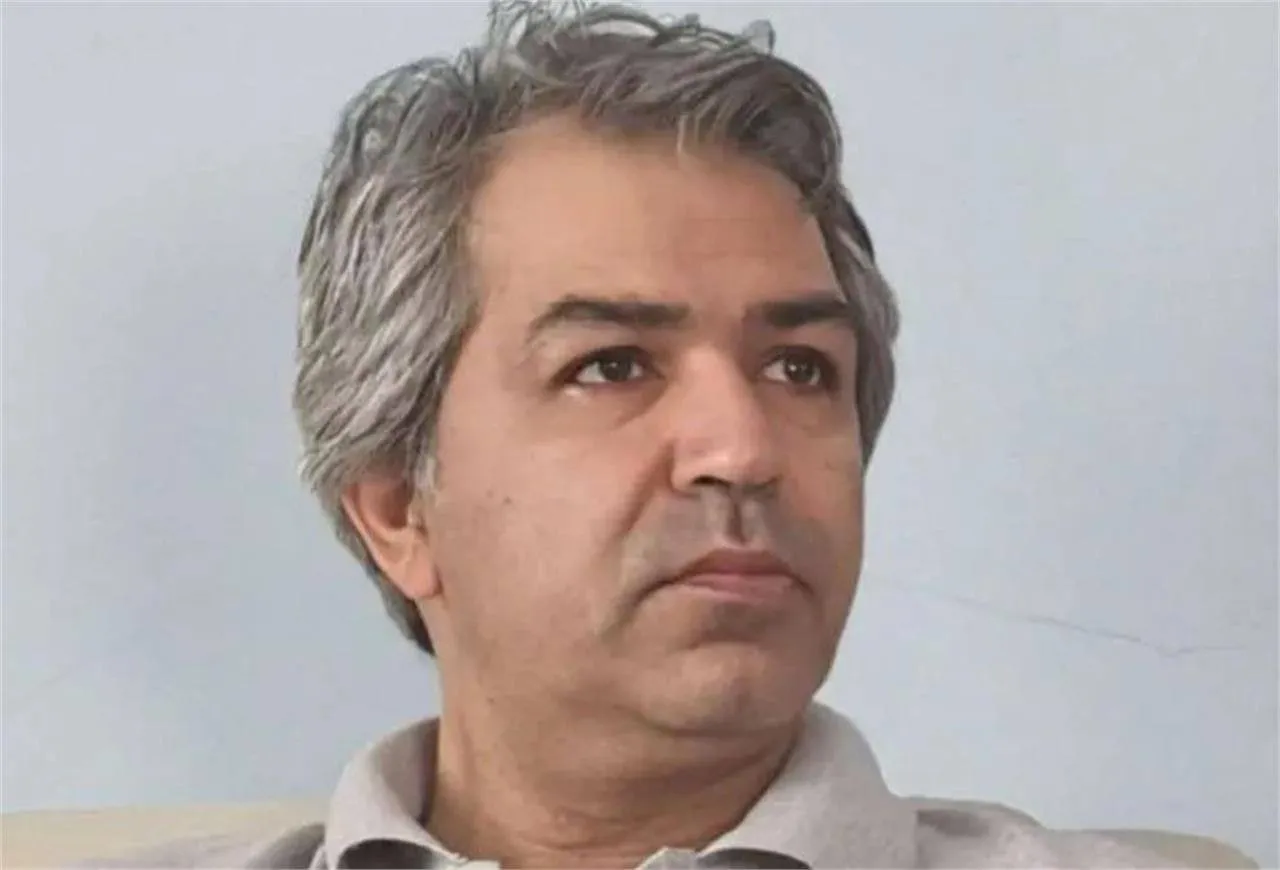
Akbar Montajabi is an Iranian journalist, editor-in-chief, and media analyst, born on April 17, 1970 (April 28, 1349 SH) in Tehran. He is considered one of the prominent figures of the second generation of journalists from Iran’s reform era and the moderate current in Iranian press.
His career in journalism is marked by a distinctive feature: continuous work across more than forty newspapers, weeklies, and national publications over roughly three decades of activity, making him one of the most prolific journalists in contemporary Iran.
Who is Akbar Montajebi?
Akbar Montajebi is an Iranian journalist, editor-in-chief, and media analyst, born on April 17, 1970, in Tehran. He is considered one of the prominent figures of the second generation of journalists from Iran’s reform era and a centrist current in Iranian journalism.
His professional record in the press is characterized by a unique feature: continuous work in more than forty national newspapers, weeklies, and magazines over nearly three decades, making him one of the most prolific journalists in contemporary Iran.
The importance of Montajebi in Iran’s media landscape can be analyzed from several perspectives. First, he has been one of the close and consistent collaborators of Mohammad Ghouchani for nearly two decades, working on multiple journalistic projects across various publications, including Etemad Melli, Ham-Mihan, Shahrvand-e Emrooz, Iran Dokht, Asman, Seda, and eventually Sazandegi newspaper.
Second, his extensive managerial experience in media organizations—from assistant editor and deputy editor to editor-in-chief of Seda weekly and Sazandegi newspaper—has placed him among the most influential executive figures in Iran’s reformist and centrist press.
Third, his role in professional journalism institutions, particularly as the head of the board of the Tehran Journalists’ Association, has further solidified his position in recent years.
Currently, Montajebi serves as the editor-in-chief of Sazandegi newspaper, the official organ of the Executives of Construction Party, and in Mehr 1404 (October 2025), he was appointed by the Minister of Culture and Islamic Guidance as the Director General of the Media Education Development Office of the ministry. This appointment marks an important milestone in his official cultural and media career.
Life and Background
Akbar Montajebi was born on April 17, 1970, in Tehran. Information about his childhood and adolescence is limited, but available accounts suggest that he studied in Tehran and developed an early interest in writing and journalism during his youth.
He entered professional journalism in 1995 at the age of 25. His first professional experience was with Zaman magazine, a tourism publication managed by Gholamhossein Mo’tamedi and edited by Siros Alinazad, published by the “Payam-e Emrooz” media institute. This environment—one of the key training centers for Iranian journalists before the 2nd of Khordad political movement—played an important role in shaping his professional network.
Beginning of His Career in Reformist Journalism
A turning point in Montajebi’s career came with the victory of Mohammad Khatami in the presidential election of May 1997 and the expansion of reformist journalism during that era. Following this shift, he joined the reformist press and began his political journalism career at Sobhe Emrooz newspaper, managed by Saeed Hajjarian.
Sobhe Emrooz quickly became one of the key platforms of reformist discourse, and Montajebi’s presence in its editorial team—alongside other young reformist journalists—was foundational in shaping his career path.
After the closure of Sobhe Emrooz following the 1999 assassination attempt on Hajjarian and the mass closure of reformist newspapers in 2000, Montajebi continued working across successive reformist publications that frequently experienced cycles of publication, closure, and relaunch under new names.
Between 1997 and 2003, he wrote for major reformist newspapers such as Aftab-e Emrooz, Bahar, Doran-e Emrooz, Hayat-e No, Norouz, Yas-e No, Etemad, and Shargh. This list includes some of the most influential reformist newspapers of that period, reflecting his consistent presence in the forefront of reform-era journalism in Iran.
Period of collaboration with Mohammad Ghochani
From the mid-2000s onward, one of the main features of Montajabi’s career has been his continuous and stable collaboration with Mohammad Ghochani on various press projects. This cooperation, which in practice began at Shargh newspaper, later became one of the most durable partnerships in contemporary Iranian journalism.
During Ghochani’s editorial leadership, Montajabi worked in various roles in the following publications:
The newspaper Etemad-e Melli (the organ of the Etemad-e Melli Party led by Mehdi Karroubi), where Ghochani took over the editorship after the resignation of Reza Ansari, and Montajabi worked there as assistant editor.
The weekly Shahrvand-e Emrooz, which between 2006 and 2008 became one of the most important reference magazines of its time and was banned in November 2008.
The newspaper Ham-Mihan, owned by Gholamhossein Karbaschi, which was published in 2007 and was shut down a few months later.
The weekly Irandokht, owned by Fatemeh Karroubi, which began publication after the events of 2009.
The newspaper and weekly Asman, which in March 2014 was banned after publishing six issues as a daily newspaper.
The newspaper Mardom-e Emrooz, which in January 2015 had its license revoked after only 19 issues by the Press Supervisory Board.
The monthly magazine Mehrnameh, where Montajabi served as assistant editor.
This shared trajectory across multiple projects, in which Montajabi held various executive and operational roles—from assistant editor to deputy editor and political desk editor—represents one of the most stable journalistic partnerships in contemporary Iran.
Independent editorial leadership
Seda Weekly
A turning point in Montajabi’s rise to independent editorial leadership occurred in July 2017, when he became editor-in-chief of Seda Weekly. This magazine, published under the ownership of Faezeh Sharif Juzdani and the executive management of Ali Raee, was one of the well-known reformist publications of its time. Montajabi served as the final editor-in-chief of Seda Weekly until early 2018, after which Mohammadjavad Rouh took over the role.
Sazandegi Newspaper
From 2017 onward, with the launch of Sazandegi newspaper as the official organ of the Executives of Construction Party, Montajabi was appointed editor-in-chief. Sazandegi, with Mohammad Ghochani as its main editor and intellectual figure, quickly became one of the most widely circulated and influential newspapers of the centrist and pro-Rouhani political camp.
In its editorial structure, Montajabi, as editor-in-chief, played a strategic role in managing the newsroom, selecting reports, and organizing the daily production of the paper. During the presidencies of the 11th and 12th governments—and later in the administration of President Pezeshkian—Sazandegi became one of the key media references of the moderate political current.
Aftab News Agency and other positions
In addition to his role as editor-in-chief of Sazandegi, Montajabi has at various times served as editor-in-chief of Aftab News Agency and has also been active on the editorial board of Shahrvand newspaper.
Role in journalistic unions
One of the notable aspects of Montajabi’s recent career has been his involvement in the institutionalization of journalism unions in Iran. He served as the head of the board of directors of the Tehran Journalists’ Syndicate, where he became one of the recognized spokespersons of Iran’s media community.
His role in defending journalists’ professional rights was reflected in several notable incidents. In a widely reported case in 2025, following the eviction and sealing of the rented building of the Tehran Journalists’ Syndicate by the municipality, Montajabi—then head of the board—defended the syndicate in multiple media interviews and described the municipality’s actions as “political.” This incident became one of the clear examples of the challenges facing journalistic unions in Iran.
The background of this syndicate is also noteworthy. The Iranian Journalists’ Association, founded with the involvement of figures such as Abbas Abdi and other prominent journalists during the reform era, has faced multiple ups and downs over the past two decades, including periods of dissolution. Montajabi’s role in reviving and maintaining its institutional function is considered one of his sustained organizational contributions.
Appointment in the Ministry of Culture and Islamic Guidance
In October 2025, in a widely reported development in Iranian media, the Minister of Culture and Islamic Guidance appointed Akbar Montajabi as “Director-General of the Office for Media Education Development.” This office, formerly known as the “Office for Media Studies and Planning,” continues its work with a new name and revised mission.
The appointment letter, citing Montajabi’s “valuable experience” in the media field and based on the proposal of the Deputy for Media Affairs and Advertising, officially assigned him to the position. This appointment marked his first official role within the government structure and signaled his consolidation within Iran’s media policy-making system.
Controversies and criticisms
Montajabi’s journalistic career, especially during his tenure at Sazandegi, has also been accompanied by controversies and criticism.
Position on the 2019 protests
In November 2019, following widespread protests over a sudden increase in fuel prices and the crackdown on those protests, Sazandegi—like many reformist newspapers—provided limited coverage of the events. In an interview with Tasnim News Agency, Montajabi, as editor-in-chief, expressed views that critics interpreted as support for the suppression of protesters and the fuel price hike. This stance became one of the most widely discussed controversies in his recent media activity.
Headline “Blind Love”
In another case, a headline in Sazandegi titled “Blind Love” regarding a so-called honor killing case in Ahvaz sparked widespread criticism from journalists, women’s rights activists, and social media users. Critics argued that the headline misrepresented gender-based violence as “love.” Montajabi responded that the headline was the result of consultation among several editors and that it referred to “a love that became blind and lost its humanity.” Nevertheless, the controversy highlighted broader challenges in covering social and gender-related issues in Iranian media.
Take less than a minute, register and share your opinion under this post.
Insulting or inciting messages will be deleted.
Sign Up