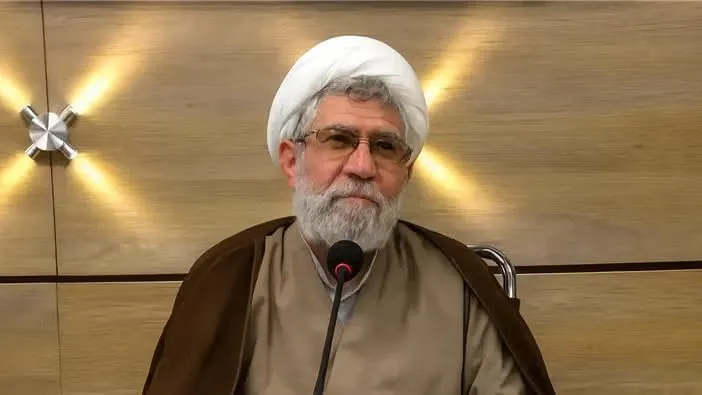
Abdolrahim Soleimani Ardestani is a Shiite cleric, a prominent researcher in comparative religion and theology, a retired professor at Mofid University in Qom, and a former member of the Society of Researchers and Teachers of the Qom Seminary. He is one of the most prominent and, at the same time, most controversial figures in Iran's contemporary religious-academic discourse. As one of the distinguished students of Ayatollah Hossein Ali Montazeri, he has become one of the few specialists in comparative religion among Iran's clergy through his reference works such as "Christianity," "An Introduction to Comparative Islamic and Christian Theology," and his translation of "The Myth of God Incarnate." Soleimani Ardestani, who has a history of arrest during the 2009 protests, became one of the most debated figures in Iran's religious-media discourse in the fall of 2025 following a widely viewed debate with Hojjat al-Islam Hamed Kashani on "the innocence and martyrdom of Hazrat Zahra (SA)," which garnered over 60,000 views and sparked widespread reactions.
Abdolrahim Soleimani Ardestani is a Shiite cleric, a researcher of religion and comparative theology, a religious theorist, a retired professor at Mofid University in Qom, and a former member of the Society of Researchers and Teachers of the Qom Seminary. Born in 1959, he is one of the most prominent and, at the same time, most controversial figures in Iran's contemporary religious-academic discourse. As one of the distinguished students of Ayatollah Hossein Ali Montazeri, and throughout his academic career, he has become one of the main references in the study of comparative religion, Christianity, Judaism, and comparative Islamic and Christian theology at Iranian universities. In the fall of 2025, following a widely viewed debate with Hojjat al-Islam Hamed Kashani on "the innocence and martyrdom of Hazrat Zahra (SA)," he became one of the most widely discussed figures in Iran's religious-media discourse .
The importance of Abdolrahim Soleimani Ardestani in Iran's religious-academic sphere can be examined from several angles. First, his distinguished academic background at Mofid University in Qom—one of the most important higher education centers close to the moderate-reformist clerical tradition in Iran, founded in 1989 by Ayatollah Abdolkarim Mousavi Ardebili—which places him among the reference professors of this center . Second, his distinguished seminary educational background as one of the students of Ayatollah Hossein Ali Montazeri, which has shaped his reformist intellectual-jurisprudential framework . Third, his prolific works in the field of comparative religion, including reference books such as "Christianity," "Living Religions of the World," "An Introduction to Comparative Islamic and Christian Theology," and his translation of "The Myth of God Incarnate," which have made him one of the few prominent specialists in comparative religion among Iran's clergy . Fourth, his former membership in the Society of Researchers and Teachers of the Qom Seminary—a prominent reformist clerical organization formed after the 1997 elections, which includes figures such as Mousavi Tabrizi, Bayat Zanjani, Fazel Meybodi, and Iayazi . Fifth, his history of arrest during the 2009 nationwide protests, which placed him among the clergy critical of the power structure and supporters of the Green Movement .
In the fall of 2025, Soleimani Ardestani became one of the most widely discussed figures in Iran's religious-media discourse following a controversial debate with Hojjat al-Islam Hamed Kashani, held on Monday, November 30, 2025, on the "Azad" media platform, in which he pointed to "the internal inconsistency of the narratives of Hazrat Zahra's martyrdom." The debate, which garnered over 60,000 views and widespread reactions in Iranian media, made him a prominent figure in the religious-media discourse of Iran .
Life and Background
Abdolrahim Soleimani Ardestani was born in 1959. The family name "Ardestani" indicates his family's connection to the city of Ardestan—one of the ancient cities of Isfahan province and one of Iran's prominent cultural-religious centers. Ardestan has introduced prominent figures in the fields of clergy, jurisprudence, philosophy, and social sciences to Iranian society in the decades after the revolution.
Detailed information about his exact birthplace, family background, and childhood-adolescence is limited in open media sources. Born in 1959, he belongs to a generation that came of age during the events of the 1979 Islamic Revolution and then the Iran-Iraq war—a generation that was educated in Iran's seminaries in the post-revolutionary atmosphere.
Seminary and Academic Education
Soleimani Ardestani's educational path took shape in the Qom Seminary and, with a combination of seminary and academic studies, he became one of the prominent specialists in comparative religion in Iran.
Studying under Ayatollah Montazeri
One of the most important aspects of Soleimani Ardestani's educational background is his studies under Ayatollah Hossein Ali Montazeri—one of the most important contemporary sources of emulation and the former deputy leader. This background formed the reformist intellectual-jurisprudential foundation of Soleimani Ardestani .
Specialization in Comparative Religion
Soleimani Ardestani's academic expertise is concentrated in the following areas :
Comparative Religions
Christian Studies
Jewish Studies
Comparative Islamic and Christian Theology
Primitive and Extinct Religions
Abrahamic Religions
History of Religions
This expertise, which is relatively rare among Iran's contemporary clergy, has formed the foundation of his distinctive academic position.
Academic Activity: Mofid University in Qom
The turning point of Soleimani Ardestani's academic career was his sustained membership in the faculty of Mofid University in Qom, a prominent higher education center founded in 1989 by Ayatollah Seyyed Abdolkarim Mousavi Ardebili.
The Position of Mofid University in Qom
Mofid University in Qom is one of the most prominent higher education centers close to the moderate-reformist clerical tradition in Iran. This university, where prominent figures such as Mousavi Ardebili, Abdolkarim Soroush (for a period), Mohammad Taghi Fazel Meybodi, and other distinguished professors have taught, is considered one of the intellectual centers of the reformist clerical movement .
Retirement
In recent years, Soleimani Ardestani has retired from Mofid University in Qom and is currently a retired professor at this university. This retirement, which may be related to his critical positions or the natural end of his academic service, is one of the recent aspects of his career .
Membership in the Society of Researchers and Teachers of the Qom Seminary
One of the notable aspects of Soleimani Ardestani's organizational-political career was his former membership in the Society of Researchers and Teachers of the Qom Seminary.
A Prominent Reformist Clerical Organization
The Society of Researchers and Teachers of the Qom Seminary is a group of teaching and research clerics of the Qom Seminary, founded after the 1997 elections—that is, after the victory of Seyyed Mohammad Khatami in the presidential election and the beginning of the Reform Era. This society, with its "reformist, change-oriented, and genuine revolutionary principlism" approach, is one of the most important reformist clerical organizations in Iran .
The main founders of this society include Ayatollah Mohammad Ali Abaei Khorasani, Ayatollah Hossein Mousavi Tabrizi, and Ayatollah Asadollah Bayat Zanjani. Prominent current members include Hossein Mousavi Tabrizi, Seyyed Mohammad Ali Iayazi, Mahmoud Salavati, Mohammad Taghi Fazel Meybodi, Seyyed Abolfazl Mousavian, Mohammad Ali Kousha, and other prominent figures. Most members of this society are students of Ayatollah Montazeri—a point that also applies to Soleimani Ardestani .
Scientific-Research Works
Abdolrahim Soleimani Ardestani is the author and translator of numerous works in the field of comparative religion. His most important works include :
Prominent Works on Abrahamic Religions
"Christianity"—one of the reference books in the field of Christian studies in Persian.
"Judaism" (translation from the book "Judaism from within the Texts")—a reference source for understanding the Jewish religion.
"An Introduction to Comparative Islamic and Christian Theology"—one of his most comprehensive authored works.
"A Textbook on Abrahamic Religions"—an educational resource for university courses.
"The Myth of God Incarnate" (translation)—a translation of one of the prominent works of contemporary Christian theology.
"The Nature of Man in Islam and Christianity"—a comparative study of the anthropology of the two religions.
"Comparative Ethics of Abrahamic Religions" (forthcoming).
Prominent Works on Comparative Religion
"Primitive and Extinct Religions"—a study of primitive religions and religions that have become extinct.
"Living Religions of the World (excluding Islam)"—a reference book on living religions of the world.
"Religions in the Quran" (forthcoming).
"The Holy Book" (new edition)—a study of the Holy Book from the perspective of religious studies.
Prominent Works on Human Rights and Contemporary Theology
"The Encounter of Contemporary Iranian Muslim Thinkers with the New Human Rights System"—a study of the relationship between contemporary Iranian Islamic thought and the discourse of human rights.
This prolific collection, covering a range of topics from primitive religions to contemporary theology, from Judaism and Christianity to human rights discourse, has made Soleimani Ardestani one of the most prolific Persian-language authors in the field of religion .
Arrest during the 2009 Protests
One of the notable aspects of Soleimani Ardestani's career was his arrest during the nationwide protests following the 2009 presidential election .
Arrest in the Behesht-e Zahra Protests
According to reports from media close to the principlist movement, Soleimani Ardestani was arrested by security forces for participating in the Behesht-e Zahra protests. This arrest, in the tense atmosphere following the controversial 2009 election, is one of the notable controversies of his career .
Release Alongside Prominent Reformist Figures
His release, along with figures such as Hamzeh Ghalbi and Dr. Zabihi, was reported—a sign that Soleimani Ardestani was among the circle of prominent figures of the Green Movement.
This experience solidified Soleimani Ardestani's reformist political identity and placed him among the "active elements in the sedition" (according to the description of media close to the principlist movement) .
Widely Viewed Debate with Hamed Kashani (November 2025)
The most widely discussed recent chapter of Soleimani Ardestani's career was his debate with Hojjat al-Islam Hamed Kashani on "the innocence and martyrdom of Hazrat Zahra (SA)." This debate, held on Monday, November 30, 2025, on the "Azad" media platform, became one of the most widely discussed events in Iran's religious-media discourse in recent years .
Background of the Debate
This debate followed Soleimani Ardestani's controversial remarks on one of the internet television networks, casting doubt on the narratives of Hazrat Zahra's martyrdom and the harassment she endured after the Prophet's death. Following these remarks, several scholars and clerics announced their readiness to respond to these doubts in a debate .
Hojjat al-Islam Hamed Kashani—a well-known Tehran preacher—in a text posted on X, announced his readiness to debate, "provided ethical standards are observed and the focus remains on the topic." Ultimately, the "Azad" media platform officially announced the holding of this debate on November 30, 2025 .
Soleimani Ardestani's Prominent Positions in the Debate
In this debate, Soleimani Ardestani took a prominent analytical position: "The story narrated as the martyrdom of Hazrat Zahra has internal inconsistencies." He went on to point out the inconsistency of historical narratives with the justice of Ali and essentially cast doubt on the principle of "martyrdom" as commonly known in Shia tradition .
Hamed Kashani's Positions
In response, Hamed Kashani, citing various hadiths, refuted Soleimani Ardestani's statements and emphasized that the discussion should not deviate from the main topic. Kashani, citing narrative sources, presented arguments in support of the traditional narratives of Hazrat Zahra's martyrdom .
Widespread Reactions in Cyberspace
This debate, which garnered over 60,000 views online, was one of the most widely discussed events in Iran's religious-media discourse in the year 2025. Reactions included a wide spectrum :
Media close to the establishment and the traditional religious spectrum introduced Hamed Kashani as the "winner" of the debate and portrayed Soleimani Ardestani as someone who had fallen short in religious argumentation and citation .
Some eulogists in recent religious ceremonies directly and harshly criticized and even insulted Soleimani Ardestani .
Some critical media criticized the way this debate was broadcast by state television .
In cyberspace, a wide spectrum from praise to criticism of the arguments of both sides was expressed.
This debate was recognized as one of the most controversial religious and media topics in Iran in the fall of 2025 .
File of the complete exclusive interview of Abdi Media with Haj Sheikh Abdolrahim Soleimani Ardestani, researcher of religions, retired professor at Mofid University, and former member of the Assembly of Lecturers and Researchers of the Qom Seminary.
Listen without filters on the Abdi Media Castbox.
Other Notable Positions
In addition to the controversial debate with Kashani, Soleimani Ardestani has addressed religious-historical issues in various media in recent years.
Interview with Didar News (July 2024)
In July 2024, Didar News conducted an interview with Soleimani Ardestani on the topic "Imam Hussain's Action; Rational or a Specific Command" during the month of Muharram. This interview, in which a historical-rational interpretation of the Ashura event was presented, is one of the examples of his critical-historical view of religious narratives.
Views and Theoretical Approaches
Throughout his intellectual-research career, Abdolrahim Soleimani Ardestani has formulated a clear intellectual framework that can be traced in several axes.
Comparative-Critical Approach to Religions
Soleimani Ardestani's most central approach is the comparative-critical approach to religious studies—an approach in which the teachings of various religions, including Islam, Christianity, Judaism, and other religions, are examined from a comparative perspective and with scientific methodological tools.
Critique of Traditional Narratives
A distinctive feature of Soleimani Ardestani's approach is his critique of traditional narratives—especially narratives that, from a historical and rational perspective, have "internal inconsistencies." This approach, which was prominently reflected in his debate with Kashani on the martyrdom of Hazrat Zahra, is one of the widely discussed aspects of his intellectual framework. This position has other examples in the literature of Shiite religious criticism among reformist clergy—although it comes with significant media-social costs.
Connection with Human Rights Discourse
In his notable book "The Encounter of Contemporary Iranian Muslim Thinkers with the New Human Rights System," Soleimani Ardestani has addressed the relationship between contemporary Iranian Islamic thought and the discourse of human rights. This position indicates his open view toward the necessity of dialogue between Islamic tradition and the global discourse of human rights.
Historical-Rational Approach to Historical Events of Islam
In his notable interview with Didar News on "Imam Hussain's Action; Rational or a Specific Command," Soleimani Ardestani presented a historical-rational interpretation of the Ashura event—a position in which Imam Hussain's behavior is examined as a rational-historical action, not merely as a specific divine command.
Connections with Figures and Currents
Abdolrahim Soleimani Ardestani is situated within a network of intellectual-organizational connections with prominent figures of Iran's reformist clergy. At the educational level, his relationship with Ayatollah Hossein Ali Montazeri—as a distinguished teacher—is one of his most important key connections.
At the organizational level, his relationship with other members of the Society of Researchers and Teachers of the Qom Seminary—including Hossein Mousavi Tabrizi, Seyyed Mohammad Ali Iayazi, Mahmoud Salavati, Mohammad Taghi Fazel Meybodi, Seyyed Abolfazl Mousavian, Mohammad Ali Kousha, and others—forms his close organizational network.
At the academic level, his relationship with colleagues at Mofid University in Qom—including its founder, Ayatollah Mousavi Ardebili, and other prominent professors of this university—forms his academic network.
At the political-Green Movement level, his relationship with figures such as Hamzeh Ghalbi and Dr. Zabihi (who were his fellow detainees) forms his political communications network.
Conclusion
Abdolrahim Soleimani Ardestani is one of the most prominent and, at the same time, most controversial figures in Iran's contemporary religious-academic discourse. With a unique combination of a distinguished seminary educational background (studying under Ayatollah Montazeri), distinctive expertise in comparative religion, sustained academic activity at Mofid University in Qom, prolific production of notable works in the fields of Christianity, Judaism, primitive religions, and comparative theology, membership in the Society of Researchers and Teachers of the Qom Seminary, a history of arrest during the 2009 protests, and finally, a widely viewed debate with Hojjat al-Islam Hamed Kashani in November 2025 on "the innocence and martyrdom of Hazrat Zahra (SA)," he occupies a unique position in Iran's reformist clergy structure.
Soleimani Ardestani's distinguishing feature, on the first level, is his distinctive expertise in comparative religion—an expertise in which a Shiite cleric with a seminary background has, at the same time, become one of the few reference authors in Persian in the fields of Christian studies, Jewish studies, and comparative theology. This expertise is relatively rare among Iran's contemporary clergy and places him in a distinctive position. On the second level, his historical-critical approach to traditional narratives—which was prominently reflected in his debate with Kashani—is one of the notable and controversial aspects of his intellectual framework.
From an analytical perspective, Soleimani Ardestani's position exemplifies the phenomenon of the "traditionalist-critic cleric-researcher" in contemporary Iran—a phenomenon in which a cleric with a seminary background, while having deep academic expertise in the field of religion, publicly approaches some traditional Shia narratives with a critical view. This pattern, which has other examples among Iran's contemporary reformist clergy (such as Hassan Yousefi Eshkevari, Mohammad Taghi Akbarnejad, Ahmad Ghabel, and others), has found a special reflection in Soleimani Ardestani through his focused expertise in comparative religion and his public debate with traditional preachers.
What is clear from today's perspective is that the topics Soleimani Ardestani has addressed in his works and positions—from comparative religion, comparative Islamic and Christian theology, critique of traditional narratives, historical-rational interpretation of historical events of Islam, and human rights discourse in contemporary Islamic thought—remain among the most enduring topics in contemporary Iranian intellectual-religious discourse. In a situation where Iran is in one of the most tense periods of its religious-historical discourse—particularly with the increasing challenges surrounding the relationship between Shia narrative tradition and historical-rational criticism—Soleimani Ardestani's research voice, with a combination of deep academic credibility and courage in expressing critical positions, is one of the widely referenced and, at the same time, controversial sources of this discourse.
Frequently Asked Questions
Who is Abdolrahim Soleimani Ardestani?
Abdolrahim Soleimani Ardestani (born 1959) is a Shiite cleric, a researcher of religions, a retired professor at Mofid University in Qom, and a former member of the Society of Researchers and Teachers of the Qom Seminary. He is one of the few prominent specialists in the fields of comparative religion, Christian studies, Jewish studies, and comparative theology among Iran's contemporary clergy.
What are Soleimani Ardestani's educational qualifications?
Soleimani Ardestani studied in the Qom Seminary and is among the distinguished students of Ayatollah Hossein Ali Montazeri. Studying under Montazeri is one of the most important aspects of his reformist intellectual-jurisprudential background.
What are Soleimani Ardestani's most important works?
Among Soleimani Ardestani's most important works are the following books: "Christianity," "Judaism" (translation), "An Introduction to Comparative Islamic and Christian Theology," "Primitive and Extinct Religions," "A Textbook on Abrahamic Religions," "Living Religions of the World (excluding Islam)," "The Myth of God Incarnate" (translation), "The Nature of Man in Islam and Christianity," "The Holy Book" (new edition), and "The Encounter of Contemporary Iranian Muslim Thinkers with the New Human Rights System."
Why was Soleimani Ardestani arrested in 2009?
Soleimani Ardestani was arrested by security forces during the nationwide protests following the 2009 presidential election for participating in the Behesht-e Zahra protests. His release, along with figures such as Hamzeh Ghalbi and Dr. Zabihi, was reported.
What was Soleimani Ardestani's debate with Hamed Kashani about?
On Monday, November 30, 2025, a debate was held on the "Azad" media platform between Soleimani Ardestani and Hojjat al-Islam Hamed Kashani on "the innocence and martyrdom of Hazrat Zahra (SA)." This debate, which garnered over 60,000 views, was held following Soleimani Ardestani's casting of doubt on the narratives of Hazrat Zahra's martyrdom. In this debate, Soleimani Ardestani stated: "The story narrated as the martyrdom of Hazrat Zahra has internal inconsistencies."
What were the reactions to Soleimani Ardestani's debate?
This debate met with widespread reactions. Media close to the establishment and the traditional religious spectrum introduced Hamed Kashani as the "winner" of the debate. Some eulogists in religious ceremonies strongly criticized and even insulted Soleimani Ardestani. In cyberspace, a wide spectrum from criticism to praise of the arguments of both sides was expressed. This debate became one of the most controversial religious-media topics in Iran in the fall of 2025.
What is Mofid University in Qom?
Mofid University in Qom was founded in 1989 by Ayatollah Seyyed Abdolkarim Mousavi Ardebili and is one of the most prominent higher education centers close to the moderate-reformist clerical tradition in Iran. Soleimani Ardestani taught at this university for many years and is currently a retired professor.
What is the Society of Researchers and Teachers of the Qom Seminary?
The Society of Researchers and Teachers of the Qom Seminary is a prominent reformist clerical organization founded after the 1997 elections. Most members of this society are students of Ayatollah Montazeri. Soleimani Ardestani is a former member of this organization, in which figures such as Hossein Mousavi Tabrizi, Mohammad Ali Iayazi, Mohammad Taghi Fazel Meybodi, and others are active.
What is Soleimani Ardestani's view on Imam Hussain's action?
In his notable interview with Didar News in July 2024 on "Imam Hussain's Action; Rational or a Specific Command," Soleimani Ardestani presented a historical-rational interpretation of the Ashura event—a position in which Imam Hussain's behavior is examined as a rational-historical action.
Is Abdolrahim Soleimani Ardestani still active?
Yes, despite his retirement from Mofid University in Qom, Abdolrahim Soleimani Ardestani remains active in Iran's media-intellectual arena. His recent widely viewed debate with Hojjat al-Islam Hamed Kashani in November 2025—which garnered over 60,000 views and widespread media reactions—is a sign of his sustained presence in contemporary Iranian religious-social discourse. His forthcoming books—including "Comparative Ethics of Abrahamic Religions" and "Religions in the Quran"—are another sign of his prolific academic activity in recent years.
Take less than a minute, register and share your opinion under this post.
Insulting or inciting messages will be deleted.
Sign Up