
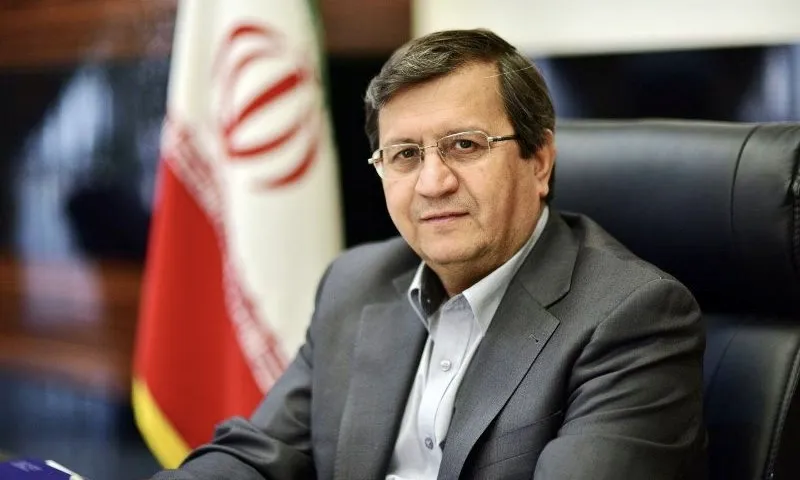
Dr. Abdolnaser Hemmati, a prominent economist and Iranian reformist politician, is the current Governor of the Central Bank of the Islamic Republic of Iran (second term, since 31 December 2025), former Minister of Economic Affairs and Finance in Masoud Pezeshkian’s fourteenth government (July–August 2024 to February–March 2025), the eighteenth Governor of the Central Bank in Hassan Rouhani’s twelfth government, former Iranian Ambassador to China, former CEO of Bank Melli Iran, and the architect of the privatization of the insurance industry, widely known as the “father of private insurance in Iran.” He ranks among the most high-profile and prominent combined economic-banking-insurance-diplomatic reformist figures of post-revolutionary Iran over the past four decades. Holding a PhD in economics from the University of Tehran and serving as a professor at its Faculty of Economics, he proposed the establishment of the Foreign Exchange Reserve Fund in 1998–1999. He headed the Central Bank during Rouhani’s twelfth government and was appointed Minister of Economy in Pezeshkian’s government in 2024, but was impeached and dismissed on 3 March 2025 due to severe currency market fluctuations and inflation. On 31 December 2025, by order of Pezeshkian, Hemmati returned for a second term as Governor of the Central Bank and announced programs focused on “curbing inflation,” “controlling the exchange rate by eliminating corruption and multi-rate currency rents,” and “managing bank imbalances.” His appointment was accompanied by a collective letter of protest from members of parliament to Pezeshkian.
Dr. Abdolnaser Hemmati (born 9 April 1957 in Kabudarahang County, Hamadan Province)—known as the “father of private insurance in Iran”—is a prominent economist and Iranian reformist politician. He is the current Governor of the Central Bank of the Islamic Republic of Iran (second term, since 31 December 2025 to the present), replacing Mohammadreza Farzin; the former Governor of the Central Bank in Hassan Rouhani’s twelfth government as the eighteenth Governor of the Central Bank; the former Minister of Economic Affairs and Finance in Masoud Pezeshkian’s fourteenth government from July–August 2024 to 3 March 2025 (approximately seven months), who was removed through a high-profile impeachment—described as “the second fastest dismissal in history and a warning for Pezeshkian”; the former Ambassador of the Islamic Republic of Iran to the People’s Republic of China; the former CEO of Bank Melli Iran from 2013 to 2016 (Iran’s largest commercial bank); the former head of the Central Insurance of the Islamic Republic of Iran and the key architect of the privatization of the insurance industry from 2003; a former member of the Economic Committee of the Supreme National Security Council; a professor and permanent faculty member of the Faculty of Economics at the University of Tehran; an official judicial expert in investment, monetary, and credit affairs; a high-profile candidate in the thirteenth presidential election in 2021 as one of the approved candidates; a high-profile candidate in the fourteenth presidential election in 2024 who was disqualified by the Guardian Council; the designer of the widely noted proposal to establish the Foreign Exchange Reserve Fund in 1998–1999, which was later founded under the name “Foreign Exchange Reserve Account”; a distinguished graduate with a bachelor’s degree in economics from the University of Tehran in 1978–1979 and a PhD in economics from the same university; the author of notable works including Theoretical and Practical Foundations of Insurance (2002–2003) and Energy Economics (2004–2005); an early active figure in the Islamic Republic of Iran Broadcasting (IRIB); a unique figure as “the impeached minister who became Governor of the Central Bank” in the high-profile phenomenon of post-impeachment return; and at the same time one of the most high-profile, prominent, and distinctive combined economic-banking-insurance-diplomatic reformist figures of post-revolutionary Iran over the past four decades. He ranks among the central figures of the moderate banking-currency economic discourse in contemporary Iran.
Dr. Abdolnaser Hemmati followed a unique path—from his distinctive family-cultural origins in Kabudarahang County, Hamadan Province (one of the most prominent cultural-historical counties in western Iran), through a distinguished academic educational trajectory that included a bachelor’s degree in economics from the University of Tehran in 1978–1979 and later a PhD in economics from the University of Tehran, to beginning notable activities in the Islamic Republic of Iran Broadcasting that formed the foundation of his early media career, to pursuing a distinguished academic path as a professor and permanent faculty member of the Faculty of Economics at the University of Tehran, to assuming key post-revolutionary economic positions including the head of the Central Insurance of the Islamic Republic of Iran (where he was responsible for supervising Iran’s insurance industry and formulating and developing the country’s insurance policies), to the widely noted proposal to establish the Foreign Exchange Reserve Fund during the presidency of Seyyed Mohammad Khatami in 1998–1999 (later founded under the name “Foreign Exchange Reserve Account” and ranking among the most significant post-revolutionary economic proposals in Iran), to designing and implementing the widely noted privatization of the insurance industry from 2003 (which formed the foundation of his identity as the “father of private insurance in Iran”), to membership in the Economic Committee of the Supreme National Security Council (which provided significant security-economic backing), to assuming the high-profile position of CEO of Bank Melli Iran from 2013 to 2016 as a key architect of Iran’s largest commercial bank, to his high-profile appointment as Ambassador of the Islamic Republic of Iran to the People’s Republic of China (which formed the foundation of his diplomatic identity), to facing a decisive high-profile turning point in Hassan Rouhani’s twelfth government in which, returning from the embassy in China, he was selected as the eighteenth Governor of the Central Bank of the Islamic Republic of Iran (forming the foundation of his lasting banking-currency identity), to managing the Central Bank during the decisive post-U.S. withdrawal from the JCPOA period beginning 8 May 2018, the November 2019 protests, the assassination of General Qasem Soleimani in January 2020, the outbreak of COVID-19 from February–March 2020, and the thirteenth presidential election in May–June 2021, to his high-profile announcement of candidacy in the thirteenth presidential election in 2021 as one of the approved candidates, to facing the post-thirteenth election developments under Ebrahim Raisi’s government, to his high-profile announcement of candidacy in the fourteenth presidential election in 2024 (which faced high-profile disqualification by the Guardian Council), to his high-profile support for Masoud Pezeshkian’s candidacy in the fourteenth presidential election, to his high-profile introduction by Masoud Pezeshkian as the proposed Minister of Economic Affairs and Finance of the fourteenth government after Pezeshkian’s victory, to obtaining high-profile vote of confidence from the Islamic Consultative Assembly and assuming the high-profile position of Minister of Economic Affairs and Finance of the fourteenth government from July–August 2024 to 3 March 2025, to facing a decisive high-profile turning point on 3 March 2025 in which, after approximately seven months of activity and due to severe currency market fluctuations and inflation, he was impeached and dismissed by the Islamic Consultative Assembly—ranking as “the second fastest dismissal in history and a warning for Pezeshkian”—to assuming the high-profile position of Governor of the Central Bank again on 31 December 2025, in which, with the approval of the Cabinet and by order of Masoud Pezeshkian, he was appointed for a second time as Governor of the Central Bank replacing Mohammadreza Farzin, to announcing high-profile programs including “curbing inflation,” “controlling the exchange rate by eliminating corruption and multi-rate currency rents,” and “managing bank imbalances and preventing the growth of overdrafts,” and finally facing recent high-profile challenges in which, prior to the appointment, a group of members of parliament in a letter to Pezeshkian called for reconsideration of Hemmati’s appointment, and his notable statement that the rise in the free-market exchange rate “has absolutely no connection to the agreed exchange rate” and that the reason was “security and economic pressures.” He has thus become one of the most enduring and at the same time most controversial combined economic-banking-insurance-diplomatic reformist figures of post-revolutionary Iran.
The significance of Dr. Abdolnaser Hemmati in the historical-political sphere of contemporary Iran can be examined from several perspectives. First, as Governor of the Central Bank in two different post-revolutionary periods—among the few post-revolutionary governors who held the position in two different periods—this constitutes one of the notable aspects of his banking continuity. Second, as the key architect of the privatization of the insurance industry—as a principal architect of Iran’s post-revolutionary insurance structure and the father of private insurance in Iran—this constitutes one of the notable aspects of his insurance legacy. Third, as former Ambassador to China and CEO of Bank Melli Iran—ranking among the most prominent post-revolutionary diplomatic-banking figures in Iran—this constitutes one of the notable aspects of his economic-diplomatic continuity. Fourth, the unique phenomenon of “the impeached minister who became Governor of the Central Bank”—as one of the most prominent cases of post-impeachment return to a higher position—constitutes one of the notable phenomenological aspects of his career. Fifth, as the designer of the Foreign Exchange Reserve Fund proposal—as a principal architect of one of the most important post-revolutionary economic institutions in Iran (the Foreign Exchange Reserve Account)—this constitutes one of the notable aspects of his economic legacy.
Important note: Dr. Abdolnaser Hemmati’s record and performance in the Persian-language media-political space is accompanied by sharply divergent perspectives. In the discourse of supporters of moderation and reform, he is known as the “father of private insurance in Iran,” “Rouhani’s prominent Central Bank governor,” and “Pezeshkian’s Minister of Economy.” In the discourse of prominent critics from the Principlist camp, his performance during his tenure as Central Bank governor and Minister of Economy—especially regarding severe currency market fluctuations and inflation—has been subject to serious criticism and formed the basis of the high-profile impeachment of 3 March 2025. In the discourse of media activists, his high-profile post-impeachment return to the governorship of the Central Bank on 31 December 2025—accompanied by a high-profile letter from members of parliament to Pezeshkian calling for reconsideration—has been criticized. In the discourse of supporters of the fourteenth government, Hemmati’s recent programs regarding curbing inflation, controlling the exchange rate, and managing bank imbalances have received attention. This profile presents the narrative published in prominent Persian-language media-historical sources from an analytical and neutral standpoint.
Life and Family Background
Dr. Abdolnaser Hemmati was born on 9 April 1957 in Kabudarahang County, Hamadan Province—one of the most prominent cultural-historical counties in western Iran.
Kabudarahang origins in Hamadan
According to published reports: “Abdolnaser Hemmati was born on 20 Farvardin 1336 in Kabudarahang County, Hamadan Province.”
Kabudarahang ranks among the most prominent counties of Hamadan Province.
Education
Dr. Abdolnaser Hemmati possesses a distinguished combined academic educational path.
Bachelor’s degree in economics from the University of Tehran (1978–1979)
According to published reports: “In 1357 he obtained a bachelor’s degree in economics from the University of Tehran.”
PhD in economics from the University of Tehran
According to published reports: “Abdolnaser Hemmati… holds a PhD in economics from the University of Tehran.”
Professor at the Faculty of Economics, University of Tehran
According to published reports: “[Hemmati] also serves as a faculty member and professor at the Faculty of Economics of this university.”
This distinguished academic-educational background formed the foundation of his lasting economist-academic identity.
Early Activities in IRIB
The most high-profile early chapter of Hemmati’s career was his notable activities in the Islamic Republic of Iran Broadcasting.
According to published reports: “Before entering the political arena, he had activities in IRIB and later reached various positions including the Central Insurance and the governorship of the Central Bank.”
This experience formed the foundation of the beginning of his notable media-economic identity.
Widely Noted Foreign Exchange Reserve Fund Proposal (1998–1999)
The most high-profile early chapter of Hemmati’s economic policy-making career was his widely noted proposal to establish the Foreign Exchange Reserve Fund during the presidency of Seyyed Mohammad Khatami in 1998–1999.
According to published reports: “During the presidency of Seyyed Mohammad Khatami in 1377, Hemmati proposed the establishment of the Foreign Exchange Reserve Fund, which was later founded under the name ‘Foreign Exchange Reserve Account.’”
This proposal ranks among the most significant post-revolutionary economic proposals in Iran, and the Foreign Exchange Reserve Account was established as one of the most important post-revolutionary economic institutions in Iran.
Head of Central Insurance and Privatization of the Insurance Industry (from 2003)
The central historical-decisive chapter of Hemmati’s insurance career was assuming the position of head of the Central Insurance of the Islamic Republic of Iran and designing and implementing the widely noted privatization of the insurance industry from 2003.
According to published reports: “[Hemmati]… was responsible for designing and implementing the privatization of the insurance industry in 1382,” and “In this role, he was responsible for supervising Iran’s insurance industry and formulating and developing the country’s insurance policies.”
These measures formed the foundation of his identity as the “father of private insurance in Iran.”
CEO of Bank Melli Iran (2013–2016)
The most high-profile chapter of Hemmati’s banking career was assuming the position of CEO of Bank Melli Iran from 2013 to 2016.
According to published reports: “CEO of Bank Melli Iran (1392 to 1395): Hemmati served as CEO of Bank Melli Iran, Iran’s largest commercial bank.”
This position formed the foundation of his notable commercial-banking identity.
Ambassadorship in China
The most high-profile chapter of Hemmati’s diplomatic career was assuming the position of Ambassador of the Islamic Republic of Iran to the People’s Republic of China.
According to published reports: “Hemmati accepted responsibility as the eighteenth Governor of the Central Bank under circumstances in which he had been dispatched as Ambassador of the Islamic Republic of Iran to China, but with this selection he returned to the country again to organize the foreign exchange market situation.”
This ambassadorship formed the foundation of his notable diplomatic-economic identity.
Governorship of the Central Bank (First Term – Rouhani’s Twelfth Government)
The central historical-decisive chapter of Hemmati’s banking-currency career was assuming the high-profile position of the eighteenth Governor of the Central Bank of the Islamic Republic of Iran in Hassan Rouhani’s twelfth government.
According to published reports: “The 68-year-old Abdolnaser Hemmati, who also held the governorship of the Central Bank in the twelfth government,” and “Hemmati accepted responsibility as the eighteenth Governor of the Central Bank under circumstances in which he had been dispatched as Ambassador of the Islamic Republic of Iran to China, but with this selection he returned to the country again to organize the foreign exchange market situation.”
This position took place during the decisive post-U.S. withdrawal from the JCPOA period beginning in May 2018, the November 2019 protests, the assassination of General Qasem Soleimani, the outbreak of COVID-19, and the thirteenth presidential election—ranking among the most tense periods of post-revolutionary Central Bank governorship in Iran.
Candidacy in the Thirteenth Presidential Election (2021)
The most high-profile chapter of Hemmati’s electoral career was his high-profile candidacy in the thirteenth presidential election in 2021.
According to published reports: “Hemmati’s most important political activity dates back to the thirteenth presidential election, in which he was approved as one of the candidates of this government and entered the electoral competition.”
Disqualification in the Fourteenth Presidential Election (2024)
The most high-profile controversial chapter of Hemmati’s electoral career was his high-profile disqualification in the fourteenth presidential election in 2024.
According to published reports: “He also volunteered in the fourteenth presidential election period, but his qualification was not approved by the Guardian Council; with Masoud Pezeshkian’s victory in this [election…].”
Ministry of Economic Affairs and Finance in Pezeshkian’s Fourteenth Government (July–August 2024 – 3 March 2025)
The central historical-decisive chapter of Hemmati’s ministerial career was assuming the high-profile position of Minister of Economic Affairs and Finance in Masoud Pezeshkian’s fourteenth government from July–August 2024 to 3 March 2025 for approximately seven months.
According to published reports: “He was Minister of Economy in the fourteenth government from Mordad 1403 to 12 Esfand of the same year,” and “Minister of Economic Affairs and Finance of the fourteenth government (Mordad to Esfand 1403) in Masoud Pezeshkian’s government: Hemmati was appointed to this position with a vote of confidence from the Assembly, but after approximately six months, due to severe currency market fluctuations and inflation, he was impeached and dismissed.”
High-Profile Impeachment (3 March 2025)
The central controversial historical-decisive chapter of Hemmati’s career was the high-profile impeachment on 3 March 2025.
According to published reports: “The impeachment of Abdolnaser Hemmati, Minister of Economy of the fourteenth government, was held on 12 Esfand 1403,” and “Hemmati’s impeachment; the second fastest dismissal in history and a warning for Pezeshkian.”
This impeachment ranks among the most high-profile cases of ministerial impeachment in Pezeshkian’s government and is considered “the second fastest dismissal in history.”
According to Hemmati’s high-profile statement prior to the impeachment: “The rise in the free-market exchange rate has absolutely no connection to the agreed exchange rate / Security and economic pressures caused the increase in the currency price.”
Governorship of the Central Bank (Second Term, from 31 December 2025)
The central recent historical-decisive chapter of Hemmati’s career was assuming the high-profile position of Governor of the Central Bank of the Islamic Republic of Iran again on 31 December 2025.
According to published reports: “On 10 Dey 1404, with the approval of the Cabinet and by order of Masoud Pezeshkian, Hemmati was appointed for a second time as Governor of the Central Bank and replaced Mohammadreza Farzin,” and “Abdolnaser Hemmati this morning—the tenth of Dey—with the vote of the Cabinet and by receiving the highest score from banking experts, once again took the helm of the Central Bank of the Islamic Republic of Iran.”
This return ranks among the most high-profile cases of post-impeachment return to a higher position in Pezeshkian’s government and formed the foundation of the phenomenon of “the impeached minister who became Governor of the Central Bank.”
High-Profile Letter from Members of Parliament to Pezeshkian
According to published reports: “Prior to the appointment, a group of members of parliament in a letter addressed to Pezeshkian called for his reconsideration regarding Hemmati’s appointment.”
Hemmati’s High-Profile Programs
According to published reports: “He announced his programs as including ‘curbing inflation,’ ‘controlling the exchange rate by eliminating corruption and multi-rate currency rents,’ and ‘managing bank imbalances and preventing the growth of overdrafts.’”
These programs rank among the most significant post-revolutionary economic programs in Iran.
Emphasis on Lifting Sanctions
According to published reports: “He emphasized the necessity of lifting sanctions and improving foreign relations [in notable positions…].”
This position ranks among the most high-profile discursive positions of Hemmati regarding Iran’s economy.
Notable Works
Among the most important works of Dr. Abdolnaser Hemmati in the fields of economics and insurance are:
- Theoretical and Practical Foundations of Insurance — translation, first edition 2002–2003, Central Insurance of Iran Publications
- Energy Economics — authorship, first edition 2004–2005, Institute for International Energy Studies Publications
These works rank among the most significant post-revolutionary economic-insurance works in Iran.
Intellectual-Political Framework
Throughout his long economic-banking-insurance-diplomatic career, Dr. Abdolnaser Hemmati has formulated a distinctive intellectual-political framework.
Moderate banking-currency economics
The central intellectual framework of Hemmati is moderate banking-currency economics—a framework in which, while maintaining commitment to the Islamic Republic system, sustained emphasis is placed on curbing inflation, controlling the exchange rate, privatization, and lifting sanctions.
Curbing inflation
A distinctive feature of Hemmati’s framework is sustained commitment to curbing inflation—reflected in the notable programs of his second term as Central Bank governor—constituting one of the notable aspects of his discourse.
Controlling the exchange rate
Another notable feature of Hemmati’s framework is sustained commitment to controlling the exchange rate—reflected in the program of “eliminating corruption and multi-rate currency rents”—constituting one of the notable aspects of his legacy.
Lifting sanctions
A sustained feature of Hemmati’s framework is sustained commitment to lifting sanctions and improving foreign relations—reflected in his contemporary discourse—constituting one of the notable aspects of his discourse.
Privatization
A sustained feature of Hemmati’s framework is sustained commitment to privatization—reflected in the design and implementation of the privatization of the insurance industry from 2003—constituting one of the notable aspects of his legacy.
Connections with Figures and Currents
Dr. Abdolnaser Hemmati operates within a high-profile network of political-economic-banking links with prominent figures of the Islamic Republic of Iran.
Seyyed Mohammad Khatami
The most high-profile early relationship of Hemmati was his sustained relationship with the presidency of Seyyed Mohammad Khatami—during which the proposal to establish the Foreign Exchange Reserve Fund was presented in 1998–1999.
Hassan Rouhani
Among the most high-profile political relationships of Hemmati was his sustained relationship with Hassan Rouhani—during whose presidency Hemmati became the eighteenth Governor of the Central Bank of the Islamic Republic of Iran in the twelfth government.
Masoud Pezeshkian
The central current political-economic relationship of Hemmati is his sustained relationship with Masoud Pezeshkian—during whose fourteenth presidency Hemmati became Minister of Economic Affairs and Finance (which ended with impeachment) and was later appointed Governor of the Central Bank on 31 December 2025.
Prominent figures of the Rouhani government
At the level of the structure of Rouhani’s eleventh and twelfth governments, Hemmati’s high-profile relationships with Mohammad Javad Zarif (Foreign Minister), Eshaq Jahangiri (First Vice President), Ali Rabiei (Minister of Labor), Mahmoud Vaezi (Chief of Staff), Mohammad Bagher Nobakht (head of the Plan and Budget Organization), and other prominent moderate figures formed his sustained governmental network.
Prominent banking-economic figures
At the banking-economic structure level, Hemmati’s high-profile relationships with Mohammadreza Farzin (former Governor of the Central Bank whom Hemmati replaced on 31 December 2025) and other prominent post-revolutionary banking-economic figures in Iran formed his sustained banking network.
Summary
Dr. Abdolnaser Hemmati is one of the most high-profile, prominent, and at the same time distinctive combined economic-banking-insurance-diplomatic reformist figures of post-revolutionary Iran over the past four decades. With a unique combination of distinctive family-cultural origins in Kabudarahang County, Hamadan Province; distinguished combined education including a bachelor’s degree in economics from the University of Tehran in 1978–1979 and a PhD in economics from the same university; professorship and permanent membership in the faculty of the Faculty of Economics at the University of Tehran; early activities in IRIB; the widely noted proposal to establish the Foreign Exchange Reserve Fund during the presidency of Seyyed Mohammad Khatami in 1998–1999, later founded under the name “Foreign Exchange Reserve Account”; head of the Central Insurance of the Islamic Republic of Iran; design and implementation of the widely noted privatization of the insurance industry from 2003 and acquisition of the title “father of private insurance in Iran”; membership in the Economic Committee of the Supreme National Security Council; CEO of Bank Melli Iran (Iran’s largest commercial bank) from 2013 to 2016; ambassadorship of the Islamic Republic of Iran to the People’s Republic of China; eighteenth Governor of the Central Bank of the Islamic Republic of Iran in Hassan Rouhani’s twelfth government; management of the Central Bank during the decisive post-U.S. withdrawal from the JCPOA period; high-profile candidacy in the thirteenth presidential election in 2021 as one of the approved candidates; high-profile candidacy in the fourteenth presidential election in 2024 and high-profile disqualification by the Guardian Council; high-profile support for Masoud Pezeshkian’s candidacy; introduction as the proposed Minister of Economic Affairs and Finance of Pezeshkian’s fourteenth government; obtaining a vote of confidence from the Islamic Consultative Assembly; Ministry of Economic Affairs and Finance of the fourteenth government from July–August 2024 to 3 March 2025 for approximately seven months; high-profile impeachment on 3 March 2025 as “the second fastest dismissal in history and a warning for Pezeshkian” due to severe currency market fluctuations and inflation; assuming the high-profile position of Governor of the Central Bank of the Islamic Republic of Iran again on 31 December 2025 with the approval of the Cabinet and by order of Masoud Pezeshkian and replacing Mohammadreza Farzin; announcing notable programs including curbing inflation, controlling the exchange rate by eliminating corruption and multi-rate currency rents, and managing bank imbalances; sustained emphasis on the necessity of lifting sanctions and improving foreign relations; authorship of notable works including Theoretical and Practical Foundations of Insurance (2002–2003) and Energy Economics (2004–2005); and finally facing the high-profile letter from members of parliament to Pezeshkian calling for reconsideration of the appointment, he occupies a unique place in the contemporary political-economic-banking structure of Iran.
The distinctive feature of Dr. Abdolnaser Hemmati is, first, serving as Governor of the Central Bank in two different post-revolutionary periods (Rouhani’s twelfth government and Pezeshkian’s fourteenth government)—as a figure among the few post-revolutionary governors who held the position in two different periods—constituting one of the notable aspects of his banking continuity. Second, as the key architect of the privatization of the insurance industry and the father of private insurance in Iran—as a principal architect of Iran’s post-revolutionary insurance structure—constituting one of the notable aspects of his insurance legacy. Third, as former Ambassador to China and CEO of Bank Melli Iran—ranking among the most prominent post-revolutionary diplomatic-banking figures in Iran—constituting one of the notable aspects of his economic-diplomatic continuity. Fourth, the unique phenomenon of “the impeached minister who became Governor of the Central Bank”—as one of the most prominent cases of post-impeachment return to a higher position—constituting one of the notable phenomenological aspects of his career. Fifth, as the designer of the Foreign Exchange Reserve Fund proposal—as a principal architect of one of the most important post-revolutionary economic institutions in Iran—constituting one of the notable aspects of his economic legacy.
From an analytical perspective, the position of Dr. Abdolnaser Hemmati is an example of the phenomenon of “a prominent reformist economist-banker-insurer with a combined banking-insurance-diplomatic-ministerial record, with sustained experience as Governor of the Central Bank in two different periods, the father of private insurance in Iran, and the high-profile phenomenon of ‘the impeached minister who became Governor of the Central Bank’” in the contemporary political-economic-banking history of Iran—a phenomenon in which a figure with distinguished academic backing from the University of Tehran, over more than four decades of activity, plays a sustained role across multiple media, insurance, banking, diplomatic, electoral, ministerial, and finally return-banking arenas. This pattern, which is relatively unique among prominent reformist economists of the Islamic Republic, has found special reflection in Hemmati through the features of serving as Governor of the Central Bank in two different periods, being the father of private insurance in Iran, designing the Foreign Exchange Reserve Fund, serving as Ambassador to China, CEO of Bank Melli, and being an impeached Minister of Economy.
What is clear from today’s perspective is that the topics Dr. Abdolnaser Hemmati has addressed in his record and discourse—from moderate banking-currency economics, curbing inflation, controlling the exchange rate, lifting sanctions, privatization, and finally the sustained challenges with the Assembly regarding impeachment and currency market fluctuations—remain among the most debated topics in contemporary Persian-language political-economic-banking discourse. In a situation in which Iran is in one of its most tense periods of political-historical discourse—especially after the 2022 uprising, the 12-day Iran-Israel war in May–June 2025, the America-Israel war with Iran in February–March 2026, the assassination of Seyyed Ali Khamenei, the selection of Seyyed Mojtaba Khamenei as the third Leader, and Masoud Pezeshkian’s fourteenth government—the record and lasting legacy of Dr. Abdolnaser Hemmati, with the combination of serving as Governor of the Central Bank in two different periods, being the father of private insurance in Iran, designing the Foreign Exchange Reserve Fund, serving as Ambassador to China, CEO of Bank Melli, and being an impeached Minister of Economy, is considered one of the main references of contemporary political-economic-banking discourse in the Persian-language media space.
Frequently Asked Questions
Who is Dr. Abdolnaser Hemmati?
Dr. Abdolnaser Hemmati (born 9 April 1957 in Kabudarahang County, Hamadan Province, known as the “father of private insurance in Iran”) is a prominent economist and Iranian reformist politician, the current Governor of the Central Bank of the Islamic Republic of Iran (second term, since 31 December 2025), the former Minister of Economic Affairs and Finance in Pezeshkian’s fourteenth government (July–August 2024 to 3 March 2025), the eighteenth Governor of the Central Bank in Rouhani’s twelfth government, and the former Iranian Ambassador to China.
What was Hemmati’s education?
According to published reports: “In 1357 he obtained a bachelor’s degree in economics from the University of Tehran,” and “Abdolnaser Hemmati… holds a PhD in economics from the University of Tehran and also serves as a faculty member and professor at the Faculty of Economics of this university.”
Why is Hemmati called the “father of private insurance in Iran”?
According to published reports: “[Hemmati]… was responsible for designing and implementing the privatization of the insurance industry in 1382.” These measures formed the foundation of his identity as the “father of private insurance in Iran.”
What were Hemmati’s most important previous positions?
Hemmati’s notable positions include: activities in IRIB, head of Central Insurance and design of the privatization of the insurance industry (from 2003), membership in the Economic Committee of the Supreme National Security Council, CEO of Bank Melli Iran (2013–2016), ambassadorship of Iran to China, eighteenth governorship of the Central Bank in Rouhani’s twelfth government, candidacy in the thirteenth presidential election (2021), candidacy in the fourteenth presidential election (2024) and disqualification, Ministry of Economic Affairs and Finance in Pezeshkian’s fourteenth government (2024), and governorship of the Central Bank (second term, from 31 December 2025).
What was Hemmati’s Foreign Exchange Reserve Fund proposal?
According to published reports: “During the presidency of Seyyed Mohammad Khatami in 1377, Hemmati proposed the establishment of the Foreign Exchange Reserve Fund, which was later founded under the name ‘Foreign Exchange Reserve Account.’”
What was Hemmati’s role in the Rouhani government?
According to published reports: “Hemmati accepted responsibility as the eighteenth Governor of the Central Bank under circumstances in which he had been dispatched as Ambassador of the Islamic Republic of Iran to China, but with this selection he returned to the country again to organize the foreign exchange market situation.”
When did Hemmati run for the presidency?
According to published reports: “Hemmati’s most important political activity dates back to the thirteenth presidential election, in which he was approved as one of the candidates of this government,” and “He also volunteered in the fourteenth presidential election period, but his qualification was not approved by the Guardian Council.”
Why was Hemmati impeached on 3 March 2025?
According to published reports: “Minister of Economic Affairs and Finance of the fourteenth government (Mordad to Esfand 1403) in Masoud Pezeshkian’s government: Hemmati was appointed to this position with a vote of confidence from the Assembly, but after approximately six months, due to severe currency market fluctuations and inflation, he was impeached and dismissed,” and “Hemmati’s impeachment; the second fastest dismissal in history and a warning for Pezeshkian.”
When did Hemmati become Governor of the Central Bank again?
According to published reports: “On 10 Dey 1404, with the approval of the Cabinet and by order of Masoud Pezeshkian, Hemmati was appointed for a second time as Governor of the Central Bank and replaced Mohammadreza Farzin.”
What are Hemmati’s programs in his second term as Governor of the Central Bank?
According to published reports: “He announced his programs as including ‘curbing inflation,’ ‘controlling the exchange rate by eliminating corruption and multi-rate currency rents,’ and ‘managing bank imbalances and preventing the growth of overdrafts.’”
What was the letter from members of parliament to Pezeshkian regarding Hemmati?
According to published reports: “Prior to the appointment, a group of members of parliament in a letter addressed to Pezeshkian called for his reconsideration regarding Hemmati’s appointment.”
What are Hemmati’s most important works?
Among Hemmati’s most important works are: Theoretical and Practical Foundations of Insurance (translation, first edition 2002–2003, Central Insurance of Iran Publications), and Energy Economics (authorship, first edition 2004–2005, Institute for International Energy Studies Publications).
What is Hemmati’s intellectual-political framework?
Hemmati’s central intellectual-political framework includes: moderate banking-currency economics, curbing inflation, controlling the exchange rate, lifting sanctions, privatization, and commitment to the Islamic Republic system.
What distinctive feature exists in Hemmati’s record?
The notable distinctive feature in Hemmati’s record is serving as Governor of the Central Bank in two different post-revolutionary periods (Rouhani’s twelfth government and Pezeshkian’s fourteenth government from 2025), being the father of private insurance in Iran, designing the Foreign Exchange Reserve Fund proposal, former Ambassador to China, former CEO of Bank Melli Iran, and the unique phenomenon of “the impeached minister who became Governor of the Central Bank”—as a figure ranking among the most prominent combined economic-banking-insurance-diplomatic reformist figures of post-revolutionary Iran.
What discursive challenges regarding Hemmati’s record have been raised?
Among the most important discursive challenges regarding Hemmati’s record are: (1) sustained challenges with the Assembly regarding the impeachment on 3 March 2025 due to severe currency market fluctuations and inflation; (2) the controversial challenge regarding the post-impeachment return to the governorship of the Central Bank on 31 December 2025; (3) the high-profile letter from members of parliament to Pezeshkian calling for reconsideration of the appointment; (4) sustained challenges with the Guardian Council regarding disqualification in the fourteenth election in 2024; and (5) challenges related to managing the currency market during the decisive post-U.S. withdrawal from the JCPOA period and the 12-day war of 2025.
Take less than a minute, register and share your opinion under this post.
Insulting or inciting messages will be deleted.
Sign Up