
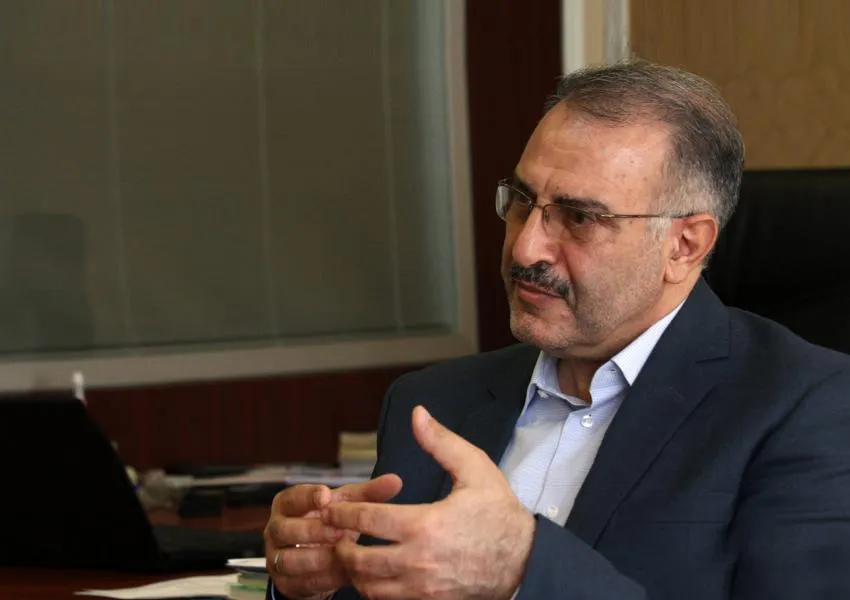
Abdollah Ramezanzadeh is a reformist politician, a professor at the University of Tehran, a former governor of Kurdistan, and a spokesperson for the second administration of Seyyed Mohammad Khatami. He is one of the most prominent figures of the reformist movement over the past two decades. With a unique path—from the governorship of Kurdistan in Khatami's first administration to his role as Secretary and Spokesperson of the Cabinet in the second term and Deputy Head of the Islamic Iran Participation Front—he has played a role in the most tense political moments in Iran. He was arrested on June 13, 2009, and spent 110 days in solitary confinement in Evin Prison, and was sentenced to six years in prison. Ramezanzadeh, who was a signatory of the 77-person statement in November 2019 and was summoned to court in July 2020, has in recent years, with his declaration of an "illegal travel ban" and his critical positions, become one of the most cited analytical voices of the reformist movement in Iran's public discourse.
Who is Abdollah Ramezanzadeh?
Abdollah Ramezanzadeh (born 1961 in Bijar, Kurdistan province) is a reformist politician, a professor at the University of Tehran, a former governor of Kurdistan, the Secretary and Spokesperson of the second administration of Seyyed Mohammad Khatami, the Deputy Head of the Islamic Iran Participation Front, and the head of the Coordinating Council of Reformists of Kurdistan. He is one of the most prominent figures of the reformist movement over the past two decades. With a unique path—from academic activity as a professor at the University of Tehran, to sustained presence in the Ministry of Interior, to the governorship of Kurdistan in Khatami's first administration, to the Secretary and Spokesperson of the Cabinet in Khatami's second term, to the Deputy Head of the Participation Front, and finally, to his highly publicized arrest on June 13, 2009, and his sentence to six years in prison on charges related to the post-election events—he has become one of the most cited symbols of the connection between the reformist faction and post-2009 political-judicial activism. Ramezanzadeh, who is among the few prominent reformist figures with a Kurdish-Bijari identity, has played a central role in the most tense political moments in Iran. With approximately 110 days of solitary confinement in Block 2-A of Evin Prison, courageous resistance against interrogators' pressure to conduct interviews and confess against others, and in recent years, a sustained presence as one of the most prominent analytical-critical voices of the reformist movement in Iran's public discourse, he occupies a unique position in the political structure of reformism.
The importance of Abdollah Ramezanzadeh in Iran's contemporary political sphere can be examined from several angles. First, his multidimensional academic-executive-political background—reflected in his combination of a professorship at the University of Tehran, prominent executive positions, and party activism—is one of the notable aspects of his political character. Second, his six-year experience as Secretary and Spokesperson of the Cabinet during Khatami's second term—which made him one of the most prominent media voices of the reformist government and one of the most widely discussed experiences of government spokesperson in Iran's post-revolutionary history. Third, his distinctive Kurdish-Bijari identity—which made him one of the few prominent reformist governors with a Kurdish background in the reformist government. Fourth, his prominent post-2009 judicial experience—in which Ramezanzadeh was among the most widely discussed reformist figures arrested, spent approximately 110 days in solitary confinement, and courageously resisted interrogators' pressure to conduct interviews and confess. Fifth, his notable persistence in political-analytical activity despite numerous judicial experiences—reflected in his signing of the 77-person statement in November 2019, his summons to the Revolutionary Court following a complaint by the Ministry of Intelligence, and his sustained analytical presence in public discourse.
In one of his recent notable positions, Ramezanzadeh declared that he is "subject to a travel ban without any court order and illegally"—a position that became one of the most widely discussed stances regarding judicial-administrative restrictions on reformist figures in Persian-language media.
Life and Background
Abdollah Ramezanzadeh was born in 1961 in the city of Bijar—one of the cities of Kurdistan province in western Iran. Bijar, which is among the ancient Kurdish and Sunni-majority cities of Kurdistan, has played a role in the formation of several prominent political-cultural figures in the contemporary era.
Born in 1961, Ramezanzadeh belongs to a generation that, in youth, coincided with the events of the 1979 Islamic Revolution and then the Iran-Iraq war, and in middle age, in the atmosphere of the Reform Era, began his prominent executive activities.
Detailed information about Ramezanzadeh's family and school years is limited in open media sources, but his Kurdish-Bijari identity played a central role in shaping his later political path, particularly in his governorship of Kurdistan.
Academic Activity: Professorship at the University of Tehran
Ramezanzadeh's prominent academic background was his membership in the faculty of the University of Tehran. This position, in which a reformist politician also played a sustained role in the academic arena, was one of the notable aspects of his multidimensional character.
Activity in the Ministry of Interior
Before holding prominent government positions, Ramezanzadeh was consistently active in the Ministry of Interior. His prominent positions in this ministry included:
Head of the Planning and Program Department of the Ministry of Interior.
Director General of Political Affairs of the Ministry of Interior.
These positions, which are among the most prominent political-executive management positions in Iran's official structure, formed the foundation of his executive experience in domestic policy.
Governorship of Kurdistan in Khatami's First Administration
The central chapter of Ramezanzadeh's provincial experience was his governorship of Kurdistan in Seyyed Mohammad Khatami's first administration (1997-2001).
This appointment, in which a figure with a Kurdish-Bijari background became governor of his home province, was considered one of the most prominent appointments of the reformist government in the provincial sphere. At that time, given the importance of ethnic-religious issues in Kurdistan province and the special sensitivities of this region, the appointment of a figure with a local background had particular significance.
Secretary and Spokesperson of the Cabinet (2001-2005)
The most widely discussed chapter of Ramezanzadeh's executive career was his role as Secretary and Spokesperson of the Cabinet during Mohammad Khatami's second term (2001-2005).
Media Role
In this position, Ramezanzadeh became one of the most widely discussed media voices of the reformist government. His role in the government's official communications with the media and public opinion during the most tense period of the reformist government's relations with the non-elected power structure was one of the notable aspects of his position.
View on Media
In one of his notable analytical positions regarding his experience as spokesperson, Ramezanzadeh stated: "In my opinion, press control makes no sense except in special cases of high national security. That is two or three cases during the war and... and we did not have this issue during the Reform Era, and the press could strongly criticize us, and this was a blessing."
This position, in which press freedom even for criticizing the government is highlighted, is one of the notable aspects of his intellectual framework.
Concurrent Positions
During this period, Ramezanzadeh also held other positions:
Member of the Supreme Council of the Islamic Republic News Agency (2001-2005).
Activity in Sports: Presidency of the Baseball Federation
One of Ramezanzadeh's distinctive positions was the presidency of the Baseball, Softball, and Cricket Federation of the Islamic Republic of Iran—a position that was considered one of the notable aspects of his multifaceted activity.
The Islamic Iran Participation Front
The central chapter of Ramezanzadeh's party activity was his presence in the Islamic Iran Participation Front.
Sustained Membership
Ramezanzadeh was a member of the Central Council of the Islamic Iran Participation Front and, in 2006, was promoted to the position of Deputy Head of the Participation Front. The Participation Front, which was among the most prominent reformist parties in Iran, was founded by Khatami's supporters during his presidency and, until its dissolution in 2010, was one of the main centers of the 1997 "Second of Khordad" discourse.
Head of the Coordinating Council of Reformists of Kurdistan
Ramezanzadeh was also the head of the Coordinating Council of Reformists of Kurdistan—an institution in which prominent reformist figures with Kurdish-regional backgrounds gathered.
Arrest on June 13, 2009
The most widely discussed chapter of Ramezanzadeh's judicial experience was his arrest on June 13, 2009—one day after Iran's tenth presidential election.
Account of the Arrest
According to Ramezanzadeh's own account: "Around 6 p.m., I left home to attend the Political Bureau meeting of the Participation Front. Mohammad (my eldest son) said he would come with me." On that same day, in the tense post-election atmosphere, security agents arrested him, and according to published reports, he was beaten during the arrest.
Conditions of Detention
From June 13, 2009, Ramezanzadeh was held in Block 2-A of Evin Prison and was in solitary confinement until the 110th day after his arrest. During this period, he was subjected to heavy interrogations, and for nearly three months, neither his family members nor his lawyers were allowed to visit him.
Resistance Against Pressure
In the widely discussed account Ramezanzadeh gave after his release, despite interrogators' pressure to conduct an interview and confess against others, he refused to do so. This position, which was considered one of the few examples of resistance against forced television confessions in the tense post-2009 atmosphere, is one of the notable aspects of his character's resilience.
Conviction
On December 24, 2009, the Public and Revolutionary Prosecutor's Office of Tehran announced that Abdollah Ramezanzadeh had been sentenced to six years in prison by Judge Abolghasem Salavati, the head of Branch 15 of the Tehran Revolutionary Court. This sentence was considered one of the most prominent sentences issued for reformist figures after 2009.
The 77-Person Statement (November 2019)
After the suppression of the November 2019 protests, 77 political activists from various reformist spectrums published a statement demanding legal action against those responsible for shooting at people. Ramezanzadeh was among the most prominent signatories of this statement.
Summons to Court (July 2020)
On July 4, 2020, 15 reformist political activists who had signed the 77-person statement—including Ali Shakouri-Rad, Azar Mansouri, Abdollah Ramezanzadeh, Isa Saharkhiz, Mehdi Mahmoudian, Hassan Asadi Zidabadi, Reyhaneh Tabatabai, Mohsen Armin, and Mohsen Aminzadeh—were summoned to court. This court was held following a complaint by the Ministry of Intelligence and the IRGC Intelligence Organization against the signatories of this statement.
Illegal Travel Ban
In one of his recent notable positions, Ramezanzadeh stated in a post: "I am subject to a travel ban without any court order and illegally." This position, in which judicial restrictions are declared illegal, was one of the most widely discussed cases of administrative restrictions on prominent reformist figures.
Views and Notable Positions
Throughout his political-analytical career, Abdollah Ramezanzadeh has formulated a clear intellectual framework.
Critique of the Suppression of Protests
Ramezanzadeh's most central analytical position in recent years has been his critique of the suppression of protests. In signing the 77-person statement in November 2019, he was among the most prominent figures calling for legal action against those responsible for shooting at people.
Critique of Supervisory Vetting
In one of his notable positions, Ramezanzadeh called participating in parliamentary elections despite supervisory vetting "meaningless"—a position that received widespread coverage in Iran's tense electoral atmosphere.
Critique of Principlist Governments
In one of his notable positions, Ramezanzadeh stated: "An incompetent government is more dangerous than an external threat." This position, in which government competence is identified as Iran's most important strategic challenge, is one of the notable aspects of his critical framework.
Press Freedom
Ramezanzadeh is among the serious defenders of press freedom. In his view, "press control makes no sense except in special cases of high national security"—a position that formed the foundation of his sustained defense of media freedom during the Reform Era.
Defense of Mohammad Reza Khatami
In one of his recent notable positions, Ramezanzadeh, along with over 150 reformist figures, signed a statement criticizing the judicial process of Mohammad Reza Khatami's case and called for a review of the issued verdict.
Reaction to Pezeshkian's Government
In recent years, Ramezanzadeh has taken notable positions in response to prominent statements of the 14th government—including President Pezeshkian's remarks about evacuating Tehran and the summons of Abbas Araghchi to the Article 90 Commission.
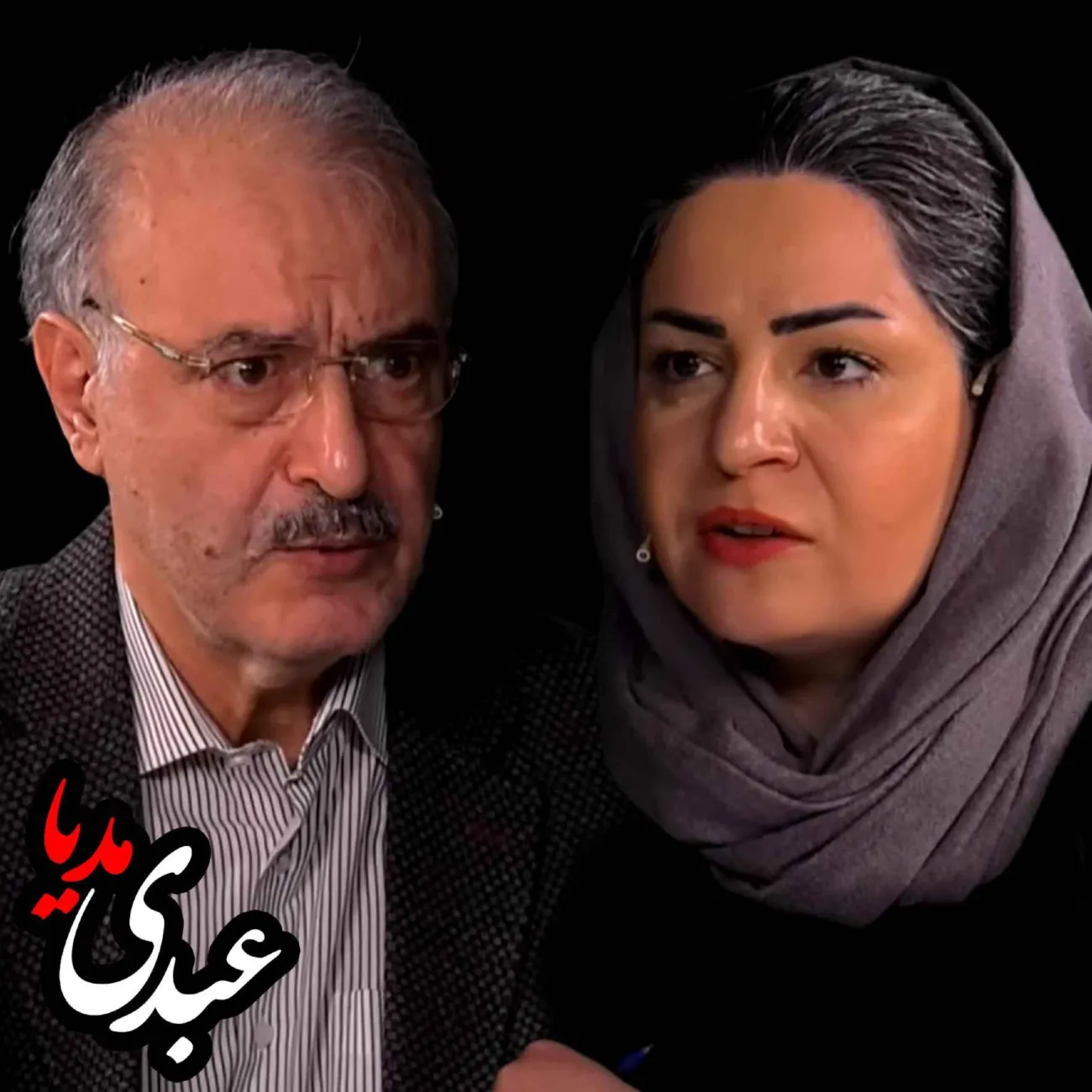
Listen | A Difficult Dilemma for Iran; Awaiting a Courageous Decision - Hashtak with Abdollah Ramezanzadeh on the Hasht Shab YouTube Channel.
Connections with Figures and Currents
Abdollah Ramezanzadeh is situated within a network of political-intellectual connections with prominent figures of Iran's reformist movement.
Close Reformist Circle
Ramezanzadeh's most central connections are with Seyyed Mohammad Khatami and Mohammad Reza Khatami.
Participation Front Colleagues
At the party level, his relationship with Saeed Hajjarian, Ali Tajernia, Abdollah Nasseri, Morteza Moballegh, Azar Mansouri, Shahindokht Molaverdi, Mohammad Kianoushrad, Mohsen Armin, Mohsen Aminzadeh, Ali Shakouri-Rad, and other prominent figures of the Participation Front forms his close party network.
Co-Detainees of 2009
At the level of co-detainees of 2009, his relationship with members of the Central Council of the Participation Front who were arrested in those days forms his judicial experience network. During his furlough from prison, Mehdi Karroubi, Hashem Aghajari, and Amirhossein Aravin visited him—connections that form his sustained reformist-protest communications network.
Co-Signatories of the 77-Person Statement
At the level of post-2019 civil activism, his relationship with Mehdi Mahmoudian, Isa Saharkhiz, Hassan Asadi Zidabadi, Reyhaneh Tabatabai, and other signatories of the 77-person statement forms his recent activism network.
Media Network
At the media level, Ramezanzadeh's consistent presence in prominent Persian-language media outlets forms his media communications network.
Conclusion
Abdollah Ramezanzadeh is one of the most prominent figures of the reformist movement over the past two decades. With a unique combination of a multidimensional academic-executive-political background, six years of experience as Secretary and Spokesperson of the Cabinet during Khatami's second term, a distinctive Kurdish-Bijari identity, central role in the Participation Front, leadership of the Coordinating Council of Reformists of Kurdistan, a highly publicized post-2009 judicial experience, the signing of the 77-person statement and summons to the Revolutionary Court, the experience of an illegal travel ban, and finally, his sustained presence as one of the most prominent analytical-critical voices of the reformist movement in Iran's public discourse, he occupies a unique position in the political structure of contemporary Iranian reformism.
Ramezanzadeh's distinguishing feature, on the first level, is his exceptional ability to connect different arenas—an ability in which a politician with an academic background plays a sustained role in prominent executive arenas, party activism, and civil activism. This connection has other examples among prominent reformist figures, but in Ramezanzadeh, it has found a special reflection through his Kurdish-Bijari identity and courageous resistance in the 2009 prison. On the second level, his notable persistence in political-analytical activity despite numerous judicial experiences—reflected in his signing of prominent post-2009 statements and his sustained media presence—is one of the notable aspects of his character. On the third level, his courageous resistance in prison—reflected in his refusal to conduct interviews and confess despite interrogators' pressure—is one of the notable examples of resistance by post-2009 political prisoners.
From an analytical perspective, Ramezanzadeh's position exemplifies the phenomenon of the "technocrat-reformist-spokesperson-prisoner-critic" in contemporary Iran—a phenomenon in which a figure with a distinguished multidimensional background, over decades, plays a sustained role in various arenas of politics, administration, analysis, and civil activism. This pattern, which has other examples among prominent figures of the Participation Front, has found a special reflection in Ramezanzadeh through his Kurdish-Bijari identity and his highly publicized role as spokesperson during Khatami's second term.
What is clear from today's perspective is that the topics Ramezanzadeh has addressed in his works and positions—from analysis of the Reform Era, the narrative of his experience as government spokesperson, press freedom, critique of the suppression of protests, critique of supervisory vetting, critique of principlist governments, defense of the rights of reformist figures against the judiciary, and the challenges of Iran's electoral process—remain among the most debated topics in contemporary Iranian political discourse. In a situation where Iran is in one of its most tense periods of socio-political discourse—particularly after the 2022 uprising, the 12-day Iran-Israel war in June 2025, and increasing internal challenges—Ramezanzadeh's analytical voice, with a combination of prominent historical reformist credibility, prominent judicial experience, and persistence in expressing his positions, is one of the main references for this discourse in Persian-language media.
Frequently Asked Questions
Who is Abdollah Ramezanzadeh?
Abdollah Ramezanzadeh (born 1961 in Bijar, Kurdistan province) is a reformist politician, a professor at the University of Tehran, a former governor of Kurdistan, the Secretary and Spokesperson of the second administration of Seyyed Mohammad Khatami, the Deputy Head of the Islamic Iran Participation Front, and the head of the Coordinating Council of Reformists of Kurdistan. He is among the most prominent reformist figures with a Kurdish-Bijari identity.
What are Ramezanzadeh's executive backgrounds?
Among Ramezanzadeh's most important executive backgrounds are: Head of the Planning and Program Department of the Ministry of Interior, Director General of Political Affairs of the Ministry of Interior, Governor of Kurdistan (in Khatami's first administration), Secretary and Spokesperson of the Cabinet (2001-2005), member of the Supreme Council of the Islamic Republic News Agency (2001-2005), and President of the Baseball, Softball, and Cricket Federation of the Islamic Republic of Iran.
What are Ramezanzadeh's party positions?
Among Ramezanzadeh's most important party positions are: member of the Central Council of the Islamic Iran Participation Front, Deputy Head of the Participation Front (since 2006), and Head of the Coordinating Council of Reformists of Kurdistan.
Why was Ramezanzadeh arrested in 2009?
Ramezanzadeh was arrested on June 13, 2009, one day after Iran's tenth presidential election, while going to the Political Bureau meeting of the Participation Front. According to published reports, he was beaten by security agents during the arrest and then transferred to Block 2-A of Evin Prison.
What were Ramezanzadeh's conditions of detention in 2009?
Ramezanzadeh was in solitary confinement until the 110th day after his arrest and was subjected to heavy interrogations. For nearly three months, neither his family members nor his lawyers were allowed to visit him. A notable feature of his detention was his courageous resistance against interrogators' pressure to conduct an interview and confess against others.
What was Ramezanzadeh's judicial sentence in the 2009 case?
On December 24, 2009, Ramezanzadeh was sentenced to six years in prison by Judge Abolghasem Salavati, the head of Branch 15 of the Tehran Revolutionary Court.
What is Ramezanzadeh's role in the 77-person statement?
After the suppression of the November 2019 protests, 77 political activists from various reformist spectrums published a statement demanding legal action against those responsible for shooting at people. Ramezanzadeh was among the most prominent signatories of this statement and, on July 4, 2020, along with 14 others, was summoned to court following a complaint by the Ministry of Intelligence and the IRGC Intelligence Organization.
What is Ramezanzadeh's view on press freedom?
In one of his notable analytical positions, Ramezanzadeh stated: "In my opinion, press control makes no sense except in special cases of high national security. That is two or three cases during the war and... and we did not have this issue during the Reform Era."
What is Ramezanzadeh's view on supervisory vetting?
In one of his notable positions, Ramezanzadeh called participating in parliamentary elections despite supervisory vetting "meaningless"—a position that received widespread coverage in Iran's tense electoral atmosphere.
What is the current status of Ramezanzadeh's judicial restrictions?
In one of his recent notable positions, Ramezanzadeh stated in a post: "I am subject to a travel ban without any court order and illegally." This position is a sign of illegal judicial restrictions on prominent reformist figures.
Is Abdollah Ramezanzadeh still active?
Yes, Abdollah Ramezanzadeh, as one of the most prominent analytical-critical voices of the reformist movement, remains active in Iran's public discourse. His consistent presence in prominent Persian-language media outlets is a sign of his sustained analytical activity. His analytical positions on the challenges of Pezeshkian's government, Iran's electoral process, the rights of reformist figures against the judiciary, and the future of the reformist movement continue to receive widespread coverage in Persian-language media. He also remains a sustained member of the Central Council of the Islamic Iran Participation Front and is considered one of the prominent analytical references of this movement.
Take less than a minute, register and share your opinion under this post.
Insulting or inciting messages will be deleted.
Sign Up