
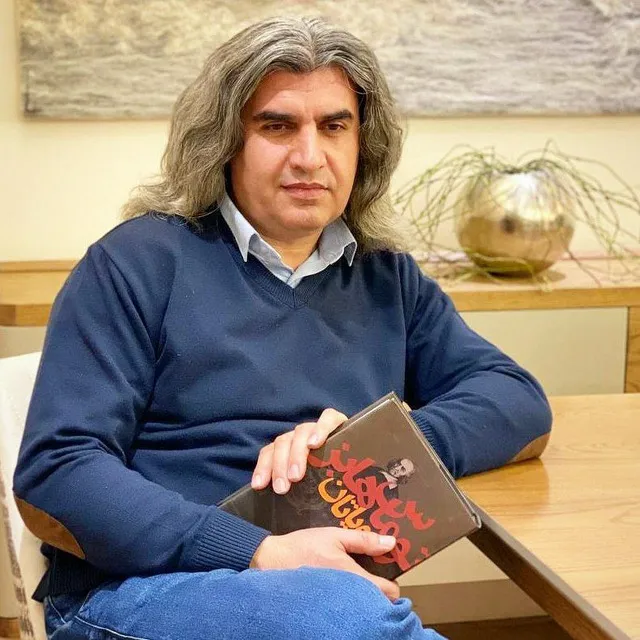
Seyyed Abdulhamid Ziaei, a poet, philosophy lecturer, researcher, and literary critic, is one of the most widely cited and multi-dimensional figures of the middle generation of contemporary Iranian religious-philosophical intellect. Hailing from the Bakhtiari tribe and holding a Ph.D. in comparative mysticism studies (along with a postdoctoral degree in the same discipline), he has become one of the few specialists in comparative mysticism and philosophy in Iran. His career includes several years of research at the Academy of Sciences of Tajikistan and India, serving as the director of the Iranian Cultural Center in New Delhi (2006–2009), editor-in-chief of the quarterly journal *Indo-Iranian Studies*, lecturing on philosophy at the University of Isfahan, hosting and serving as an expert guest on IRIB Channel 4's flagship program *The Meaning of Life*, and publishing more than 13 books across poetry, philosophy, comparative mysticism, and the sociology of religion. Through major works such as *In the Absence of God* (A Genealogy of Atheistic Thought), *In the Absence of Reason* (A Critique of Anti-Intellectualism in Mystical Literature), *Buddhism and Sufism*, and *Mysticism and Modernity*, Ziaei has established himself as a primary reference in comparative mysticism and philosophy of religion within Persian-language intellectual discourse.
Who is Abdulhamid Ziaei?
Seyyed Abdulhamid Ziaei (born 1975 in Chaharmahal and Bakhtiari), a poet, philosophy lecturer, researcher, author, literary critic, and holder of a Ph.D. in comparative mysticism, is one of the most widely cited and multi-dimensional figures of the middle generation of contemporary Iranian religious-philosophical intellect. Hailing from the Bakhtiari tribe, his unique path ranges from extensive studies at top Iranian universities (judiciary law and Persian literature at Allameh Tabataba'i University and the University of Tehran) and a Ph.D. in comparative mysticism to a postdoctoral degree in comparative mysticism that placed him among a limited group of specialists in comparative mysticism and philosophy in Iran. His career includes several years of research at the Academy of Sciences of Tajikistan and India, serving as director of the Iranian Cultural Center in New Delhi (2006–2009), serving as editor-in-chief of the specialized bilingual quarterly Indo-Iranian Studies, teaching philosophy at the University of Isfahan, and publishing more than 13 books across poetry, philosophy, comparative mysticism, and the sociology of religion—establishing him as a primary reference in comparative mysticism and philosophy of religion within Persian-language intellectual discourse.
Through seminal works such as In the Absence of God (A Genealogy of Atheistic Thought in Western Philosophy), In the Absence of Reason (A Critical Analysis of Anti-Intellectualism in Mystical Literature), Sociology of Ashura Distortions, Buddhism and Sufism (An Examination of Similarities and Connections Between Buddhism and Iranian Sufism), and Mysticism and Modernity, he became a major reference in this field. Within poetry, he occupies a prominent position in contemporary Persian literature through poetry collections such as In the Reincarnation of Words, Crying in the Dark, The Book of Oblivion, The Book of Doubt (which earned critical acclaim at the 11th International Fajr Poetry Festival in 2017), and Liberal Laylas.
The significance of Abdulhamid Ziaei in contemporary Iran's intellectual-literary sphere can be evaluated from several perspectives:
Interdisciplinary Synthesis: An exceptional ability to synthesize distinct domains—including poetry, philosophy, comparative mysticism, literature, literary criticism, and media—making him a rare multi-dimensional figure active in the Persian intellectual sphere.
Pioneering Specialization in Comparative Mysticism: Recognized as one of the few postdoctoral holders in this discipline in Iran, playing a pioneering role in bridging Eastern mystical traditions (particularly Buddhism) and Islamic mysticism (particularly Iranian Sufism).
Critical Framework on Anti-Intellectualism: A distinct intellectual framework critiquing the anti-rational tradition in mystical literature—reflected in his widely cited book In the Absence of Reason—where he critically analyzes the rejection of demonstrative reason in the works of Rumi, Sanai, Attar, and Ghazali.
Sustained Media Presence: Hosting and expert contributions across 30 episodes of the flagship television program The Meaning of Life (IRIB Channel 4, spring 2018), Radio Payam, and over 50 expert broadcast appearances, establishing him as a well-known intellectual-literary voice in Persian media.
International Background: Extensive research experience at the Academy of Sciences of Tajikistan and India, directing the Iranian Cultural Center in New Delhi, and publishing scholarly articles in Urdu and Russian, positioning him as a key bridge between the Persian-language intellectual sphere and the intellectual traditions of the Indian Subcontinent and Central Asia.
In one of his key analytical stances, Ziaei stated that "the meaning of human life is born out of an internal-external process," formulating a distinct theoretical framework regarding the philosophy of life that has been widely cited across Persian-language media.
Life and Background
Abdulhamid Ziaei was born in 1975 in Chaharmahal and Bakhtiari, a mountainous province in western Iran and the traditional homeland of the Bakhtiari people. He belongs to the Bakhtiari tribe—one of Iran's most prominent tribes in contemporary history, which has produced numerous influential cultural and political figures.
Born in 1975, Ziaei belongs to a generation whose early years coincided with the Islamic Revolution and the Iran-Iraq War, and who began their intellectual and literary pursuits during the Reform era in Iran.
Schooling
Ziaei completed his primary and secondary education in his birthplace of Chaharmahal and Bakhtiari. During this period, his interest in literature—particularly ancient classical and contemporary Persian poetry—took shape, forming the foundation of his poetic identity.
Education
Ziaei’s educational trajectory represents one of the most multi-dimensional academic paths among contemporary Persian-language intellectuals.
Tehran Universities (1995 Onward)
In 1995, Ziaei moved to Tehran after gaining university admission. He pursued two distinct fields:
Judiciary Law — at Allameh Tabataba'i University and the University of Tehran
Persian Literature — at the University of Tehran
He completed Master's degrees in both fields.
Ph.D. in Comparative Mysticism
Ziaei earned his doctorate in comparative mysticism—a field representing one of the most prominent interdisciplinary domains in the humanities.
Postdoctorate
He also completed postdoctoral research in comparative mysticism, placing him among a limited group of individuals specialized in this field in Iran.
National Elites Foundation Membership
Since 2006, Ziaei has been a member of Iran’s National Elites Foundation—a major center for identifying and supporting elite scientific and cultural figures in Iran.
International Academic Activity
The centerpiece of Ziaei’s international experience was several years of research at the Academy of Sciences of Tajikistan and India, which formed the foundation of his international comparative outlook.
Directorship of the Iranian Cultural Center in New Delhi (2006–2009)
From 2006 to 2009, Ziaei served as the director of the Iranian Cultural Center in New Delhi. Serving in one of Iran’s key cultural diplomacy posts in the Subcontinent established his sustained connection with Indian cultural and literary traditions.
Editor-in-Chief of Indo-Iranian Studies
From 2007 to 2009, Ziaei served as the editor-in-chief of Indo-Iranian Studies, a specialized bilingual quarterly published in Persian and English. This role in Indian studies publishing represented a notable aspect of his international work.
Lecturing on Philosophy at the University of Isfahan
Following his return from international assignments, Ziaei taught philosophy at the University of Isfahan, forming the core of his domestic academic experience.
Other Academic Roles
Researcher at the Academic Center for Education, Culture and Research (ACECR) Institute for Humanities and Social Sciences (2004–2006)
Content Production Specialist at the Iran Public Libraries Foundation (2010–2011)
Academic Advisor to the Soroush-e Mevlana Institute
Media Activity
A major chapter in Ziaei’s career is his sustained presence in Iranian television and radio as a host, expert guest, and writer.
The Meaning of Life Program
Ziaei’s most widely covered media work was hosting and serving as expert analyst for the 30-episode television program The Meaning of Life, broadcast on IRIB Channel 4 in the spring of 2018. The program, featuring discussions with Iranian thinkers and philosophers, was considered one of the most prominent philosophical-intellectual broadcasts on Iranian television in recent years.
Other Television Programs
Ziaei served as an expert guest on more than 50 episodes of specialized television programs—including Introduction to Thoughts, Chakavak, Dawn and Mist, and others—across Channels 1, 4, Jaam-e Jam 1, and foreign broadcasts of IRIB (2005–2006), making him a prominent broadcast expert in literature, mysticism, and philosophy.
Radio Payam
From 2010 to 2017, Ziaei served as an expert analyst, presenter, and writer for the nighttime segment of Radio Payam, providing a continuous media presence over several years.
Poetic Activity
Poetry constitutes a central chapter of Ziaei’s literary background.
Beginning of Poetic Career
Ziaei demonstrated poetic talent from adolescence. During and after his university years, he pursued poetry professionally.
Poetry Collections
In the Reincarnation of Words (Teka Publishing, 2008) — Debut collection containing selected ghazals and blank verse poems
Crying in the Dark
The Book of Oblivion
The Book of Doubt — Received critical acclaim at the 11th International Fajr Poetry Festival (2017)
Liberal Laylas (Hazzareh Qoqnoos, 2010)
Poetic Style
Ziaei’s poetic style synthesizes classical ghazal and blank verse. Key themes in his poetry include faith and doubt, philosophy, love, life and death, and mystical-existential thoughts—themes directly linked to his philosophical and mystical background.
Listen | Speech by Abdulhamid Ziaei on the Homeland
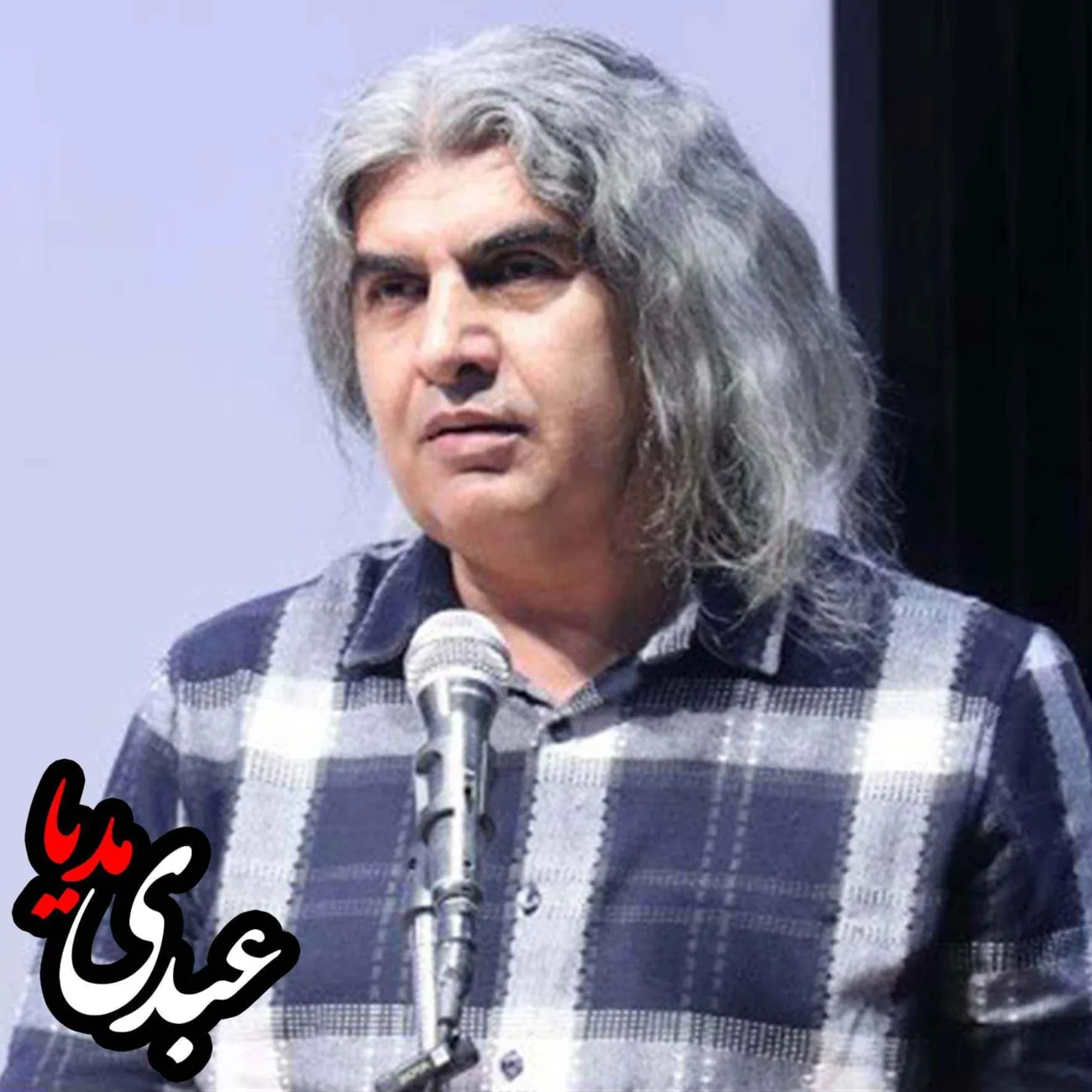
Research Activity The centerpiece of Ziaei’s research career is the production of a series of seminal works in philosophy, comparative mysticism, literature, and the sociology of religion.
Major Research Works Among Ziaei's most key research publications are:
Sociology of Ashura Distortions (Hazzareh Qoqnoos, 2008) — His debut research book, which critically evaluates authentic versus unverified historical aspects of Ashura based on documented sources.
Critical Edition of the Poetic Translation of Ramayana (IS Type Center New Delhi, 2008) — An edited edition of India's oldest romantic epic.
Medinat-ul-Sokhan (Iranian Cultural Center, New Delhi, 2008) — Poems by Indian poets in praise of the Prophet of Islam.
Love Poems of a Rebel (New Delhi, 2009) — A critical edition of the poetry collection (Divan) of Sarmad Kashani, an executed Iranian poet and mystic in India.
In the Absence of Reason (Fekr-e Azin, 2011) — A critical analysis of anti-intellectualism in mystical literature.
In the Absence of God (Avijeh Publishing) — A genealogy of atheistic thought in Western philosophy.
Buddhism and Sufism (2015) — An investigation of similarities and connections between Buddhism and Iranian Sufism.
I Am Yours — An alternative narrative on the lives of Shams and Rumi.
Mysticism and Modernity (2019) — His major recent research-analytical work.
Specialization in Comparative Mysticism Ziaei's defining characteristic is his pioneering expertise in comparative mysticism. His landmark works analyze Fana (annihilation) in Islamic mysticism alongside Nirvana in Buddhism, "suffering" and "liberation from suffering" in Buddhist doctrine compared to Rumi's poetry, and mystical anthropology in contrast to modern anthropology.
Intellectual Framework
Throughout his intellectual and literary career, Abdulhamid Ziaei has articulated a distinct theoretical outlook.
Critique of Anti-Intellectualism in Mystical Literature The primary critical pillar of Ziaei’s work is his critique of anti-rationalism in Persian mystical literature. In his widely discussed book In the Absence of Reason, Ziaei argues that mystic figures such as Rumi, Sanai, Attar, and Ghazali, by rejecting demonstrative and philosophical reason while promoting intuitive and heart-based knowledge, contributed to the gradual fading of analytical philosophical thought in Iran until heart-centered intuition replaced intellectual inquiry.
This position, which critiques the master-disciple (Morad and Mored) relationship and absolute obedience as a manifestation of abandoning demonstrative reasoning in favor of blind compliance, represents one of his most widely cited critical stances.
Emphasis on Rationality A prominent aspect of Ziaei’s position is his defense of rationality and demonstrative reasoning. Standing in contrast to anti-rational traditions, this framework underpins his main intellectual works.
Comparative Approach The distinguishing feature of Ziaei’s intellectual framework is his comparative method. In his view, mapping similarities and differences across diverse thought traditions—from Buddhism and Islamic Sufism to Western philosophy and Eastern mysticism—forms the foundation for a deeper understanding of each tradition.
Analysis of Distortions in Religious History In Sociology of Ashura Distortions, Ziaei critiques historical distortions surrounding religious events, addressing one of the most debated topics in contemporary religious discourse.
The Meaning of Life In a key analytical stance, Ziaei declared: "The meaning of life is born out of an internal-external process in human existence." Defining meaning as a product of interaction between internal and external spheres of life constitutes a defining feature of his philosophical framework.
Connections with Figures and Movements
Abdulhamid Ziaei belongs to a network of intellectual and literary ties connecting contemporary Iranian thinkers and international traditions.
Iranian Intellectuals: His network encompasses prominent Iranian thinkers and scholars, many of whom participated in dialogues on his television program The Meaning of Life.
Mevlana Intellectual Center: Mystically, his work as an academic advisor to the Soroush-e Mevlana Institute anchors his close connection to contemporary Rumi studies.
International Institutions: Internationally, his ties to the Academy of Sciences of Tajikistan, the Academy of Sciences of India, and the Iranian Cultural Center in New Delhi form his global network.
Persian Media: His sustained presence on IRIB Channel 4, Radio Payam, Tehran Podcast, and other major platforms forms his media footprint.
Publishing Houses: His works have been brought to print by Hazzareh Qoqnoos, Avijeh, Teka, Fekr-e Azin, and the Iranian Cultural Center in New Delhi.
Conclusion
Abdulhamid Ziaei is one of the most widely cited and multi-dimensional figures of the middle generation of contemporary Iranian religious-philosophical intellect. Hailing from the Bakhtiari tribe, his extensive background spans top Iranian universities in law and literature, a Ph.D. and postdoctoral specialization in comparative mysticism, years of research at the Academies of Sciences of Tajikistan and India, directing the Iranian Cultural Center in New Delhi (2006–2009), editing the bilingual journal Indo-Iranian Studies, teaching philosophy at the University of Isfahan, hosting 30 episodes of The Meaning of Life on IRIB Channel 4, publishing over 13 books in poetry and research, and holding membership in the National Elites Foundation since 2006.
What sets Ziaei apart first is his ability to bridge distinct fields—maintaining an active presence across poetry, philosophy, comparative mysticism, literary criticism, media, and cultural diplomacy. Second, his critical defense of rationality—reflected in works like In the Absence of Reason and In the Absence of God—represents a notable intellectual legacy. Third, his international background in Tajikistan and India makes him a key link between Persian intellectual circles and the traditions of the Subcontinent and Central Asia.
Analytically, Ziaei exemplifies the "poet-philosopher-comparative researcher-media figure" model in contemporary Iran. His core themes—critiquing anti-intellectualism in mysticism, comparing Buddhism and Sufism, tracing atheism in Western thought, analyzing historical religious distortions, and exploring the meaning of life—remain central reference points in contemporary religious-philosophical discussions.
Frequently Asked Questions
Who is Abdulhamid Ziaei?
Seyyed Abdulhamid Ziaei (born 1975 in Chaharmahal and Bakhtiari) is an Iranian poet, philosophy lecturer, researcher, author, literary critic, and Ph.D. holder in comparative mysticism. He is among the few specialists in comparative philosophy and mysticism in Iran and has been a member of the National Elites Foundation since 2006.
What is Abdulhamid Ziaei’s educational background?
Ziaei studied judiciary law and Persian literature at Allameh Tabataba'i University and the University of Tehran, completing Master's degrees in both. He subsequently earned a Ph.D. and completed postdoctoral studies in comparative mysticism.
What are Ziaei’s most important research books?
His key research publications include Sociology of Ashura Distortions (2008), In the Absence of Reason (2011), In the Absence of God, Buddhism and Sufism (2015), Mysticism and Modernity (2019), I Am Yours, and Love Poems of a Rebel.
What are Ziaei’s primary poetry collections?
His major poetry books include In the Reincarnation of Words (2008), Crying in the Dark, The Book of Oblivion, The Book of Doubt (honored at the 2017 Fajr Poetry Festival), and Liberal Laylas (2010).
What is Ziaei’s critique of mystical literature?
In In the Absence of Reason, Ziaei argues that prominent mystics like Rumi, Sanai, Attar, and Ghazali, by marginalizing demonstrative reason in favor of intuitive heart-knowledge, weakened analytical philosophical thought in Iran. He also critiques absolute obedience within master-disciple relationships.
What is Ziaei’s international background?
Ziaei conducted research at the Academies of Sciences of Tajikistan and India for several years. His primary international role was serving as director of the Iranian Cultural Center in New Delhi from 2006 to 2009 and editor-in-chief of Indo-Iranian Studies (2007–2009).
What was The Meaning of Life program?
In spring 2018, Ziaei hosted and served as expert analyst for 30 episodes of The Meaning of Life on IRIB Channel 4, featuring dialogues with Iranian thinkers and scholars on philosophy and existence.
What is Ziaei’s view on the meaning of life?
Ziaei stated that "the meaning of life is born out of an internal-external process in human existence," defining meaning as an emergent outcome of interactions between internal reflections and external realities.
What is Ziaei’s specialization in comparative mysticism?
He specializes in bridging Eastern mystical traditions (especially Buddhism) with Islamic mysticism (especially Iranian Sufism), comparing concepts such as Fana and Nirvana, as well as Buddhist views on suffering with Rumi’s poetic teachings.
What are Ziaei’s primary research areas?
His research focuses on comparative mysticism, Western philosophy, analytical philosophy, Buddhism and Sufism, Eastern mystical traditions, Persian literature, philosophy of religion, history of religions, and classical and contemporary Persian poetry.
Is Abdulhamid Ziaei still active?
Yes, Abdulhamid Ziaei remains active across intellectual, literary, and media spheres through podcasts, new publications, and workshops on philosophy, the Masnavi, and mystical studies across institutions such as the University of Tehran, the Iranian Clinical Hypnosis Association, Ehya Psychology Clinic, Baharan Institute, and Golestan Cultural Center.

Take less than a minute, register and share your opinion under this post.
Insulting or inciting messages will be deleted.
Sign Up