
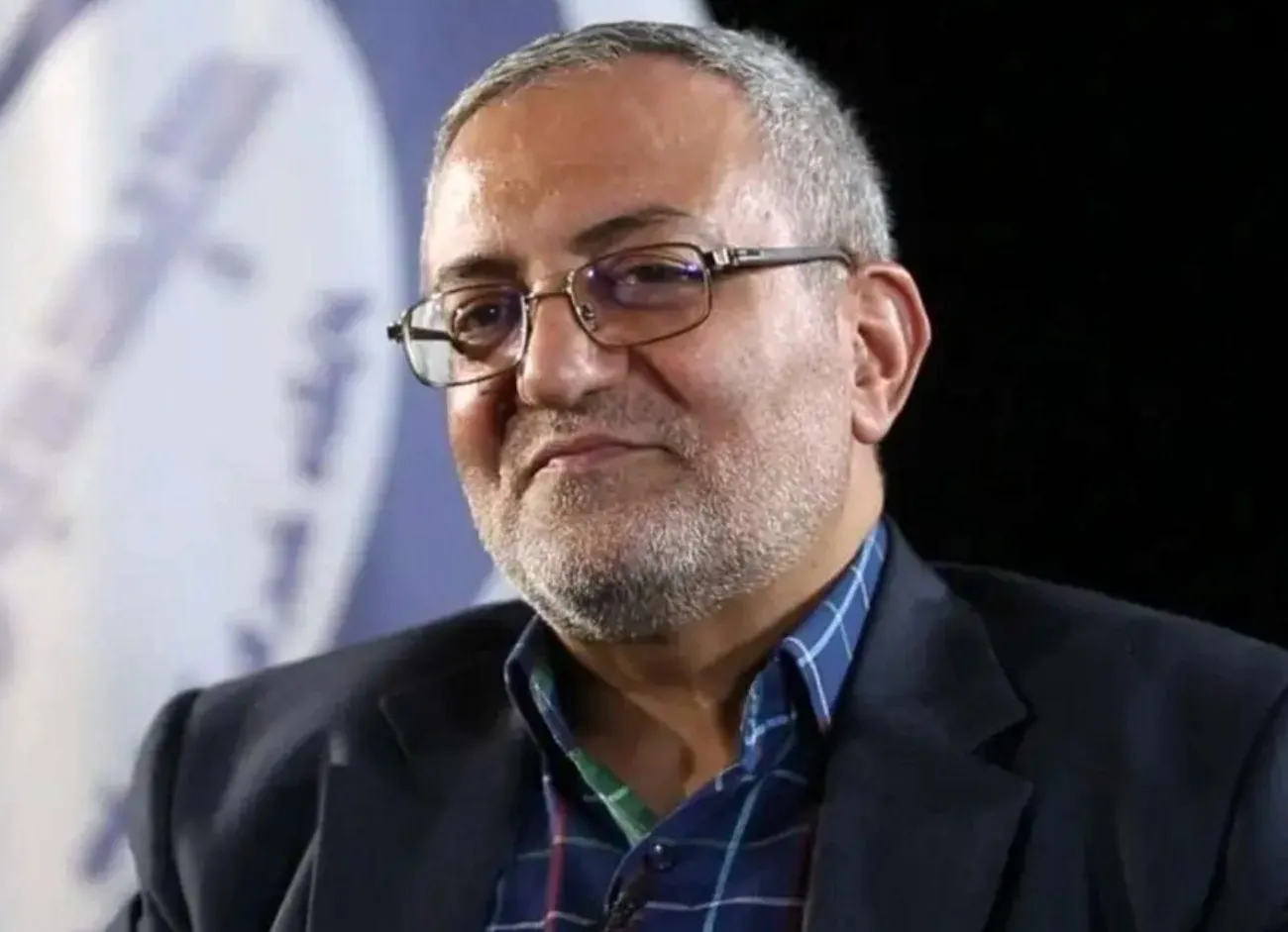
Abbas Palizdar—the former secretary of the 7th Parliament's Investigation Committee into the Judiciary—is one of the most controversial and widely discussed figures in the phenomenon of "corruption whistleblowing" in contemporary Iranian history. By delivering a shocking speech in 2008 at Hamadan University and explicitly naming senior state officials, he dealt a massive blow to public opinion, which subsequently led to his arrest and conviction on charges of disclosing classified documents and defamation. His case remains highly paradoxical: while the Head of the Judiciary at the time verified the accuracy of the vast majority of his report, it was Palizdar himself who was sent to prison. Following years of silence and discursive shifts, Palizdar returned to the absolute forefront of the news cycle in 2024 by claiming ownership of a 54,000-page dossier detailing the corruption of state officials. In this piece, Abdi Media, alongside a meticulous anatomy of his career and institutional links, republishes and analyzes his unprecedented video and visual documentary statements regarding the dimensions of these cases and his fierce confrontation with Saeid Mortazavi.
Who is Abbas Palizdar?
Abbas Palizdar—born on September 1, 1968—is the former secretary of the 7th Parliament's Investigation Committee into the Judiciary and the judicial representative to the parliament's Article 90 Commission. He stands as one of the most highly publicized, polarizing, and controversial figures associated with the phenomenon of "insider corruption whistleblowing" in the contemporary history of the Islamic Republic of Iran.
Palizdar vaulted into national notoriety following a landmark speech at Bu-Ali Sina University in Hamadan on May 3, 2008. In this address, he explicitly named and detailed explosive economic corruption allegations against an array of the state's senior political and clerical figures. The video of the speech spread aggressively across the early Iranian internet, ultimately resulting in his arrest on June 10, 2008, under orders from Tehran's notorious prosecutor at the time, Saeid Mortazavi. Palizdar was initially handed a 10-year prison sentence, which was later reduced to 6 years on appeal.
The significance of Abbas Palizdar in modern Iranian political history is defined by several unique dynamics:
The Weight of Systemic Insider Status: Because of his official institutional role within the parliament's investigation committee—which was tasked specifically with auditing the judiciary—his claims carried severe "intranational" weight. This insider credibility was paradoxically confirmed when Ayatollah Mahmoud Hashemi Shahroudi (the Head of the Judiciary at the time) famously admitted that "80 to 85 percent of Palizdar's report is accurate"—an extraordinary admission that validated the substance of his findings even as the state apparatus sent Palizdar to prison for exposing them.
A Symbol of Judicial Paradox: In the Iranian public discourse, the "Palizdar Phenomenon" evolved into a textbook case study highlighting the state's aggressive legal retaliation against anti-corruption whistleblowers, rather than the powerful figures exposed by them.
The 2024 Resurgence: After nearly two decades of relative obscurity and forced silence, Palizdar re-emerged at the absolute center of the national news cycle following a highly publicized interview with Didban Iran in November 2024. In this appearance, he claimed to possess a "54,000-page dossier exposing the corruption of 52 senior state officials," initiating an entirely new chapter of controversy around his name.
Beyond his legislative roles, Palizdar also operated as an expert investigator for the Presidential Special Inspection Office during the first administration of Mahmoud Ahmadinejad—a sensitive posting that granted him deep access to the executive branch's internal compliance and investigative documents. According to official records, Palizdar is a disabled wartime veteran (Janbaz) with a 45% disability rating, though hardline state media platforms aggressively tried to question his military credentials following his 2008 speech to undermine his public standing.
Early Life and Background
Abbas Palizdar was born on September 1, 1968, positioning him within the specific generation of Iranians who witnessed the final years of the Pahlavi monarchy as young children, and navigated their adolescence through the immediate upheaval of the 1979 Islamic Revolution, the grueling eight-year Iran-Iraq War, and the subsequent era of national reconstruction.
Publicly available records regarding his early upbringing, hometown, and direct family history remain intensely limited. This obscurity is commonplace among high-level internal auditors, regulatory inspectors, and judicial figures in Iran, whose public personas are almost exclusively defined by their institutional mandates rather than their personal lives.
What is verified across all historical accounts is that Palizdar deployed directly to the frontlines during the Iran-Iraq War as a young man, sustaining severe combat injuries that earned him an official 45% war-veteran disability status. This frontline history later served as a vital shield for his defense team against aggressive hardline accusations branding him a "foreign spy." Conversely, immediately following the political earthquake of his Hamadan speech, state-aligned propaganda organs routinely attempted to "cast doubt on his veteran status"—a conventional character-assassination tactic frequently deployed by political factions to strip controversial whistleblowers of their revolutionary legitimacy.
Institutional Career
Throughout the mid-2000s, coinciding with the broader rise of the Osoolgara (Principlist/Conservative) political wave, Palizdar operated within two highly critical oversight nodes of the Iranian state:
Expert for the Presidential Special Inspection Office
During the first term of President Mahmoud Ahmadinejad (2005–2009), Palizdar worked directly as an investigative expert within the President's Special Inspection apparatus. This regulatory body, which answers directly to the presidency, afforded him visibility into highly sensitive financial, bureaucratic, and operational compliance reports across various state institutions.
Secretary of the 7th Parliament's Investigation Committee
The true turning point of Palizdar's institutional career occurred when he was appointed as a member and the official Secretary of the 7th Parliament's Judicial Investigation Committee. Operating under the auspices of the parliament's Article 90 Commission—the constitutional clearinghouse for processing public and state grievances against the three branches of government—this committee held the massive mandate of auditing systemic corruption and tracking the internal handling of economic crimes within the judiciary itself. Concurrently, Palizdar functioned as the parliamentary judiciary liaison, a dual positioning that drastically eased his ability to legally requisition sensitive state documents.
The Historic Judicial Audit
The parliamentary mandate that empowered Palizdar's investigations was entirely unprecedented within the modern legislative history of the Islamic Republic:
November 1, 2004: The motion for a comprehensive judicial audit is introduced, bearing the signatures of 100 MPs from the 7th Parliament.
January 18, 2005: The parliament overwhelmingly passes the motion with 165 votes in favor.
May 21, 2008: The finalized investigative report is officially read aloud on the floor of the parliament.
The investigative scope was tightly anchored around five explosive thematic pillars:
The structural condition, management, and extrajudicial activities within the country's prison systems.
The legality and factional nepotism involved in high-level judicial appointments and dismissals.
The personal or commercial exploitation of state authority and asset seizures by senior judicial figures.
The financial and operational performance of organizations subordinate to the judiciary (such as the State Organization for Registration of Deeds and Properties).
The systematic mishandling, stalling, or burying of major economic corruption cases.
The resulting two-year investigation represented the most sweeping legislative audit ever conducted into the Iranian judiciary since 1979, amassing a mountain of classified dossiers, corporate records, and internal memos that were placed directly into the hands of the committee's core staff, chief among them Abbas Palizdar.
The Hamadan University Speech (May 3, 2008)
The absolute flashpoint of Palizdar's public life took place on May 3, 2008, at Bu-Ali Sina University in Hamadan—exactly two weeks before the investigation committee's official report was scheduled to be read on the floor of the parliament.
Stepping far outside standard bureaucratic channels, Palizdar delivered a scorched-earth public address where, for the first time in the history of the Islamic Republic, a state official explicitly listed senior clerical and political leaders by name, accusing them of rampant economic exploitation and grand corruption. Among his most explosive public assertions were:
Corruption Allegations Against the Rafsanjani Family: Palizdar launched a direct assault on the financial dealings of Akbar Hashemi Rafsanjani and his children, declaring to the student audience: "The economic corruption of this family is so vast that it is practically unspeakable." He specifically accused the clan of orchestrating illicit Daewoo automotive import monopolies and siphoning billions of dollars out of the national treasury by systematically evading state customs duties.
The Alleged Sabotage of Rahman Dadman's Aircraft: In one of his most shocking claims, Palizdar asserted that the May 2001 airplane crash that killed Rahman Dadman (the highly popular Minister of Roads and Transportation under reformist President Mohammad Khatami) was not a mechanical accident but a deliberate act of domestic sabotage. This claim sent shockwaves through the country's political factions.
The Roster of 44 Corrupt Senior Officials: In a final, defiant interview with Radio Farda shortly before his capture, Palizdar stated that his committee had definitively established airtight corruption files against "44 of the highest-ranking leaders in the country." While he withheld the complete list of names in that specific broadcast, the assertion triggered a massive political crisis within the establishment.
National Blowback
The Hamadan speech spread across early video-sharing platforms and internet forums at lightning speed. Within weeks, it became the most watched and debated piece of political media in Iran. While it was widely celebrated by a deeply cynical public eager to see elite corruption exposed, it triggered immediate, furious condemnation from the targeted institutional centers of power, who viewed the public naming of the state's ruling elite as an existential breach of national security.
Arrest, Prosecution, and Judicial Paradox
The state's legal retaliation against Palizdar was swift, severe, and highly controversial:
The June 10, 2008 Arrest
On June 10, 2008—roughly a week after the video of his speech achieved total saturation online—Palizdar was officially arrested. The warrant was issued by the 2nd Investigative Branch of the Government Employees Prosecutorial Office, signed directly by Tehran's powerful and feared Prosecutor-General, Saeid Mortazavi.
The initial charges leveled against him included: "financial malpractice, defamation, the dissemination of falsehoods aimed at disturbing public anxiety, and the spreading of illegal rumors." Court records indicate that upon honoring a formal summons to the Erg Square courthouse, he was immediately denied bail, processed, and transferred straight to prison.
The 10-Year Initial Sentence
In June 2009, following a year of intense pre-trial detention, the primary court found Palizdar guilty on all counts, handing down a crushing 10-year prison sentence. The finalized conviction listed an array of severe state security violations:
Acting against national security
The unauthorized disclosure of classified state documents
Breach of public trust (Khiyanat dar Amanat)
Acquisition of illicit wealth
Slander, defamation, and spreading falsehoods
The severity of the sentence—particularly the inclusion of "acting against national security"—underscored the judiciary's intent to make an institutional example out of him for breaking the unspoken rule against exposing the inner circle of the ruling elite.
Provisional Bail and Appeal (2010)
In July 2009, his legal team successfully secured his temporary release from prison after posting a 350-million-Toman bail pending his formal appeal. This temporary release was highly unusual given the national security weight of his initial sentence, hinting at behind-the-scenes political friction regarding how his file was being handled.
In 2010, the Court of Appeals partially overturned the lower court's rulings:
National Security Charge: Palizdar was completely acquitted of "acting against national security"—a major legal victory that signaled the state's security case against him was fundamentally flawed or politically manufactured.
Remaining Charges: The convictions for disclosing classified documents, breach of trust, and defamation were upheld.
Final Sentence: His active prison term was officially reduced to 6 years.
The Shahroudi Admission
The crowning paradox of the entire Palizdar affair remains the formal public commentary offered by Ayatollah Hashemi Shahroudi, the Head of the Judiciary during this era. Even as his own courts were actively prosecuting and jailing Palizdar, Shahroudi explicitly admitted to journalists and officials that "80 to 85 percent of Palizdar's report is completely accurate."
This historic admission confirmed to the public that Palizdar was not being jailed for lying, fabricating evidence, or inventing stories; he was being jailed solely because of the public method of his whistleblowing and for exposing classified state files outside of approved bureaucratic backrooms.
The Forced Apology to Rafsanjani (June 2009)
In June 2009, while facing the peak of his judicial pressure inside prison walls, a formal letter signed by Palizdar was released, addressed directly to Akbar Hashemi Rafsanjani. In the letter, Palizdar explicitly walked back his explosive 2008 claims against the Rafsanjani family, offering a total apology. The letter read:
"Across the 124 distinct corruption dossiers reviewed by the parliamentary investigation committee, there was not a single case or file associated with your Excellency or your children, and I never intended to claim otherwise within the final official text of the parliamentary report."
This apology remains one of the most deeply contested elements of his legacy. Official state media platforms point to it as definitive proof that his initial Hamadan speech was packed with emotional, baseless lies. Conversely, independent analysts and human rights groups view the letter as a classic byproduct of intense, coercive judicial pressure exerted on a detained whistleblower facing a decade behind bars.
The 2024 Resurgence
Following nearly two decades of absolute media exile and quiet corporate survival, Palizdar chose November 2024 to shatter his silence, granting an explosive, multi-part video interview to the independent news outlet Didban Iran that immediately revived the controversies of the 2000s.
Unprecedented Revelations: Abbas Palizdar’s Confrontation with Saeid Mortazavi In a widely distributed broadcast, Palizdar provided a raw, behind-the-scenes accounting of his original 2008 arrest, details of his brutal legal interrogations, and a direct, face-to-face confrontation with his chief nemesis, former prosecutor Saeid Mortazavi, re-litigating the exact mechanisms used by the state to suppress his original anti-corruption findings.
Shocking New Claims
In his 2024 media blitz, Palizdar did not merely repeat his old talking points; he introduced an entirely new, highly dangerous slate of allegations against the old guard of the establishment:
The 54,000-Page Archive: He claimed to currently possess an active, highly secure private archive consisting of over 54,000 pages of authenticated documents detailing systemic financial crimes committed by 52 senior Iranian officials across multiple decades.
Naming Hojjatoleslam Niyazi as the Source: Palizdar dropped a political bombshell by naming Hojjatoleslam Gholam-Hossein Niyazi (the former Head of the General Inspection Organization of Iran) as the high-level insider who originally leaked the most damaging judicial corruption dossiers to his parliamentary team.
The Assault on the Mohammad Yazdi Estate: He leveled devastating new financial corruption and land-grabbing allegations against the family and estate of the late Ayatollah Mohammad Yazdi (the former Head of the Judiciary and a prominent ultra-conservative member of the Guardian Council).
The Turn Against Ahmadi-Nejad: Despite his early links to the 2005 administration, Palizdar used the interview to tear down Mahmoud Ahmadinejad, accusing his inner circle of participating in the very structural corruption they publicly claimed to fight.
The €1 Billion Diesel Auto Fraud: He detailed a specific, alleged €1 billion financial fraud scheme embedded deep within the corporate structures of the domestic manufacturing giant, Iran Khodro Diesel.
Institutional Fallout
The 2024 interview provoked a furious backlash from hardline Osoolgara media outlets. In a highly telling move, the Islamic Revolutionary Guard Corps-affiliated Fars News Agency published a sharp editorial demanding that the "Judiciary immediately intervene and hold Palizdar accountable" for his sweeping statements. This reaction demonstrated that his words still retained the power to deeply rattle the political establishment. Concurrently, moderate and state-aligned critics alike heavily cited his 2009 forced apology letter to Rafsanjani, arguing that his history of walking back his claims severely damaged the baseline credibility of his new 2024 allegations.
Analytical Assessment: The "Insider Whistleblower"
Abbas Palizdar represents a textbook example of the structural "insider whistleblower" (Whistleblower-e Darouni) within an authoritarian political framework. Unlike external dissidents or exiled journalists, Palizdar’s power stemmed entirely from his formal integration into the state apparatus—his veteran status, his presidential investigator credentials, and his parliamentary clearance.
Frequently Asked Questions (FAQs)
Who is Abbas Palizdar? Abbas Palizdar (born September 1, 1968) is an Iranian former legislative official who served as the Secretary of the 7th Parliament's Investigation Committee into the Judiciary. He also worked as an investigator for the Presidential Special Inspection Office under Mahmoud Ahmadinejad. He became one of the most famous insider anti-corruption whistleblowers in modern Iranian history following a highly controversial public speech in 2008.
What exactly did he say during the infamous 2008 Hamadan Speech? Speaking at Bu-Ali Sina University, Palizdar bypassed all official reporting channels to publicly accuse a long list of senior clerical and political leaders of grand economic corruption. Most notably, he accused Ayatollah Hashemi Rafsanjani and his children of siphoning billions via illicit auto import monopolies, and controversially asserted that the fatal 2001 plane crash of Transport Minister Rahman Dadman was an act of internal sabotage.
Why was he prosecuted if he was a parliamentary investigator? Palizdar was arrested on June 10, 2008, under orders from Tehran Prosecutor Saeid Mortazavi. The state accused him of illegally disclosing classified top-secret documents, defamation, and acting against national security. While he was initially sentenced to 10 years, an appeals court acquitted him of the national security charge in 2010, reducing his active sentence to 6 years.
Was his anti-corruption report actually true? In a stunning institutional paradox, the Head of the Judiciary at the time, Ayatollah Mahmoud Hashemi Shahroudi, explicitly stated on the record that "80 to 85 percent of Palizdar's report is completely accurate." This proved that his conviction was not based on fabrication, but rather on the fact that he exposed state secrets directly to the public without factional authorization.
Why did he apologize to Rafsanjani in 2009? In June 2009, while facing intense legal isolation and severe prison conditions, Palizdar signed an official letter completely recanting his allegations against Hashemi Rafsanjani and his family, stating that no such corruption evidence existed in the committee's files. While state media cites this as proof of his dishonesty, independent observers view it as a forced confession extracted under intense judicial duress.
What new claims did Palizdar make during his 2024 return? After nearly 20 years of silence, Palizdar re-emerged in November 2024 via an interview with Didban Iran. He claimed to hold a highly secure private archive of 54,000 pages detailing the financial crimes of 52 senior officials. He launched brand-new corruption allegations against the family of the late Ayatollah Mohammad Yazdi, accused Mahmoud Ahmadinejad's circle of systemic hypocrisy, and alleged a €1 billion fraud scheme inside Iran Khodro Diesel.
How did the Iranian political establishment react to his 2024 allegations? The interview triggered immense anger within hardline political circles. The IRGC-affiliated Fars News Agency demanded that the judiciary immediately prosecute Palizdar for spreading unchecked allegations. Conversely, critics from various factions pointed to his 2009 recantation letter as evidence that his dramatic claims lack baseline analytical credibility.
Take less than a minute, register and share your opinion under this post.
Insulting or inciting messages will be deleted.
Sign Up