
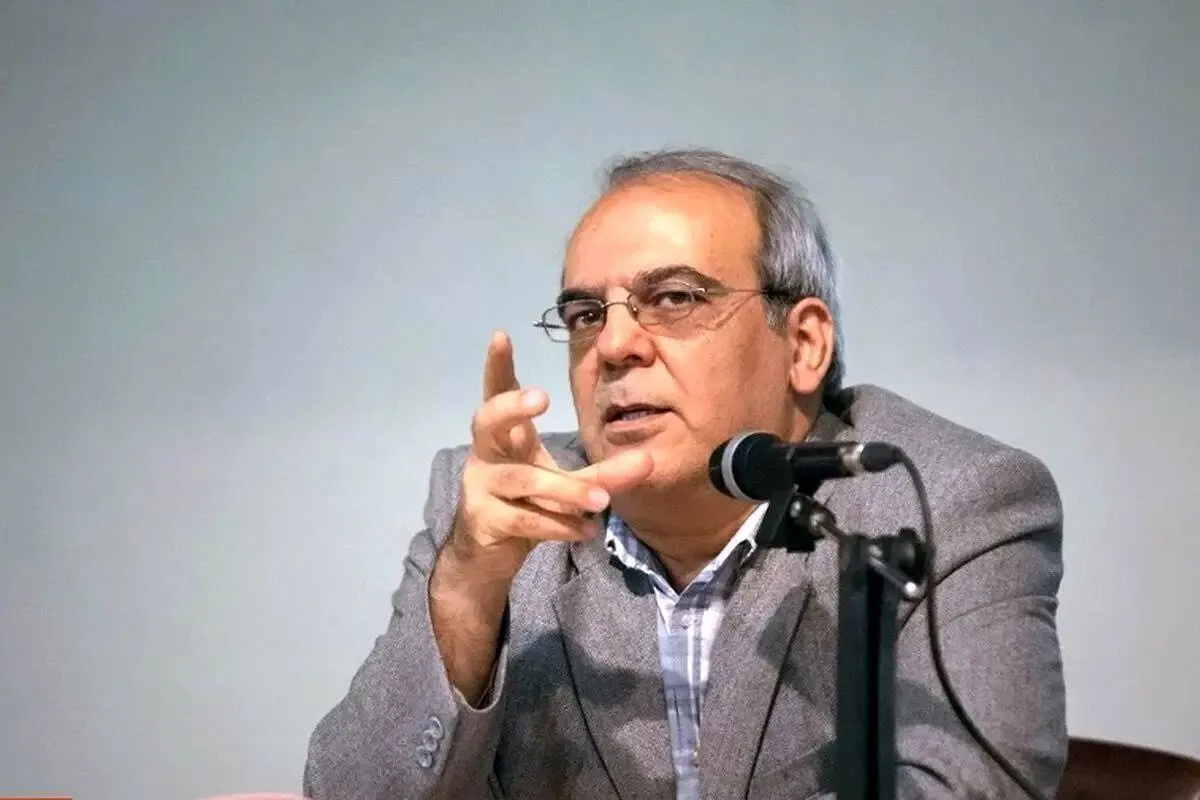
Abbas Abdi, a political activist, social researcher, reformist journalist, and member of the Strategic Council of the 14th government, is one of the most widely discussed and multifaceted figures in Iran's contemporary political-intellectual sphere. Having experienced roles from being one of the student leaders of the 1979 U.S. Embassy hostage-taking and a member of Mir-Hossein Mousavi's government to the editor-in-chief of prominent reformist newspapers "Salam" and "Sobh-e Emrooz," he gained fame through the highly publicized 2002 polling case on charges of espionage. Abdi, who over four decades has undergone a notable transformation from a revolutionary following the Imam's line to a reformist critic and advisor to a moderate government, is currently recognized as one of the most important intellectual-political advisors to Masoud Pezeshkian. In one of his recent positions, he stated: "No positive outlook is seen in any of the country's financial, monetary, social, international, or media systems."
Who is Abbas Abdi?
Abbas Abdi (born June 22, 1956, in Tehran) is a political activist, social researcher, reformist journalist, prominent analyst of Iran's political space, and a member of the Strategic Council for Cabinet Selection and Policy Formulation of the 14th government. He is one of the most widely discussed and, at the same time, multifaceted figures in Iran's contemporary political-intellectual sphere. With a unique path—from being one of the student leaders of the 1979 U.S. Embassy hostage-taking and the 444-day event that has shaped Iran-U.S. relations to this day, to membership in the Office of Information and Research of the Prime Minister's Office in Mir-Hossein Mousavi's government during the war, to editorship of prominent reformist newspapers Salam and Sobh-e Emrooz in the 1990s, to membership in the Central Council of the Islamic Iran Participation Front at the beginning of the Reform Era, to his high-profile arrest on November 3, 2002, on charges of espionage and publishing the results of a poll on relations with America, and finally, to his central role on the Strategic Council of the 14th government under President Masoud Pezeshkian—Abdi has become one of the most cited examples of the intellectual-political transformation of the first generation of revolutionary-reformist Iranians. With a combination of a technical educational background, a long history of social-statistical research, a sustained media presence, and several prison experiences, Abdi has become one of the most influential analytical voices in Iran's intellectual-reformist space. In recent years, he has been recognized as one of the most important intellectual-political advisors to President Pezeshkian.
The importance of Abbas Abdi in Iran's contemporary political-intellectual sphere can be examined from several angles. First, his unique historical background linked to one of the most widely discussed events of contemporary Iranian history—as one of the leaders of the 1979 U.S. Embassy hostage-taking, an event that is among the most significant post-revolutionary events in Iran and has played a strategic role in shaping Iran-U.S. relations to this day. Second, his notable discursive transformation over four decades—from a student leader following the Imam's line in the early post-revolutionary days, to one of the most prominent reformist analysts, and finally, to one of the most widely discussed voices critical of the power structure—which is considered one of the prominent examples of the discursive transformation of the first revolutionary generation. Third, his prominent contribution to social research and polling—particularly through the Ayandeh Research Institute—which became one of the prominent sources for understanding Iranian public opinion and ultimately led to the highly publicized 2002 polling case on relations with America. Fourth, his sustained media-analytical presence—from editing Salam and Sobh-e Emrooz in the 1990s to his regular column writing in prominent Persian-language media—which has made him one of the most widely read analysts in Iran's intellectual-political space. Fifth, his central institutional position in the 14th government—as a member of the Strategic Council for Cabinet Selection and Policy Formulation—which places him among the most prominent intellectual-political advisors to Masoud Pezeshkian.
In one of his recent notable analytical positions, Abdi stated: "No positive outlook is seen in any of the country's financial, monetary, social, international, or media systems." This position, which presents a structural critique of Iran's current situation, is one of his most widely discussed critical statements in the recent period.
Life and Background
Abbas Abdi was born on June 22, 1956, in Tehran. Born in the mid-1950s, Abdi belongs to a generation that came of age during the peak of the protest movements leading to the Islamic Revolution and began his highly publicized political activities as part of the first generation of post-revolutionary students.
Detailed information about Abdi's family and school years is limited in open media sources. This limited information is relatively common among the first generation of student-revolutionary activists, who primarily focused on their political-intellectual activities.
Education
Abdi graduated in Polymer Engineering from Amirkabir University of Technology in Tehran. This technical background, which stands in contrast to his later expertise in social research and political science, is one of the interesting aspects of his academic background—a background in which a polymer engineer ultimately became one of Iran's most prominent social researchers.
Amirkabir University, which is among the oldest and most prestigious technical universities in Iran, was one of the active centers of the pre-revolution student movement during Abdi's studies—an environment that formed the foundation of his political-revolutionary activity.
Role in the U.S. Embassy Hostage-Taking (November 1979)
The most prominent moment of Abbas Abdi's revolutionary career was his presence as one of the student leaders of the U.S. Embassy hostage-taking in November 1979.
The Embassy Seizure
On November 4, 1979, a group of students known as the "Students Following the Imam's Line"—including Abbas Abdi, Ebrahim Asgharzadeh, Mohsen Mirdamadi, Habibollah Bitaraf, Masoumeh Ebtekar, and others—stormed the U.S. Embassy in Tehran and held approximately 52 American diplomats hostage for 444 days.
This event, which occurred in the tense post-revolutionary atmosphere and a few months after the admission of Mohammad Reza Pahlavi to the United States for medical treatment, is among the most significant events of contemporary Iranian history and has played a strategic role in shaping Iran-U.S. relations to this day.
Abdi's Position in This Event
Abdi was among the most prominent student leaders of this group. This position, in which a polymer engineering student played a central role in one of the most widely discussed events of contemporary Iranian history, formed the foundation of his political-historical identity.
Meeting with Barry Rosen in Paris (1998)
One of the symbolic aspects of Abdi's post-revolutionary career was his meeting with Barry Rosen—one of the American diplomats held hostage for 444 days in 1979—in Paris in 1998. This meeting, which occurred in the détente diplomacy atmosphere of the Reform Era and 18 years after the severance of Iran-U.S. relations, received widespread coverage in international media—particularly from the symbolic perspective of a former hostage-taker meeting one of his former hostages.
According to published accounts, Eric Rouleau, a prominent French journalist, served as the intermediary in arranging this meeting.
Later Reassessment
In later years, in a notable discursive shift, Ayatollah Ali Khamenei, in remarks published in recent years, noted: "Most of those who took the U.S. Embassy have gone and apologized." This position, which indirectly referred to the discursive transformation of some of the hostage-taking activists, is one of the debated aspects of this event's legacy.
Activity in Mir-Hossein Mousavi's Government
After the hostage crisis and during the Iran-Iraq war, Abdi joined the official structure of the system.
Abdi was a member of the seven-member Fars Committee and the Foreign Information Department of the Office of Information and Research of the Prime Minister's Office in Mir-Hossein Mousavi's government. This position, in which Abdi worked in the information-research structure of Mousavi's government, is one of the notable aspects of his executive background.
Activity in the Judicial Structure
After the end of Mousavi's government, Abdi joined the judicial structure. As the head of the Social Research Office in the Political Deputy of the Prosecutor General's Office, the foundation of his later expertise in social research was formed.
Cultural Deputy of the Center for Strategic Research
Abdi also served as the Cultural Deputy of the Center for Strategic Research of the Presidency. This center, which was established during the presidency of Akbar Hashemi Rafsanjani and later became one of the main centers for the formation of reformist discourse, was one of Abdi's most important intellectual-political platforms.
The secret of the fall of authoritarian governments Abbas Abdi and Sahand Iranmehr: Why should we read dictators?
In this special interview, Abbas Abdi talks about the secret of the survival of authoritarian governments, the reasons for the fall of dictators, Iran's experience, the fate of the Islamic Republic, the role of society, the power crisis and the future of politics in Iran in a program hosted by Sahand Iranmehr.
Editorship of Prominent Reformist Newspapers
The central chapter of Abdi's media career was his membership on the editorial boards of prominent reformist newspapers.
Salam Newspaper
Abdi was a member of the editorial board of Salam newspaper—published by Mohammad Mousavi Khoeiniha and considered one of the most prominent media outlets of the "Imam's Line" current in the 1990s. This newspaper, which was ultimately shut down following the publication of news about the press bill in July 1999 and formed one of the key contexts for the University of Tehran dormitory events, laid the foundation for Abdi's media-reformist identity.
Arrest in the 1990s
According to published reports, Abdi was arrested and imprisoned in the 1990s while serving as editor of Salam newspaper for publishing news about Hossein Ali Montazeri's illness. This arrest, which occurred in the tense atmosphere surrounding Ayatollah Montazeri, was one of his first prison experiences.
1994 Arrest
Abdi was also arrested by the Ministry of Intelligence for a period in 1994—an arrest that was one of the notable events in the tense media atmosphere of that period.
Sobh-e Emrooz Newspaper
Abdi was also a member of the editorial board of Sobh-e Emrooz—another prominent reformist newspaper at the beginning of the Reform Era. This newspaper, founded by Saeed Hajjarian, was one of the main platforms of the 1997 "Second of Khordad" discourse.
Membership in the Participation Front
Abdi was a member of the Central Council of the Islamic Iran Participation Front—Iran's most prominent reformist party in the 2000s. This party, founded in 1998 by supporters of Seyyed Mohammad Khatami, was among the most central organizations of the Second of Khordad current.
The Ayandeh Research Institute and the Polling Case (2002)
The most prominent chapter of Abdi's research-legal career was the case of the Ayandeh Research Institute in November 2002.
The Ayandeh Research Institute
The Ayandeh Research Institute was a private polling center in Iran where Abdi served as a board member. This institute, which was among the first private polling institutions in Iran, became one of the prominent sources for understanding Iranian public opinion during the Reform Era.
The High-Profile Poll on Relations with America
In September 2002, three polls—conducted by the Ayandeh Institute, the Humanities and Social Sciences Research Institute of ACECAR, and the National Institute for Public Opinion Polls—were conducted on negotiation and relations with America. The results indicated that 75% of Iranians supported negotiations between Iran and America.
This result, published in the tense atmosphere following George W. Bush's "Axis of Evil" speech, met with a severe reaction from the judicial structure.
Arrest on November 3, 2002
On the eve of the anniversary of the U.S. Embassy seizure, on November 3, 2002, Abdi was arrested on charges of espionage by order of Saeed Mortazavi. This symbolic coincidence—the arrest of a former hostage-taking leader on espionage charges on the anniversary of the same event—was one of the notable aspects of this case.
In the same case, Behrouz Granpayeh and Hossein Ghazian were also arrested. Abdi's family members were also subjected to accusations.
Charges
The charges against Abdi and his colleagues, according to the official account, included:
Propaganda against the system through polling.
Selling information abroad.
Cooperation with prominent American polling institutions such as Gallup, V/M, and Zogby.
Transferring sensitive and classified information abroad.
Initial Sentence and Case Outcome
According to published accounts, Abdi was initially sentenced to 8 years in prison. However, according to Abdi's own account in later years: "Fortunately, the final court verdict was acquittal, and the charges were not proven."
This case was one of the most high-profile political-legal events in Iran in the 2000s and influenced the country's political atmosphere for several months.
"Abdi's Confession"
One of the debated aspects of this case was an interview Abdi gave to Iranian television during his detention, in which he confessed to some matters. This interview, which was reflected in international media as "Abdi's confession," was analyzed in prominent BBC Persian reports as a "third type of treatment." After his release, Abdi stated: "We should have been more cautious."
Activity in the 14th Government
The most prominent recent development in Abdi's career is his membership in the Strategic Council for Cabinet Selection and Policy Formulation of the 14th government.
Role During the Transition
After Masoud Pezeshkian's victory in the 2024 presidential election, Abdi, as one of the prominent intellectual-political advisors of the 14th government, played a highly visible role in the Strategic Council for Cabinet Selection. This role, in which one of the most prominent reformist analysts participated in shaping the structure of the new government, is one of the most important recent chapters of his career.
Intellectual Challenges
In a notable conversation with Hesam Salamat on the future of reformism, Abdi stated: "Pezeshkian and his supporters must try to bring others closer to themselves. If reformists want to reach an agreement with the top, they must first be able to form a coalition at the bottom and in society." This position, which emphasizes the necessity of social coalition before negotiating with the power structure, is one of the notable aspects of his intellectual framework.
Views and Analytical Positions
Throughout his intellectual-political career, Abbas Abdi has formulated a clear intellectual framework.
Structural Critique of Iran's Current Situation
In one of his recent notable analytical positions, Abdi stated: "No positive outlook is seen in any of the country's financial, monetary, social, international, or media systems, and given the lack of vision and stagflation, the situation will worsen. Worse than the general situation is the lack of vision and hope."
This position, which presents a multidimensional critique of Iran's current situation, is one of his most widely discussed critical statements in the recent period.
Analysis of Social Protests
In one of his notable positions on recent social protests, Abdi stated: "These young people are the product of this very education system, and now they ask families to control them." This position, which emphasizes structural responsibility in the formation of protests, is a sign of his sociological view of current events.
Critique of Filtering
In one of his recent notable positions, Abdi critiqued internet filtering: "The issue of white lines on Twitter has also clarified many things, including that contrary to official claims in defense of filtering, tens and hundreds of thousands of users access these platforms through VPNs."
Critique of Ambiguous Arrests
In a recent phase, Abdi critiqued arrests without media transparency: "Suppose these individuals have done things that warrant summoning or arrest. If so, the public should be informed, and officials cannot do these things in silence."
View on War and Social Advancement
In one of his recent notable analytical positions following the 12-day Iran-Israel war, Abdi stated: "The war improved the social standing of Iranians. People's behavior during this war was very civic. In general, the public space of Iranian society did not allow civic behavior to be violated. This war, overall, improved the social standing of Iranians in the world."
This position, which presents a positive view of Iranians' civic behavior during the war, is one of the notable aspects of his analytical framework in the recent period.
Connections with Figures and Currents
Abbas Abdi is situated within a network of intellectual-political connections with prominent figures of Iran's reformist-moderate current.
The Embassy Hostage-Taking Generation
At the historical level, Abdi's relationship with his former colleagues in the embassy hostage-taking—including Ebrahim Asgharzadeh, Mohsen Mirdamadi, Habibollah Bitaraf, Masoumeh Ebtekar, and others—formed his early network of relationships. Many of these figures became key figures in the reformist current in later decades.
The Reformist Current
At the reformist level, Abdi's relationship with Mohammad Khatami, Saeed Hajjarian, Mohammad Reza Khatami, Mostafa Tajzadeh, and other prominent figures of the Participation Front forms his close reformist network.
The Circle Close to Pezeshkian
At the level of the 14th government, Abdi's relationship with Masoud Pezeshkian, Mohammad Javad Zarif, and other prominent figures of the new government forms his current institutional network.
The Research-Analytical Circle
At the research level, Abdi's relationship with Hossein Ghazian and Behrouz Granpayeh, Hesam Salamat, Mostafa Mehr Ayin, and other prominent sociological analysts forms his research network.
Media Presence
At the media level, Abdi's consistent presence in prominent Persian-language media outlets—including Etemad Online, Ensaf News, Tabnak, Azad (podcast), Asr-e Iran, and other platforms—forms his media communications network.
Conclusion
Abbas Abdi is one of the most widely discussed and multifaceted figures in Iran's contemporary political-intellectual sphere. With a unique combination of a unique historical background, a technical educational background, a sustained presence in the post-revolutionary executive structure, high-profile media-reformist activity, a pioneering contribution to Iran's social-statistical research, several prison experiences, a symbolic meeting with Barry Rosen in Paris, and finally, a central role on the Strategic Council of the 14th government under President Masoud Pezeshkian, he occupies a unique position in Iran's contemporary political-intellectual structure.
Abdi's distinguishing feature, on the first level, is his notable discursive transformation over four decades—a transformation in which one of the student leaders following the Imam's line in 1979 ultimately became one of the most widely discussed reformist critical voices and one of the advisors to a moderate government. This transformation, which has other examples among the first generation of revolutionary activists, has found a special reflection in Abdi through his frankness in presenting criticism and his sustained contribution to social research. On the second level, his exceptional ability to connect different arenas—from a technical background, to revolutionary background, to executive-intelligence activity, to journalism, to statistical-social research, to political analysis, to government advisory—is one of the notable aspects of his multifaceted character. On the third level, his exceptional persistence in public discourse—reflected in his consistent presence in Persian-language media despite repeated prison experiences—is one of the notable aspects of his political-intellectual character.
From an analytical perspective, Abdi's position exemplifies the phenomenon of the "revolutionary-reformist-researcher-analyst" in contemporary Iran—a phenomenon in which a figure with a prominent revolutionary background, over decades, plays a sustained role in various intellectual, media, research, and political arenas. This pattern, which has other examples among the first generation of student-revolutionary activists, has found a special reflection in Abdi through his central role in one of the most widely discussed events of contemporary Iranian history and his prominent contribution to social research.
What is clear from today's perspective is that the topics Abdi has addressed in his works and positions—from Iran-U.S. relations, the future of reformism, structural critique of Iran's current situation, analysis of social protests, critique of filtering, assessment of the 12-day Iran-Israel war and Iranians' civic behavior, and the outlook of Pezeshkian's government—remain among the most debated topics in contemporary Iranian political-social discourse. In a situation where Iran is in one of the most tense periods of its political-social discourse—particularly after the 12-day Iran-Israel war in June 2025 and increasing internal challenges—Abdi's analytical voice, with a combination of prominent historical credibility, distinctive research background, and a central institutional position on the Strategic Council of the 14th government, is one of the main references for this discourse in Persian-language media.
Frequently Asked Questions
Who is Abbas Abdi?
Abbas Abdi (born June 22, 1956, in Tehran) is a political activist, social researcher, reformist journalist, prominent analyst of Iran's political space, and a member of the Strategic Council for Cabinet Selection and Policy Formulation of the 14th government. He was one of the student leaders of the 1979 U.S. Embassy hostage-taking and later became one of Iran's most prominent reformist figures.
What is Abbas Abdi's educational background?
Abdi graduated in Polymer Engineering from Amirkabir University of Technology in Tehran. This technical background was later combined with his expertise in social research and political science.
What was Abdi's role in the U.S. Embassy hostage-taking?
Abdi was among the student leaders of the "Students Following the Imam's Line" who, on November 4, 1979, stormed the U.S. Embassy in Tehran and held approximately 52 American diplomats hostage for 444 days. This event is one of the most widely discussed events in contemporary Iranian history.
What was Abdi's meeting with Barry Rosen?
In 1998, 18 years after the severance of Iran-U.S. relations, Abdi met with Barry Rosen—one of the American diplomats held hostage for 444 days in 1979—in Paris. This meeting, which occurred in the détente diplomacy atmosphere of the Reform Era, received widespread coverage in international media.
What was the 2002 polling case?
In September 2002, the Ayandeh Research Institute, along with two other institutes, published a poll in which 75% of Iranians supported negotiations between Iran and America. Following this poll, on November 3, 2002, Abdi was arrested on charges of espionage by order of Saeed Mortazavi. The charges included cooperation with Gallup, V/M, and Zogby.
What was Abdi's sentence in the 2002 case?
Abdi was initially sentenced to 8 years in prison. However, according to his own account in later years: "Fortunately, the final court verdict was acquittal, and the charges were not proven."
What are Abdi's media backgrounds?
Abdi was a member of the editorial board of prominent reformist newspapers Salam and Sobh-e Emrooz. In the 1990s, he was arrested for publishing news about Hossein Ali Montazeri's illness in Salam. He was also arrested by the Ministry of Intelligence in 1994.
What are Abdi's executive backgrounds?
Among Abdi's most important executive backgrounds are: membership in the Fars Committee and the Foreign Information Department of the Office of Information and Research of the Prime Minister's Office in Mir-Hossein Mousavi's government, head of the Social Research Office in the Political Deputy of the Prosecutor General's Office, and Cultural Deputy of the Center for Strategic Research of the Presidency.
What is Abdi's role in the 14th government?
Abdi is a member of the Strategic Council for Cabinet Selection and Policy Formulation of the 14th government under President Masoud Pezeshkian—a position that places him among the most prominent intellectual-political advisors of this government.
Is Abbas Abdi still active?
Yes, Abbas Abdi, as a member of the Strategic Council of the 14th government, a prominent analyst of Iran's political space, and one of Masoud Pezeshkian's intellectual advisors, is one of the most active figures in Iran's intellectual-reformist discourse. His consistent presence in prominent media outlets is a sign of his sustained activity. His recent analyses of social protests, Iranians' civic behavior during the 12-day Iran-Israel war, the challenges of Pezeshkian's government, the future of reformism, and critique of filtering have received widespread coverage in Persian-language media
Take less than a minute, register and share your opinion under this post.
Insulting or inciting messages will be deleted.
Sign Up