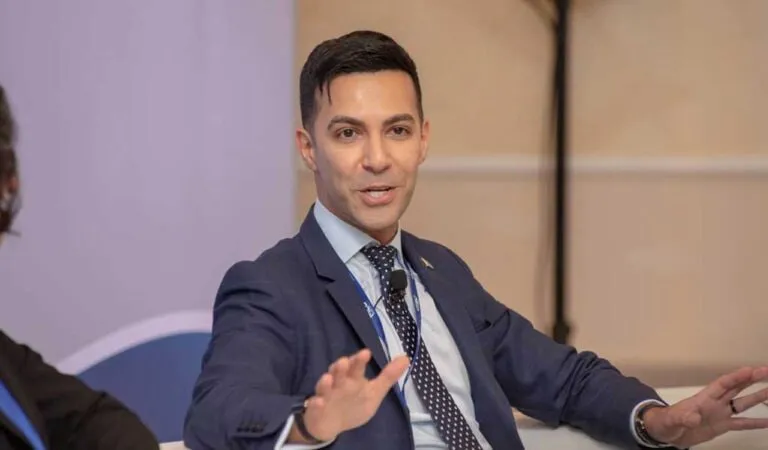
Ali Vaez (full name Alireza Vaezzadeh) is a prominent analyst, researcher, and expert on Iranian affairs. He serves as the Iran Project Director and Senior Advisor to the President of the International Crisis Group and is considered one of the most well-known and influential Iranian-born analysts in the field of Iran’s nuclear diplomacy and foreign policy at the international level. Over more than a decade of work, Vaez has become a key reference point for Western media, policymakers, and diplomats seeking to understand Iran—particularly its nuclear file, sanctions regime, and negotiations.
Who is Ali Vaez?
Ali Vaez (full name Alireza Vaezzadeh) is a prominent analyst, researcher, and expert on Iranian affairs. He serves as the Iran Project Director and Senior Advisor to the President of the International Crisis Group and is one of the most well-known and influential Iranian-origin analysts in the field of nuclear diplomacy and Iranian foreign policy at the international level. Over more than a decade of work, Vaez has become a key reference point for Western media, policymakers, and diplomats seeking to understand Iran—particularly its nuclear program, sanctions, and negotiations.
The importance of Ali Vaez in the field of diplomacy and international analysis can be examined from several perspectives. First, he played an active and recognized role in the process leading to the 2015 nuclear agreement (JCPOA), to the extent that the International Crisis Group described his efforts as helping “bridge the gap between Iran and the P5+1.” Second, Vaez acted as an informal “Track II” diplomat and analyst in contact with all negotiating parties, becoming a source of ideas for resolving technical and political challenges in the negotiations. Third, his extensive media presence in the world’s leading outlets—from The New York Times and The Washington Post to CNN and BBC—has made him one of the most cited analytical voices on Iran.
At the same time, Vaez’s activities—particularly his proximity to nuclear diplomacy processes and his views on engagement with Iran—have made him a controversial figure. Critics, especially among opponents of the Islamic Republic and supporters of a harder policy approach, have interpreted his work as aligned with Iranian interests—allegations that Vaez and the International Crisis Group strongly reject. This profile aims to present a balanced and accurate account of his career, role, and surrounding controversies.
Life and Background
Ali Vaez, full name Alireza Vaezzadeh, was born into an educated and academic family in Iran. His father, Karim Vaezzadeh (1931–2018), was a surgeon and professor at Shiraz University of Medical Sciences—a background that placed Vaez in a scientific and academic environment. This family setting played a significant role in shaping his intellectual development.
Vaez’s educational path is one of the most unusual among political analysts, transitioning from natural sciences to political science and international relations. He initially studied biotechnology and earned a PhD in Biotechnology from the University of Geneva in Switzerland. He later shifted to international relations and obtained a master’s degree in International Relations from the Johns Hopkins School of Advanced International Studies (SAIS). This scientific-technical background, combined with his later political expertise, distinguishes him: he is able to understand both the technical dimensions of Iran’s nuclear program (such as enrichment, centrifuges, and fuel cycles) and its political implications. From 2008 to 2010, he was a postdoctoral researcher at Harvard University.
Early Career: Journalism and Research
Before entering policy analysis and diplomacy, Vaez spent more than a decade in journalism. He worked as a correspondent for Radio Free Europe/Radio Liberty in Switzerland and regularly collaborated with major international media outlets including the BBC, CNN, NPR, and Reuters. This experience strengthened his ability to communicate complex analysis in accessible language.
In research, Vaez served as Iran Project Director at the Federation of American Scientists in Washington, where he focused on Iran’s nuclear and missile programs. This role solidified his expertise in the technical dimensions of Iran’s nuclear issue.
Vaez has also been active in academia as an adjunct professor at Georgetown University’s Edmund A. Walsh School of Foreign Service and as a fellow at the Johns Hopkins School of Advanced International Studies. He is fluent in Persian, English, and French.
Role in the International Crisis Group and the Nuclear Negotiations
A turning point in Vaez’s career came in 2012 when he joined the International Crisis Group, a global NGO working on conflict prevention and resolution. The organization is considered one of the world’s most respected think tanks in international conflict analysis. Vaez was recruited by Rob Malley—later head of the Crisis Group and then U.S. Special Envoy for Iran under the Biden administration—and quickly became the organization’s senior Iran analyst.
Role in the JCPOA negotiations
Vaez played an active role in the Iran–P5+1 nuclear negotiations, which intensified in 2013. He attended negotiation sites as an observer and closely followed the process. According to reports, most negotiating parties consulted him, and he became a source of ideas for resolving technical and political deadlocks.
This role, a form of Track II diplomacy, allowed him to function as an informal intellectual intermediary helping bridge gaps between negotiating sides. His media analysis also aimed to build public support for a deal.
In late 2013, Vaez and Louise Arbour (then President of the International Crisis Group) traveled to Iran and met with figures including Akbar Hashemi Rafsanjani and other officials. On September 17, 2015—about two months after the JCPOA was signed—the Crisis Group published a report acknowledging the group’s and Ali Vaez’s role in facilitating the agreement.
After this period, Vaez was promoted to Iran Project Director and Senior Advisor to the President of the International Crisis Group, a position he still holds. Reports also suggest that Rob Malley later attempted to bring Vaez into the U.S. State Department under the Biden administration, but security concerns prevented it.
Analytical and Media Work
Vaez is one of the most active and widely cited analysts on Iran in international media. He regularly publishes in major outlets including The New York Times, The Washington Post, The Guardian, The Atlantic, Foreign Policy, and Foreign Affairs, and frequently appears on CNN, BBC, Al Jazeera, and NPR.
His analysis focuses on Iran’s nuclear program, sanctions and their impact, diplomacy and negotiations, regional tensions, and domestic developments in Iran. He is also a co-author of the book How Sanctions Work: Iran and the Impact of Economic Warfare, which examines the consequences of economic sanctions on Iran.
In recent years, Vaez has analyzed issues such as Iran–Israel military tensions, attacks on nuclear facilities, and the prospects for reviving the nuclear deal. His general approach emphasizes diplomacy, avoiding large-scale war, and finding negotiated solutions to the nuclear dispute.
Take less than a minute, register and share your opinion under this post.
Insulting or inciting messages will be deleted.
Sign Up