
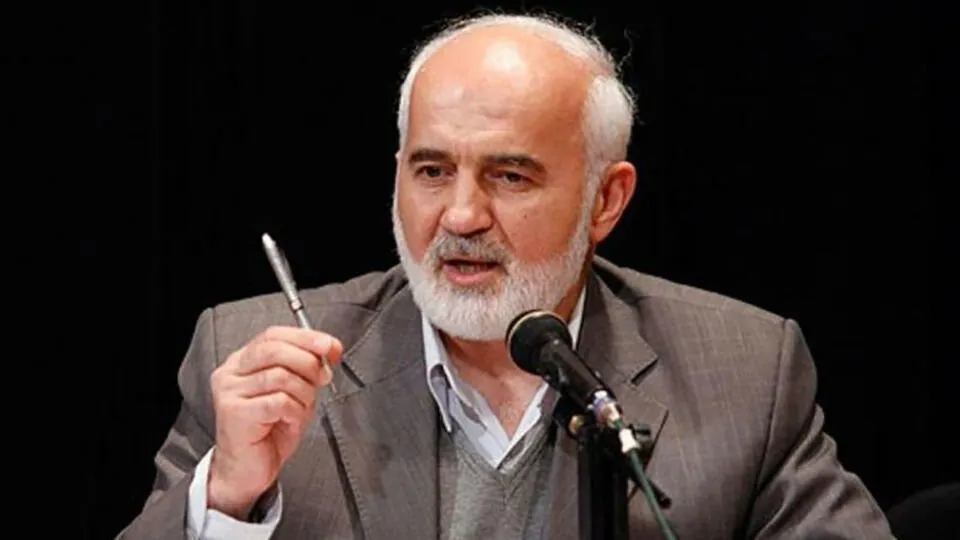
Ahmad Tavakoli (31 May 1951 – 23 July 2025) was a politician, economist, university professor, and one of the prominent and long-standing figures of the principlist/conservative camp of the Islamic Republic of Iran. He was among the most influential members of parliament, administrators, and economic-political theorists of the past four decades in Iran.
Throughout his long career, Tavakoli held numerous positions—including government spokesperson, Minister of Labour, multiple-term member of Parliament, head of the Majlis Research Center, and member of the Expediency Discernment Council. In the final years of his life, he became widely known as one of the most active and persistent figures in the fight against economic corruption.
Who is Ahmad Tavakoli?
Ahmad Tavakoli (10 June 1951 – 23 July 2025) was an Iranian politician, economist, university professor, and one of the prominent and long-standing figures of the conservative (principlist) faction of the Islamic Republic of Iran. He was one of the most influential members of parliament, senior administrators, and economic-political theorists of the past four decades in Iran.
Throughout his long career, Tavakoli held numerous positions—from government spokesperson and Minister of Labour to multiple-term member of parliament, head of the Parliamentary Research Center, and member of the Expediency Discernment Council. In his later years, he became widely known as one of the most active figures fighting economic corruption in Iran
Importance in Iran’s political-economic history
Ahmad Tavakoli’s significance can be examined from several perspectives.
First, he was one of the few principlist politicians who consistently and openly criticized the economic performance of various governments—regardless of their political orientation—and was known as an “insider critic” of the system.
Second, his two presidential campaigns (the 6th and 8th elections), in which he came in second place against the eventual winners (Akbar Hashemi Rafsanjani and Mohammad Khatami), made him a major figure in Iran’s electoral politics.
Third, in his later years, he founded and led the NGO “Transparency and Justice Watchdog,” turning him into a symbol of anti-corruption efforts and opposition to rent-seeking within Iran’s political system.
Tavakoli died on 23 July 2025, after a heart attack and several days in intensive care, at the age of 74. His funeral was held on 26 July 2025 in Tehran at the shrine of Imamzadeh Ainali and Zainali in Punak. His death triggered widespread reactions across Iran’s political spectrum, reflecting his cross-factional standing.
Life and background
Ahmad Tavakoli was born on 10 June 1951 in Behshahr, Mazandaran Province, northern Iran. He grew up in a religious family and spent his childhood and adolescence in the same city. His roots in Behshahr later became reflected in his first parliamentary term, when he represented the city.
His educational path combined technical and humanities disciplines. He initially studied electrical engineering at Shiraz University (formerly Pahlavi University), but later shifted toward economics. He eventually earned a PhD in Economics in 1996 from the University of Nottingham in the United Kingdom.
This academic background formed the foundation of his later work in economic policy-making.
His academic credentials were at times subject to media controversy, with critics questioning aspects of his educational record, while supporters and Tavakoli himself rejected these claims. This debate remained a minor political controversy but did not significantly affect his standing as an economic thinker.
After returning to Iran, he served as an assistant professor in the Department of Political Science at Shahid Beheshti University in Tehran, retiring in 2013.
Early political activity after the 1979 revolution
Ahmad Tavakoli entered politics shortly after the 1979 Islamic Revolution and quickly became an active figure in the revolutionary government structure.
Government spokesperson and Minister of Labour
One of his earliest major roles was serving as government spokesperson under Prime Minister Mohammad-Ali Rajai during the highly turbulent early 1980s.
He later became Minister of Labour and Social Affairs in the first cabinet of Mir-Hossein Mousavi. However, his tenure was short, and he resigned due to fundamental ideological and economic disagreements with the government’s economic approach during wartime. Tavakoli supported market-oriented economics and reduced state intervention, while Mousavi’s government followed a state-controlled, rationing-based model.
Parliamentary career
Tavakoli entered parliament in the first term of the Islamic Consultative Assembly as the representative of Behshahr.
Presidential elections
He ran for president twice:
1993 (6th election):
He was the main challenger to Akbar Hashemi Rafsanjani. Although Rafsanjani won, Tavakoli’s unexpectedly strong performance was interpreted as public dissatisfaction with economic policies.
2001 (8th election):
He again ran as a leading conservative candidate against Mohammad Khatami. Despite Khatami’s landslide victory, Tavakoli again finished second and became a recognized national political figure.
Parliamentary leadership and policy influence
Tavakoli returned to parliament as Tehran’s representative and served in the 7th, 8th, and 9th terms (2003–2016).
Head of the Parliamentary Research Center
He served as head of the Parliamentary Research Center, the legislature’s main analytical body. Under his leadership, the center became an important source of economic policy analysis.
During this period, the center issued critical reports on Mahmoud Ahmadinejad’s economic policies, including subsidy reforms and monetary policies, demonstrating Tavakoli’s independence even within the conservative camp.
Criticism of Ahmadinejad’s government
Despite being a principlist, Tavakoli became one of the most prominent critics of Ahmadinejad’s economic policies, particularly regarding inflation, liquidity, subsidies, and fiscal discipline. This positioned him as a conservative critic within his own political faction
Failure in the 10th parliamentary election
In the 2016 parliamentary elections, Tavakoli ran as part of the conservative coalition in Tehran but finished 35th and failed to win a seat. This marked the end of his parliamentary career.
Expediency Discernment Council
After leaving parliament, he became a member of the Expediency Discernment Council, where he remained active until his death, although his participation decreased in later years due to health issues.
Transparency and anti-corruption activism
One of Tavakoli’s most lasting contributions was his anti-corruption activism. He founded the NGO “Transparency and Justice Watchdog,” focused on fighting corruption, rent-seeking, and promoting transparency.
He regularly exposed corruption cases, criticized illegal privileges and “luxury salaries,” and demanded transparency in government contracts and economic institutions.
Views and ideology
Market economy orientation
Tavakoli supported market-based economics and reducing government control, which partly explains his resignation from Mousavi’s government.
Social justice and anti-corruption
At the same time, he strongly emphasized social justice and protection of vulnerable groups, combining market economics with anti-corruption and equity concerns.
Independent political stance
He was known for criticizing governments regardless of political alignment, including Rafsanjani, Khatami, and Ahmadinejad.
Controversies
The main controversy surrounding Tavakoli involved disputes over his academic credentials, particularly his “doctor” title. These claims were rejected by his supporters.
He was also known for his outspoken and sometimes harsh criticism of political figures and governments.
Relations and political network
Tavakoli was a key figure in the principlist camp but maintained an independent stance.
He was related by marriage to Ali Larijani, linking him to one of Iran’s influential political families.
Conclusion
Ahmad Tavakoli was a prominent Iranian politician and economist who played a major role in Iran’s political and economic debates for over four decades. He combined technical economic expertise with political activism and became known as an “insider critic” of the system.
His legacy is particularly defined by his anti-corruption efforts and his independent stance within Iran’s conservative political spectrum.
Frequently Asked Questions
Who was Ahmad Tavakoli?
A conservative Iranian politician, economist, and former member of parliament known for his independent criticism and anti-corruption activism.
What was his educational background?
Electrical engineering (Shiraz University) and a PhD in Economics from the University of Nottingham.
What positions did he hold?
Government spokesperson, Minister of Labour, member of parliament, head of the Parliamentary Research Center, and member of the Expediency Council.
Why did he resign as minister?
Due to disagreements with the government’s state-controlled economic policies.
What is he best known for?
His anti-corruption activism and independent criticism of economic policies across different governments.
Take less than a minute, register and share your opinion under this post.
Insulting or inciting messages will be deleted.
Sign Up