
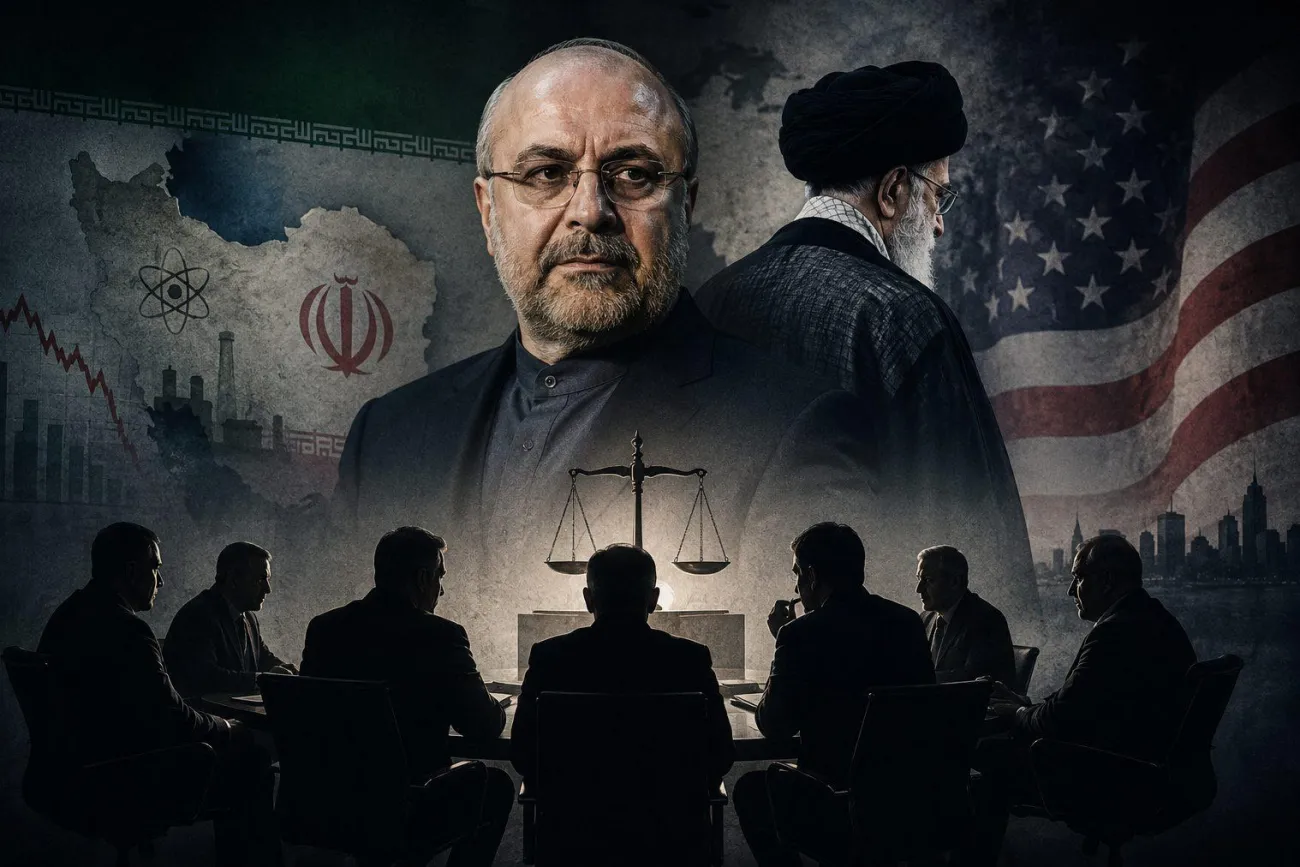
Some recent developments and movements have raised the speculation that within the hard core of power, more authority has been granted to pragmatic and security-executive factions.
Some recent developments and movements have raised the speculation that within the hard core of power, more authority has been granted to pragmatic and security-executive factions—a trend that could pave the way for a different kind of agreement with the United States.
In this context, the name of Mohammad Bagher Ghalibaf is being brought up more than before; a figure whom some sources consider to be one of the main actors in "managing the agreement."
This decision has seemingly either been delegated to General Ghalibaf through a decision-making channel parallel to the hard core of power, or has been facilitated by the absence and conditions arising from the transition phase and the lack of full stabilization of the third leader.
The primary driver of such a scenario is the mounting economic pressure that is now affecting and throwing into crisis not just the economy, but the very governance capacity of the Islamic Republic.
Some observers believe that what is unfolding in Tehran today is not merely an effort to reach an agreement, but could be a sign of a shift in the regime's decision-making architecture—a change in which a portion of macro decisions are made with greater flexibility and focus than in the past.
If the ability to make decisions that alter the reality on the ground without the need for the third leader's definitive approval materializes, the Islamic Republic may have entered a stage where the "necessity of survival" is effectively redefining the mode of governance.
This is a shift that could empower the government and new factions of power, and even the third leader, in a manner that was rarely imaginable during the era of Ayatollah Ali Khamenei.
Take less than a minute, register and share your opinion under this post.
Insulting or inciting messages will be deleted.
Sign Up