Conversation
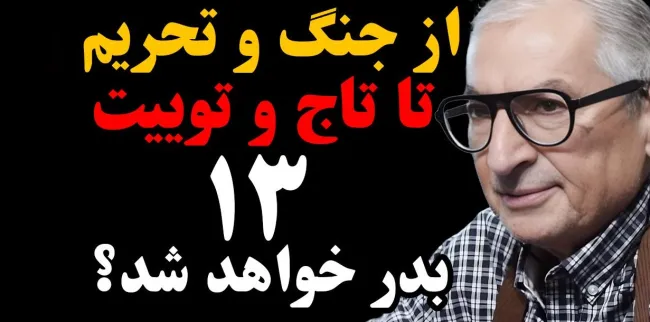

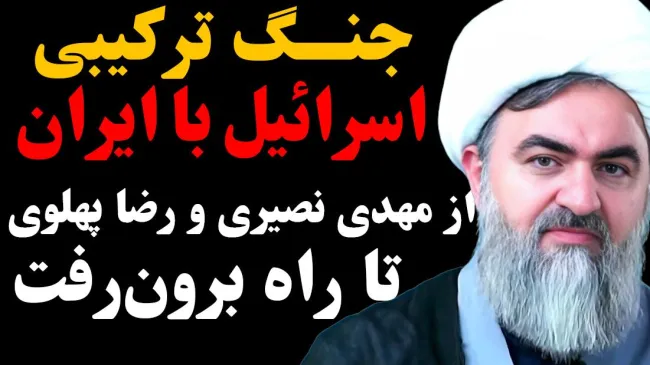
Israel's Hybrid War with Iran: From Mehdi Nassiri and Reza Pahlavi to the Way Out, featuring Hojjat-ol-Islam val-Moslemeen Mohammad-Taqi Akbarnejad, Lecturer at the Qom Seminary
Has the war ended? Or have we just entered its main phase? When the enemy no longer approaches from the border but strikes from other directions, how, who, and where does it collapse? Amidst fire and diplomacy, in a land that still smells of gunpowder, a fundamental question lies before us: How can one stand without being destroyed? How can one fight without being a warmonger?
Read more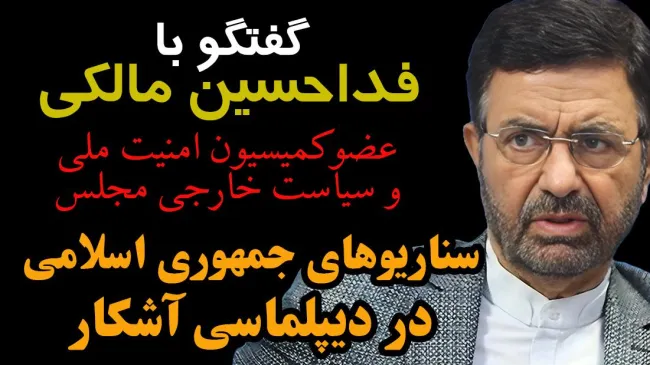
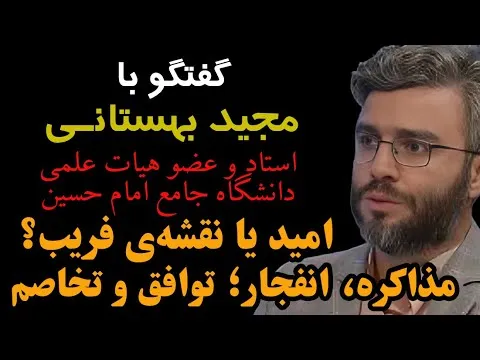
Scenarios of the Islamic Republic in Open Diplomacy with America: A Conversation with Fadahossein Maleki, Member of the Parliament's National Security and Foreign Policy Commission.
In the geometry of global power, dialogue is sometimes a tool of peace and sometimes a mask for war. The Islamic Republic, from its very first days, has defined itself in opposition to what it calls imperialism and the hegemony system—namely, the United States. But throughout all these years, behind closed doors, the power of diplomacy has always been flowing: sometimes loudly, sometimes with sealed lips. Now, on the eve of major regional and global transformations, amid economic deadlocks and increasing social pressures, and while the world is experiencing a complex America led by Trump, it is watching this period's negotiations with Iran. The fundamental question is: what scenario does the Islamic Republic have in mind for confronting the United States under Trump's leadership? Has open diplomacy replaced covert policy?
Read more
See | The Inevitable Future of the Islamic Republic; From Protesters to Power Transfer; A Conversation with Faezeh Hashemi
Is it possible to escape the future? This is a very important question: is there any escape from the future or not? History is neither sleep nor fantasy; it is a stubborn reality that sometimes shows its face in the mirror of popular protests, sometimes in negotiations behind closed doors, and sometimes in the shadow of the comings and goings of leaders and their successors. The Islamic Republic, after nearly half a century, now seems to me to be standing in a purgatory between continuity and transition.
Read more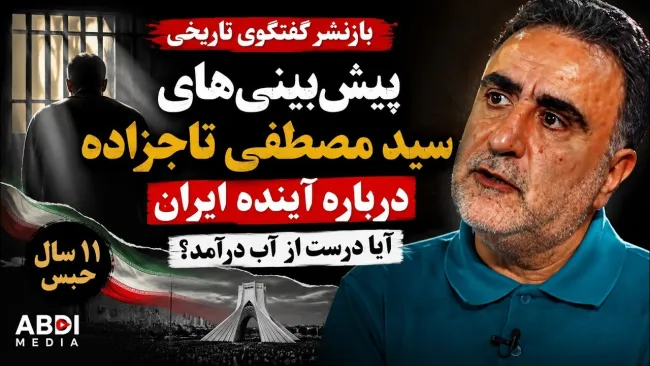
See | What future had Seyyed Mostafa Tajzadeh predicted for Iran? Reposted on the occasion of the 11th anniversary of his imprisonment.
Here it is from the YouTube channel of Abdi Media
Read more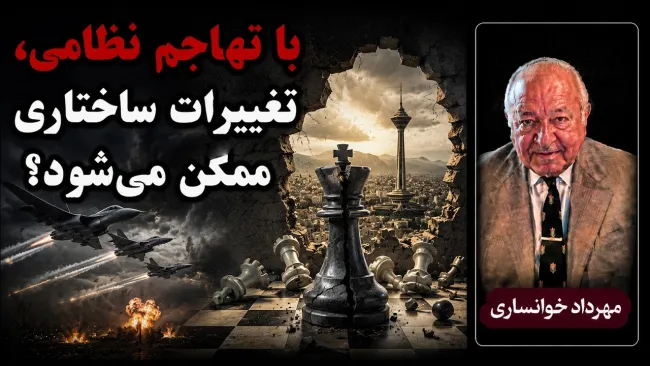
Mehrdad Khansari: Mr. Pahlavi is not on the verge of occupying Iran or establishing a monarchy.
Such actions take time, and we must maintain our credibility.
Read more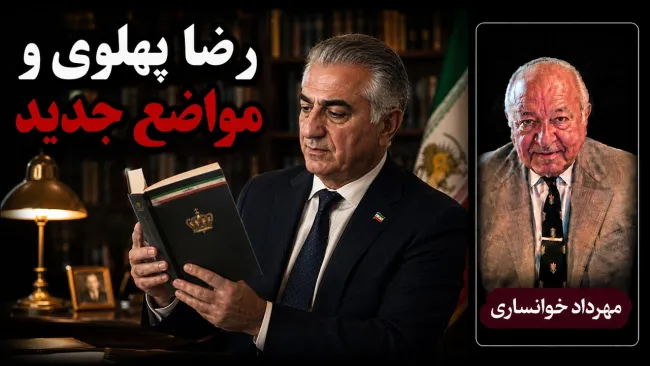
Mehrdad Khansari: Personally, I cannot support the positions that have been announced by him.
As a fighter Iranian, I do not want him to get involved in issues that are beyond control or that contradict the position of a constitutional monarch.
Read more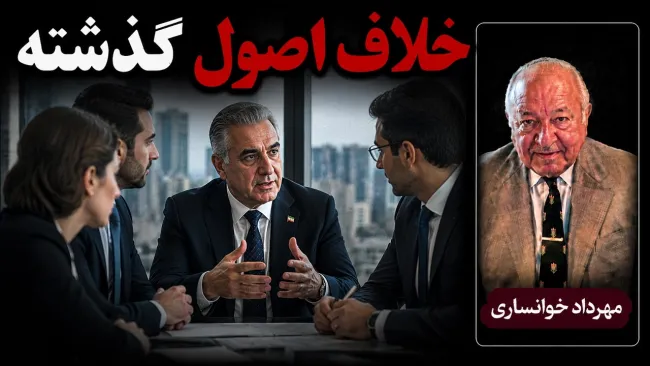
Mehrdad Khansari: The program that Reza Pahlavi announced today for the transitional period is inconsistent with his previous principles.
During the years when I was alongside Reza Pahlavi, he was a democratic individual and did not fight for the restoration of the "monarchy".
Read more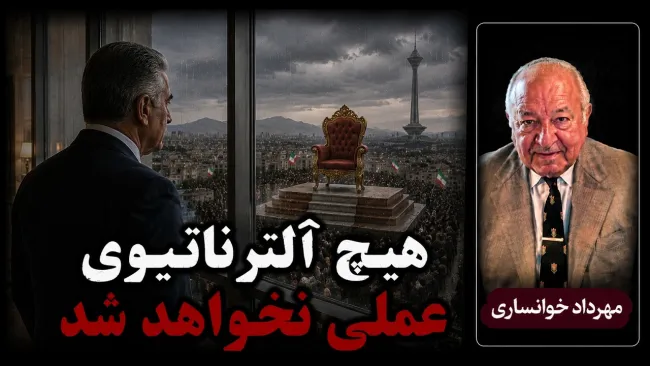
Mehrdad Khansari: In the current situation, I do not see any alternative as practical in the short term.
The Islamic Republic is not on the verge of collapse.
Read more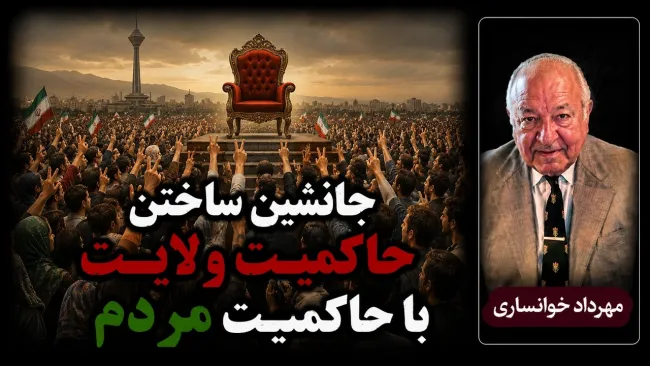
Mehrdad Khansari: The issue for which an agreement must be reached is the replacement of the sovereignty of Velayat (Guardianship of the Jurist) with the sovereignty of the people.
The sidelining of Ayatollah Khamenei has "discredited" (made ambiguous or tainted) the concept of Velayat (Guardianship of the Jurist).
Read more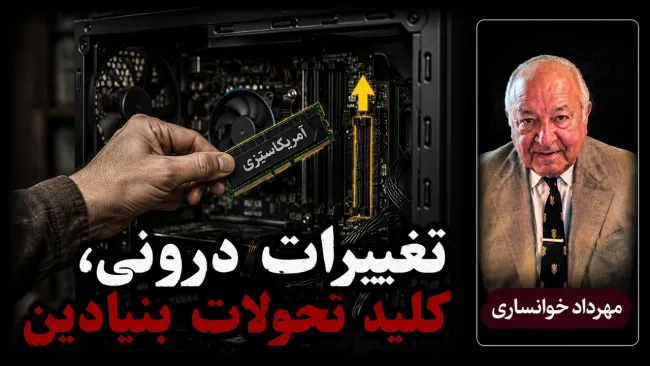
Mehrdad Khansari: Those who came with Khomeini and seized power diminished over time, and only 15-20 percent of them remain.
All the levers of power are in the hands of this 15-20 percent, and they run the country.
Read more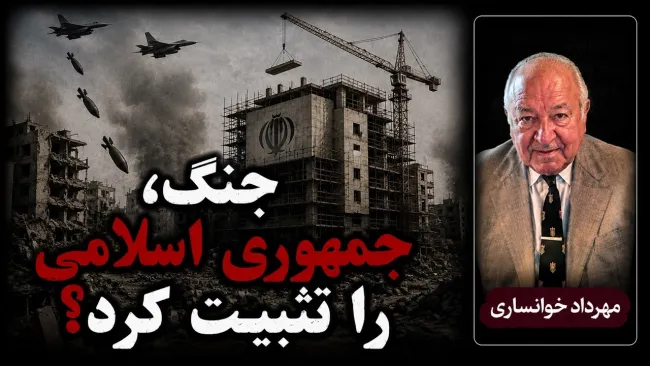
Mehrdad Khansari: In a situation that is neither war nor peace, the Islamic Republic is not more unstable.
Neither the Islamic Republic nor the US government wants to return to the battlefield.
Read more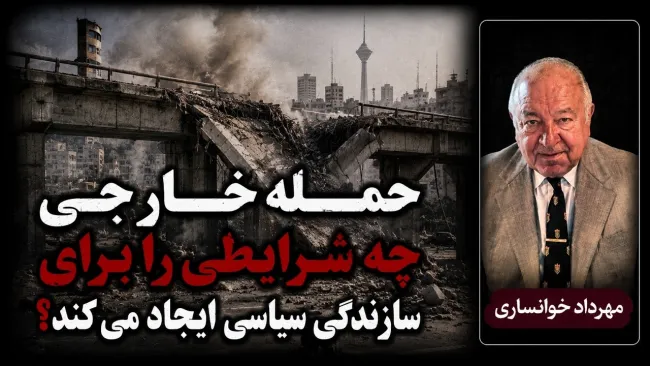
Mehrdad Khansari: A foreign attack harms the work of constructive political forces and creates conditions where many people, for national reasons, stand behind the system.
The attack on Iran was against international law.
Read more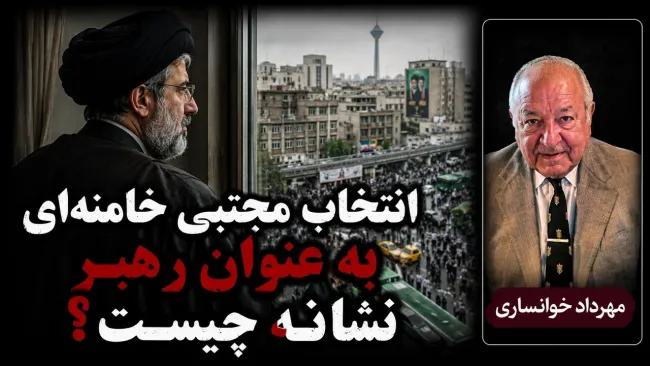
The selection of Mojtaba Khamenei as the leader of the Islamic Republic: what does it signify? An exclusive conversation with Mehrdad Khansari.
Mehrdad Khansari: The removal (or sidelining) of Ayatollah Khamenei has created a situation in which, if our nation is vigilant...
Read more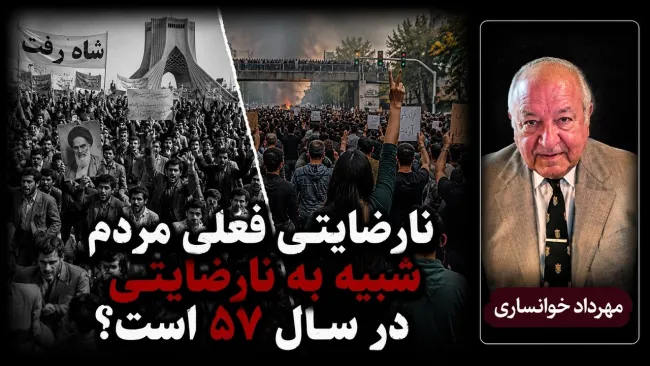
Is the current dissatisfaction of the people similar to the dissatisfaction of the people in 1979?
Mehrdad Khansari: The nature of the current dissatisfaction of the people is different from the past.
Read more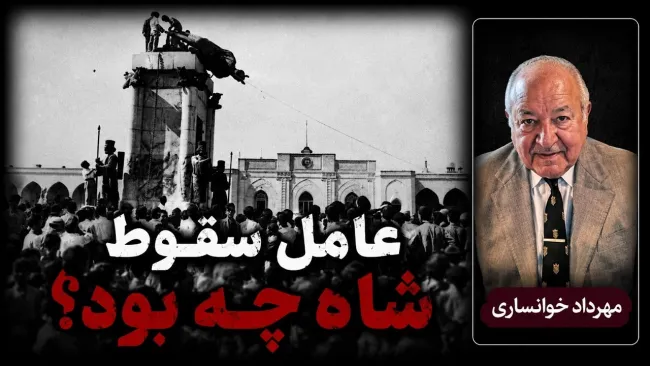
Mehrdad Khansari: The cause of the Shah's downfall was the dissatisfaction of the people.
The people wanted more political freedom, which was not available at that time.
Read more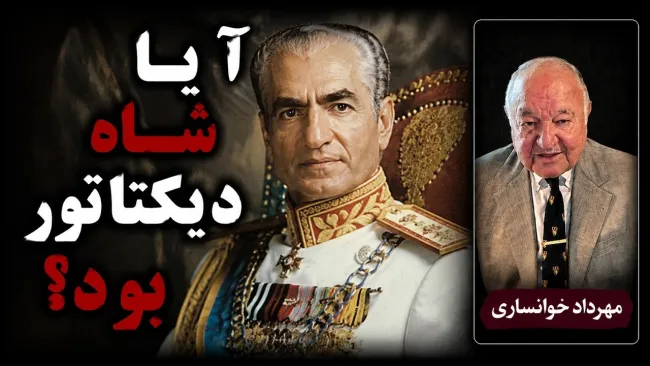
Mehrdad Khansari: The Shah was a dictator politically, but he was not a brutal dictator.
The Shah intervened in two areas: matters related to foreign policy and military matters and the defense of the country.
Read more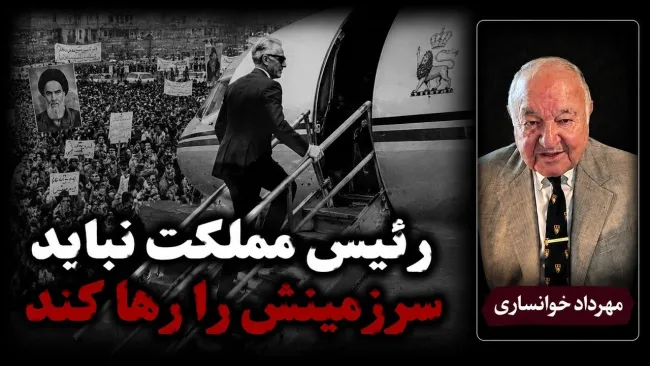
Mehrdad Khansari: One of the differences between the rule of the Shah and the current rule is that the head of the country should not abandon his land.
During the time of the Shah, dissatisfaction could be curbed by providing financial facilities to the people.
Read more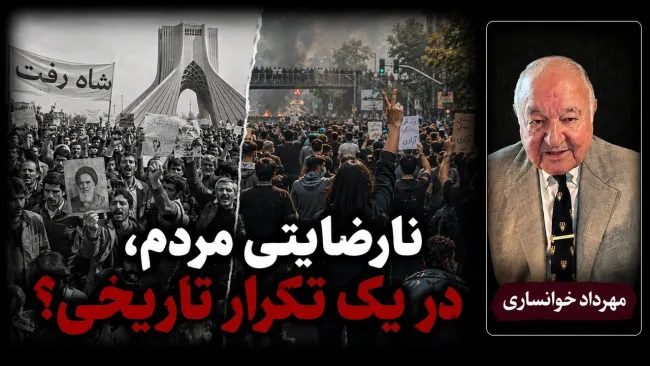
Is public dissatisfaction with the government a "historical repetition"? Exclusive interview with Mehrdad Khansari
Mehrdad Khansari: Our country, at the time when Mohammad Reza Shah came to the throne, was a poor country.
Read more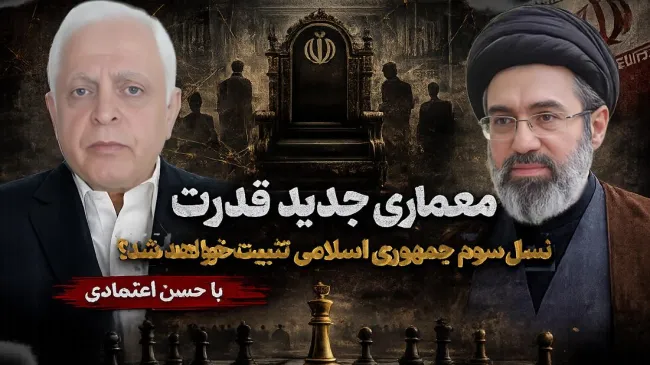
Mojtaba Khamenei and the New Architecture of Power; Will the Third Generation of the Islamic Republic Be Consolidated? A Conversation with Hassan Etemadi, Political Analyst.
It is very clear that the Islamic Republic is at one of the most sensitive historical junctures. Therefore, we are going to discuss an issue that is important for the future of Iran, and the topic of our conversation is the structure of power in Iran. We know that after the attacks that took place in recent months, and after the killing of Ayatollah Khamenei and the transfer of leadership in a very strange and extraordinary process to his son, Mojtaba Khamenei, many now believe that the Islamic Republic has entered its third generation. Although to this day, we have not seen any live voice, image, photo, or even a live signature from the new leader. Has Iran entered the era of a military-security government? And can the new architecture of power stabilize the Islamic Republic system and the nascent system of Mojtaba Khamenei, or will new crises arise?
Read more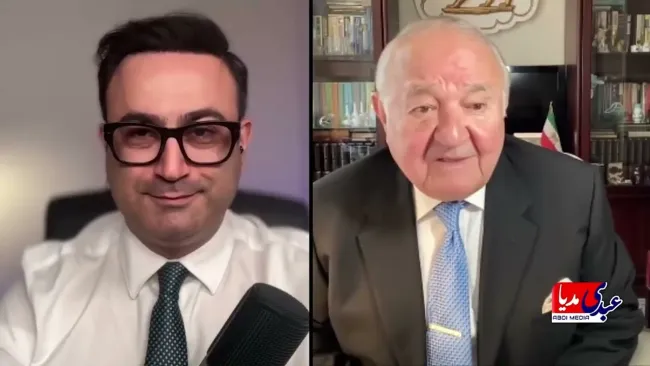
What is the biggest weakness of the Islamic Republic? Exclusive interview with Mehrdad Khansari
Mehrdad Khansari: The biggest weakness of the Islamic Republic is the lack of development and the creation of public dissatisfaction.
Read more
Most Read
Popular reads across Abdi Media