
25 August 19411941
The Anglo-Soviet invasion of Iran in World War II.
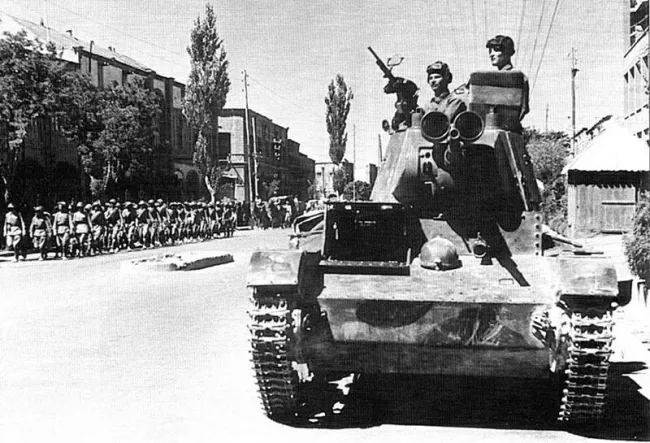
September 3, 1941, past midnight, the sound of explosions and sirens disturbed the sleep of the people in the north and south of Iran.
Soviet forces from the northern borders and the British army from the Persian Gulf, without any official declaration of war, invaded Iranian territory.
That day was the beginning of one of the bitterest chapters in Iran's contemporary history; the day the country was trampled under the feet of the two superpowers of the era for the first time in the twentieth century.
On the morning of September 3, 1941, the people of Bandar Anzali and Abadan woke up to a strange scene; foreign soldiers, with unfamiliar uniforms and weapons they had only seen in movies before, were parading through the streets. Reza Shah, who for years had relied on the army and a policy of proximity to Nazi Germany to turn Iran into an impregnable fortress, was caught off guard by this attack.
The Iranian army, most of whose budget had been spent on formalities and show maneuvers, collapsed within days. The Shah was forced to abdicate, and his son, Mohammad Reza, ascended the throne under conditions where the country was effectively occupied by two great powers.
Iran became the "Victory Bridge" for the Allies; a vital route for delivering supplies to the Soviet Union, which was resisting Hitler's invasion at the time. Thousands of foreign soldiers were stationed in Iranian territory, roads and railways came under foreign control, and the great famine of 1943, which led to the deaths of hundreds of thousands, occurred in the shadow of this occupation and disruption in the distribution of grain.
An old man who was a child in those days wrote years later in his memoirs: "I remember we used to queue for bread. British and Russian soldiers were in the city, and we lived like shadows in our own homes."