
28 August 19201920
The passing of Mirza Mohammad Taqi Shirazi, the leader of the Iraqi independence movement.
- Death
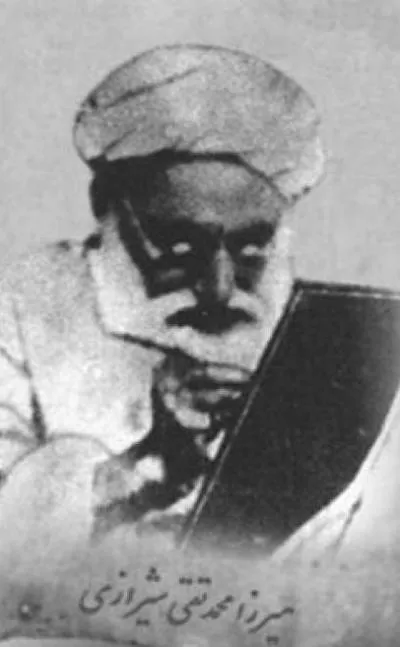
Iraq was under the heavy shadow of British mandate. World War I had ended, the Ottoman Empire had collapsed, and Britain, with its colorful promises of independence, had taken its place in Mesopotamia. In Karbala, an elderly man of eighty, whose voice had reached beyond the pulpits and markets, was seated; Ayatollah Mirza Mohammad Taqi Shirazi, known as "Mirza the Second." He was the political leader of the Iraqi independence movement.
Earlier, during the occupation of Faw, he had issued fatwas of jihad in Samarra, calling on tribes and Muslims to resist. His historic fatwa was clear and explicit: demanding rights is obligatory upon Iraqis, and if the British refuse to accept these demands, it is permissible to resort to defensive force. This fatwa ignited the Twentieth Revolution in the summer of that year.
But on the 6th of Shahrivar (August 28, 1920), at the most sensitive and critical moment of the uprising, Mirza the Second passed away in Karbala. Some sources consider his death unnatural and say he was poisoned by British agents. His body was buried in the shrine of Imam Hussein, and Sheikh al-Sharia Isfahani performed the funeral prayer over his body.
The silence of this religious authority was a blow from which the uprising did not survive; his death weakened the rebellion and gave Britain a freer hand to suppress it. But what remained was a pattern that would be repeated in Iraq for years to come: the voice of religious authority rising against the occupier, even if its bearer dies in the middle of the road.